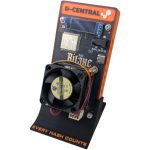
Bitaxe and Heatbit represent two fundamentally different philosophies of Bitcoin home mining. Bitaxe is an open-source, community-driven solo miner built for sovereignty — models range from the ~400 GH/s Supra ($70 CAD) to the ~3.6 TH/s Hex ($700 CAD), consuming 15-80W. Heatbit is a proprietary consumer mining heater designed for plug-and-play convenience — the Trio delivers ~10 TH/s at 1,500W for $849 USD, while the Maxi Pro promises ~60 TH/s at 1,500W for $1,499 USD. This comparison breaks down the specs, philosophy, costs, and trade-offs to help you decide which approach matches your goals — and introduces a third option that combines the best of both worlds.
Two Philosophies of Home Mining
Before comparing specifications and price tags, you need to understand what these two products actually represent. They are not just different hardware. They are different answers to a fundamental question: what is home mining for?
Bitaxe answers: Home mining is an act of sovereignty. You run open-source hardware connected to a pool of your choosing (or solo mine directly against the Bitcoin network). You control every aspect — firmware, pool selection, frequency, voltage, data. You are a participant in Bitcoin’s decentralized security model, not a customer of someone else’s mining infrastructure. The machine is yours. The software is yours. The hashrate is yours.
Heatbit answers: Home mining is a consumer experience. You plug in a beautiful appliance, download an app, and earn Bitcoin while heating your room. The complexity is abstracted away. You do not choose pools, flash firmware, or configure anything beyond a temperature setting. The device mines through Heatbit’s infrastructure, and you receive payouts to your wallet. It is mining as a service, packaged inside a space heater.
Neither answer is wrong. But one aligns with Bitcoin’s founding principles, and the other trades those principles for convenience. If you are reading this on a site called D-Central Technologies — a company whose mission is the decentralization of every layer of Bitcoin mining — you can probably guess where our bias falls. We will be fair, but we will be honest.
Bitaxe: The Open-Source Solo Miner
The Bitaxe is an open-source Bitcoin mining device designed by Skot and the open-source mining community. Every aspect of the hardware — schematics, PCB layouts, bill of materials, firmware source code — is published under open licenses. Anyone can manufacture a Bitaxe. Anyone can modify it. Anyone can verify exactly what the device does with every clock cycle.
D-Central Technologies has been involved in the Bitaxe ecosystem since its earliest days. We created the original Bitaxe Mesh Stand, developed leading heatsink solutions for both the standard Bitaxe and the Hex, and stock every variant along with a full accessories lineup. This is not a product we resell — it is an ecosystem we helped build.
Current Bitaxe Lineup (2026)
| Model | ASIC Chip | Hashrate | Power Draw | Efficiency | Approx. Price (CAD) |
|---|---|---|---|---|---|
| Bitaxe Supra | BM1366 | ~400 GH/s | ~15W | ~37.5 J/TH | $70-$100 |
| Bitaxe Ultra | BM1366 | ~500 GH/s | ~15W | ~30 J/TH | $90-$120 |
| Bitaxe Gamma 602 | BM1370 | ~1.2 TH/s | ~15-20W | ~16.7 J/TH | $120-$180 |
| Bitaxe GT 801 | BM1371 | ~1.5 TH/s | ~15-20W | ~13.3 J/TH | $150-$220 |
| Bitaxe Hex | 6x BM1366 | ~3.6 TH/s | ~65-80W | ~22 J/TH | $500-$700 |
What Makes Bitaxe Different
Fully open-source hardware and firmware. The ESP-Miner firmware that powers every Bitaxe is open-source and actively developed by the community. You can inspect every line of code, contribute improvements, or fork it entirely. Firmware updates are transparent and verifiable. No black boxes.
Solo mining by default. Most Bitaxe owners point their device at a solo mining pool like Solo CKPool or Public Pool. You are hashing directly against the Bitcoin network, and if your device finds a valid block, you receive the full 3.125 BTC block subsidy plus transaction fees. The probability is low — extremely low — but the payout is life-changing. This is lottery mining in its purest form.
Choose any pool. Want to mine with OCEAN? Braiins Pool? Your own Stratum V2 proxy? The Bitaxe does not care. You enter a stratum URL in the web interface and hash away. There is no vendor lock-in, no manufacturer-controlled pool, no middleman between you and the Bitcoin network.
Community-driven development. Bug fixes, performance improvements, and new features come from the open-source community, not a corporate product roadmap. When the BM1370 chip became available, the community designed the Gamma. When the BM1371 arrived, the GT followed within months. This is how open-source hardware is supposed to work.
Repairable and modifiable. Every component is documented. Schematics are public. If a capacitor blows, you can replace it. If you want to experiment with different heatsink configurations, voltage settings, or overclocking parameters, the firmware gives you direct control. The device is yours to hack — which is exactly why we call ourselves Mining Hackers.
Heatbit: The Consumer Mining Heater
Heatbit is a US-based company (registered in Delaware, founded in 2020) that manufactures consumer-grade Bitcoin mining heaters. Their approach is fundamentally different from the Bitaxe: instead of building a miner that produces heat as a byproduct, they built a heater that mines as a bonus feature. The product targets mainstream consumers, not Bitcoin enthusiasts.
For a deeper dive on the Heatbit specifically, see our complete Heatbit Review 2026.
Current Heatbit Lineup (2026)
| Model | Hashrate | Mining Power | Total Power | Noise Level | Price (USD) |
|---|---|---|---|---|---|
| Heatbit Trio | ~10 TH/s | 400W mining + 1,100W resistive | 1,500W | ~40 dB | $849 |
| Heatbit Maxi | ~35-40 TH/s | 1,500W (all mining) | 1,500W | ~56 dB | $1,249 |
| Heatbit Maxi Pro | ~60 TH/s | 1,500W (all mining) | 1,500W | ~56 dB | $1,499 |
All models produce approximately 5,120 BTU/hr of heat (standard for a 1,500W space heater), include HEPA air filtration, and are controlled via the Heatbit mobile app. They plug into standard 120V wall outlets in North America.
Important Note on the Trio
The Heatbit Trio only uses 400W of its 1,500W draw for actual Bitcoin mining. The remaining 1,100W is a standard resistive heating element — the same technology used in a $30 space heater from any hardware store. You are paying $849 for 10 TH/s of mining hashrate plus a resistive heater. The Maxi and Maxi Pro use the full 1,500W for mining, making every watt work double duty (heat + hash). If you are considering a Heatbit, the Trio’s economics are hard to justify.
What Makes Heatbit Different
Consumer industrial design. Heatbit devices look like premium Dyson-style appliances — aviation-grade aluminum, clean lines, leather accents on the Maxi models. They are designed to sit in a living room without drawing attention as mining hardware. For aesthetics-conscious buyers, this is genuinely compelling.
Complete plug-and-play experience. Download the app. Connect to Wi-Fi. Link a Bitcoin wallet. Set your temperature. Done. No Ethernet cables, no firmware configuration, no pool setup, no command line. This is mining at the lowest possible barrier to entry.
Integrated HEPA air filtration. Every Heatbit model includes a HEPA 12/13 filter that removes 99.7-99.97% of airborne particles. This is a genuine functional bonus that no other mining device offers, including the Bitaxe and D-Central’s own space heaters.
Smart home features. App-based control, scheduling, remote monitoring, and earnings tracking. The app is polished and well-designed, providing a familiar consumer experience.
Safety certified. US and Canadian safety certifications for consumer appliances, which is non-trivial for a product that combines ASIC mining hardware with a home heating element.
Head-to-Head Comparison
Let us put the numbers side by side. For this comparison, we are using the Bitaxe Gamma 602 (the most popular Bitaxe model in 2026) and the Heatbit Maxi (Heatbit’s current flagship shipping model) as representatives of each category.
| Feature | Bitaxe Gamma 602 | Heatbit Maxi |
|---|---|---|
| Price | ~$150 CAD (~$110 USD) | $1,249 USD |
| Hashrate | ~1.2 TH/s | ~35-40 TH/s |
| Power Draw | ~15-20W | 1,500W |
| Efficiency (J/TH) | ~16.7 J/TH | ~40 J/TH |
| Heat Output | ~51-68 BTU/hr | ~5,120 BTU/hr |
| Noise Level | Near-silent (~25 dB) | ~56 dB (fan noise) |
| Open-Source? | Yes — hardware + firmware | No — proprietary hardware and software |
| Solo Mining? | Yes — default configuration | No — mines through Heatbit pool |
| Pool Choice? | Any pool — fully configurable | Limited — default is Heatbit’s pool |
| Custom Firmware? | Yes — ESP-Miner (open-source) | No — locked firmware |
| Repairability | Fully repairable — public schematics | Limited — proprietary sealed unit |
| Data Collection | None — no phone-home | App-based — account required |
| Size | ~5 x 5 x 2 cm (PCB) | Large floor-standing appliance |
| Primary Function | Solo mining / lottery mining | Space heating with mining bonus |
| Heating Capability | Negligible (15-20W) | Heats ~400 sq ft room |
These are fundamentally different devices for fundamentally different use cases. The Bitaxe is a mining device. The Heatbit is a heater that happens to mine. Comparing raw hashrate misses the point — but the economics still matter, and we will get to those.
The Open-Source Advantage
For anyone aligned with Bitcoin’s core values — decentralization, self-sovereignty, permissionlessness, verification over trust — the open-source nature of the Bitaxe is not just a feature. It is the entire point.
No Vendor Lock-In
If Heatbit goes bankrupt tomorrow, your device still heats your room. But what happens to the mining functionality? The device mines through Heatbit’s infrastructure. If their servers go down, their app stops working, or they pivot the business, you are left with a very expensive space heater. Their Trustpilot reviews already show some customers frustrated with delivery timelines and warranty policies — what happens if those frustrations compound?
The Bitaxe has no such dependency. If D-Central disappeared tomorrow (not that we plan to), every Bitaxe ever sold would continue functioning exactly as it does today. The firmware is open-source and can be compiled by anyone. The stratum protocol is a Bitcoin standard. The hardware schematics are public. There is no single point of failure.
Community Firmware Development
ESP-Miner, the firmware that powers the Bitaxe, has dozens of active contributors on GitHub. Features are proposed, debated, implemented, and peer-reviewed in the open. When users identified that overclocking the BM1370 chip could push the Gamma beyond 1.2 TH/s, the community documented the settings, tested stability, and shared the results publicly. See our Bitaxe Overclocking Guide for the full details.
With Heatbit, firmware updates come from the company, on their schedule, containing whatever they choose. You cannot inspect the code. You cannot verify what data the device transmits. You cannot customize behavior beyond what the app permits. For a device that is always connected to the internet and always connected to your Bitcoin wallet, that opacity should concern you.
Repairability and Longevity
ASIC chips degrade over time. Components fail. A Bitaxe with a blown capacitor or failed MOSFET can be repaired by anyone with basic soldering skills and access to the public schematics. Replacement components cost pennies. The open-source community has documented every common failure mode and repair procedure.
A Heatbit with a failed mining chip has exactly one repair path: contact Heatbit. If the device is out of warranty (and remember, their warranty is voided if you discard the original packaging), you are at the mercy of whatever out-of-warranty repair policy exists at that time. No third-party repair shop can help you. The repair ecosystem for proprietary consumer mining hardware does not exist.
Pool Flexibility and Decentralization
When you mine with a Bitaxe, you choose where your hashrate goes. You can point it at OCEAN and support the most transparent pool in the ecosystem. You can solo mine through Public Pool and contribute to network decentralization. You can run your own Stratum V2 proxy and select your own block templates. Your hashrate is your vote on the Bitcoin network, and with a Bitaxe, you cast that vote yourself.
Heatbit devices mine through Heatbit’s pool infrastructure by default. While some reports suggest advanced users may have limited pool selection options, the default experience — and the one 99% of Heatbit buyers will use — concentrates hashrate under a single company’s control. If Heatbit sells 100,000 devices, that is 100,000 devices worth of hashrate directed wherever Heatbit chooses. That is the opposite of decentralization.
Privacy and Data Collection
A Bitaxe communicates with exactly one endpoint: the stratum server you configure. It does not phone home. It does not require an account. It does not track your mining activity in a corporate database. It does not know your name, email, or wallet balance.
Heatbit requires an app, an account, and an internet connection. The app tracks your mining activity, earnings, device status, and usage patterns. This data lives on Heatbit’s servers. For a community that values privacy and self-sovereignty, the difference matters.
The Appliance Advantage
Fairness demands we acknowledge what Heatbit does well — and for a specific audience, it does several things better than the Bitaxe.
Meaningful Hashrate
The Heatbit Maxi produces 35-40 TH/s. The Bitaxe Gamma produces 1.2 TH/s. In raw mining output, the Heatbit generates roughly 30x more hashrate. If your primary goal is to earn the most possible Bitcoin from home mining, higher hashrate means higher expected earnings (albeit in a pool, not solo). The Maxi Pro at 60 TH/s competes with full-size ASICs like the Antminer S9.
However, this comparison requires context. The Heatbit draws 1,500W to achieve those numbers. The Bitaxe draws 15-20W. Per watt consumed, the Bitaxe Gamma is significantly more efficient (16.7 J/TH vs ~40 J/TH). And with the Bitaxe, every watt goes toward solo mining with a chance at the full block reward, not pooled mining with guaranteed fractions.
Built-In Heating Functionality
The Heatbit is a proper space heater. At 1,500W, it produces 5,120 BTU/hr and can heat a 400 square foot room. The Bitaxe produces 15-20 watts of heat — enough to warm your fingertips if you hold them against the heatsink. If you need a heater that mines, the Bitaxe is not it.
That said, if you need a heater that mines, there are better options than the Heatbit at a fraction of the price. More on that below.
Zero Technical Knowledge Required
A Heatbit buyer never sees a stratum URL, a web interface, an IP address, or a command line. The app handles everything. For someone who has never configured any hardware more complex than a smart speaker, this genuinely matters. The Bitaxe setup process — while not difficult — still requires connecting to a web interface, entering pool information, and configuring basic settings. For the technically inclined, this takes five minutes. For someone who finds Wi-Fi routers confusing, it can be intimidating.
Smart Home Integration and Monitoring
Heatbit’s app provides polished monitoring, scheduling, and remote control. The Bitaxe has a functional web interface and can be integrated with monitoring tools like AxeOS Dashboard, but it requires more effort. For users who want a single-app experience with push notifications about their earnings, Heatbit delivers that out of the box.
Living Room Aesthetics
The Heatbit is designed by industrial designers, not electrical engineers. It looks like a piece of premium home technology. The Bitaxe is a PCB with a heatsink and a fan — beautiful in its own way, but not something most people would put on their mantelpiece without a case. (Though our Bitaxe accessories lineup includes cases and stands that help.)
The Economics: What You Actually Pay Per Terahash
Let us do the math that matters. Cost per terahash tells you how much mining hashrate you actually receive for your money:
| Device | Price | Hashrate | Cost Per TH/s |
|---|---|---|---|
| Bitaxe Supra | ~$70 CAD (~$50 USD) | 0.4 TH/s | $125 USD/TH |
| Bitaxe Gamma 602 | ~$150 CAD (~$110 USD) | 1.2 TH/s | $91.67 USD/TH |
| Bitaxe GT 801 | ~$185 CAD (~$135 USD) | 1.5 TH/s | $90 USD/TH |
| Bitaxe Hex | ~$600 CAD (~$435 USD) | 3.6 TH/s | $120.83 USD/TH |
| Heatbit Trio | $849 USD | 10 TH/s | $84.90 USD/TH |
| Heatbit Maxi | $1,249 USD | 37.5 TH/s | $33.31 USD/TH |
| Heatbit Maxi Pro | $1,499 USD | 60 TH/s | $24.98 USD/TH |
On a pure cost-per-terahash basis, the Heatbit Maxi and Maxi Pro appear to offer more hashrate for the money than the Bitaxe — but this comparison is misleading for three critical reasons:
1. You are comparing apples to heaters. The Bitaxe draws 15-20W and sits on your desk. The Heatbit draws 1,500W and requires a dedicated 15A circuit. The ongoing electricity cost of the Heatbit is 75-100x higher than the Bitaxe. Over a year of 24/7 operation at $0.10/kWh, the Bitaxe Gamma costs ~$17 in electricity. The Heatbit Maxi costs ~$1,314. The total cost of ownership flips dramatically.
2. Solo mining economics work differently. A Bitaxe solo mining has a small but real probability of finding a full 3.125 BTC block (plus fees). A Heatbit mining in a pool earns tiny, predictable fractions. The expected value calculations are different, and for many Bitaxe owners, the non-financial value of participating in solo mining is the point entirely.
3. The Heatbit’s price includes a heater. A fair comparison would subtract the cost of the heating element (which you could buy for $30-50) and compare only the mining hardware value. When you do that, the Heatbit’s mining-specific cost per terahash still looks reasonable — but it is still a proprietary, closed-source, non-repairable mining solution at a premium price.
Who Should Buy a Bitaxe?
The Bitaxe is built for a specific type of person — and if you recognize yourself in this list, there is nothing else on the market quite like it:
- Bitcoin sovereignty advocates who believe in running their own node, holding their own keys, and mining their own blocks
- Cypherpunks and tinkerers who want to understand mining hardware at the component level
- Solo mining enthusiasts willing to accept extreme variance for the chance at a full block reward
- Open-source advocates who refuse to run proprietary firmware on principle
- Low-power miners who want mining without significant electricity costs ($17/year vs $1,300/year)
- Privacy-conscious users who do not want a corporate app tracking their mining activity
- Educators and students using the Bitaxe to learn about SHA-256, proof-of-work, and ASIC design
- Decentralization contributors who want their hashrate on pools like OCEAN or their own Stratum V2 proxy
- Collectors and enthusiasts who appreciate the engineering elegance of a single-chip open-source miner
If you value sovereignty over convenience, and principles over passive income, the Bitaxe is your machine.
Who Should Buy a Heatbit?
We will be honest about who the Heatbit is for, and it is a real audience:
- Non-technical Bitcoin curious users who want to “mine Bitcoin” without learning anything about mining
- Consumers who need a space heater and like the idea of earning Bitcoin while heating their room
- Gift buyers looking for a conversation-piece appliance for a Bitcoin-curious friend or family member
- Aesthetics-first buyers who want mining hardware that looks like a Dyson product
- Allergy sufferers who value the integrated HEPA air filtration
- Set-and-forget users who never want to think about pools, firmware, or configuration
If you value simplicity above all else and you already need a space heater, the Heatbit is not a terrible proposition — but read the next section before deciding.
The Third Option: D-Central Bitcoin Space Heaters
Here is where this comparison gets interesting. The Bitaxe and Heatbit are presented as the two options — open-source solo miner vs consumer mining heater. But there is a third approach that combines the advantages of both while avoiding their respective weaknesses.
D-Central’s Bitcoin Space Heater Editions are built on proven Antminer ASIC hardware — the same hardware that secures the Bitcoin network at industrial scale — repackaged into enclosed, noise-dampened configurations designed for home use. They are not consumer appliances. They are not closed-source black boxes. They are real mining hardware, hacked for your home.
How D-Central Space Heaters Compare
| Feature | Bitaxe Gamma | Heatbit Maxi | D-Central S19 Space Heater |
|---|---|---|---|
| Price | ~$150 CAD | $1,249 USD | ~$755 CAD (~$545 USD) |
| Hashrate | ~1.2 TH/s | ~37.5 TH/s | ~56 TH/s |
| Power Draw | ~15-20W | 1,500W | ~1,400-1,800W |
| Cost Per TH/s | $91.67 USD | $33.31 USD | $9.73 USD |
| Open Hardware? | Yes | No | Yes (Bitmain reference design) |
| Custom Firmware? | Yes (ESP-Miner) | No | Yes (BraiinsOS+, Vnish, stock) |
| Pool Choice? | Any pool | Limited | Any pool |
| Repairable? | Fully | Limited (proprietary) | Fully (global Antminer parts) |
| Solo Mining? | Yes | No | Yes (via ckpool/OCEAN) |
| Heating Capability | Negligible | 400 sq ft | 400+ sq ft |
| Noise | Near-silent | ~56 dB | 40-55 dB (dampened) |
| HEPA Filter? | No | Yes | No |
| App Control? | Web interface | Mobile app | Web interface + BraiinsOS dashboard |
The D-Central S19 Space Heater Edition delivers 50% more hashrate than the Heatbit Maxi at less than half the price. It costs $9.73 per terahash compared to Heatbit’s $33.31. It runs open firmware (BraiinsOS+, Vnish, or stock Bitmain). It mines on any pool you choose. It is fully repairable using globally available Antminer components. And it heats your room just as effectively, because a watt of heat is a watt of heat regardless of the enclosure.
The trade-offs? D-Central Space Heaters do not look like Dyson products. They do not have HEPA filters. They do not have a slick mobile app. They look like what they are: mining hardware in an acoustic enclosure. But they mine more Bitcoin, cost less money, and give you full control over your hashrate. For anyone who cares about the Bitcoin mining part of “Bitcoin mining heater,” the value proposition is not close.
The Repair Advantage
This point deserves emphasis. D-Central’s Space Heaters are built on Antminer hardware — the most widely deployed ASIC mining platform in the world. Replacement hashboards, control boards, fans, power supplies, and individual ASIC chips are available from dozens of suppliers globally. D-Central’s own ASIC repair service handles component-level repairs on every Antminer model. If a chip fails three years from now, it is a repairable event, not a device funeral.
Heatbit’s proprietary hardware has no third-party repair ecosystem. If the mining component fails after warranty — and remember, the warranty is voided if you discard the original packaging — your options range from limited to nonexistent.
The Verdict: Which Should You Choose?
This is not a contest where one product “wins” universally. These are different tools for different people with different values. Here is our honest recommendation framework:
Choose a Bitaxe If…
You care about Bitcoin’s decentralization. You want to solo mine. You value open-source hardware and the ability to inspect, modify, and repair your own equipment. You want the cheapest possible entry point into Bitcoin mining. You do not need space heating from your miner. You are a tinkerer, a cypherpunk, a maker, or just someone who believes the tools of Bitcoin should be as decentralized as Bitcoin itself. Start with a Bitaxe Gamma 602 and join the thousands of solo miners running open-source hardware against the Bitcoin network.
Choose a Heatbit If…
You are buying primarily a space heater and want Bitcoin mining as a bonus feature. You are not technically inclined and never want to configure anything beyond a mobile app. You value industrial design and home aesthetics above all else. You want HEPA air filtration. You understand that you are paying a 3-5x premium per terahash for the consumer experience, and you are comfortable with a closed, proprietary ecosystem.
Choose a D-Central Space Heater If…
You want the best of both worlds: a space heater that mines Bitcoin at serious hashrate, on any pool you choose, with firmware you control, built on hardware that the entire ASIC repair industry can service. You want the most hashrate per dollar. You want the option to solo mine or pool mine. You want a device that will be repairable in five years, not e-waste. You want mining hardware hacked for the home — not a consumer gadget with a mining chip bolted inside.
For most readers of this site, the answer is either a Bitaxe (for the open-source solo mining experience) or a D-Central Space Heater (for serious hash-and-heat performance). Many of our customers run both — a Bitaxe on the desk for the joy of solo mining, and a Space Heater in the garage or spare room for real heating and real hashrate.
Final Thoughts: The Bigger Picture
The existence of products like Heatbit tells us something important: the market for home Bitcoin mining is growing. Mainstream consumers are becoming interested in mining, and that is genuinely good for Bitcoin’s decentralization — even when the products themselves are centralized.
But the Mining Hackers’ perspective is this: if you are going to mine Bitcoin, mine it on your terms. Use hardware you can inspect. Run firmware you can verify. Point your hashrate at a pool that aligns with your values — or solo mine and answer to nobody. The Bitaxe embodies this philosophy at the smallest scale. D-Central’s Space Heaters embody it at a scale that can actually heat your home and generate meaningful hashrate.
Heatbit makes a beautiful appliance that introduces non-technical people to the concept of mining. Credit where it is due. But beauty is not sovereignty. Convenience is not decentralization. And a mining device you cannot repair, cannot reflash, and cannot direct to the pool of your choice is not really your mining device. It is someone else’s mining device in your living room.
Choose accordingly.
Frequently Asked Questions
Can I solo mine with a Heatbit?
Not in any meaningful way. Heatbit devices mine through Heatbit’s pool infrastructure by default. While there are some reports of limited pool selection for advanced users, the standard experience routes all hashrate through Heatbit’s system. The Bitaxe, by contrast, is designed for solo mining from the ground up and can connect to any stratum-compatible pool.
Is a Bitaxe powerful enough to heat a room?
No. At 15-20W, the Bitaxe produces negligible heat — roughly equivalent to a small LED light bulb. If you need both mining and heating, look at D-Central’s Bitcoin Space Heater Editions or the Heatbit. The Bitaxe is a mining device, not a heating device.
Which earns more Bitcoin: Bitaxe or Heatbit?
In terms of expected daily earnings, the Heatbit’s higher hashrate (10-60 TH/s) will earn more predictable satoshis through pooled mining than a Bitaxe (0.4-3.6 TH/s) earns through solo mining probability. However, the Heatbit also costs 75-100x more in electricity per day. When you factor in electricity costs, the net difference narrows significantly. And the Bitaxe solo miner always carries the small probability of finding a full 3.125 BTC block — a payout no pooled Heatbit will ever deliver.
Can I run custom firmware on a Heatbit?
No. Heatbit devices use proprietary firmware that cannot be replaced or modified. The Bitaxe runs ESP-Miner, fully open-source firmware that you can modify, compile, and flash yourself.
What happens if Heatbit the company shuts down?
Your device would continue to function as a space heater, but the mining functionality — which depends on Heatbit’s app, servers, and pool infrastructure — would likely cease or become severely limited. This is not a theoretical concern; it is the inherent risk of any closed-ecosystem hardware product. Bitaxe devices have no such dependency.
Why does D-Central sell both Bitaxe and Space Heaters?
Because they serve different needs. The Bitaxe is for solo mining sovereignty at minimal power draw — a philosophical and educational tool as much as a miner. Space Heaters are for practical heating + mining at scale — the best hash-per-dollar in a home-compatible form factor. Many customers own both. We believe in giving miners the tools to decentralize Bitcoin at every scale, from 400 GH/s to 56 TH/s and beyond.
Can I solo mine with a Heatbit?
Not in any meaningful way. Heatbit devices mine through Heatbit’s pool infrastructure by default. While there are some reports of limited pool selection for advanced users, the standard experience routes all hashrate through Heatbit’s system. The Bitaxe, by contrast, is designed for solo mining from the ground up and can connect to any stratum-compatible pool.
Is a Bitaxe powerful enough to heat a room?
No. At 15-20W, the Bitaxe produces negligible heat — roughly equivalent to a small LED light bulb. If you need both mining and heating, look at D-Central’s Bitcoin Space Heater Editions or the Heatbit. The Bitaxe is a mining device, not a heating device.
Which earns more Bitcoin: Bitaxe or Heatbit?
In terms of expected daily earnings, the Heatbit’s higher hashrate (10-60 TH/s) will earn more predictable satoshis through pooled mining than a Bitaxe (0.4-3.6 TH/s) earns through solo mining probability. However, the Heatbit also costs 75-100x more in electricity per day. When you factor in electricity costs, the net difference narrows significantly. And the Bitaxe solo miner always carries the small probability of finding a full 3.125 BTC block — a payout no pooled Heatbit will ever…
Can I run custom firmware on a Heatbit?
No. Heatbit devices use proprietary firmware that cannot be replaced or modified. The Bitaxe runs ESP-Miner, fully open-source firmware that you can modify, compile, and flash yourself.
What happens if Heatbit the company shuts down?
Your device would continue to function as a space heater, but the mining functionality — which depends on Heatbit’s app, servers, and pool infrastructure — would likely cease or become severely limited. This is not a theoretical concern; it is the inherent risk of any closed-ecosystem hardware product. Bitaxe devices have no such dependency.
Why does D-Central sell both Bitaxe and Space Heaters?
Because they serve different needs. The Bitaxe is for solo mining sovereignty at minimal power draw — a philosophical and educational tool as much as a miner. Space Heaters are for practical heating + mining at scale — the best hash-per-dollar in a home-compatible form factor. Many customers own both. We believe in giving miners the tools to decentralize Bitcoin at every scale, from 400 GH/s to 56 TH/s and beyond.