
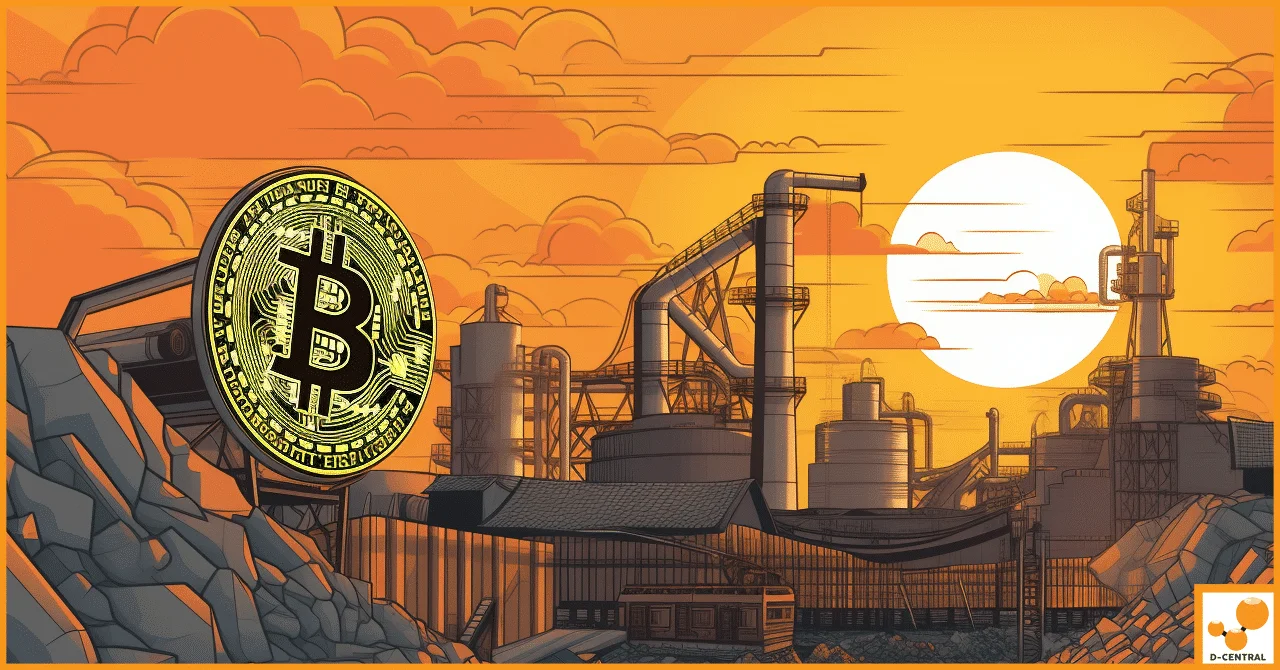
Bitcoin mining is not a speculative side hustle. It is critical infrastructure — the backbone of the most censorship-resistant monetary network ever built. Every ASIC humming in a warehouse, every Bitaxe ticking away on a desk, every space heater warming a basement contributes proof-of-work that secures billions of dollars in value and guarantees that no government, no corporation, and no central bank can unilaterally freeze, censor, or inflate away your wealth.
But here is something the mainstream media consistently gets wrong: Bitcoin mining does not just secure the network. It reshapes the economies of the communities where it operates. From property tax relief to renewable energy financing, from rural job creation to grid stabilization, mining operations are proving to be some of the most productive tenants a municipality can attract.
At D-Central Technologies, we have been in the trenches since 2016 — repairing, building, hosting, and deploying mining hardware across Canada. We have seen firsthand how mining transforms communities. This is the story that needs telling.
How Bitcoin Mining Lowers Property Taxes
This is not theory. This is documented testimony from state-level economic development officials.
In a U.S. Senate hearing on energy policy, the former head of Nebraska’s Economic Development Office testified that a single Bitcoin mining facility contributed approximately $1.6 million in state sales tax over 12 months and generated roughly $3.8 million for local tax authorities. That revenue directly offsets the tax burden on local residents, effectively lowering property taxes.
Think about what that means for a small rural county. One facility — one warehouse full of ASICs — generates enough revenue to fund road repairs, school improvements, and emergency services. The math is straightforward:
| Revenue Source | Annual Contribution | Local Impact |
|---|---|---|
| State Sales Tax | ~$1.6 million | State-level infrastructure and services |
| Local Tax Revenue | ~$3.8 million | Schools, roads, emergency services |
| Employee Income Tax | Varies by facility size | Consumer spending in local economy |
| Property Tax (facility) | Based on assessed value | Direct county revenue supplement |
The mechanism is simple: mining facilities are industrial tenants that consume electricity, employ people, and pay taxes — but unlike traditional manufacturing, they can be deployed rapidly, scaled flexibly, and operated with minimal environmental disruption. No smokestacks. No toxic runoff. Just hash power.
The Economic Engine: Jobs, Skills, and Community Investment
Bitcoin mining facilities are not dark boxes that run themselves. They require electricians, HVAC technicians, network engineers, security personnel, administrative staff, and — critically — hardware repair specialists. At D-Central, our ASIC repair division has serviced thousands of machines since 2016, and we have trained technicians who can diagnose hashboard failures, replace ASIC chips, and bring dead machines back to life. This is skilled, well-paying work.
In rural areas — whether in Nebraska, Quebec, or Manitoba — these jobs matter enormously. A single mid-scale mining operation can create 15-30 direct jobs and dozens of indirect positions in logistics, construction, and supply chain management.
| Job Category | Roles | Skill Level |
|---|---|---|
| Electrical | Electricians, power engineers, substation techs | Licensed trade |
| Hardware | ASIC repair techs, hashboard diagnosticians, firmware engineers | Specialized technical |
| Infrastructure | HVAC, cooling system design, facility management | Trade + engineering |
| Operations | Network monitoring, security, logistics, administration | General + technical |
| Software | Monitoring systems, pool management, automation | Development |
These are not temp jobs or gig economy scraps. They are skilled, full-time positions that build careers and communities.
Bitcoin Mining and the Energy Grid: Symbiosis, Not Parasitism
The single most persistent misconception about Bitcoin mining is that it “wastes” energy. This narrative is not just wrong — it is backwards.
Bitcoin miners are the most flexible load on any electrical grid. Unlike a hospital, a factory, or a data center, a mining operation can curtail its consumption in seconds. When grid demand spikes — during a heat wave, a cold snap, or a generation shortfall — miners can instantly shed load, freeing up capacity for critical consumers. No other industrial load offers this level of demand response flexibility.
In Nebraska specifically, the transition from diesel-powered irrigation to electric irrigation has created seasonal surplus capacity. Irrigation pumps run roughly three months per year. For the remaining nine months, that electrical infrastructure sits underutilized. Bitcoin miners fill that gap perfectly — they consume the surplus, pay for it, and can step aside the moment irrigation season returns.
This is not a Nebraska-only phenomenon. In Canada, where D-Central operates hosting facilities in Quebec, hydroelectric power generates massive surplus during off-peak months. Mining operations absorb that surplus, generating revenue for utilities that would otherwise have to curtail generation or export power at a loss.
The Renewable Energy Feedback Loop
Here is where it gets genuinely exciting. Bitcoin mining creates a revenue floor for renewable energy projects. Solar farms, wind installations, and small hydro projects often struggle with intermittency — they generate power when the sun shines or the wind blows, not necessarily when consumers need it. This makes financing difficult because revenue projections are unpredictable.
Mining changes the equation. A solar farm can point its excess generation at ASIC miners and guarantee a revenue stream for every kilowatt-hour produced, regardless of grid demand. This makes renewable projects more bankable, which accelerates deployment, which increases clean generation capacity for everyone.
| Energy Benefit | Mechanism | Real-World Example |
|---|---|---|
| Demand response | Instant load shedding during peak demand | ERCOT (Texas) curtailment programs |
| Surplus absorption | Consuming off-peak/seasonal excess generation | Quebec hydro surplus, Nebraska irrigation off-season |
| Renewable financing | Guaranteed revenue floor for intermittent generation | Co-located solar + mining projects |
| Methane capture | Flared/vented gas converted to hash power | Oil field stranded gas operations |
| Heat recovery | ASIC exhaust heat used for space/water heating | D-Central Bitcoin Space Heaters |
That last row deserves special attention. At D-Central, we build Bitcoin Space Heaters — ASIC miners enclosed in purpose-built housings that direct their exhaust heat into living spaces. In a Canadian winter, where heating costs can exceed $200/month, a Space Heater running an S9 or S19 offsets a portion of that cost while simultaneously mining Bitcoin. The energy is not wasted — it is used twice.
The Canadian Advantage: Why We Mine in the North
Canada is uniquely positioned for Bitcoin mining, and at D-Central, we lean into every advantage:
Cheap, clean hydroelectric power. Quebec’s electricity rates are among the lowest in North America, and the generation is almost entirely renewable. Our hosting facility in Laval, Quebec runs on this clean, affordable power.
Cold climate = free cooling. For roughly eight months of the year, Canadian ambient temperatures provide natural cooling for mining hardware. This dramatically reduces the energy overhead that plagues operations in warmer climates. Where a Texas facility might spend 30-40% of its energy budget on cooling, a Quebec facility can achieve the same thermal management for a fraction of that cost.
Political stability and rule of law. Canada offers miners something that many jurisdictions cannot: predictable regulation, property rights, and a legal framework that does not change overnight. No midnight bans. No surprise confiscations.
Skilled workforce. Canada’s technical education system produces engineers, electricians, and technicians who can build and maintain mining infrastructure at the highest level.
From Industrial Scale to Your Desk: Mining for Everyone
The economic benefits of mining are not limited to industrial-scale operations. The same principles apply at every scale — and this is where D-Central’s mission gets personal.
We believe in the decentralization of every layer of Bitcoin mining. That means making mining accessible to individuals, not just corporations. Whether you are running a full-scale ASIC in a Space Heater enclosure, a Bitaxe solo miner on your desk, or a NerdAxe learning kit with your kids, you are contributing to network decentralization and participating directly in the Bitcoin protocol.
Every hash counts. Every individual miner makes the network more distributed, more resilient, and harder to attack. This is not just an economic argument — it is a sovereignty argument. When you mine Bitcoin, you are not asking permission from anyone. You are participating in a permissionless system on your own terms.
What This Means for Policy Makers and Communities
If you are a municipal planner, an economic development officer, or a utility executive reading this, here is the bottom line:
Bitcoin mining facilities are high-value, low-impact industrial tenants. They generate substantial tax revenue, create skilled jobs, stabilize energy grids, finance renewable energy deployment, and can be deployed in virtually any location with adequate power and connectivity.
The communities that welcome miners early will capture the greatest economic benefits. The communities that regulate them out of existence will watch those benefits flow to their neighbors.
Nebraska figured this out. Quebec figured this out. Texas figured this out. The question is whether your community will figure it out before the opportunity moves elsewhere.
FAQ
How does Bitcoin mining lower property taxes in local communities?
Mining facilities generate substantial tax revenue through state sales tax, local business taxes, property taxes on the facility itself, and income taxes from employees. In documented cases like Nebraska, a single facility contributed $1.6 million in state sales tax and $3.8 million to local authorities annually. This revenue supplements municipal budgets, reducing the tax burden on individual property owners.
What types of jobs does Bitcoin mining create?
Mining operations create skilled positions across multiple disciplines: electricians, HVAC technicians, network engineers, ASIC repair specialists, firmware developers, security personnel, and administrative staff. At D-Central, our ASIC repair team represents a prime example — diagnosing hashboard failures and replacing individual ASIC chips is precision technical work that commands competitive wages.
Does Bitcoin mining waste energy?
No. Bitcoin miners are the most flexible electrical load on any grid. They can curtail consumption in seconds during peak demand, absorb surplus generation during off-peak periods, and provide a guaranteed revenue floor for renewable energy projects. Additionally, technologies like Bitcoin Space Heaters recover the thermal output for home heating, meaning the energy is effectively used twice.
Why is Canada a strong location for Bitcoin mining?
Canada offers cheap, clean hydroelectric power (especially in Quebec), natural cold-climate cooling for eight months of the year, political stability, strong rule of law, and a highly skilled technical workforce. D-Central operates hosting facilities in Quebec that leverage all of these advantages.
Can individuals benefit from Bitcoin mining at home?
Absolutely. Home mining with devices like the Bitaxe or Bitcoin Space Heaters allows individuals to participate directly in the Bitcoin network, contribute to decentralization, offset heating costs, and accumulate sats. D-Central’s mission is to make mining accessible at every scale — from a single Bitaxe on your desk to a full Space Heater system warming your home.
What is the current Bitcoin block reward?
As of 2024’s halving, the block reward is 3.125 BTC per block. This reward is earned by the miner (or pool) that successfully mines a block, and it halves approximately every four years. Solo mining with devices like the Bitaxe gives individuals a lottery-style chance at earning this full reward — every hash counts.
How does D-Central support Bitcoin miners?
D-Central is a full-lifecycle mining company: we sell hardware (from Bitaxe solo miners to full-scale ASICs), offer professional ASIC repair services, provide hosting in Quebec, and offer mining consulting for individuals and businesses looking to optimize their operations. We have been in this space since 2016 — Bitcoin Mining Hackers from day one.
 Antminer S19 Space Heater Edition" width="80" height="80" loading="lazy" style="width:80px;height:80px;object-fit:contain;border-radius:6px;background:#1A1A1A;flex-shrink:0;">
