A long time ago, in a galaxy far, far away, monetary systems rose and fell just like they do in ours. The Star Wars universe didn’t just give us lightsabers and hyperdrives — it built an entire economic framework that mirrors the exact trajectory humanity has followed from hard money to fiat garbage to something better.
This is Episode II of our Star Wars, A Bitcoin Story series. If Episode I explored the origin myth — Satoshi as the galaxy’s anonymous architect — this episode digs into what happens when civilizations abandon sound money for centrally controlled slop, and why Bitcoin is the protocol-level fix that both our galaxy and theirs desperately needed.
Grab your thermal detonator. We’re going deep.
Aurodium: When the Galaxy Had Hard Money
Before Galactic Credits existed, the Star Wars economy ran on Aurodium — a rare, lustrous metal mined primarily from Alderaan. Think of Aurodium as the galaxy’s version of gold: physically scarce, impossible to counterfeit, and valued across every system from the Core Worlds to the Outer Rim.
Aurodium worked because it had the properties that make sound money sound:
- Scarcity — limited supply, difficult to extract
- Durability — didn’t degrade over time
- Divisibility — could be measured and portioned
- Verifiability — its physical properties made it recognizable
- No central issuer — no government or banking clan controlled its supply
Sound familiar? These are the exact properties Bitcoiners evaluate when comparing monetary systems. Aurodium was the galaxy’s proof-of-work money — you couldn’t print it, you had to mine it. Alderaan’s prosperity was built on this foundation, the same way civilizations on Earth prospered under the gold standard.
And just like on Earth, the politicians and bankers couldn’t leave it alone.
The Fall: From Aurodium to Galactic Credits
The transition from the Aurodium standard to Galactic Credits is a beat-for-beat replay of what happened on Earth when Nixon closed the gold window in 1971. The Inter-Galactic Banking Clan (IGBC) — basically the Federal Reserve in robes — convinced the galaxy that physical metal was too inconvenient for an interstellar economy. They needed something flexible. Something modern.
Translation: they needed something they could control and inflate.
Galactic Credits started as credit chips backed by the wealth of Muunilinst and the IGBC. The denominations ranged from 0.1 to 5,000. They became the universal medium of exchange — from the bustling markets of Coruscant to the cantinas of Mos Eisley.
But here’s where it gets ugly.
The Credit Symbol: Branding Fiat Slavery
The Galactic Credit symbol — resembling the Aurebesh letter Resh crossed by two lines — became as ubiquitous as the dollar sign is today. An icon of commerce on the surface. A brand of monetary servitude underneath.
Because once the IGBC controlled the money supply, they controlled everything. They funded both sides of the Clone Wars. They backed the Separatists while simultaneously propping up the Republic. Central bankers playing both sides of a war to consolidate power — where have we seen that before?
Watto Knew
One of the most Bitcoin-pilled moments in cinema history comes from a junk dealer on Tatooine. When Qui-Gon Jinn tries to buy parts with Republic Credits, Watto fires back:
“Republic credits? Republic credits are no good out here. I need something more real.”
Watto understood what every orange-pilled pleb miner understands today: if you can’t verify it, it’s not real money. Out on the Outer Rim, far from the Core Worlds’ banking infrastructure, credits were just digits backed by the promise of a corrupt government. Watto wanted hard assets. Watto was based.
Republic Credits to Imperial Credits: When the Empire Seizes the Printer
The transition from Republic Credits to Imperial Credits after Order 66 is a masterclass in authoritarian monetary policy. The Empire didn’t just change the government — they seized the monetary system and weaponized it.
| Feature | Republic Credits | Imperial Credits | Bitcoin |
|---|---|---|---|
| Issuing Authority | Galactic Republic / IGBC | Galactic Empire | No one (protocol rules) |
| Supply Control | Central banking clan | Emperor’s decree | 21 million hard cap |
| Censorship | Moderate (sanctions) | Total (Imperial chain-codes) | Censorship-resistant |
| Privacy | Low | None (full surveillance) | Pseudonymous |
| Inflation Risk | High (IGBC manipulation) | Total (war machine funding) | Zero (halving schedule) |
| Geographic Reach | Core & Mid Rim | Enforced galaxy-wide | Permissionless, global |
The Empire’s monetary policy was straightforward: fund the Death Star, fund the Star Destroyers, fund the Stormtrooper program. Print credits, debase the currency, extract wealth from every system in the galaxy. The parallels to modern fiat monetary expansion — trillions printed to fund military-industrial complexes while purchasing power erodes — are impossible to ignore.
Bitcoin: The Protocol That Fixes This
If Aurodium was the galaxy’s gold, Bitcoin is the protocol-level upgrade that makes both Aurodium and Galactic Credits obsolete. Bitcoin takes every property that made hard money valuable and implements it in code that no Emperor, no banking clan, and no central authority can alter.
The Numbers That Matter
| Property | Aurodium (Gold) | Bitcoin |
|---|---|---|
| Supply Cap | Unknown (asteroid mining could flood supply) | 21,000,000 BTC — mathematically enforced |
| Issuance Schedule | Unpredictable (depends on discovery) | Halving every 210,000 blocks — currently 3.125 BTC per block |
| Verification | Physical assay (slow, requires trust) | Run a node — verify everything, trust no one |
| Portability | Heavy, requires physical transport | Weightless, transmitted at light speed |
| Confiscation Resistance | Low (vaults can be raided — ask Alderaan) | High (12 words in your head) |
| Security Model | Physical force | 800+ EH/s of computational proof-of-work |
Bitcoin’s security model is the key differentiator. The network currently operates at over 800 exahashes per second — that’s 800,000,000,000,000,000,000 hashes every second, all dedicated to securing the most robust monetary network ever created. No Death Star required.
Mining Is the Rebellion
Here’s where it gets personal for us at D-Central. Bitcoin mining isn’t just transaction processing — it’s the act of decentralizing the monetary system. Every hash computed by a home miner is a vote against centralized control. Every block found is a middle finger to the IGBC of our world.
This is exactly why we do what we do. At D-Central Technologies, we’ve been hacking institutional-grade mining technology into accessible solutions for home miners since 2016. We call ourselves Bitcoin Mining Hackers because that’s exactly what the pleb mining movement is — taking the tools of industrial operations and putting them in the hands of individuals.
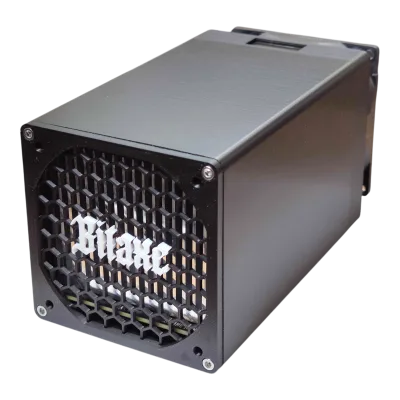
- Solo mining with a Bitaxe — an open-source, single-chip solo miner that gives every individual a shot at finding a block. At 3.125 BTC per block, that’s the ultimate lottery ticket backed by thermodynamic proof-of-work, not some banking clan’s promise.
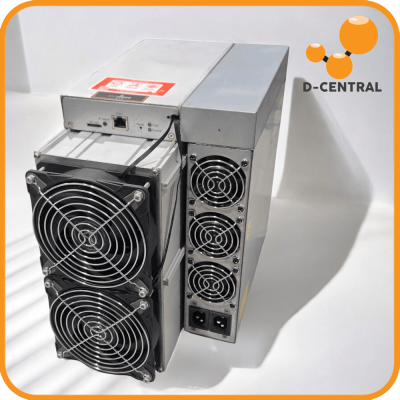
- Bitcoin Space Heaters — ASICs repurposed as home heating units. You heat your home AND mine Bitcoin. Dual-purpose machines that turn energy costs into sats. In Canada, where winters hit -30C, this isn’t a novelty — it’s an engineering solution.
- ASIC Repair — when your miner goes down, we bring it back. With 8+ years of repair experience across Bitmain, MicroBT, Canaan, and Innosilicon hardware, we keep hashrate decentralized by keeping home miners operational.
The Empire wants you dependent on their credits. The Rebellion wants you running your own node and mining your own blocks. Pick a side.
The Alderaan Lesson: What Happens When You Centralize Value
Let’s talk about the most devastating economic event in galactic history: the destruction of Alderaan.
Alderaan wasn’t just a populated planet — it was the primary source of Aurodium. When the Death Star turned Alderaan to rubble, it didn’t just kill billions of beings. It obliterated the galaxy’s last connection to hard money. The Aurodium standard was already dead politically, but Alderaan’s destruction killed it physically.
The lesson is brutal and clear: when you centralize your store of value in one location, a single point of failure can destroy everything.
Bitcoin fixes this. The Bitcoin network runs on tens of thousands of nodes distributed across every continent. There is no Alderaan to blow up. There is no vault to raid. There is no single point of failure. The network’s hashrate — over 800 EH/s spread across mining operations worldwide — ensures that no Death Star, no government, and no executive order can shut it down.
This is why decentralizing mining matters. When hashrate concentrates in a few large facilities, you create Alderaans — single points of failure that authoritarian regimes can target. When hashrate is distributed across thousands of home miners running Bitaxe units, NerdAxe devices, and repurposed ASICs from D-Central’s shop, you build an indestructible network.
From Cypherpunks to the Rebel Alliance
The Star Wars Rebel Alliance and the cypherpunk movement share the same DNA. Both understood that freedom requires systems that can’t be controlled by centralized powers.
The cypherpunks — Eric Hughes, Timothy May, Hal Finney, and the anonymous Satoshi Nakamoto — built cryptographic tools that enabled individual sovereignty. They wrote code. They ran nodes. They mined.
The Rebel Alliance did the same thing with starfighters and stolen Death Star plans. Different tools, same principle: decentralize power or lose your freedom.
Bitcoin mining is where this philosophy becomes physical. Every ASIC humming in a garage, every Bitaxe blinking on a desk, every space heater warming a basement while stacking sats — these are acts of monetary rebellion. Not with blasters, but with SHA-256 hashes.
The Real Bitcoin Standard
In the Star Wars timeline, the galaxy never found its way back to sound money. The Empire’s credits gave way to New Republic credits, and the cycle of centralized monetary control continued. The galaxy never got its Satoshi Nakamoto.
We did.
Bitcoin’s fixed supply of 21 million coins, its predictable halving schedule (block reward currently at 3.125 BTC, halving roughly every four years), and its permissionless network create something that neither Aurodium nor any galactic currency could achieve: a monetary system that is simultaneously scarce, portable, verifiable, censorship-resistant, and immune to political manipulation.
That’s not just digital gold. That’s a civilization-scale upgrade to money itself.
What Comes Next
The battle between centralized and decentralized money isn’t theoretical — it’s happening right now. Central Bank Digital Currencies (CBDCs) are the Empire’s latest weapon: total surveillance of every transaction, programmable restrictions on how you can spend your own money, and the ability to freeze your funds with a keystroke.
In Episode III: Imperial Chain-Codes vs. Central Bank Digital Currencies, we’ll dismantle exactly how CBDCs mirror the Empire’s chain-code system and why Bitcoin is the only viable exit.
Until then — run your node, mine your blocks, heat your home. Every hash counts.
What is Aurodium in Star Wars and how does it relate to Bitcoin?
Aurodium is a rare precious metal in the Star Wars universe, primarily mined from the planet Alderaan. It served as the galaxy’s hard money standard before being replaced by Galactic Credits issued by the Inter-Galactic Banking Clan. Aurodium shares key properties with gold and Bitcoin: scarcity, durability, and freedom from central control. Bitcoin improves on both by adding a mathematically enforced supply cap of 21 million coins and a decentralized verification network.
Why did the Star Wars galaxy move away from the Aurodium standard?
The Inter-Galactic Banking Clan (IGBC) pushed the galaxy toward Galactic Credits, arguing that a physical commodity standard was impractical for interstellar commerce. The real motive was control — credit systems allowed the IGBC to manipulate supply, fund both sides of the Clone Wars, and consolidate power. This mirrors Earth’s 1971 abandonment of the gold standard, which gave central banks unlimited money-printing ability.
What are the parallels between Imperial Credits and modern fiat currency?
Imperial Credits were issued by a centralized authoritarian regime, had no supply cap, funded a massive military apparatus, and could be used as a tool of financial surveillance and control. Modern fiat currencies share these characteristics: central bank issuance, unlimited money creation, military-industrial funding, and increasing financial surveillance. Bitcoin offers an alternative with its fixed 21 million supply, permissionless access, and censorship resistance.
How does Bitcoin mining relate to the Star Wars Rebellion?
Bitcoin mining decentralizes the monetary system by distributing the power to create and validate money across thousands of independent operators. This directly parallels the Rebel Alliance’s mission to decentralize political power. Every home miner running a Bitaxe, NerdAxe, or repurposed ASIC is participating in monetary rebellion — securing a financial network that no Empire can control. At D-Central Technologies, we provide the tools for this rebellion: solo miners, space heaters, and repair services that keep decentralized hashrate online.
What is a Bitaxe and how does it connect to solo Bitcoin mining?
A Bitaxe is an open-source, single-chip Bitcoin solo miner. It allows individuals to mine Bitcoin independently without joining a mining pool. While the odds of solo mining a block are low given Bitcoin’s 800+ EH/s network hashrate, each block found pays the full 3.125 BTC reward. D-Central Technologies is a pioneer in the Bitaxe ecosystem, having created the original Bitaxe Mesh Stand and developed leading accessories. Visit the Bitaxe Hub for setup guides, comparisons, and everything Bitaxe.
What are Bitcoin Space Heaters?
Bitcoin Space Heaters are ASIC miners repurposed as home heating units. Since all energy consumed by a miner converts to heat, you can heat your home while simultaneously mining Bitcoin — turning a pure cost (heating) into a productive activity. D-Central Technologies builds space heater editions using various ASIC models. In cold Canadian climates, this is particularly effective, providing months of dual-purpose operation. Explore the full lineup at Bitcoin Space Heaters.