The Bitcoin network now exceeds 800 EH/s of global hashrate. Behind every one of those exahashes sits purpose-built hardware, consuming electricity, generating heat, and securing the most resilient monetary network humanity has ever constructed. For most of its history, that hashrate was produced by private companies and individual miners. That era is ending.
Nation-states are deploying sovereign hashrate. They are building mining farms, writing mining into energy policy, and accumulating bitcoin directly through proof-of-work. This is not speculation or some distant forecast. It is happening right now, on every continent, and the implications for Bitcoin’s security model, for geopolitics, and for home miners like you are profound.
At D-Central Technologies, we have been in the mining trenches since 2016. We repair the hardware, build the infrastructure, and ship the miners. We see this trend from the ground level. Here is what the sovereign mining shift actually means, stripped of hype and grounded in the technical and economic reality.
Why Governments Mine Bitcoin: The Strategic Calculus
Governments do not adopt technologies on a whim. When a nation-state commits resources to Bitcoin mining, it is making a calculated bet across multiple strategic dimensions simultaneously. Understanding those dimensions is critical.
Energy Monetization: Turning Waste Into Hashrate
Every nation has stranded energy. Hydroelectric dams that overproduce during spring runoff. Natural gas that gets flared at wellheads because pipeline capacity does not exist. Geothermal heat in volcanic regions that sits untapped. Wind farms that curtail output when the grid cannot absorb it.
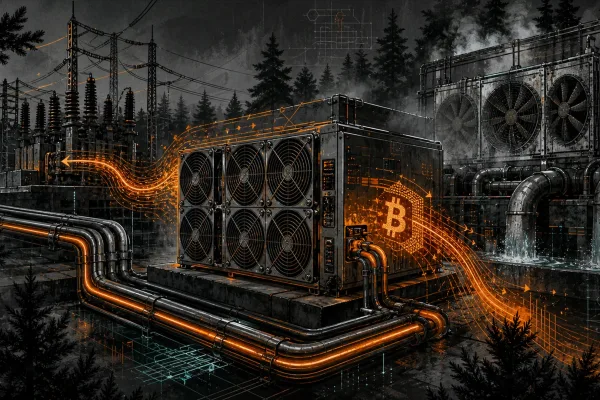
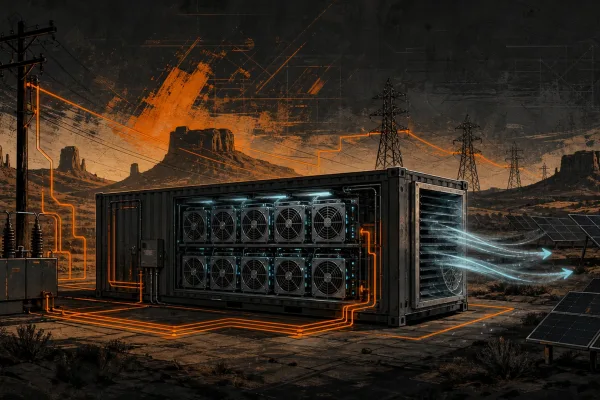
Bitcoin mining is the only industry on earth that can monetize energy anywhere, at any scale, with near-instant deployment. A shipping container full of ASICs can be trucked to a remote gas flare site and begin converting methane into bitcoin within days. No customers needed. No transmission lines required. The buyer of last resort is the Bitcoin network itself, and it is always open.
This is why nations with energy surpluses are natural candidates for sovereign mining:
| Country | Energy Source | Mining Strategy |
|---|---|---|
| El Salvador | Geothermal (volcanic) | State-run mining facility at Tecapa volcano; bitcoin is legal tender |
| Bhutan | Hydroelectric | Sovereign wealth fund (Druk Holding) mines BTC with surplus hydro power |
| Russia | Nuclear, hydro, gas | Legalized industrial mining; multiple state-aligned operations in Siberia |
| UAE | Natural gas, solar | Marathon Digital partnership; DMCC Crypto Centre as regulatory hub |
| Ethiopia | Hydroelectric (Grand Renaissance Dam) | Licensed mining operations using excess hydro capacity |
| Canada | Hydro, nuclear, wind | Provincial-level support; Quebec hydro attracts massive mining operations |
Canada deserves special attention here. Quebec alone produces more hydroelectric power than most countries, and the province has historically exported surplus energy at a loss. Bitcoin mining transforms that surplus into a revenue stream that stays within Canadian borders. This is exactly why D-Central operates its hosting facility in Quebec — cheap, clean hydro is the ultimate competitive advantage for proof-of-work.
Strategic Reserve Accumulation
When a government mines bitcoin, it acquires BTC at the cost of electricity rather than at market price. At current difficulty levels and with access to sub-$0.04/kWh power (common for state-owned hydro and nuclear), the cost-per-bitcoin for a sovereign miner running modern ASICs is substantially below market price.
This math changes the game. Instead of buying bitcoin on exchanges — which moves the market, creates counterparty exposure, and requires foreign currency — a nation can simply mine it into existence using domestic energy and domestic infrastructure. The bitcoin never touches an exchange. It goes straight from the coinbase transaction to the sovereign wallet.
El Salvador understood this early. Bhutan’s sovereign wealth fund quietly accumulated over $750 million in BTC through mining before the public even knew they were doing it. The United States has explored a strategic bitcoin reserve, with multiple legislative proposals and executive orders on the table. When the world’s reserve currency issuer starts talking about holding bitcoin, the signal is unmistakable.
Grid Stabilization and Demand Response
This is the angle that most mainstream coverage misses entirely. Bitcoin miners are the ideal interruptible load for electricity grids.
Here is how it works: electrical grids must balance supply and demand in real time. Too much supply relative to demand causes frequency instability. Too little causes brownouts. Grid operators spend enormous resources managing this balance. Bitcoin miners solve this problem by acting as flexible demand that can be throttled up or down in seconds.
When the grid is oversupplied (windy night, spring runoff, low demand), miners absorb the excess. When demand spikes (heat wave, cold snap, industrial peak), miners curtail instantly. ERCOT in Texas has demonstrated this model at scale — miners have repeatedly shut down during winter storms to free up gigawatts of capacity for residential heating.
For a nation-state, this is not just an energy policy tool. It is a national security asset. A fleet of ASICs connected to the grid becomes a buffer that strengthens grid resilience while generating revenue during normal operations. The alternative — building peaker plants that sit idle most of the year — is vastly more expensive.
The Geopolitical Implications of Sovereign Hashrate
Bitcoin is a global, permissionless, censorship-resistant monetary network. Its security depends on the distribution of hashrate. When hashrate concentrates in a single jurisdiction, that jurisdiction gains disproportionate influence over transaction ordering, censorship potential, and network governance.
This is why sovereign mining matters for everyone, not just for nation-states.
Hashrate as Soft Power
A country that controls a significant percentage of global hashrate has influence over the Bitcoin network. Not control — Bitcoin’s design prevents any single actor from controlling the network — but influence. The ability to signal for protocol upgrades, the ability to prioritize certain transactions, the ability to participate in the block construction market.
More importantly, a country with domestic hashrate cannot be cut off from the Bitcoin network by external actors. Sanctions cannot prevent a sovereign miner from producing blocks. Diplomatic pressure cannot shut down domestically powered, domestically operated mining infrastructure.
This is the real reason sanctioned nations mine bitcoin. It is not about “circumventing” the financial system — it is about building a parallel one that cannot be weaponized against you.
The Hash Rate Arms Race
When multiple nation-states mine bitcoin, the game theory gets interesting. If Country A mines and Country B does not, Country A accumulates a strategic asset while Country B falls behind. This creates a first-mover disadvantage for non-participants, similar to the nuclear deterrence logic of the Cold War (minus the existential threat).
The result is predictable: more nations will mine. The global hashrate distribution will become more geographically diverse, which — and this is the critical point — makes Bitcoin more resilient. No single government can shut down a network whose hashrate is distributed across dozens of sovereign jurisdictions, each with their own energy infrastructure and legal framework.
From a cypherpunk perspective, this is an extraordinary outcome. Nation-states, by pursuing their own strategic interests, inadvertently strengthen the very decentralized system that limits their monetary sovereignty. The game theory of Bitcoin is elegant precisely because it aligns self-interest with network security.
What This Means for Home Miners
If you are a home miner running a Bitaxe on your desk or an Antminer in your basement, you might wonder whether sovereign mining threatens your operation. The answer is nuanced, and ultimately encouraging.
Difficulty and the Individual Miner
Yes, nation-state mining increases global hashrate, which increases difficulty, which means your individual hardware produces fewer sats per day. That is an unavoidable mathematical reality. When the network crosses 800 EH/s and climbs toward 1 ZH/s, each terahash earns a smaller slice of the 3.125 BTC block reward.
But here is what the alarmists miss: difficulty adjustment is Bitcoin working as designed. Rising difficulty means rising security. It means the network is attracting more resources, more investment, more commitment to proof-of-work. A Bitcoin network secured by 1 ZH/s is dramatically harder to attack than one secured by 100 EH/s.
The Case for Decentralized Mining Has Never Been Stronger
If anything, sovereign mining makes your home mining operation more important, not less. Every hash that comes from an individual miner running in their home, on their own power, with their own node, is a hash that no government controls. It is a hash that contributes to geographic distribution. It is a hash that keeps Bitcoin decentralized at the most granular level.
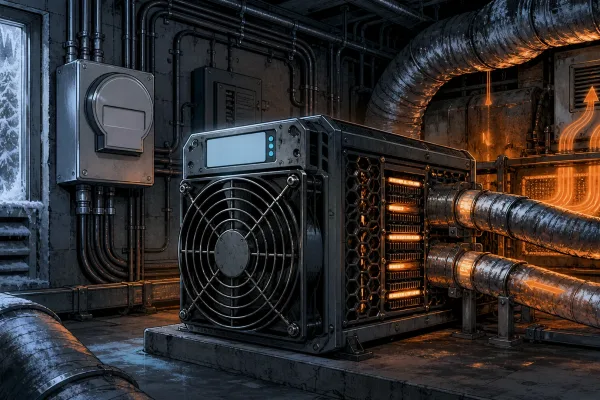
This is the mission that drives everything we do at D-Central. It is why we build Bitcoin space heaters that turn mining hardware into home heating systems. It is why we stock every Bitaxe variant, every open-source miner, every accessory that makes home mining accessible. It is why we repair ASICs that would otherwise end up in landfills — because every miner brought back online is another node of decentralization.
The sovereign mining trend is not a threat to home miners. It is the strongest possible argument for why home mining must exist.
Canada’s Position in the Sovereign Mining Landscape
Canada holds a unique position in this global shift. Our energy profile is nearly ideal for Bitcoin mining:
| Factor | Canada’s Advantage |
|---|---|
| Energy Mix | 60%+ hydroelectric — among the cleanest grids on earth |
| Climate | Cold ambient temperatures reduce cooling costs by 30-40% compared to tropical regions |
| Political Stability | Stable rule of law; no history of asset seizure or mining bans |
| Energy Surplus | Quebec regularly exports surplus hydro at below-cost rates; mining captures that value domestically |
| Dual-Purpose Potential | 8+ months of heating season means ASIC heat recovery is economically viable most of the year |
At D-Central, we have built our entire operation around these Canadian advantages. Our Quebec hosting facility runs on hydro power. Our space heaters are designed for Canadian winters. Our consulting services help Canadian miners optimize for our specific energy landscape and regulatory environment.
We are the North, and the North mines bitcoin.
The Regulatory Reality
The regulatory picture for sovereign mining is complex and rapidly evolving. Different nations are taking wildly different approaches:
Permissive frameworks — Canada, the UAE, and several U.S. states have created favorable environments for mining through tax incentives, clear regulatory guidelines, and energy partnerships. These jurisdictions are attracting massive capital investment.
State-operated models — El Salvador and Bhutan run mining operations directly through state entities or sovereign wealth funds. The government is the miner, and the bitcoin goes directly into national reserves.
Restrictive regimes — China banned mining in 2021, pushing hashrate to other jurisdictions. Some nations have imposed temporary moratoriums or heavy energy taxes on mining operations.
Emerging frameworks — Many nations are still developing their approach. Ethiopia, Paraguay, Oman, and several African nations are writing mining into their energy and economic development plans.
The trend line is clear: more regulation, but not less mining. Governments that ban mining lose the economic activity to jurisdictions that welcome it. The nations that get the regulatory framework right will attract hashrate, capital, and technical talent. Canada, with its clear property rights, clean energy, and political stability, is positioned to be one of those nations.
Debunking the Energy Alarmism
No article on nation-state mining is complete without addressing the “Bitcoin uses more energy than [insert country]” narrative. Let us dismantle it with data.
Bitcoin mining consumes roughly 150-170 TWh annually. That sounds like a lot until you compare it to the global financial system (estimated at 260+ TWh), clothes dryers in the United States alone (~100 TWh), or always-on consumer electronics globally (~1,000+ TWh). The energy critique is a framing problem, not a physics problem.
More importantly, the composition of that energy matters. The Bitcoin Mining Council reports that over 60% of Bitcoin mining energy comes from sustainable sources — hydro, solar, wind, nuclear, and geothermal. That percentage is higher than virtually any other global industry, and it is growing. When nation-states mine with surplus hydro (Bhutan, Canada, Ethiopia) or geothermal (El Salvador, Iceland), the marginal environmental impact approaches zero because that energy would otherwise be curtailed or wasted.
Bitcoin mining does not compete with households for energy. It monetizes energy that would not otherwise be used. That is not a bug — it is a feature, and it is precisely why governments are deploying hashrate alongside their renewable energy infrastructure.
The Road Ahead: Hashrate Goes Sovereign
The sovereign mining trend is accelerating. More nations will mine. More strategic reserves will hold bitcoin. More energy policy will integrate proof-of-work as a grid management tool.
For the Bitcoin network, this is overwhelmingly positive. More hashrate means more security. More geographic distribution means more censorship resistance. More nation-state commitment means more legitimacy and infrastructure investment.
For home miners, the message is clear: your hashrate matters more than ever. In a world where governments mine bitcoin, the individual miner is the last line of decentralization. Every Bitaxe on a desk, every space heater in a basement, every solo miner taking their shot at a 3.125 BTC block reward — these are acts of sovereign computing.
At D-Central Technologies, we have been building the tools for this mission since 2016. Whether you need a Bitaxe for your desk, a space heater for your home, or a full hosting setup in Quebec, we are here to make sure the hashrate stays distributed.
Because the best response to sovereign mining is more sovereign mining — at every scale, in every home, in every country.
Every hash counts.
Frequently Asked Questions
Why are nation-states getting involved in Bitcoin mining?
Nation-states mine bitcoin for multiple strategic reasons: monetizing stranded or surplus energy (especially hydroelectric, geothermal, and flared natural gas), accumulating bitcoin as a strategic reserve asset at below-market cost, stabilizing electricity grids through interruptible load management, and establishing sovereign participation in the Bitcoin network’s security model. The trend accelerated after El Salvador adopted bitcoin as legal tender and Bhutan’s sovereign wealth fund was revealed to hold hundreds of millions in mined BTC.
Which countries are currently mining bitcoin at the state level?
As of 2025-2026, notable sovereign or state-aligned mining operations exist in El Salvador (geothermal), Bhutan (hydroelectric), Russia (nuclear/hydro/gas), the UAE (gas/solar via Marathon Digital partnership), Ethiopia (hydroelectric), and several U.S. states with favorable energy policies. Canada hosts significant mining operations, particularly in Quebec, leveraging surplus hydroelectric power. The list continues to grow as more nations recognize the strategic value of domestic hashrate production.
Does sovereign mining threaten individual home miners?
Not in any meaningful way. While sovereign mining increases global difficulty — meaning each terahash produces fewer sats — this is Bitcoin’s difficulty adjustment working as intended. More importantly, sovereign mining strengthens the case for home mining. Every hash produced by an individual miner in their own home, on their own power, running their own node, is a hash that no government controls. Home mining is the ultimate expression of Bitcoin’s decentralization mission, and it becomes more important as institutional and state-level mining grows.
How does Bitcoin mining help stabilize electricity grids?
Bitcoin miners are ideal interruptible loads. They can ramp up when the grid has excess supply (windy nights, spring hydro runoff, low-demand periods) and curtail within seconds when demand spikes (heat waves, cold snaps, peak industrial hours). This flexibility helps grid operators balance supply and demand without building expensive peaker plants that sit idle most of the year. Texas’s ERCOT grid has demonstrated this model at scale, with miners shutting down during winter storms to free up gigawatts for residential heating.
Why is Canada well-positioned for Bitcoin mining?
Canada has a nearly ideal profile for Bitcoin mining: over 60% hydroelectric energy (among the cleanest grids globally), cold ambient temperatures that reduce cooling costs by 30-40%, political stability with clear property rights, significant energy surplus (Quebec regularly exports hydro at below-cost rates), and 8+ months of heating season that makes ASIC heat recovery economically viable. D-Central Technologies operates its hosting facility in Quebec and builds Bitcoin space heaters specifically designed for Canadian conditions.
Is Bitcoin mining bad for the environment?
The “Bitcoin uses too much energy” narrative is a framing problem, not a physics problem. Bitcoin mining consumes roughly 150-170 TWh annually — less than the global financial system, comparable to U.S. clothes dryers alone. Over 60% of mining energy comes from sustainable sources (hydro, solar, wind, nuclear, geothermal), a higher percentage than virtually any other global industry. When sovereign miners use surplus hydro or geothermal energy that would otherwise be curtailed, the marginal environmental impact approaches zero. Bitcoin mining monetizes energy that would not otherwise be consumed.
What services does D-Central Technologies offer for miners?
D-Central Technologies is a full-service Bitcoin mining company based in Canada, operating since 2016. We offer ASIC repair services for all major manufacturers, Bitcoin mining hardware (including all Bitaxe variants, open-source miners, full ASICs, and Bitcoin space heaters), mining hosting in our Quebec hydroelectric facility, mining consulting for home and commercial setups, and comprehensive mining support. We are pioneers in the Bitaxe ecosystem and created the original Bitaxe Mesh Stand. Visit our shop or repair center to get started.
How can I start mining bitcoin at home?
The easiest entry point is an open-source solo miner like the Bitaxe, which plugs into a standard 5V barrel jack power supply and connects to your home WiFi. For heat recovery, a Bitcoin space heater converts a full ASIC miner into a heating unit for your home. For larger setups, D-Central offers consulting and hosting services. Check out the Bitaxe Hub for comprehensive guides on getting started with solo mining, or browse our space heater collection for dual-purpose mining solutions.