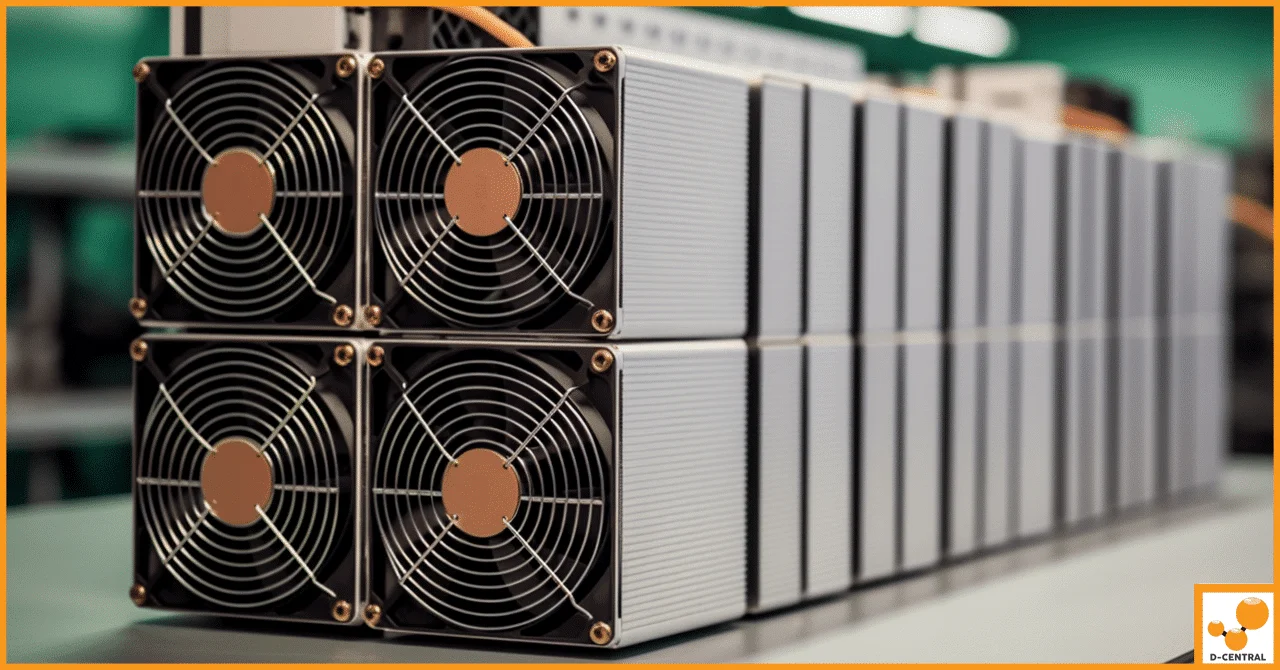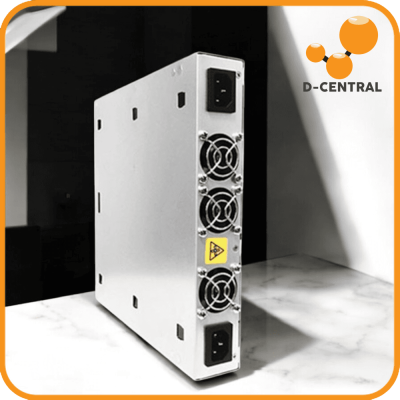
Running a single ASIC miner at home is one thing. Running ten, twenty, or a hundred is an entirely different engineering problem. The noise alone from a fleet of Antminer S21s will have your neighbours filing complaints before your first difficulty adjustment. Then there is the power draw — a dozen next-generation machines can pull 40+ kW, which is more than most residential panels can deliver without a costly electrical upgrade. And the heat? You are essentially running an industrial furnace in your basement.
This is where colocation enters the picture. Not as a replacement for home mining — we are massive advocates of mining at home, especially with dual-purpose setups like Bitcoin space heaters — but as a complement. Colocation is for the miners who want to scale beyond what their home infrastructure can handle while keeping custody of their own hardware. It is the difference between running a home lab and deploying production infrastructure.
At D-Central Technologies, we have been operating Bitcoin mining hosting in Quebec since our early days. We have seen the colocation landscape evolve from sketchy warehouse operations to professional, purpose-built facilities. Here is what you need to know in 2026 — with the network hashrate pushing past 800 EH/s and the block reward at 3.125 BTC post-halving — about making colocation work for your mining operation.
What Is Bitcoin Mining Colocation?
Colocation is straightforward: you own the mining hardware, but you house it in someone else’s facility. The facility provides power, cooling, network connectivity, physical security, and monitoring. You pay a hosting fee — typically calculated per kW/h or as a flat rate per machine per month — and you keep the mining rewards.
This is fundamentally different from cloud mining (where you own nothing) or hashrate contracts (where you are essentially renting someone else’s machines). With colocation, you maintain ownership and sovereignty over your hardware. You choose your mining pool. You decide your overclocking profile. You can visit your machines, swap them out, or ship them to a repair facility when a hashboard fails. Your keys, your hardware, your hashrate.
The Core Components of a Colocation Facility
A proper Bitcoin mining colocation facility is not a repurposed server room. It is purpose-built infrastructure designed for one thing: converting electricity into SHA-256 hashes as efficiently as possible. The key components include:
- Power infrastructure: High-voltage utility feeds (typically 13.8 kV or higher), step-down transformers, PDUs rated for continuous high-amperage loads, and redundant grid connections. In Quebec, this means access to Hydro-Quebec’s grid — one of the cheapest and cleanest power sources in North America.
- Cooling systems: ASIC miners convert nearly all consumed electricity into heat. A facility running 1 MW of miners is dissipating 1 MW of thermal energy. Purpose-built facilities use a combination of direct airflow management, evaporative cooling, and in cold climates like Quebec, free-air cooling for much of the year.
- Network connectivity: Redundant internet connections with low-latency paths to major mining pools. Stale shares cost you money — every millisecond of latency matters when you are competing against 800+ EH/s of global hashrate.
- Physical security: Fencing, surveillance cameras, access control, and on-site personnel. Your hardware represents a significant capital investment — it needs to be protected accordingly.
- Monitoring and management: 24/7 operational monitoring with alerting for offline machines, abnormal temperatures, and power anomalies. Good facilities catch problems before they cost you significant downtime.
Why Colocation Makes Sense After the 2024 Halving
The April 2024 halving cut the block reward from 6.25 BTC to 3.125 BTC. That single event immediately doubled the cost of producing each bitcoin through mining. In a post-halving environment, operational efficiency is not a nice-to-have — it is the difference between profitable mining and burning money.
Power Costs Are the Dominant Variable
Electricity typically represents 70-80% of ongoing mining operational costs. The difference between $0.04/kWh and $0.12/kWh is not marginal — it determines whether your operation is profitable or underwater. Most residential electricity rates in North America range from $0.10 to $0.25/kWh. Industrial and commercial rates, especially in regions like Quebec, can be significantly lower.
Colocation facilities negotiate bulk power contracts that individual miners simply cannot access. When you are buying megawatts instead of kilowatts, you get pricing that makes post-halving mining viable with current-generation hardware.
Cooling Efficiency in Cold Climates
This is where Quebec hosting has a structural advantage. For roughly six months of the year, outside air temperatures are below the intake temperature targets for ASIC miners. Free-air cooling during Canadian winters means the facility spends almost nothing on cooling during those months — savings that get passed through to hosted miners. Compare that to a facility in Texas or the Middle East that runs industrial cooling systems year-round.
Uptime Is Hashrate
Every hour your miner is offline is an hour of zero revenue with fixed costs still ticking. Home mining setups are vulnerable to residential power outages, breaker trips, router reboots, and the occasional family member unplugging your miner because it is too loud. Professional colocation facilities maintain 99%+ uptime through redundant systems, backup power, and 24/7 monitoring. Over the course of a year, the difference between 95% and 99.5% uptime is significant — that is roughly 200 additional hours of hashing.
Colocation vs. Home Mining: They Are Not Competing
We need to be clear about something: D-Central does not view colocation and home mining as an either/or proposition. We are the company that builds Bitcoin space heaters and champions the Bitaxe ecosystem for solo mining at home. We believe every bitcoiner who can run a miner at home should do so — it strengthens the network’s decentralization, it monetizes your energy costs, and it puts you closer to the protocol.
But we also recognize reality. There is a ceiling to what you can run at home. That ceiling varies — maybe it is one S21, maybe it is five if you have a dedicated space and the electrical capacity — but it exists. When you hit it, colocation is how you keep scaling without moving to an industrial property.
The Sweet Spot for Each Approach
Home mining works best when:
- You are running 1-5 machines and have the electrical capacity
- You can use the waste heat productively (space heating, water heating, greenhouse)
- Noise is manageable (basement, garage, or dedicated room with sound dampening)
- You are running open-source miners like the Bitaxe for solo mining and education
- Your residential electricity rate is competitive (under $0.10/kWh)
Colocation works best when:
- You want to deploy 5+ machines and your home cannot support them
- Your residential power rate makes large-scale mining unprofitable
- Noise and heat from multiple ASICs are not manageable at home
- You want professional monitoring and maintenance without doing it yourself
- You need the reliability of purpose-built infrastructure
Many serious miners do both. They run a couple of machines at home — perhaps a Bitcoin space heater in the living room and a Bitaxe on the desk for solo lottery mining — while hosting a larger fleet at a colocation facility. This hybrid approach maximizes decentralization (your home miner contributes to geographic hash distribution) while capturing the economic benefits of professional hosting for your larger investment.
What to Look for in a Colocation Provider
Not all hosting facilities are created equal. The Bitcoin mining hosting space has its share of fly-by-night operators, overcrowded warehouses, and outright scams. Here is what separates legitimate operations from the rest:
Transparent Pricing
A reputable facility will give you clear, upfront pricing. Watch out for hidden fees — setup charges, maintenance surcharges, minimum commitment periods with penalties, or electricity rate escalation clauses. The best hosting agreements are simple: you pay X per kW/h or X per machine per month, all-in.
Verifiable Infrastructure
Can you visit the facility? Can you see the electrical infrastructure, cooling systems, and security measures? If a hosting provider will not let you inspect their operation, that is a red flag. Legitimate facilities are proud of their infrastructure and happy to show it off.
Track Record and Reputation
How long has the facility been operating? Do they have references from current clients? What happens when there is a problem — do they communicate proactively, or do you find out your machines were offline for three days after the fact?
Geographical and Jurisdictional Considerations
Where your miners are hosted matters. Political stability, energy policy, regulatory environment, and climate all factor in. Canada — and Quebec specifically — scores well on all counts: stable democratic governance, abundant hydroelectric power, mining-friendly regulatory environment, and a cold climate that reduces cooling costs for half the year.
Hardware Support Capabilities
Machines break. Fans fail, hashboards degrade, control boards glitch. Does the facility have on-site technicians who can diagnose and perform basic repairs? Or will your machine sit offline for weeks while you arrange to have it shipped to a repair shop? D-Central’s model is unique here — we combine hosting with professional ASIC repair services, which means your hosted hardware gets faster turnaround on maintenance and repairs.
D-Central’s Colocation: Quebec-Based, Miner-Focused
D-Central Technologies operates its hosting facility in Montreal, Quebec. This is not an accident — it is a strategic decision based on the fundamentals that matter for Bitcoin mining:
- Hydro-Quebec power: Quebec’s electrical grid runs on 99%+ hydroelectric generation. This is some of the cleanest, cheapest, and most reliable power in North America. When critics claim Bitcoin mining is environmentally destructive, Quebec-hosted miners can point to one of the greenest grids on the planet.
- Cold climate advantage: Montreal’s average temperature from October through April hovers around or below freezing. That translates to months of free-air cooling, dramatically reducing the energy overhead of keeping ASICs at optimal operating temperatures.
- Canadian jurisdiction: Stable rule of law, clear property rights over your hardware, and no history of government seizures of mining equipment. Your machines are your machines.
- Integrated repair services: Unlike pure hosting providers, D-Central has been repairing ASICs since 2016. When a hashboard goes down in our facility, our technicians can diagnose and repair it on-site or at our repair shop without the machine leaving our care. This integration between hosting and ASIC repair reduces downtime significantly.
Who We Host For
Our hosting services cater to individual miners and small-to-medium operations. We are not chasing institutional-scale deployments of 100 MW — we are focused on the pleb miners who want to run serious hashrate but do not have the infrastructure at home. Whether you are hosting 2 machines or 20, our facility is built to support your operation with the same level of care and attention.
The Economics of Colocation in 2026
Let us talk numbers, because this is where the decision becomes concrete.
Current Network Conditions
As of early 2026, the Bitcoin network hashrate exceeds 800 EH/s. The block reward is 3.125 BTC. Transaction fees provide additional revenue but are variable. Difficulty adjustments continue to push upward as more efficient hardware comes online. In this environment, your cost per terahash matters more than ever.
The Colocation Cost Equation
Your total cost of mining in a colocation facility includes:
- Hardware cost: The capital expenditure on your ASIC miners (amortized over their productive lifespan)
- Hosting fee: The monthly or per-kWh charge from the facility
- Shipping: Getting your hardware to and from the facility
- Maintenance: Repairs, part replacements, and hardware refreshes
Compare this against home mining costs: residential electricity (often 2-3x industrial rates), electrical upgrades (sub-panel, dedicated circuits, potentially service upgrades), cooling solutions, noise mitigation, and your own time managing the operation. For operations beyond 2-3 machines, colocation frequently wins on a pure cost-per-hash basis.
The Time Factor
Something often overlooked: your time has value. Managing a large home mining operation is essentially a part-time job — monitoring uptime, cleaning filters, swapping fans, troubleshooting connectivity issues, managing heat in summer. Colocation offloads that operational burden to professionals, freeing you to focus on strategy: when to buy hardware, which pool to mine on, when to upgrade to next-generation machines.
Scaling Your Mining Operation Strategically
The smartest approach to scaling a Bitcoin mining operation is incremental and strategic. Here is a framework that many successful miners follow:
Phase 1: Learn at Home
Start with a single miner at home. Understand the fundamentals: pool selection, overclocking, monitoring, power measurement, heat management. Run a Bitaxe for solo mining education. Set up a Bitcoin space heater to experience dual-purpose mining firsthand. This phase is about building knowledge, not maximizing hashrate.
Phase 2: Optimize Your Home Setup
Once you understand the basics, optimize what you have. Proper ventilation, sound dampening, dedicated electrical circuits. Maybe add a second or third machine if your home supports it. Experiment with custom firmware and efficiency tuning. Browse the D-Central shop for accessories, replacement parts, and cooling solutions that improve your setup.
Phase 3: Expand via Colocation
When you hit the ceiling of what your home can support, move your expansion to a colocation facility. Keep your home miners running — they serve a different purpose (heat utilization, decentralization, education). Your colocation deployment is your production fleet, optimized for maximum hashrate per dollar.
Phase 4: Iterate and Upgrade
As new, more efficient hardware becomes available, evaluate the upgrade cycle. Sell or repurpose older machines (older ASICs make excellent space heaters). Deploy next-generation hardware at the colocation facility. Continuously optimize your fleet composition based on current difficulty, power costs, and hardware efficiency.
Common Misconceptions About Colocation
“Colocation Means I Do Not Control My Bitcoin”
Wrong. You control your pool settings, your payout address, and your wallet. The colocation facility provides power and shelter for your hardware — they never have access to your mining rewards. Your bitcoin goes directly from the pool to your wallet.
“It Is Cheaper to Just Mine at Home”
For 1-2 machines, possibly. But factor in the true cost of home mining at scale: electrical upgrades ($2,000-$10,000+), cooling infrastructure, noise mitigation, the value of your time, and residential electricity rates. At scale, colocation is almost always more cost-effective.
“I Cannot Trust Someone Else With My Hardware”
This is why due diligence matters. Visit the facility. Verify insurance. Read the contract. A reputable colocation provider has every incentive to keep your machines running — their business depends on it. Choose a provider with a track record, like D-Central, that has been in the mining industry since 2016.
“Cloud Mining Is the Same Thing”
Absolutely not. Cloud mining means you own nothing — you are buying hashrate output from someone else’s machines. When the contract ends or the company disappears, you have zero. With colocation, you own the physical hardware. You can retrieve it, sell it, repurpose it, or move it to another facility. Ownership matters.
The Decentralization Argument for Colocation
There is a tension in the Bitcoin mining world between efficiency and decentralization. Large-scale mining farms concentrate hashrate geographically and organizationally. Home mining distributes it but is limited in scale. Colocation sits in an interesting middle ground.
When individual miners host their own hardware at a colocation facility, the hashrate ownership remains distributed even if the physical location is shared. Each miner chooses their own pool, their own configuration, their own payout. This is fundamentally different from a single entity controlling all the hashrate in a facility. Colocation can actually support decentralization by enabling individual miners to compete at scale without surrendering control of their hashrate to a single corporate entity.
At D-Central, we believe the ideal Bitcoin network has hashrate distributed across millions of locations and operators. Home mining with Bitaxe devices and space heaters pushes hashrate into homes. Colocation enables individuals to scale their owned hashrate beyond home limitations. Both contribute to a more resilient, decentralized network.
Frequently Asked Questions
What is Bitcoin mining colocation and how does it differ from cloud mining?
Colocation means you own the physical mining hardware and house it in a professional facility that provides power, cooling, security, and connectivity. You maintain full control over your machines, pool selection, and payout addresses. Cloud mining, by contrast, means you own nothing — you purchase hashrate output from a third party. When the cloud mining contract ends, you have no hardware and no ongoing hashrate. Colocation preserves your sovereignty over your mining operation.
Why does D-Central host miners in Quebec specifically?
Quebec offers a unique combination of advantages for Bitcoin mining: Hydro-Quebec provides some of the cheapest and cleanest electricity in North America (99%+ hydroelectric), the cold climate enables free-air cooling for roughly half the year, and Canada provides a stable legal jurisdiction with clear property rights. D-Central’s hosting facility is located in Montreal, Quebec, where these advantages translate directly into lower operational costs and higher reliability for hosted miners.
Can I still mine at home and use colocation at the same time?
Absolutely — and we encourage it. Many miners run a hybrid setup: smaller machines or dual-purpose miners (like Bitcoin space heaters) at home for heating and decentralization, while hosting a larger fleet at a colocation facility for maximum hashrate. Home mining and colocation serve different purposes and complement each other well.
What happens if my mining hardware breaks while it is at a colocation facility?
This depends on the facility. Most pure hosting providers will notify you and wait for instructions, which can mean weeks of downtime. D-Central’s advantage is our integrated ASIC repair service — we have been repairing mining hardware since 2016. If a machine in our facility goes down, our technicians can diagnose and often repair it without the machine ever leaving our care, drastically reducing downtime compared to other providers.
How much does Bitcoin mining colocation cost?
Hosting fees vary by provider and are typically structured as a per-kWh electricity rate (often in the range of $0.04-$0.08/kWh for competitive facilities) or as a flat monthly fee per machine. Total cost includes the hosting fee plus your hardware capital expenditure. For most miners running more than 2-3 machines, colocation is more cost-effective than paying residential electricity rates, funding electrical upgrades, and managing cooling and noise at home.
Do I maintain control over my Bitcoin when using colocation?
Yes, completely. Your mining pool configuration, payout wallet address, and all mining rewards are under your control. The colocation facility provides infrastructure — power, cooling, security — but never has access to your bitcoin. Your mining rewards go directly from the pool to your wallet, just as they would if the miner were sitting in your basement.
What is the current state of Bitcoin mining economics in 2026?
Following the April 2024 halving, the block reward is 3.125 BTC. The network hashrate has grown past 800 EH/s, meaning competition for blocks is intense. In this environment, operational efficiency — particularly electricity cost and uptime — is the primary determinant of mining profitability. Colocation helps optimize both variables by providing access to lower power rates and professional monitoring that maintains high uptime.
How do I get started with D-Central’s colocation services?
Contact us through our hosting page to discuss your requirements. We will walk you through pricing, available capacity, shipping logistics for your hardware, and the onboarding process. Whether you are hosting 2 machines or 20, we can accommodate your operation at our Quebec facility. If you need mining hardware, browse our shop — we can ship directly to the facility for streamlined setup.
Is colocation better for small miners or large operations?
Colocation benefits miners at various scales, but the economics improve as you scale up. For a single miner, home mining with dual-purpose heat recovery (like a Bitcoin space heater) may be more practical. For 3+ machines where home infrastructure becomes a constraint — noise, heat, electrical capacity, residential power rates — colocation typically offers better economics and less hassle. The sweet spot for individual colocation clients is often in the 5-20 machine range.
What should I look for when choosing a colocation provider?
Key factors include: transparent and competitive pricing with no hidden fees, verifiable infrastructure (visit the facility if possible), a proven track record in the mining industry, clear contractual terms regarding hardware ownership and retrieval, on-site technical support capabilities, and geographical advantages (power cost, climate, jurisdiction). Avoid providers who will not let you inspect their facility, who have no verifiable history, or who lock you into long-term contracts with heavy penalties.