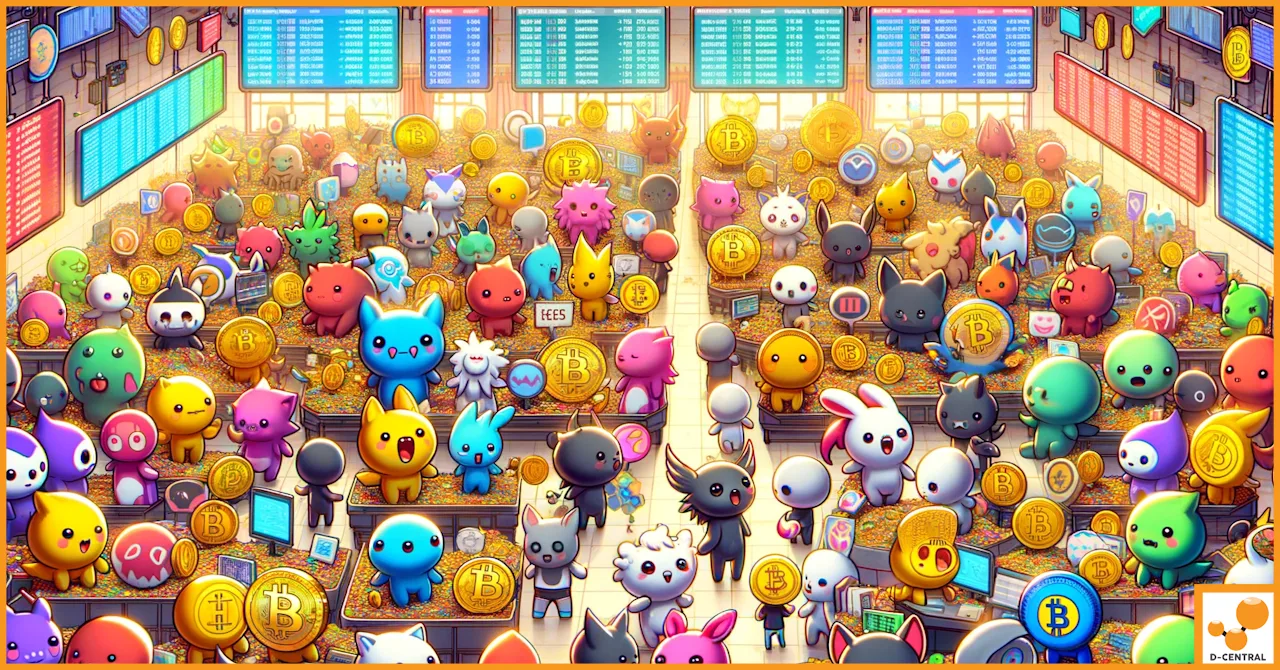
Cryptocurrency exchanges are not your friends. They are businesses, and their primary product is not “financial freedom” or “access to innovation” — it is you. More specifically, your attention, your trading fees, and your willingness to gamble on assets that have no reason to exist. The proliferation of thousands of altcoins and outright shitcoins on major exchanges is not an accident. It is an engineered outcome driven by perverse incentives, regulatory arbitrage, and the deliberate exploitation of human psychology.
As Bitcoin maximalists and mining hackers at D-Central Technologies, we have watched this play out since 2016. We have seen the same cycle repeat: a new token launches with slick marketing, gets listed on exchanges hungry for fees, retail traders pile in, insiders dump, and the token slowly bleeds to zero. Meanwhile, Bitcoin — the only decentralized, censorship-resistant, proof-of-work money in existence — continues to grind higher block by block, now securing a network with over 800 EH/s of hashrate and a difficulty above 110 trillion.
This article breaks down exactly why exchanges list so many shitcoins, why it matters, and why the Bitcoin-only path remains the only rational choice for anyone serious about sovereignty, decentralization, and long-term value.
The Exchange Business Model: You Are the Product
To understand why exchanges list thousands of tokens, you need to understand how exchanges make money. It is not complicated, but it is rarely discussed honestly.
Listing Fees: Pay-to-Play at Scale
Most centralized exchanges charge projects a listing fee. For top-tier exchanges, these fees can range from $500,000 to several million dollars. For mid-tier platforms, $50,000 to $250,000 is common. Even smaller exchanges charge $10,000 to $50,000. This creates a direct financial incentive to list as many tokens as possible, regardless of their technical merit or long-term viability.
The token project pays the fee. The exchange lists the token. Retail traders see the listing as implicit endorsement and buy in. The exchange profits no matter what happens to the token’s price. It is a business model built on information asymmetry.
Trading Fees: Volume Is Everything
Every trade on an exchange generates a fee — typically 0.1% to 0.5% per transaction. The more tokens listed, the more trading pairs available, the more volume generated, and the more fees collected. Shitcoins are particularly profitable because they attract speculative traders who trade frequently, chase pumps, and accept high slippage. A single meme coin listing can generate millions in trading fees within days.
The Wash Trading Problem
Multiple studies and blockchain analytics firms have demonstrated that a significant percentage of reported exchange volume is fabricated through wash trading. Exchanges inflate their volume numbers to attract more listings (and higher listing fees), which in turn generates more real volume. The shitcoin ecosystem provides perfect cover for this — thousands of low-liquidity tokens with opaque order books that are trivial to manipulate.
| Revenue Source | How Shitcoins Amplify It | Who Pays the Cost |
|---|---|---|
| Listing fees | More tokens = more fee revenue | Token projects (passed to retail buyers) |
| Trading fees | Speculative volume spikes on new listings | Retail traders |
| Margin/futures fees | Leveraged shitcoin trading = liquidation cascades | Leveraged traders (mostly retail) |
| Market maker kickbacks | Designated market makers front-run retail orders | Retail traders via slippage |
| Data licensing | More trading pairs = more data to sell | Industry (indirectly retail) |
The Illusion of Vetting: Exchange Listing Criteria Are Theater
Exchanges love to publish their “rigorous listing criteria.” They claim to evaluate technical architecture, team credentials, community engagement, use cases, and regulatory compliance. In practice, the evaluation is perfunctory at best and pay-to-play at worst.
The Reality of Due Diligence
If exchanges truly applied rigorous standards, they would not list tokens with:
- Anonymous teams hiding behind pseudonyms and cartoon avatars
- Pre-mined supply where insiders control 30-80% of tokens
- No working product — just a whitepaper and a roadmap of vague promises
- Tokenomics designed to enrich early insiders through vesting schedules that unlock during retail hype cycles
- Smart contracts with backdoor functions allowing developers to mint unlimited tokens or freeze wallets
Yet exchanges list these projects routinely. The listing criteria exist primarily as legal cover — a way to argue in court that they performed due diligence, not as a genuine filter for quality.
The Conflict of Interest
Many exchanges also run venture capital arms that invest in token projects before listing them. This creates a direct conflict of interest: the exchange invests early at a low price, lists the token on its own platform (generating hype and volume), and then profits as retail traders bid up the price. When the token eventually collapses, the exchange has already taken its profits from both the investment and the trading fees.
Investor Psychology: How Exchanges Exploit Human Weakness
The shitcoin casino would not work without willing participants. Exchanges understand human psychology deeply and design their platforms to maximize addictive behavior.
FOMO and the Fear of Missing Out
Every cycle produces stories of 100x or 1000x returns on obscure tokens. These stories spread virally on social media, creating intense fear of missing out among retail participants. Exchanges amplify this by featuring “top gainers” prominently on their interfaces — always showing the tokens that pumped the hardest, never the ones that collapsed.
The Gamification of Trading
Modern exchange interfaces are designed with the same psychological techniques used by casinos and social media platforms. Push notifications for price alerts. Leaderboards for top traders. Achievement badges. Referral bonuses. Leveraged trading with up to 125x margin. Every element is calibrated to keep users trading more frequently, more aggressively, and with larger positions than they rationally should.
Influencer-Driven Pump and Dump
The relationship between exchanges, token projects, and social media influencers is deeply incestuous. Token projects pay influencers to promote their coins. Exchanges benefit from the resulting trading volume. Influencers profit from both the promotional fees and their own early token positions. The retail investor who follows the influencer’s advice is the last to know when the insiders start selling.
The Narrative Machine
Every cycle has its narratives — DeFi, NFTs, metaverse, AI tokens, real-world assets, meme coins. These narratives serve a single purpose: to provide intellectual cover for speculation. They give traders a story to tell themselves about why this time is different, why this token will be the exception. But the data tells a consistent story: the vast majority of altcoins lose value against Bitcoin over any meaningful time horizon.
The Scoreboard: Shitcoins vs. Bitcoin Over Time
Numbers do not lie. While the crypto industry breathlessly promotes the latest token launch, the long-term data paints a devastating picture for altcoin investors.
| Metric | Bitcoin | Average Altcoin |
|---|---|---|
| Tokens that outperform BTC over 4+ years | N/A (benchmark) | Less than 3% |
| Projects that survive 5+ years | 16 years and counting | Under 10% |
| Network hashrate (2026) | 800+ EH/s | N/A (most are PoS or centralized) |
| Mining difficulty (2026) | 110T+ | N/A |
| Block reward | 3.125 BTC (post-2024 halving) | Inflationary or arbitrary emission |
| Supply cap | 21 million — immutable | Often changeable by governance vote |
| Decentralization | Thousands of nodes, globally distributed mining | Typically controlled by foundation or small group |
Over 25,000 cryptocurrencies have been created since Bitcoin’s launch. The overwhelming majority are now worthless or effectively dead. CoinGecko and CoinMarketCap still track thousands of tokens with near-zero volume and abandoned repositories. These are the digital ghosts of previous hype cycles — monuments to misallocated capital and broken promises.
The Bitcoin Standard: Why Only One Matters
From D-Central’s perspective — as builders who have been repairing ASIC miners, manufacturing accessories, and supporting the home mining community since 2016 — the answer to “which cryptocurrency matters?” has always been clear. Bitcoin is the only one.
Proof of Work Is the Foundation
Bitcoin’s proof-of-work consensus mechanism is not a bug to be optimized away — it is the fundamental innovation that makes trustless digital scarcity possible. The energy expenditure required to mine Bitcoin is what gives it unforgeable costliness. It is what makes the 21 million cap credible. No amount of clever tokenomics, staking mechanisms, or governance structures can replicate what proof of work achieves.
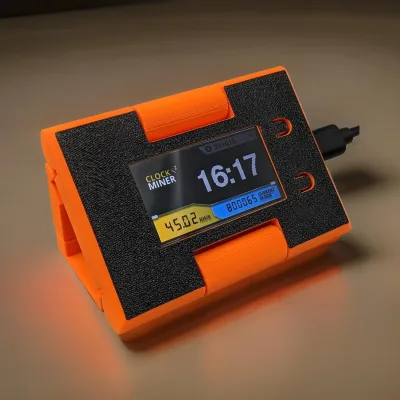
This is why we build our business around Bitcoin mining. From open-source Bitaxe solo miners to industrial-grade ASIC repair, every product and service we offer at D-Central is oriented toward strengthening the Bitcoin network through decentralized hashrate distribution.
Decentralization Is Not a Feature — It Is the Point
Most altcoins claim to be “decentralized” while being controlled by a foundation, a small group of validators, or a venture capital syndicate that can alter the protocol at will. Bitcoin has no CEO, no foundation with a treasury, no pre-mine, and no ability for any single entity to change its monetary policy. This is not a marketing talking point — it is an engineering achievement that has never been replicated.
When we talk about decentralizing every layer of Bitcoin mining at D-Central, we mean it literally. Our Bitcoin space heaters turn your home into a mining node. Our Bitaxe accessories help solo miners contribute hashrate to the network from anywhere. Our hosting facility in Quebec provides an option for miners who need industrial-scale capacity. Every layer, decentralized.
The Hardest Money Wins
Bitcoin’s monetary properties are what make it unique among all digital assets. The fixed supply of 21 million coins, enforced by proof of work and full node consensus, creates the hardest money humanity has ever produced. The current block reward of 3.125 BTC (after the April 2024 halving) will halve again around 2028, further tightening the supply schedule. No governance vote can change this. No foundation can override it. No venture capitalist can print more.
Every other cryptocurrency is, at best, an experiment in distributed systems design. At worst, it is a vehicle for extracting value from retail participants. Bitcoin is the only one that has proven itself as genuinely censorship-resistant, immutable, and sound money.
The Regulatory Reckoning Is Coming
The era of unregulated shitcoin listing is drawing to a close. Regulatory bodies worldwide are tightening their grip on cryptocurrency exchanges, and the shitcoin business model is squarely in the crosshairs.
Securities Classification
The fundamental legal question hanging over every altcoin is whether it constitutes a security. Under most jurisdictions’ securities laws, an investment of money in a common enterprise where profits are expected primarily from the efforts of others constitutes a security. The vast majority of altcoins meet this definition — tokens sold to fund a project, with the expectation that the token’s value will increase based on the team’s work.
Bitcoin is unique in that it has no issuer, no pre-mine, no foundation collecting proceeds from a token sale, and no identifiable group of people whose efforts drive its value. This is why Bitcoin consistently receives different regulatory treatment than altcoins. It is not a security. It is a commodity. It is money.
Exchange Liability
As regulators begin enforcing securities laws more aggressively in the crypto space, exchanges face significant liability for listing unregistered securities. The era of listing hundreds of tokens with minimal due diligence is ending. Exchanges that built their business models on shitcoin listing fees will need to fundamentally restructure — or face enforcement actions.
The Canadian Landscape
In Canada, the regulatory environment has been particularly active. Canadian Securities Administrators (CSA) have required crypto trading platforms to register and comply with securities legislation. Several major exchanges have restricted or exited the Canadian market rather than comply. For Canadian Bitcoin miners and investors, this reinforces the importance of focusing on Bitcoin — the one digital asset with clear regulatory standing across virtually all jurisdictions.
What Bitcoiners Should Do Instead
Rather than chasing the next shitcoin pump on an exchange that profits from your losses, here is what we recommend:
Stack Sats
Dollar-cost average into Bitcoin. Do not try to time the market. Do not allocate to altcoins hoping for outsized returns. The data overwhelmingly shows that a disciplined Bitcoin accumulation strategy outperforms altcoin speculation over any multi-year period.
Run a Node
Running a full Bitcoin node makes you a first-class citizen of the network. You verify every transaction and every block independently. You do not trust — you verify. This is the antithesis of trusting an exchange’s listing committee to tell you which tokens are legitimate.
Mine Bitcoin
Whether you are running a Bitaxe solo miner on your desk or a full S21 in your garage, mining Bitcoin is the most sovereign way to acquire it. You are not buying from an exchange. You are not trusting a counterparty. You are converting energy into money through the thermodynamic lottery of proof of work.
At D-Central, this is our entire mission. We exist to make Bitcoin mining accessible to everyone — from the pleb miner running a single Bitaxe to the hobbyist operating a small fleet of ASICs. Every hash counts. Every home miner matters. Every watt of energy converted into Bitcoin hashrate strengthens the network’s decentralization.
Self-Custody Your Bitcoin
If you are holding Bitcoin on an exchange, you do not own Bitcoin. You own an IOU from a company that could be hacked, freeze your account, or go bankrupt. The entire history of exchange failures — Mt. Gox, QuadrigaCX, FTX — demonstrates that counterparty risk is the greatest threat to your Bitcoin. Move your coins to a hardware wallet. Control your keys.
The Bottom Line
Exchanges list shitcoins because it is profitable for the exchange. Not for you. Not for the broader ecosystem. Not for the advancement of decentralized technology. For the exchange. Every listing fee collected, every leveraged liquidation triggered, every influencer-promoted pump and dump — the exchange takes its cut while retail traders absorb the losses.
Bitcoin does not need exchange listings to succeed. It does not need marketing campaigns, celebrity endorsements, or venture capital funding. It has something no other digital asset possesses: genuine, unforgeable, energy-backed scarcity enforced by the largest computational network in human history — now exceeding 800 EH/s of hashrate.
At D-Central Technologies, we have been building for Bitcoin and only Bitcoin since 2016. We repair the machines that secure the network. We manufacture the accessories that make home mining possible. We educate the community on why decentralization matters at every layer. The shitcoin casino will eventually close. Bitcoin will still be producing blocks every ten minutes, reducing its issuance every four years, and defending the principle that money should be hard, open, and controlled by no one.
Every hash counts. Mine Bitcoin. Stack sats. Ignore the noise.
Frequently Asked Questions
Why do cryptocurrency exchanges list so many shitcoins if most go to zero?
Exchanges profit from listing fees (often $50,000 to $1 million+ per token), trading fees on every transaction, and the increased user engagement that new listings generate. The exchange makes money whether the token succeeds or fails. Each new listing creates a burst of speculative trading activity, and the exchange collects fees on every buy and sell. It is a volume-driven business model where the quantity of listed tokens directly correlates with revenue, regardless of token quality.
Are exchange listing criteria meaningful, or are they just for show?
In most cases, exchange listing criteria serve more as legal liability protection than genuine quality filtering. If the criteria were truly rigorous, exchanges would not list tokens with anonymous teams, no working product, pre-mined supply controlled by insiders, or smart contracts with backdoor admin functions. The fact that exchanges also operate venture capital arms that invest in tokens before listing them on their own platform creates an obvious conflict of interest that undermines any claim of objective evaluation.
Why is Bitcoin different from altcoins and shitcoins?
Bitcoin is the only cryptocurrency with no issuer, no pre-mine, no foundation treasury, and no ability for any entity to change its monetary policy. Its proof-of-work consensus mechanism requires real energy expenditure, creating unforgeable costliness. The network hashrate exceeds 800 EH/s in 2026, with mining difficulty above 110 trillion. The fixed supply of 21 million coins (with the current block reward at 3.125 BTC after the 2024 halving) is enforced by decentralized consensus, not by a governance committee or foundation that could change the rules.
How do exchanges and influencers work together to promote shitcoins?
The relationship is typically financial. Token projects allocate marketing budgets to pay influencers for promotional content. Exchanges benefit from the resulting trading volume. Influencers profit from both the promotional fees and their own early token positions purchased before the promotion begins. This creates a coordinated pump mechanism where insiders and promoters profit while retail followers — who buy in after the promotion goes live — are left holding depreciating tokens when the coordinated selling begins.
What should Bitcoiners do instead of trading shitcoins on exchanges?
Focus on Bitcoin accumulation through dollar-cost averaging, self-custody with a hardware wallet (not on an exchange), running a full node to verify transactions independently, and mining Bitcoin to acquire it in the most sovereign way possible. Whether using a small open-source miner like a Bitaxe for solo mining or running full-scale ASICs, converting energy into hashrate is the most direct way to participate in the Bitcoin network without counterparty risk. D-Central Technologies provides the hardware, repair services, and education to support home miners at every level.
Is the era of unregulated shitcoin listings ending?
Yes. Regulatory bodies worldwide are increasingly classifying altcoins as securities and requiring exchanges to register and comply with securities legislation. In Canada, the Canadian Securities Administrators have already required crypto trading platforms to register, leading several major exchanges to restrict or exit the market. Bitcoin consistently receives distinct regulatory treatment as a commodity rather than a security, due to its lack of an issuer, pre-mine, or central controlling entity. Exchanges built on the shitcoin listing fee model face significant restructuring or enforcement actions as this regulatory pressure intensifies.
How does mining Bitcoin strengthen the network compared to trading on exchanges?
Mining contributes hashrate to the Bitcoin network, directly strengthening its security and decentralization. Every home miner running hardware — from a Bitaxe solo miner to a full Antminer S21 — adds to the distributed hashrate that makes Bitcoin censorship-resistant. Trading on an exchange does nothing for the network. It simply moves IOUs between accounts on a centralized database. Mining creates real, provable work that secures the blockchain for everyone. At D-Central, this is why our mission focuses on making mining accessible: decentralization of every layer of Bitcoin mining matters for the long-term health of the network.