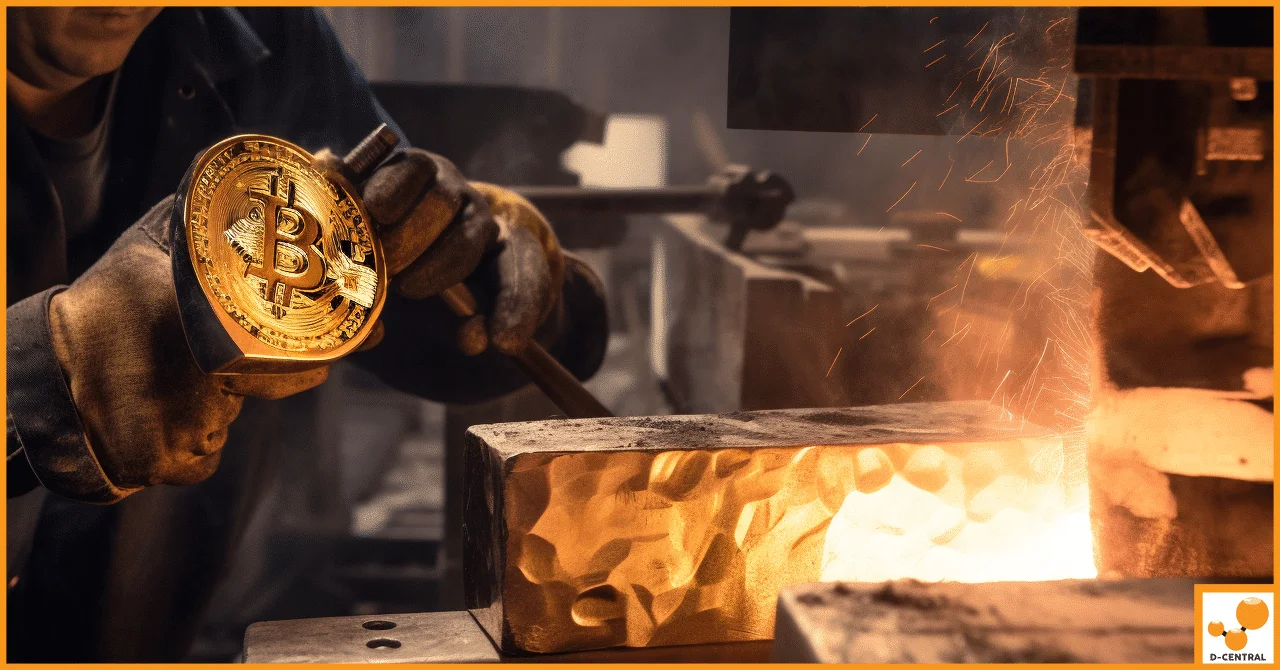
Metal fabrication shops burn through energy like few other operations. Plasma cutters, welding stations, CNC machines, heat-treating ovens — they all demand massive thermal input. Meanwhile, Bitcoin miners convert electricity into SHA-256 computations and produce heat as a thermodynamic byproduct. Put these two facts together and you get one of the most practical industrial symbioses available today: routing ASIC miner exhaust heat into metal fabrication workflows, slashing energy bills while securing the Bitcoin network.
This is not a theoretical exercise. Across North America, forward-thinking shop owners are already co-locating Bitcoin mining hardware alongside their fabrication equipment. The economics work because the heat is not “waste” — it is a 100% efficient conversion of electricity into thermal energy, and metal fabrication shops happen to need exactly that.
Why Metal Fabrication Shops Are Ideal for Bitcoin Mining Heat Recovery
Metal fabrication facilities share several characteristics that make them perfect candidates for Bitcoin mining heat integration:
- High ambient heat tolerance. Workers and equipment already operate in hot environments. Adding ASIC exhaust heat does not create comfort or safety issues the way it would in an office building.
- Large industrial spaces. Fabrication shops typically occupy 5,000 to 50,000+ square feet of open floor space with high ceilings — ideal for airflow management and miner rack placement.
- Three-phase power infrastructure. Most fabrication shops already have 200A+ three-phase electrical service, which can accommodate Bitcoin mining loads without costly panel upgrades.
- Year-round heating needs. Preheating metal stock, maintaining ambient temperature for welding quality, and keeping workers comfortable in Canadian winters all require continuous heat input.
- Existing ventilation systems. Industrial exhaust fans, ductwork, and air handling systems can be adapted to route ASIC miner heat where it is needed most.
The Thermodynamics: How ASIC Heat Maps to Fabrication Needs
A modern ASIC miner like the Antminer S21 consumes approximately 3,500 watts and converts every single watt into heat. That is 3.5 kW of thermal output per unit — equivalent to a high-end industrial space heater, but one that also earns Bitcoin while it runs. Scale that to a rack of 10 miners and you are looking at 35 kW of continuous thermal output.
To put this in perspective for fabrication shop owners:
| Heat Application | Typical Requirement | ASIC Miners Needed | Approx. BTC Revenue/Month |
|---|---|---|---|
| Shop ambient heating (5,000 sq ft) | 15–25 kW | 5–7 units | Variable (pool-dependent) |
| Metal stock preheating chamber | 10–20 kW | 3–6 units | Variable (pool-dependent) |
| Paint booth curing assist | 20–40 kW | 6–12 units | Variable (pool-dependent) |
| Welding area climate control | 10–15 kW | 3–5 units | Variable (pool-dependent) |
| Full shop heating (20,000 sq ft) | 60–100 kW | 17–29 units | Variable (pool-dependent) |
The critical insight is that every kilowatt-hour consumed by the miners produces useful heat and earns Bitcoin. You are not choosing between heating and mining — you are doing both simultaneously. The effective cost of heating drops dramatically because the Bitcoin revenue offsets or even exceeds the electricity bill.
Network Context: Bitcoin Mining in 2026
Understanding the current state of the Bitcoin network helps frame the economics. As of early 2026, the network hashrate exceeds 800 EH/s, mining difficulty has surpassed 110 trillion, and the block reward stands at 3.125 BTC following the April 2024 halving. Competition among miners is fierce, which means every operational advantage matters.
For metal fabrication shops, the advantage is clear: your heat is not wasted. While a dedicated mining farm must pay for both electricity and cooling (often 30-40% overhead), a fabrication shop uses the miner heat productively. This dual-purpose model effectively gives you free heating, making your mining operation more competitive per hash than a standalone facility running the same hardware.
Implementation: Ductwork, Placement, and Airflow Design
The practical implementation of ASIC heat recovery in a fabrication shop follows straightforward engineering principles. The key is controlling airflow so that hot exhaust air from the miners reaches the areas where heat is needed.
Basic Ductwork Configuration
The simplest approach uses inline duct fans and insulated flexible ductwork to route miner exhaust from a dedicated mining rack into the shop space. ASIC miners like the Antminer S-series have standardized exhaust patterns — hot air exits from the rear at temperatures between 45-65°C (113-149°F), depending on the model and ambient conditions.
A typical setup involves:
- Miner rack enclosure — a sealed or semi-sealed cabinet that captures exhaust air and funnels it into a duct manifold.
- Insulated ductwork — 6″ to 12″ insulated flex duct running from the rack to target zones (welding bays, stock storage, paint areas).
- Thermostat-controlled dampers — automated dampers that route hot air to the shop when heat is needed, or exhaust it outside during warm months.
- Backup exhaust — a secondary path to vent heat outdoors when the shop does not need it, ensuring miners run year-round regardless of heating demand.
D-Central has extensive experience building custom Bitcoin Space Heaters that apply these same heat recovery principles. Our space heater line — built from repurposed S9, S17, and S19 ASIC miners — demonstrates exactly how miner heat can be captured and directed for productive use. The fabrication shop application scales the same concept to industrial dimensions.
Noise Management
ASIC miners are loud — typically 70-80 dB per unit. In a metal fabrication shop, this is less problematic than in residential or office settings because the ambient noise from grinders, plasma cutters, and welding equipment already requires hearing protection. However, isolating the mining rack in a dedicated corner or enclosure helps keep overall noise levels manageable and protects the mining hardware from metal dust and debris.
The Economics: A Dual-Revenue Model
The financial case for co-locating Bitcoin miners in a metal fabrication shop rests on a simple principle: you are already paying for heat. By generating that heat with ASIC miners instead of conventional heaters, you add a Bitcoin revenue stream at near-zero marginal cost.
| Cost Category | Traditional Heating | Bitcoin Mining Heat |
|---|---|---|
| Monthly electricity/gas (heating) | $2,000–$8,000 | $2,000–$8,000 (same energy input) |
| Bitcoin revenue | $0 | Variable (offsets heating cost) |
| Equipment cost (one-time) | $1,000–$5,000 (furnaces/heaters) | $5,000–$50,000+ (miners + ductwork) |
| Equipment lifespan | 10–20 years | 3–7 years (ASIC lifecycle) |
| Residual hardware value | Near zero | Resale or parts market |
| Network security contribution | None | Strengthens Bitcoin decentralization |
The higher upfront equipment cost for miners is offset by the ongoing Bitcoin revenue. Unlike a gas furnace that only produces heat, an ASIC miner produces heat and sats. Over a multi-year horizon, the total cost of ownership for the mining-heat approach can be significantly lower — especially if you hold the Bitcoin long-term.
Canadian Advantage: Why This Works Especially Well Up North
Canada’s climate and energy infrastructure create an unusually strong case for this model:
- Long heating seasons. Most of Canada requires shop heating 7-9 months per year, maximizing the period during which miner heat is fully utilized.
- Low electricity rates. Quebec offers some of the lowest industrial electricity rates in North America (often under $0.05/kWh), making mining economics highly favorable.
- Cold ambient air for cooling. During the months when you do need to vent excess heat, cold Canadian air provides free cooling — no chillers or cooling towers needed.
- Industrial culture. Canadian metal fabrication shops are already accustomed to creative energy management in harsh climates. Adding miners is a natural extension.
D-Central operates from Laval, Quebec, and our hosting facility in the province takes full advantage of Quebec’s hydroelectric power. We understand the Canadian energy landscape intimately — and we know that fabrication shop owners in this country are uniquely positioned to benefit from dual-purpose mining.
Hardware Selection for Fabrication Shop Environments
Not every miner is ideal for a fabrication shop environment. Metal dust, sparks, and humidity can damage electronics. Here are the key considerations:
- Air filtration. Install intake filters on any miners placed in or near the fabrication area. Even with a dedicated mining room, ambient metal dust can migrate through ventilation.
- Enclosed racks. Use sealed or filtered mining cabinets to protect hardware from particulate contamination.
- Regular maintenance. ASIC miners in industrial environments need more frequent cleaning — compressed air blowdowns every 2-4 weeks to prevent dust buildup on heatsinks and fans.
- Hardware choice. Newer-generation miners (S19 series and newer) offer better joules-per-terahash efficiency, meaning more hashrate per kW of heat produced. For shops that want maximum heat output per dollar invested, refurbished S9 or S17 units remain a cost-effective option — and D-Central specializes in these through our ASIC repair services.
If a miner does fail in the harsh fabrication environment, having a repair partner who knows the hardware inside and out matters. D-Central has repaired thousands of ASIC miners across 38+ models — from hashboard replacements to full unit diagnostics. This repair expertise means your mining fleet stays online and producing heat when you need it.
Scaling Up: From Supplemental Heat to Full Shop Heating
Most shops start small — a rack of 3-5 miners providing supplemental heat to a specific work area. As operators see the economics play out, scaling becomes attractive:
- Phase 1 (Pilot): 3-5 miners in a filtered enclosure, ducted to a single work zone. Validate the heat output, noise impact, and Bitcoin revenue.
- Phase 2 (Expansion): 10-15 miners providing heat to multiple zones via a duct manifold with thermostat-controlled dampers.
- Phase 3 (Full Integration): 20-30+ miners serving as the primary heat source for the entire shop, with conventional heating as backup for extreme cold snaps.
At Phase 3, the shop owner is essentially running a mid-scale Bitcoin mining operation that happens to also heat their fabrication facility. The mining revenue becomes a meaningful secondary income stream, and the heating cost effectively drops to near zero.
Beyond Heat: The Decentralization Angle
There is a deeper reason to put Bitcoin miners in metal fabrication shops that goes beyond economics. Every miner that operates outside of a large institutional mining farm contributes to the geographic decentralization of Bitcoin’s hashrate. The more distributed the mining network, the more resilient and censorship-resistant Bitcoin becomes.
Metal fabrication shops are spread across every province and state. They are independently owned, deeply rooted in their communities, and accustomed to operating their own infrastructure. These are exactly the kinds of operators that Bitcoin’s decentralized security model was designed for. When a shop owner in Laval or Edmonton or Thunder Bay fires up a rack of miners, they are not just heating their shop — they are strengthening the most important decentralized network in human history.
This is what we mean when we say “decentralization of every layer of Bitcoin mining.” It is not just about who manufactures the hardware or which pool you join. It is about where the physical machines run. Fabrication shops, farms, greenhouses, homes — every distributed location adds resilience to the network.
Getting Started: What You Need
If you run a metal fabrication shop and you are considering Bitcoin mining heat recovery, here is your checklist:
- Assess your electrical capacity. Determine how much spare amperage your panel can support. Each S21-class miner draws roughly 15A at 240V.
- Calculate your heating load. Measure or estimate how many kW of heat your shop consumes monthly. This determines how many miners you can productively deploy.
- Designate a mining area. Identify a corner or room that can be enclosed, filtered, and ducted. Proximity to your electrical panel and target heating zones minimizes ductwork runs.
- Choose your hardware. Browse our shop for current-generation and refurbished ASIC miners. D-Central can help you select the right hardware for your specific application.
- Plan your ductwork. Size your ducts and fans for the total CFM (cubic feet per minute) your miner fleet will produce. Most ASIC miners move 200-300 CFM each.
- Consult with experts. D-Central’s mining consulting service can help you design and optimize your mining-heat integration from the ground up.
Explore the Full D-Central Ecosystem
Metal fabrication heat recovery is just one application of the dual-purpose mining concept. D-Central builds and sells purpose-built Bitcoin Space Heaters for residential and commercial use, stocks every Bitaxe variant and accessory for open-source solo mining enthusiasts, and maintains the most comprehensive ASIC repair operation in Canada. Whether you are heating a shop, a home, or a greenhouse — if it needs heat and you believe in Bitcoin, we have the hardware and the expertise.
What types of metal fabrication processes benefit most from Bitcoin mining heat?
Processes that require ambient or supplemental heat benefit most: maintaining comfortable working temperatures in large shop spaces, preheating metal stock before cutting or welding, assisting paint booth curing, and preventing condensation on cold metal surfaces. High-temperature processes like heat treating and forging typically require temperatures beyond what ASIC exhaust provides (45-65°C), but miner heat can still preheat incoming air to reduce the energy needed to reach target temperatures.
How loud are Bitcoin miners in a fabrication shop setting?
Individual ASIC miners produce 70-80 dB, which is comparable to a vacuum cleaner or loud conversation. In a fabrication shop environment where angle grinders (100+ dB), plasma cutters (80-90 dB), and hammering are already present, miner noise is typically not a significant additional concern. Isolating miners in a dedicated enclosure or room further reduces their impact on the working environment.
What is the upfront cost to set up Bitcoin mining heat recovery in a fabrication shop?
A pilot setup of 3-5 miners typically costs between $5,000 and $15,000 including miners, a basic rack or enclosure, ductwork, and electrical connections. A full-shop heating installation with 20-30 miners can range from $30,000 to $80,000+ depending on hardware generation, ductwork complexity, and electrical upgrades needed. These costs are offset over time by Bitcoin mining revenue and reduced conventional heating expenses.
Can Bitcoin miners operate year-round in a fabrication shop?
Yes. During heating season (typically 7-9 months in Canada), miner exhaust is ducted into the shop. During warmer months, thermostat-controlled dampers redirect exhaust outside or through a dedicated venting path. The miners continue earning Bitcoin year-round — you simply change where the heat goes. Some shop owners reduce their mining fleet in summer if electricity costs rise due to peak-demand pricing.
Will metal dust damage the Bitcoin mining hardware?
Metal particulate can absolutely damage ASIC miners if not managed properly. Fine metal dust can accumulate on heatsinks, clog fans, and create short circuits on exposed PCB traces. The solution is to isolate miners in a filtered enclosure with clean air intake, and to perform regular compressed-air cleaning every 2-4 weeks. D-Central’s ASIC repair team frequently services miners from industrial environments and can advise on protection strategies.
What happens if a miner breaks down?
ASIC miners are solid-state devices with fans as the primary mechanical failure point. In a fabrication shop environment, dust-related failures may occur more frequently than in a clean data center. Having a repair partner is essential. D-Central offers comprehensive ASIC repair services covering 38+ models across Bitmain, MicroBT, Innosilicon, and Canaan hardware. We can diagnose and repair hashboards, replace fans, and refurbish units to keep your mining-heating fleet operational.
Do I need special electrical work to run miners in my shop?
Most metal fabrication shops already have three-phase 200A+ electrical service, which is more than sufficient to support a mining fleet. You will need dedicated 240V circuits for the miners — typically one 20A circuit per 1-2 miners depending on the model. A licensed electrician should install the circuits and ensure they meet local code requirements. The electrical infrastructure in fabrication shops is generally far more capable than residential settings, making the installation straightforward.