The Bitmain Antminer S17 marked a generational leap in Bitcoin mining hardware when it launched in April 2019. Built on the 7nm BM1397 ASIC chip, the S17 delivered 56 TH/s at 2,520W — representing a massive efficiency improvement over the 16nm S9 generation. At 45 J/TH, the S17 was more than twice as efficient as the S9, signaling Bitmain’s transition to a new era of mining hardware performance.
The S17 generation introduced several important innovations: a new physical form factor (the “server-style” chassis that continues in the S19 and S21 families), improved thermal management with 4 fans, and the BM1397 chip that would also power the S17 Pro and T17 variants. However, the S17 generation also gained a reputation for reliability issues — particularly with hashboard solder joints and thermal cycling problems — that made them more maintenance-intensive than their predecessors.
In 2026, the S17 occupies a middle ground: more efficient than the S9 family but significantly behind the S19 and S21 generations. At current Bitcoin prices and difficulty, the S17 can still be marginally profitable with cheap electricity, and its 2,520W heat output makes it a viable candidate for space heater conversion. D-Central provides comprehensive repair services for the S17 platform, which is particularly important given the model’s known reliability challenges.
Antminer S17 Full Specifications
| Specification | Details |
|---|---|
| Manufacturer | Bitmain |
| Model | Antminer S17 |
| Release Date | April 2019 |
| Algorithm | SHA-256 |
| Hashrate | 56 TH/s (±5%) |
| Power Consumption | 2,520W (±5%) |
| Efficiency | 45 J/TH |
| Input Voltage | 220–277V AC (integrated PSU) |
| Dimensions | 178 × 296 × 298 mm |
| Weight | 9.5 kg |
| Noise Level | ~82 dB |
| Operating Temperature | 5–45°C |
| Humidity | 5–95% |
| Cooling | 4 × high-speed fans |
| Network Connection | Ethernet (RJ45) |
| ASIC Chip | BM1397 (7nm) |
| Chips per Hashboard | 48 |
| Number of Hashboards | 3 |
| Total Chip Count | 144 |
| Power Supply | Integrated APW9/APW9+ PSU |
Performance Analysis
At 45 J/TH, the S17 is approximately 2.1 times more efficient than the Antminer S9 (96.4 J/TH) but 1.3 times less efficient than the Antminer S19 (34.2 J/TH) and 2.6 times less efficient than the Antminer S21 (17.5 J/TH). Within the S17 family, the standard S17 sits below the S17 Pro (39.5 J/TH) in efficiency but above the budget T17 (55 J/TH).
The S17 was a transitional generation — dramatically better than what came before, but quickly outpaced by the S19 series just one year later. Today, its 56 TH/s hashrate is modest by 2026 standards, but at rock-bottom secondary market prices, the economics can still work for miners with cheap power.
Daily and Monthly Power Costs
| Electricity Rate | Daily Power Cost | Monthly Power Cost | Viability |
|---|---|---|---|
| $0.05/kWh | $3.02 | $91 | Marginally profitable — low acquisition cost makes this viable |
| $0.08/kWh | $4.84 | $145 | Breakeven territory — best as a dual-purpose space heater |
| $0.10/kWh | $6.05 | $181 | Unprofitable for pure mining — space heater conversion recommended |
| $0.12/kWh | $7.26 | $218 | Unprofitable — consider upgrading to S19 or S21 generation |
Heat Output
The S17 produces approximately 8,598 BTU/h of heat (2,520W × 3.412 BTU/W). This is a substantial heat output — equivalent to a medium-to-large space heater. For home miners in cold climates, the S17 can meaningfully contribute to home heating while mining Bitcoin. D-Central offers space heater conversions for the S17 platform.
Noise Characteristics
At approximately 82 dB, the S17 is louder than the S9 family (76-85 dB) despite having 4 fans versus 2. The 4-fan design prioritizes airflow and cooling over noise reduction. A dedicated room, basement, or garage is required for the S17 — it is not suitable for living spaces without significant sound dampening.
Best Use Cases in 2026
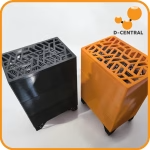
Space Heater Conversion: At 2,520W and ~8,600 BTU/h, the S17 provides serious heating capacity. For Canadian and northern-climate miners, converting an S17 to a space heater offsets a meaningful portion of heating costs while earning Bitcoin. Pair it with a cooling shroud to duct heat where it is needed.
Budget Mining: With near-zero acquisition cost on the used market, the S17 can be profitable at electricity rates below $0.06/kWh. The economics depend entirely on your power cost.
Learning Advanced Repair: The S17’s reputation for reliability issues makes it an excellent training platform for learning advanced ASIC repair — solder rework, thermal paste replacement, and hashboard diagnostics. See our APW9 PSU Repair Guide for power supply servicing.
Common Issues & Repair
The S17 generation is known for higher-than-average failure rates compared to the S9 and S19 families. Common issues include:
- Hashboard solder joint failures: The S17’s BM1397 chips are susceptible to solder joint cracking due to thermal cycling. This is the most common failure mode and requires professional rework.
- APW9/APW9+ PSU failures: The integrated power supply can fail, particularly the output capacitors. D-Central provides APW9 PSU repair services.
- Temperature sensor errors: Faulty temperature sensors can cause false over-temperature shutdowns even when actual temperatures are within spec.
- Fan controller issues: The 4-fan controller can malfunction, running fans at max speed or failing to detect fan speeds properly.
D-Central offers professional Antminer S17 Repair services from our Canadian workshop. Given the S17’s known reliability challenges, having access to professional repair is especially important for this model. See our ASIC Repair Cost Estimator for pricing.
D-Central Services for the Antminer S17
- Repair: Hashboard rework, PSU repair, fan replacement — Antminer S17 Repair
- PSU Service: APW9/APW9+ diagnostics and repair — APW9 PSU Guide
- Space Heater Conversion: Convert to dual-purpose heater — Bitcoin Space Heaters
- Replacement Parts: Hashboards, fans, PSU components — Shop Parts
- Repair Cost Estimate: ASIC Repair Cost Estimator
Frequently Asked Questions
Is the Antminer S17 still profitable in 2026?
At electricity rates below $0.06/kWh, the S17 can still generate a small profit from pure mining. At higher rates, it operates at a loss unless used as a dual-purpose space heater. The S17’s near-zero acquisition cost on the used market is its primary economic advantage.
How much electricity does the Antminer S17 use per day?
The S17 consumes approximately 2,520W continuously, translating to 60.5 kWh per day or about 1,814 kWh per month. At $0.10/kWh, that is $6.05/day or $181/month in electricity costs.
Can the Antminer S17 be used as a space heater?
Yes — the S17 produces approximately 8,598 BTU/h of heat, making it a powerful space heater. D-Central offers space heater conversions with noise reduction and optimized airflow for residential use.
Is the S17 reliable?
The S17 generation has a higher failure rate than the S9 and S19 families, primarily due to solder joint issues on the hashboards. Professional repair from D-Central can restore failed units, and aftermarket firmware like Vnish can improve stability through better thermal management.
What firmware works with the Antminer S17?
The S17 supports stock Bitmain firmware, Braiins OS+, Vnish, and LuxOS. Aftermarket firmware can improve stability and allow undervolting to reduce power consumption and heat output. See our Antminer Firmware Update Guide for installation instructions.