If you run an art studio or workshop, you already know the brutal reality of heating costs. Large open spaces, high ceilings, poor insulation, garage-style doors — creative spaces are notoriously expensive to keep warm. In Canada alone, heating can eat 40-60% of a small studio’s overhead during winter months.
Here is the hack that changes everything: Bitcoin miners convert 100% of their electrical input into heat. Every single watt. That is not an efficiency claim — it is thermodynamics. An ASIC miner running at 3,000W produces 3,000W of heat, identical to a 3,000W electric space heater. The difference? The space heater gives you nothing but warmth. The Bitcoin miner gives you warmth and mines Bitcoin while doing it.
At D-Central Technologies, we have been building dual-purpose mining solutions since 2016. We call ourselves Bitcoin Mining Hackers for a reason — we take institutional-grade mining hardware and hack it into practical solutions for real-world applications. Heating your art studio with a Bitcoin miner is not some futuristic concept. It is something our customers are doing right now.
Why Art Studios and Workshops Are Ideal for Mining Heat
Most homes cannot handle the power draw and noise of industrial ASIC miners. Art studios and workshops are different. Here is why creative spaces are actually perfect for dual-purpose mining:
| Factor | Typical Home | Art Studio / Workshop |
|---|---|---|
| Noise tolerance | Low — bedrooms, living spaces | High — power tools, ventilation already present |
| Electrical capacity | 15-20A circuits, limited panel | Often 200A+ panels, 240V outlets common |
| Space available | Tight, shared areas | Open floor plans, dedicated utility areas |
| Heating demand | Moderate, well-insulated | High — large volume, poor insulation, open doors |
| Ventilation | Limited ductwork | Existing exhaust systems, ductwork for fumes/dust |
Woodworking shops, metalworking studios, pottery kilns, glassblowing workshops, painting studios — these spaces already have the electrical infrastructure, noise tolerance, and ventilation that mining hardware demands. You are not retrofitting your living room. You are adding a heat source to an industrial-grade space that was already built to handle it.
The Physics: Why Every Miner Is a Space Heater
This is not marketing spin. It is the first law of thermodynamics.
When an ASIC miner draws 3,000W from the wall, it performs SHA-256 computations at staggering speed. Every computation generates heat as a byproduct. But here is the critical point: none of the energy leaves as anything other than heat. There is no mechanical output, no light production, no chemical transformation. 100% of the electrical energy converts to thermal energy.
A traditional electric space heater does exactly the same thing — converts electricity to heat through a resistive element. The coefficient of performance is identical: 1.0. One watt in, one watt of heat out.
The only difference is what happens in between. The space heater runs current through a nichrome wire. The Bitcoin miner runs current through billions of transistors performing SHA-256 hashes, securing the most robust monetary network on Earth — and in 2026, competing for a share of the 3.125 BTC block reward across a network exceeding 800 EH/s of total hashrate.
Same heat. Same electricity cost. One earns Bitcoin. The choice is obvious.
Equipment Options: From Silent Solo Miners to Full ASIC Setups
Not every studio needs (or wants) the roar of an Antminer S19. D-Central offers solutions across the entire noise and power spectrum:
Quiet Solo Mining: Bitaxe and Open-Source Miners
For studios where noise matters — think painting studios, photography darkrooms, or shared creative spaces — open-source solo miners like the Bitaxe are the perfect entry point. These compact devices draw only 12-25W, run virtually silent, and mine Bitcoin on the solo lottery principle: every hash is a chance at the full 3.125 BTC block reward.
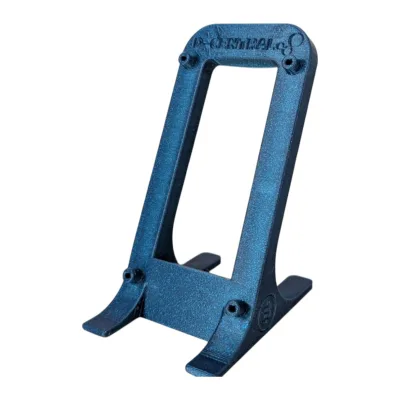
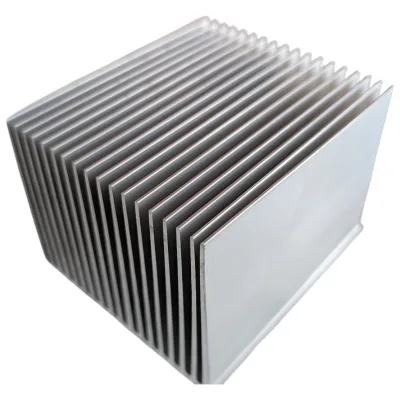
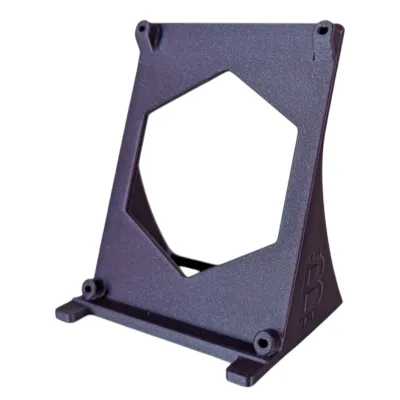
Will a single Bitaxe heat your studio? No. But a cluster of them adds meaningful warmth to a small space while giving you skin in the game of solo block discovery. D-Central has been a pioneer in the Bitaxe ecosystem since the beginning — we created the original Bitaxe Mesh Stand and developed leading heatsink and accessory solutions for every Bitaxe variant.
The Sweet Spot: Bitcoin Space Heaters
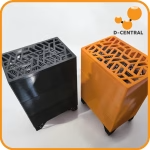
For most art studios and workshops, D-Central’s Bitcoin Space Heaters are the ideal solution. These purpose-built units house a full ASIC miner inside an acoustically dampened enclosure with integrated fans that direct warm air into your workspace.
| Space Heater Model | Heat Output | Hashrate | Best For |
|---|---|---|---|
| S9 Space Heater Edition | ~1,400W | ~13.5 TH/s | Small studios, supplemental heat |
| S17 Space Heater Edition | ~2,100W | ~56 TH/s | Medium workshops, primary heat source |
| S19 Space Heater Edition | ~3,250W | ~110 TH/s | Large workshops, full heating replacement |
The S19 Space Heater Edition at 110+ TH/s of hashrate is equivalent to a large portable electric heater running at full blast — except it is also mining Bitcoin. In a well-managed setup, the Bitcoin earned can offset a significant portion (or in some cases, all) of the electricity cost, effectively making your heating free or even profitable.
Advanced: HVAC-Integrated Mining
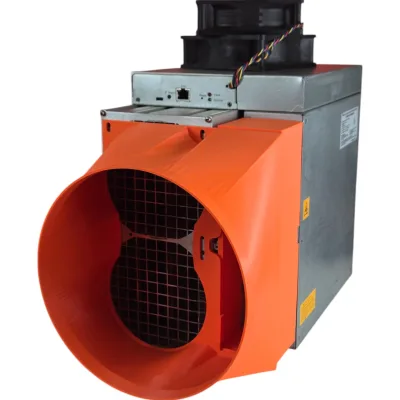
For larger workshops with existing forced-air heating, you can integrate a standard ASIC miner directly into your HVAC return duct. The concept is straightforward: an inline fan pulls cool air through the miner, and the heated exhaust feeds into your ductwork. When your furnace calls for heat, the miner supplements it. When the furnace is idle, the miner provides baseline warmth.
This approach requires some planning — proper ducting, airflow management, and electrical considerations — which is exactly where D-Central’s mining consulting services come in. Our team has designed dozens of these integrations for commercial and residential spaces across Canada.
Real Numbers: What Dual-Purpose Mining Costs in a Studio
Let us break down a realistic scenario for a 500 sq ft art studio in Canada using an S19-class miner as the primary heat source during winter:
| Parameter | Value |
|---|---|
| Miner power draw | 3,250W (3.25 kW) |
| Daily electricity (24h) | 78 kWh |
| Electricity rate (QC avg) | $0.073/kWh |
| Daily electricity cost | ~$5.69 |
| Monthly electricity cost | ~$171 |
| Heat output | ~11,100 BTU/h (equivalent to large space heater) |
| Bitcoin mined (est.) | Varies with difficulty and BTC price |
| Net heating cost | Electricity cost minus Bitcoin earned |
The exact Bitcoin earnings fluctuate with network difficulty (now exceeding 110T) and BTC market price. But the fundamental math remains: you were going to spend that money on heating anyway. With a Bitcoin miner, you get the same heat plus Bitcoin. Even if mining revenue covers only 30-50% of the electricity cost, your effective heating cost drops dramatically compared to a conventional electric heater that earns nothing.
Quebec’s low electricity rates make this equation particularly attractive. At $0.073/kWh, Canada’s cheapest province gives miners a structural advantage that studios in the US or Europe cannot match.
Installation Considerations for Creative Spaces
Every studio is different. Here is what to evaluate before setting up a mining heater:
Electrical Requirements
An S19-class miner requires a dedicated 240V, 20A circuit. Most workshops already have 240V outlets for welders, kilns, or heavy machinery. If not, an electrician can install one for a few hundred dollars. Always run mining hardware on its own circuit — never share with other high-draw equipment.
Noise Management
Stock ASIC miners are loud — 70-80 dB, comparable to a vacuum cleaner running continuously. D-Central’s Space Heater editions include acoustic dampening, but noise is still a factor. Workshops with existing background noise (table saws, grinders, compressors) will barely notice. Quiet studios may want to isolate the miner in a utility closet with ducted warm air output, or opt for the near-silent Bitaxe route.
Air Quality
ASIC miners pull significant air volume through their heat sinks. In dusty environments (woodworking, ceramics), regular filter maintenance is essential. A simple furnace filter mounted on the intake side prevents sawdust and particulate from clogging heatsinks. Clean or replace monthly in dusty shops.
Summer Considerations
This is the honest part: you do not want to run a 3,250W heat source in July. The beauty of dual-purpose mining in studios is seasonal flexibility. Run miners at full capacity during heating season (October-April in most of Canada). In summer, either power down, reduce clock speed via firmware tuning, or — if you have a hosting arrangement — send the hardware to a dedicated facility where cooling is handled at scale. D-Central offers hosting in Quebec specifically for this purpose.
Getting Started: A Step-by-Step Guide
Step 1: Assess your space. Measure your studio’s square footage, insulation quality, and existing electrical capacity. A 500 sq ft well-insulated studio needs roughly 2,500-3,500W of heat. A 1,000 sq ft drafty workshop may need 5,000-7,000W.
Step 2: Choose your hardware. Browse D-Central’s shop for Bitcoin Space Heaters, ASIC miners, or Bitaxe units depending on your noise tolerance and power budget. Our team can recommend the right setup for your specific space.
Step 3: Prepare the electrical. Ensure you have the appropriate 240V circuit (for ASIC miners) or standard 120V outlet (for Bitaxe units). Get a licensed electrician if needed.
Step 4: Configure your miner. Connect to a mining pool (Braiins Pool, Ocean, or similar) or run solo on a Bitaxe. Set your Bitcoin wallet address for payouts. D-Central provides setup support for all hardware we sell.
Step 5: Position for heat distribution. Place the miner where warm exhaust can circulate effectively. Point the exhaust fan toward the center of your workspace, or connect to ductwork. Ensure fresh air intake is accessible and filtered.
Step 6: Monitor and optimize. Use your pool dashboard or AxeOS (for Bitaxe) to monitor hashrate, temperature, and earnings. Adjust fan speeds and clock rates as needed for the ideal balance of heat output and noise.
ASIC Maintenance in Workshop Environments
Creative spaces are harder on mining hardware than climate-controlled data centers. Dust, humidity from clay work, paint fumes, and temperature swings all take their toll. Here is how to keep your miners running:
- Monthly: Clean intake filters. Blow out heatsinks with compressed air (you probably already have a compressor in your shop).
- Quarterly: Inspect fan bearings. Check all power connections for heat discoloration. Verify hashrate has not degraded.
- Annually: Full teardown and deep clean. Replace thermal paste if hashrate has dropped. Check hashboard connections.
If a hashboard fails or performance degrades beyond what cleaning can fix, D-Central’s ASIC repair service handles everything from chip-level diagnostics to full hashboard replacements. We have repaired thousands of miners since 2016 — we know these machines inside and out.
The Bigger Picture: Decentralizing the Hashrate
Beyond the economics, there is something deeply aligned between the creative community and Bitcoin’s decentralization mission. Artists understand what it means to operate outside centralized systems. Independent studios, self-funded workshops, maker spaces — these are decentralized by nature.
When you run a Bitcoin miner in your studio, you are not just heating your space and earning sats. You are contributing hashrate to the most important decentralized network on Earth. You are making the network stronger, more distributed, and more censorship-resistant. Every hash counts.
The same spirit that drives an artist to create independently — outside galleries, outside institutions, on their own terms — is the same spirit that drives Bitcoin. Sovereignty. Self-reliance. Building something real with your own hands and your own energy.
That is the Mining Hacker ethos. And it fits the creative workshop like a glove.
FAQ
How much heat does a Bitcoin miner produce compared to a regular space heater?
A Bitcoin miner converts 100% of its electrical input into heat, identical to an electric space heater. A miner drawing 3,250W produces exactly 3,250W of heat — roughly 11,100 BTU/h. The difference is that the miner also performs SHA-256 computations that earn Bitcoin while generating that heat. Same watts, same warmth, but with Bitcoin as a bonus.
Is Bitcoin mining too noisy for an art studio?
It depends on the type of studio. Stock ASIC miners run at 70-80 dB, which is comparable to a vacuum cleaner. Workshops with power tools, compressors, or kilns will barely notice. For quieter spaces like painting or photography studios, D-Central’s Space Heater editions include acoustic dampening, or you can opt for near-silent Bitaxe solo miners that produce minimal noise at 12-25W of gentle warmth.
What happens in summer when I do not need the heat?
You have several options: power down the miner entirely, reduce its clock speed via firmware to lower heat output, or send the hardware to a hosting facility like D-Central’s Quebec hosting center where industrial cooling handles the thermal load. Many studio miners run October through April and host remotely during summer months.
How much Bitcoin can I realistically earn heating my studio?
Earnings depend on your hardware’s hashrate, current network difficulty (exceeding 110T in 2026), the BTC block reward of 3.125 BTC, and your electricity rate. The goal of dual-purpose mining is not to get rich — it is to offset your heating costs. Even if mining covers 30-50% of electricity expenses, your net heating cost drops significantly compared to a conventional heater that earns nothing.
Do I need special electrical work to set up a mining heater?
ASIC miners like the S19 require a dedicated 240V, 20A circuit. Many workshops already have 240V outlets for welders or kilns. If not, a licensed electrician can install one affordably. Smaller units like the Bitaxe run on standard 120V, 5V/6A power supplies and need no electrical upgrades at all.
Will workshop dust damage my Bitcoin miner?
Dust, sawdust, and particulates can clog heatsinks and reduce performance over time. The solution is simple: mount a standard furnace filter on the miner’s intake, clean or replace it monthly, and blow out heatsinks with compressed air quarterly. In particularly dusty environments (woodworking, ceramics), an enclosed Space Heater unit with filtered intake is recommended.
Can D-Central help me design a mining heating setup for my studio?
Absolutely. D-Central’s mining consulting team has designed dozens of dual-purpose mining installations for studios, workshops, garages, and commercial spaces across Canada. We assess your space, recommend hardware, plan the electrical and airflow layout, and provide ongoing support. We have been doing this since 2016.