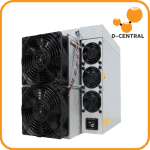
The best Bitcoin miners in 2026 are the Antminer S21 XP (270 TH/s, 13.5 J/TH) for efficiency, the Fluminer T3 (115 TH/s, 40 dB) for home mining, the Antminer S21 Pro (234 TH/s) as the best all-around, and the Bitaxe Gamma for open-source solo mining. With Bitcoin at ~$69,000 and network hashrate at 1.17 ZH/s, choosing the right ASIC miner is the single most important decision you’ll make as a miner in 2026.
We’ve spent thousands of hours repairing, testing, overclocking, and deploying every major ASIC on this list. D-Central isn’t a review site reading spec sheets from a distance — we’re a Canadian Bitcoin mining company that has been in the trenches since 2016, servicing miners, building custom space heater editions, and pioneering the Bitaxe ecosystem. Every recommendation here comes from hands-on experience, real power measurements, and actual mining data.
This guide ranks the best Bitcoin miners available in February 2026 based on efficiency (J/TH), profitability at realistic electricity costs, noise levels, build quality, and availability. Whether you’re deploying a rack in your garage or setting up a single miner to heat your living room, this is the definitive comparison.
How We Ranked These Bitcoin Miners
Every miner on this list was evaluated against five weighted criteria. No sponsorships, no affiliate-driven rankings — just data and experience.
- Efficiency (J/TH) — 30% weight: The single most important spec. Lower joules per terahash means lower electricity costs per unit of hashrate. At current difficulty levels, anything above 25 J/TH is essentially unprofitable unless you’re heating with it.
- ROI & Profitability — 25% weight: We modeled daily revenue at current network difficulty (125.86 T), block reward (3.125 BTC), and Bitcoin price (~$69,000). We calculated profitability at $0.05, $0.08, and $0.12/kWh to cover different scenarios.
- Noise & Home Suitability — 15% weight: Many readers are home miners. A miner that sounds like a jet engine at 80 dB is a non-starter for residential use. We factor in noise, heat output, and physical footprint.
- Build Quality & Reliability — 15% weight: Having repaired thousands of ASICs, we know which machines hold up and which ones become repair tickets within six months. Board layout, thermal design, fan quality, and firmware stability all matter.
- Availability & Price — 15% weight: A miner that exists only on paper or costs 3x its fair value doesn’t help you. We only rank miners that are actually shipping and available at reasonable prices.
Master Comparison Table: Best Bitcoin Miners 2026
Here’s every miner we reviewed, side by side. Sort by what matters most to you — efficiency, hashrate, noise, or price.
| Miner | Hashrate | Power | Efficiency | Noise | Cooling | Best For |
|---|---|---|---|---|---|---|
| Antminer S21 XP Hyd | 473 TH/s | 5,676W | 12.0 J/TH | ~50 dB | Hydro | Maximum efficiency (industrial) |
| Antminer S21 XP | 270 TH/s | 3,645W | 13.5 J/TH | 76 dB | Air | Best air-cooled efficiency |
| Canaan Avalon A16 XP | 300 TH/s | 3,850W | 12.8 J/TH | 75 dB | Air | High-performance alternative |
| Antminer S21 Pro | 234 TH/s | 3,510W | 15.0 J/TH | 76 dB | Air | Best overall value |
| Antminer S21+ | 216 TH/s | 3,564W | 16.5 J/TH | 76 dB | Air | Strong mid-range option |
| Antminer S21 | 200 TH/s | 3,500W | 17.5 J/TH | 75 dB | Air | Proven workhorse |
| Fluminer T3 | 115 TH/s | 1,700W | 14.8 J/TH | 40-55 dB | Air | Best for home mining |
| Whatsminer M66S++ | 356 TH/s | 5,518W | 15.5 J/TH | N/A | Immersion | Immersion mining |
| Whatsminer M60S | 186 TH/s | 3,422W | 18.5 J/TH | 72 dB | Air | MicroBT alternative |
| Canaan Avalon A15 Pro | 218 TH/s | 3,700W | 16.8 J/TH | 75 dB | Air | Canaan ecosystem |
| Antminer T21 | 190 TH/s | 3,610W | 19.0 J/TH | 75 dB | Air | Budget full-scale miner |
| Antminer S19 XP | 140 TH/s | 3,010W | 21.5 J/TH | 75 dB | Air | Best used value |
| D-Central Space Heater Editions | 10-33 TH/s | 800-1,000W | Variable | 40-55 dB | Silent fans | Best for space heating |
| Bitaxe Gamma 601 | 1.2 TH/s | 18W | 15.0 J/TH | <30 dB | Passive/fan | Best open-source solo miner |
| Bitaxe Supra Hex | 4.2 TH/s | 90W | 21.4 J/TH | <35 dB | Fan | Best multi-chip solo miner |
Category Winners at a Glance
🏆 Best Overall
Antminer S21 Pro — 234 TH/s at 15.0 J/TH. The sweet spot of performance, efficiency, price, and availability. If you can only buy one miner, this is it.
⚡ Best Efficiency
Antminer S21 XP — 270 TH/s at 13.5 J/TH (air-cooled). The most efficient air-cooled miner you can buy. For hydro setups, the S21 XP Hyd at 12.0 J/TH is king.
🏠 Best for Home Mining
Fluminer T3 — 115 TH/s at just 40-55 dB. Purpose-built for residential use with excellent efficiency (14.8 J/TH) and a compact form factor.
💰 Best Budget
Antminer S19 XP (Used) — Available for $800-900 used, still profitable at electricity under $0.06/kWh. The best dollar-per-terahash value on the market.
🔥 Best for Space Heating
D-Central Space Heater Editions — Mine Bitcoin while heating your home. Whisper-quiet operation under 55 dB, 800-1,000W heat output, and you offset your heating bill with sats.
🎰 Best Open-Source / Solo Mining
Bitaxe Gamma — 1.2 TH/s on 18W. Open-source, silent, and designed for the sovereign miner. Multiple Bitaxe units have hit full blocks — 3.125 BTC + fees.
Individual Miner Reviews
1. Antminer S21 XP Hyd — Most Efficient Bitcoin Miner (Hydro)
| Spec | Details |
|---|---|
| Hashrate | 473 TH/s |
| Power Consumption | 5,676W |
| Efficiency | 12.0 J/TH |
| Algorithm | SHA-256 |
| Cooling | Hydro (water-cooled) |
| Noise Level | ~50 dB (pump noise only) |
| Dimensions | 316 x 430 x 570 mm |
| Weight | 15.4 kg |
| Voltage | 380-415V (three-phase) |
| Warranty | 365 days |
| Est. Price | $8,000-$12,000 |
The S21 XP Hyd is the efficiency king of Bitcoin mining in 2026. At 12.0 J/TH, nothing in air-cooled territory comes close. But this machine isn’t for everyone — it requires a hydro-cooling loop, three-phase power, and proper infrastructure. This is an institutional-grade machine.
At $0.05/kWh with Bitcoin at $69,000, the S21 XP Hyd generates roughly $15-18/day in revenue before electricity, with power costs around $6.80/day — leaving a healthy margin. The water-cooled design keeps ASIC junction temperatures lower than any air-cooled unit, which extends the lifespan of the BM1370 chips significantly.
Pros:
- Best-in-class efficiency at 12.0 J/TH
- Massive 473 TH/s hashrate from a single unit
- Lower chip temperatures extend hardware lifespan
- Relatively quiet (no screaming fans)
- Premium build quality from Bitmain’s top tier
Cons:
- Requires hydro-cooling infrastructure (radiators, pumps, coolant)
- Three-phase 380-415V power — not residential in most areas
- High upfront cost ($8,000-$12,000+)
- Complex maintenance — coolant leaks are a real concern
- Overkill for home miners
Best for: Industrial operations, mining farms, and anyone with existing hydro-cooling infrastructure who needs maximum efficiency per watt. If you’re paying for power in a data center, this machine pays for itself fastest.
Need help setting up or repairing a hydro-cooled unit? D-Central’s ASIC repair team has experience with every generation of Bitmain hydro miners.
2. Antminer S21 XP — Best Air-Cooled Efficiency
| Spec | Details |
|---|---|
| Hashrate | 270 TH/s |
| Power Consumption | 3,645W |
| Efficiency | 13.5 J/TH |
| Algorithm | SHA-256 |
| Cooling | Air (4 fans) |
| Noise Level | 76 dB |
| Dimensions | 449 x 219 x 293 mm |
| Weight | 18.7 kg |
| Voltage | 220-277V |
| Operating Temp | -20°C to 45°C |
| Warranty | 365 days |
| Est. Price | $5,500-$7,500 |
The S21 XP is the crown jewel for air-cooled mining. At 13.5 J/TH, it’s the most efficient air-cooled Bitcoin miner on the market — and with 270 TH/s, it packs serious hashpower into a standard form factor that fits existing mining racks without modification.
This is the miner we’d recommend for anyone building a dedicated mining setup (garage, basement, shed) who doesn’t want to deal with hydro infrastructure. The -20°C to 45°C operating range makes it particularly well-suited for Canadian winters — cold intake air directly improves efficiency and chip longevity.
At $0.08/kWh, this miner generates roughly $2.50-$4.00/day in profit at current difficulty and Bitcoin price. Not life-changing margins, but this is the machine that survives difficulty increases and bear markets when less efficient hardware gets unplugged.
Pros:
- Best air-cooled efficiency at 13.5 J/TH
- 270 TH/s in a standard form factor
- Wide operating temperature range (-20°C to 45°C) — perfect for cold climates
- Standard 220-277V power — no three-phase required
- 365-day warranty
Cons:
- 76 dB noise level — not suitable for living spaces
- Premium price point over the S21 Pro
- At current Bitcoin prices and difficulty, margins are thin at electricity above $0.10/kWh
- Four fans means more potential fan failure points
Best for: Miners who want maximum efficiency from an air-cooled machine without hydro-cooling complexity. Ideal for garage and basement deployments, especially in cold climates like Canada where you get free cooling from ambient air.
3. Antminer S21 Pro — Best Overall Bitcoin Miner 2026
| Spec | Details |
|---|---|
| Hashrate | 234 TH/s |
| Power Consumption | 3,510W |
| Efficiency | 15.0 J/TH |
| Algorithm | SHA-256 |
| Cooling | Air |
| Noise Level | 76 dB |
| ASIC Chip | BM1370 |
| Weight | 20 kg |
| Voltage | 220-277V |
| Warranty | 365 days |
| Est. Price | $3,500-$5,000 |
The S21 Pro takes our top overall pick because it hits the perfect intersection of price, performance, and efficiency. At 234 TH/s and 15.0 J/TH, it’s a meaningful upgrade over the original S21 (200 TH/s, 17.5 J/TH) while costing significantly less than the S21 XP.
Built on the BM1370 ASIC chip — the same silicon powering the Bitaxe Gamma — the S21 Pro represents Bitmain’s current-generation technology at a more accessible price point. It’s the miner that makes the math work for the widest range of electricity costs and deployment scenarios.
We’ve seen excellent reliability from the S21 Pro in our repair shop. The thermal design is a clear improvement over the S19 generation, with better heat spreaders and more consistent airflow across the hashboards. Fewer hot spots means fewer failures.
Pros:
- Best balance of efficiency, hashrate, and price
- 15.0 J/TH — excellent efficiency at a mid-range price
- BM1370 chip — current generation, long competitive lifespan
- Improved thermal design over S19/S21 generations
- Wide availability from multiple retailers
Cons:
- 76 dB — still too loud for inside the house
- 3,510W requires a dedicated 20A/240V circuit minimum
- Not the most efficient (S21 XP wins that title)
Best for: The miner who wants the best overall package — strong efficiency, proven reliability, reasonable price, and wide availability. If you’re buying 1-10 machines for a small-to-medium operation, start here.
4. Antminer S21 — The Proven Workhorse
| Spec | Details |
|---|---|
| Hashrate | 200 TH/s |
| Power Consumption | 3,500W |
| Efficiency | 17.5 J/TH |
| Algorithm | SHA-256 |
| Cooling | Air (5 fans) |
| Noise Level | 75 dB |
| Dimensions | 400 x 195 x 290 mm |
| Weight | 15.4 kg |
| Voltage | 220-277V |
| Warranty | 365 days (new) |
| Est. Price | $2,500-$4,500 (new) / $1,100-$1,500 (used) |
The original S21 is the Toyota Camry of Bitcoin mining — reliable, well-understood, and available everywhere. At 200 TH/s and 17.5 J/TH, it doesn’t win any efficiency awards against its newer siblings, but it’s a known quantity with a long track record.
As prices have dropped with the release of the S21 Pro and XP models, the standard S21 has become an increasingly compelling option, especially used. We’re seeing clean used units for $1,100-$1,500 — that’s serious hashrate for the dollar. At 17.5 J/TH, it’s still well within profitable territory at electricity costs under $0.08/kWh.
Our ASIC repair team has serviced hundreds of S21 units. Common issues include fan bearing wear (easily replaced) and occasional PSU relay failures. Overall, the failure rate is lower than the S19 generation.
Pros:
- Proven reliability across thousands of deployments
- 200 TH/s — still competitive hashrate
- Excellent used market availability and pricing
- Well-documented, widely supported by third-party firmware (Braiins OS, etc.)
- Lower price point makes ROI math easier
Cons:
- 17.5 J/TH is falling behind newer models
- 75 dB noise — typical ASIC volume
- Being replaced in Bitmain’s lineup, so new unit availability is declining
Best for: Miners who want a proven machine at a good price. Especially attractive as a used purchase where the $/TH ratio is hard to beat. Great first miner for someone scaling up from smaller hardware.
5. Fluminer T3 — Best Bitcoin Miner for Home Use
| Spec | Details |
|---|---|
| Hashrate | 115 TH/s |
| Power Consumption | 1,700W |
| Efficiency | 14.8 J/TH |
| Algorithm | SHA-256 |
| Cooling | Air (internal, enclosed design) |
| Noise Level | 40 dB (eco) / 55 dB (full load) |
| Dimensions | 400 x 120 x 440 mm |
| Weight | 13.5 kg |
| Build | Die-cast aluminum, IP54 rated |
| Est. Price | $3,000-$4,500 |
The Fluminer T3 is something genuinely new in Bitcoin mining hardware: a miner purpose-built for your home. At 40 dB in eco-mode, you can run this in the same room as your desk without reaching for earplugs. That alone makes it revolutionary in a market dominated by 75+ dB industrial machines.
But the T3 isn’t just quiet — it’s efficient. At 14.8 J/TH, it actually beats the Antminer S21 Pro (15.0 J/TH) while consuming far less total power (1,700W vs. 3,510W). The die-cast aluminum enclosure with IP54 dust and moisture rating is a class above typical ASIC build quality. This is a miner that looks like it belongs in your home, not your garage.
The tradeoff? Hashrate. At 115 TH/s, the T3 produces roughly half the hashrate of a full-size miner at roughly half the power. The efficiency is excellent, but total daily revenue is lower in absolute terms. For a home miner who values livability over maximum hashrate, that’s a fair trade.
Pros:
- 40-55 dB noise — genuinely quiet for home use
- 14.8 J/TH efficiency — best in its class
- 1,700W — runs on a standard 15A/120V circuit (with headroom) or easily on 240V
- Premium die-cast aluminum build, IP54 rated
- Compact form factor (roughly the size of a microwave)
Cons:
- 115 TH/s — lower total hashrate than full-size miners
- Newer brand — less track record than Bitmain/MicroBT
- Fewer repair parts and third-party support available
- Premium pricing for the hashrate level
Best for: Home miners who need quiet operation and don’t have a dedicated mining room. If noise has been the barrier keeping you from running a serious miner at home, the T3 removes that barrier. Also excellent for apartment mining or office setups.
6. Canaan Avalon A16 XP — Canaan’s Best Shot
| Spec | Details |
|---|---|
| Hashrate | 300 TH/s |
| Power Consumption | 3,850W |
| Efficiency | 12.8 J/TH |
| Algorithm | SHA-256 |
| Cooling | Air |
| Noise Level | ~75 dB |
| Availability | Shipping April 2026 |
| Est. Price | $6,000-$8,000 (pre-order) |
The Avalon A16 XP is Canaan’s most aggressive play yet — 300 TH/s at 12.8 J/TH puts it ahead of Bitmain’s S21 XP (13.5 J/TH) on paper. If these numbers hold at production scale, the A16 XP could be the most efficient air-cooled Bitcoin miner available in 2026.
We have a few caveats. First, this machine hasn’t shipped yet — it’s scheduled for April 2026. Pre-order specs from any manufacturer should be taken with a grain of salt until independent testing confirms them. Second, Canaan’s historical market share has been significantly smaller than Bitmain’s, which means fewer repair parts, less third-party firmware support, and a thinner secondary market.
That said, the A15 Pro has been a solid machine in our experience, and the A16 series represents a meaningful generational leap. If Canaan delivers on these specs, it’s a serious contender.
Pros:
- 12.8 J/TH — potentially the best air-cooled efficiency
- 300 TH/s — highest hashrate in a standard air-cooled form factor
- 35%+ improvement over A15 series
- Competitive alternative to Bitmain dominance
Cons:
- Not yet shipping — specs are pre-production
- Smaller parts ecosystem and repair support vs. Bitmain
- Less third-party firmware support (limited Braiins OS compatibility)
- Pre-order pricing may not reflect final market pricing
Best for: Miners who want to diversify away from Bitmain or who need maximum efficiency and are willing to wait for April 2026 delivery. Also worth considering for anyone who has had positive experiences with the Avalon ecosystem.
7. Whatsminer M60S — The MicroBT Alternative
| Spec | Details |
|---|---|
| Hashrate | 186 TH/s |
| Power Consumption | 3,422W |
| Efficiency | 18.5 J/TH |
| Algorithm | SHA-256 |
| Cooling | Air |
| Noise Level | 72 dB |
| Dimensions | 430 x 155 x 226 mm |
| Weight | 13.5 kg |
| Est. Price | $2,000-$3,500 |
MicroBT’s Whatsminer M60S is the strongest alternative to Bitmain’s S21 lineup. At 186 TH/s and 18.5 J/TH, it doesn’t match the S21 Pro on efficiency, but it’s typically available at a lower price point — and in mining, $/TH at purchase time matters as much as J/TH during operation.
The M60S has a reputation for solid build quality. MicroBT’s integrated power supply design (the PSU is built into the miner) eliminates one common failure point and simplifies setup. The 72 dB noise level is also slightly lower than competing Bitmain units.
For immersion miners, the M66S++ variant delivers 356 TH/s at 15.5 J/TH — competitive with Bitmain’s immersion options and compatible with standard single-phase immersion tanks.
Pros:
- Integrated PSU — simpler setup, fewer cables
- 72 dB — slightly quieter than Bitmain competitors
- Competitive pricing vs. Bitmain equivalents
- Good build quality and thermal design
- Compact and relatively lightweight (13.5 kg)
Cons:
- 18.5 J/TH — falling behind the efficiency curve
- 186 TH/s — less hashrate than S21 Pro at similar power draw
- Smaller parts market and repair community vs. Bitmain
- Fewer firmware options (limited custom firmware ecosystem)
Best for: Miners who want an alternative to Bitmain, especially if MicroBT pricing is more favorable. The integrated PSU design is a real advantage for clean, simple deployments. Good option for diversifying your fleet across manufacturers.
D-Central repairs Whatsminer units as well — check our ASIC repair page for supported models.
8. Antminer T21 — Best Budget Full-Scale Miner
| Spec | Details |
|---|---|
| Hashrate | 190 TH/s |
| Power Consumption | 3,610W |
| Efficiency | 19.0 J/TH |
| Algorithm | SHA-256 |
| Cooling | Air (2 fans) |
| Noise Level | 75 dB |
| ASIC Chip | BM1368 (324 chips, 3 hashboards) |
| Operating Temp | 0-45°C |
| Voltage | 380-415V (three-phase) |
| Warranty | 365 days |
| Est. Price | $1,800-$3,000 |
The T21 is Bitmain’s budget-tier current-gen miner. The “T” series has always been the cost-effective sibling to the “S” series — using the same generation ASIC chips but with slightly less optimized binning, resulting in lower efficiency (19.0 J/TH vs. the S21’s 17.5 J/TH).
At 190 TH/s, the T21 is only 10 TH/s behind the S21, but it draws more power to get there. The real advantage is price: the T21 can often be found $500-$1,000 cheaper than the S21, which significantly changes the ROI calculation. If your electricity is under $0.06/kWh, the T21 pays for itself faster than the S21 despite the efficiency gap because of the lower upfront cost.
One important note: the T21 requires three-phase 380-415V power, unlike the S21 which runs on standard 220-277V. This limits its residential applicability in North America without an electrical upgrade.
Pros:
- Lower purchase price than S21/S21 Pro
- 190 TH/s — near-equivalent hashrate to the S21
- BM1368 chip — same generation as S21 series
- Good availability and declining prices
- Only 2 fans — simpler cooling, fewer fan failures
Cons:
- 19.0 J/TH — notably less efficient than S21 Pro (15.0)
- Three-phase power requirement limits home use
- Higher electricity cost per TH over the miner’s lifetime
- Being pushed out of profitability as difficulty rises
Best for: Budget-conscious miners with access to very cheap electricity (under $0.06/kWh) and three-phase power infrastructure. The lower upfront cost makes ROI math work even with the efficiency penalty.
9. Antminer S19 XP — Best Used Value
| Spec | Details |
|---|---|
| Hashrate | 140 TH/s |
| Power Consumption | 3,010W |
| Efficiency | 21.5 J/TH |
| Algorithm | SHA-256 |
| Cooling | Air |
| Noise Level | 75 dB |
| Voltage | 220-277V |
| Warranty | None (used market) |
| Est. Price (Used) | $800-$1,000 |
The S19 XP was the king of efficiency in its generation at 21.5 J/TH. Now it’s been surpassed by the S21 series, and that’s exactly what makes it an incredible used buy. Institutional miners upgrading to S21 XP units are dumping S19 XPs onto the secondary market at $800-$1,000 — a fraction of their original price.
At $0.05/kWh with Bitcoin at $69,000, an S19 XP generates roughly $1.50/day in profit. That’s thin, but at an $800-$900 purchase price, you’re looking at a ~18-month payback period in a bull market. And in the meantime, every sat you mine is a sat you didn’t have to buy on an exchange.
The catch: at 21.5 J/TH, the S19 XP is approaching the profitability edge. If difficulty keeps climbing (and it will) or Bitcoin drops significantly, these machines hit shutdown price before newer models do. Used machines also carry zero warranty and may have hidden issues — worn fans, degraded hashboards, or thermal paste that needs refreshing.
Pros:
- $800-$1,000 — best $/TH on the market
- 140 TH/s — still respectable hashrate
- Massive used market availability
- Well-documented, extensive repair parts supply
- Compatible with third-party firmware (Braiins OS+, VNish)
Cons:
- 21.5 J/TH — least efficient miner on this list
- No warranty on used units
- May need maintenance (fan replacement, thermal paste, cleaning)
- Approaching shutdown price at higher electricity costs
- Previous generation — shorter remaining competitive lifespan
Best for: Budget miners with cheap electricity who want to maximize hashrate per dollar spent, not per watt consumed. Also great for Canadian miners who can duct the waste heat for home heating during winter months, effectively making the electricity cost zero (you’d be paying for heating anyway). If you pick up a used S19 XP and it needs servicing, D-Central has dedicated S19 XP repair pages with transparent pricing and fast turnaround.
10. Bitaxe Gamma 601 — Best Open-Source Solo Miner
| Spec | Details |
|---|---|
| Hashrate | 1.2 TH/s (up to 2.0 TH/s overclocked) |
| Power Consumption | 18W (stock) |
| Efficiency | 15.0 J/TH |
| Algorithm | SHA-256 |
| ASIC Chip | BM1370 (single chip) |
| Connectivity | Wi-Fi, USB-C |
| Firmware | AxeOS (open-source) |
| Noise Level | <30 dB (whisper quiet) |
| Power Supply | 5V 6A USB-C |
| Est. Price | $200-$350 |
The Bitaxe Gamma isn’t about daily profitability — it’s about sovereignty, education, and the chance to hit a full Bitcoin block reward solo. At 1.2 TH/s on 18W, it costs roughly $0.03-$0.05/day in electricity. That’s coffee money for a lottery ticket at 3.125 BTC (~$216,000 at today’s price).
Built on the same BM1370 chip powering the Antminer S21 Pro, the Gamma represents the pinnacle of the Bitaxe project — open-source hardware you can audit, modify, and build yourself. The AxeOS firmware gives you full control through a clean web interface, and the Wi-Fi connectivity means zero cables beyond power.
Multiple Bitaxe units have successfully mined full Bitcoin blocks, proving this isn’t just a novelty. The probability is low — but the expected value calculation gets interesting when your electricity cost is $15/year and the potential payout is $200,000+.
D-Central has been a pioneer in the Bitaxe ecosystem since the beginning, creating the original Bitaxe Mesh Stand and developing leading heatsink and accessory solutions. We stock every Bitaxe variant along with a complete ecosystem of accessories, cases, stands, and heatsinks.
Pros:
- Open-source hardware and firmware — true sovereignty
- 18W power consumption — costs pennies per day to run
- Whisper quiet — run it on your desk
- Real solo mining potential — multiple block wins on record
- BM1370 chip — current generation efficiency
- Overclockable to 1.8-2.0 TH/s with proper cooling
- Educational — learn Bitcoin mining hands-on
Cons:
- 1.2 TH/s — statistically unlikely to find a block (but people do)
- Not designed for pool mining profitability
- Requires some technical comfort for setup and overclocking
- Open-source means quality varies by manufacturer — buy from reputable sources
Best for: Bitcoiners who want to participate in securing the network on their own terms. Cypherpunks who value open-source sovereignty. Anyone who wants a conversation-starting piece of Bitcoin hardware on their desk. And optimists who believe they might just hit a 3.125 BTC block. Browse Bitaxe miners and accessories at D-Central.
11. Bitaxe Supra Hex — Best Multi-Chip Open-Source Miner
| Spec | Details |
|---|---|
| Hashrate | 4.2 TH/s |
| Power Consumption | 90W |
| Efficiency | 21.4 J/TH |
| Algorithm | SHA-256 |
| ASIC Chips | 6x BM1368 |
| Connectivity | Wi-Fi |
| Cooling | 2x 80mm fans |
| Noise Level | <35 dB |
| Power Supply | 6-pin 12V 140W |
| Est. Price | $500-$800 |
If one Bitaxe chip is a lottery ticket, the Hex is buying six tickets at once. The Bitaxe Supra Hex packs six BM1368 chips to deliver 4.2 TH/s — roughly 3.5x the hashrate of a single Gamma — while remaining quiet enough for home use at under 35 dB.
At 90W, the Hex runs on a standard 12V PSU and costs about $0.15-$0.25/day in electricity. The efficiency at 21.4 J/TH isn’t going to compete with full-size ASICs, but that’s not the point. The Hex is the most hashrate you can get in a silent, open-source, solo-mining-ready package.
D-Central carries the Bitaxe Hex along with purpose-built accessories including the Hex heatsink and custom case designed specifically for optimal thermal performance on this six-chip board.
Pros:
- 4.2 TH/s — 3.5x the hashrate of a single Bitaxe
- Under 35 dB — still whisper quiet
- 90W — minimal power cost
- Open-source, auditable hardware
- Better solo mining odds than single-chip Bitaxe
Cons:
- 21.4 J/TH — less efficient than the Gamma per chip
- More expensive than individual Bitaxe units
- Requires a 12V PSU (not USB-C like single Bitaxe)
- Still statistically unlikely to find a block (but 3.5x more likely than Gamma)
Best for: The committed solo miner who wants to maximize open-source hashrate without the noise of a full-scale ASIC. Perfect desk companion or home mining conversation piece with real teeth.
12. D-Central Space Heater Editions — Best Dual-Purpose Miner
| Spec | Details |
|---|---|
| Models Available | S9, S17/T17, and more |
| Hashrate Range | 10-33 TH/s |
| Power Consumption | 800-1,000W |
| Noise Level | 40-55 dB (silent fan options) |
| Heat Output | 800-1,000W (~2,730-3,410 BTU/hr) |
| Fan Options | Stock, Arctic P12/P14, Noctua |
| Design | Custom Space Heater Mining Box |
| Made In | Canada |
| Est. Price | $400-$1,200 (varies by model) |
This is where the Mining Hacker philosophy comes to life. D-Central’s Space Heater Editions take proven ASIC hardware — S9s, S17s, T17s — and re-engineer them into quiet, purpose-built space heaters that mine Bitcoin while warming your home. Every watt consumed becomes heat you were going to pay for anyway.
Think about that: during Canadian winters (and much of the Northern US), your home heating bill is a fixed cost. A 1,000W Space Heater Edition replaces 1,000W of baseboard or electric heater consumption, mining Bitcoin with energy you’d spend regardless. The electricity cost of mining effectively drops to zero because you’d be paying for that heat anyway.
Each unit is built in D-Central’s Canadian workshop with upgraded silent fans (Arctic P14 Max or Noctua options), custom enclosures designed for optimal heat dissipation, and tested before shipping. The S9 Space Heater Edition runs at ~800W and ~10 TH/s — modest hashrate, but the economics flip when you’re heating with it. The S17 Edition pushes up to 33 TH/s at 1,000W for more serious mining output.
Pros:
- Dual-purpose: heating + mining eliminates effective electricity cost
- 40-55 dB with premium fan upgrades — livable noise levels
- 800-1,000W — equivalent to a standard space heater
- Purpose-built enclosures with optimized airflow
- Built and tested in Canada with premium components
- Multiple ASIC options from S9 to S17 generation
- Offset your heating bill with sats
Cons:
- 10-33 TH/s — modest hashrate vs. current-gen full-size ASICs
- Based on older-generation ASIC hardware (higher J/TH)
- Only useful for heating months (unless you need heat year-round)
- Hashrate may not be profitable standalone without the heating offset
Best for: Home miners in cold climates who want to turn their heating bill into a Bitcoin mining operation. The economics are compelling anywhere you currently use electric heat. This is the quintessential Mining Hacker product — institutional tech, hacked for the home. Explore D-Central’s full Space Heater lineup.
Bitcoin Mining Buyer’s Guide: What to Consider Before You Buy
Buying a Bitcoin miner is an investment decision. Here are the variables that determine whether that investment pays off.
Electricity Cost — The Make-or-Break Variable
Your electricity rate is the single most important factor in mining profitability. Here’s how it breaks down at current difficulty (125.86 T) and Bitcoin price (~$69,000) for a 200 TH/s miner at 17.5 J/TH (Antminer S21):
| Electricity Rate | Daily Power Cost | Est. Daily Revenue | Est. Daily Profit | Verdict |
|---|---|---|---|---|
| $0.04/kWh | $3.36 | $6.50 | $3.14 | Strong profit |
| $0.06/kWh | $5.04 | $6.50 | $1.46 | Profitable |
| $0.08/kWh | $6.72 | $6.50 | -$0.22 | Breakeven / marginal |
| $0.10/kWh | $8.40 | $6.50 | -$1.90 | Unprofitable |
| $0.12/kWh | $10.08 | $6.50 | -$3.58 | Unprofitable |
The numbers are clear: at current conditions, you need electricity under $0.07/kWh for an S21 to be comfortably profitable. More efficient miners (S21 XP at 13.5 J/TH) push that threshold higher; less efficient machines (S19 XP at 21.5 J/TH) push it lower. Use our Bitcoin Mining Profitability Calculator to model your exact setup.
Space and Noise
Full-size ASIC miners run at 72-76 dB. For reference, that’s louder than a vacuum cleaner and roughly equivalent to a busy restaurant. You cannot run these in your living space. You need one of the following:
- Dedicated room/closet — insulated, ventilated, with intake/exhaust paths
- Garage or basement — most common home mining setup
- Outdoor enclosure — weatherproof box with ventilation
- Mining hosting — someone else deals with the noise
Exceptions: The Fluminer T3 (40-55 dB), D-Central Space Heater Editions (40-55 dB), and Bitaxe miners (<35 dB) can operate in living spaces.
Heat Management
Every watt a miner consumes is converted into heat. A 3,500W Antminer S21 produces 3,500W of heat — equivalent to running three space heaters simultaneously. In Canadian winters, this is a feature. In July, it’s a problem.
Plan your airflow: cold intake from outside (or an unheated space), hot exhaust ducted away from the miner. This is where D-Central’s Space Heater Editions shine — they’re designed to distribute that heat throughout your home instead of fighting to get rid of it.
Electrical Requirements
Most full-size miners require 220-240V circuits rated at 20A or higher. In North America, this is your dryer outlet or a dedicated circuit installed by an electrician. Critical considerations:
- Standard S21/S21 Pro: 220-277V, 16-20A dedicated circuit
- T21: 380-415V three-phase — typically requires commercial electrical
- Hydro units: 380-415V three-phase
- Fluminer T3: 1,700W — can run on a dedicated 120V/15A circuit
- Bitaxe: 5V USB-C — plug it into any outlet
- Space Heater Editions: 800-1,000W — standard 120V outlet
Never daisy-chain miners on the same circuit. Never use extension cords. Hire an electrician for any 240V installations.
Your Mining Goal
Define what you want before you buy:
- Maximize hashrate/profit: S21 XP or S21 Pro, cheap electricity, dedicated space
- Home mining with minimal disruption: Fluminer T3 or D-Central Space Heater Editions
- Sovereignty and education: Bitaxe Gamma — solo mining on your terms
- Heat your home while mining: D-Central Space Heater Editions — the best $/watt when heating offset is counted
- Budget entry into mining: Used S19 XP or T21
- Solo block hunting: Bitaxe Gamma or Hex — low cost, high potential upside
New vs. Used Bitcoin Miners: When Used Makes Sense
The used ASIC market is massive in 2026. As institutional miners upgrade fleets to S21 XP and next-gen hardware, mountains of S19, S19 Pro, and S19 XP units hit the secondary market. Here’s when used makes sense — and when it doesn’t.
Buy Used When:
- Your electricity is very cheap (<$0.05/kWh). The efficiency gap matters less when power is nearly free.
- You’re heating with the miner. Space heater use cases make older, less efficient hardware perfectly viable.
- You want to maximize hashrate per dollar spent. A used S19 XP at $900 gives you 140 TH/s. A new S21 Pro at $4,000 gives you 234 TH/s. Dollar per terahash, the used unit wins.
- You can inspect or repair the hardware yourself. (Or send it to D-Central for inspection/repair.)
- You’re learning. Start with a $900 used miner rather than a $5,000 new one while you figure out airflow, electrical, noise management, and firmware.
Buy New When:
- Your electricity is above $0.06/kWh. At higher rates, only the most efficient machines remain profitable.
- You need warranty protection. New Bitmain units come with 365-day warranties.
- You want maximum competitive lifespan. A new S21 XP will remain profitable through more difficulty increases than an S19 XP.
- You’re deploying at scale. Uniformity and warranty matter more when managing 50+ machines.
Used Miner Buying Checklist
- Request hashrate screenshots from the seller (pool dashboard, not just the miner UI)
- Check for damaged heatsinks, bent pins, or corroded connectors
- Test all hashboards — each should hash within 5% of rated speed
- Inspect fans for bearing noise or wobble
- Check PSU cables for burn marks or melted connectors
- Verify firmware version and ensure it’s not locked to a specific pool
- Ask about operating environment (clean room vs. dusty warehouse)
FAQ: Best Bitcoin Miners 2026
What is the most efficient Bitcoin miner in 2026?
The most efficient Bitcoin miner in 2026 is the Antminer S21 XP Hyd at 12.0 J/TH (hydro-cooled). For air-cooled miners, the Antminer S21 XP leads at 13.5 J/TH, with the upcoming Canaan Avalon A16 XP claiming 12.8 J/TH (shipping April 2026). The Fluminer T3 also deserves mention at 14.8 J/TH in a home-friendly form factor.
Is Bitcoin mining still profitable in 2026?
Yes, but only with efficient hardware and low electricity costs. With Bitcoin at ~$69,000 and network difficulty at 125.86 T, you need electricity under $0.07/kWh for most current-gen miners to be profitable. More efficient machines (sub-15 J/TH) can stretch profitability to $0.09-$0.10/kWh. Use our mining profitability calculator to model your specific scenario.
What is the best Bitcoin miner for home use?
The Fluminer T3 is the best full-scale miner for home use at 40-55 dB and 115 TH/s. For dual-purpose heating + mining, D-Central’s Space Heater Editions (40-55 dB) are purpose-built for residential use. For desk-level mining, the Bitaxe Gamma at under 30 dB is whisper quiet.
How much does it cost to mine 1 Bitcoin in 2026?
At current network difficulty (125.86 T), mining 1 BTC requires approximately 854,400 kWh of energy. Using a top-tier miner like the S21 XP (13.5 J/TH), the electricity cost to mine 1 BTC ranges from $34,000-$51,000 at power prices of $0.04-$0.06/kWh. With less efficient hardware, costs increase proportionally.
Should I buy a new or used ASIC miner?
If your electricity is under $0.05/kWh, used miners (S19 XP at $800-$1,000) offer the best $/TH. If your electricity is above $0.06/kWh, buy the most efficient new hardware you can afford (S21 Pro or S21 XP). Used miners also make excellent space heaters where the mining profit is secondary to the heating value.
What is a Bitaxe and can it really mine a Bitcoin block?
The Bitaxe is an open-source, single-chip ASIC miner that runs on 18W and costs $200-$350. It mines solo (not in a pool), meaning if it finds a valid block, the full 3.125 BTC reward (~$216,000) goes to you. Multiple Bitaxe units have successfully mined full blocks. The probability per day is extremely low, but the cost to try is pennies per day.
Can I mine Bitcoin and heat my home at the same time?
Absolutely — this is one of the smartest applications of Bitcoin mining for home miners. Every watt consumed by a miner becomes heat. D-Central’s Space Heater Editions are purpose-built for this: quiet operation (40-55 dB), 800-1,000W heat output, and they mine Bitcoin with energy you’d spend on heating anyway. In cold climates like Canada, the effective mining cost drops to near zero.
What's the difference between the Antminer S21, S21 Pro, S21+, and S21 XP?
They’re all in the same S21 family but represent different performance tiers. The S21 (200 TH/s, 17.5 J/TH) is the base model. The S21+ (216 TH/s, 16.5 J/TH) is a modest upgrade. The S21 Pro (234 TH/s, 15.0 J/TH) is the sweet-spot model with the BM1370 chip. The S21 XP (270 TH/s, 13.5 J/TH) is the highest-efficiency air-cooled option. Higher in the lineup means better efficiency but higher price.
How loud is a Bitcoin miner?
Most full-size ASICs run at 72-76 dB, roughly the volume of a vacuum cleaner. You cannot run these in a living space without serious sound isolation. Exceptions include: the Fluminer T3 (40-55 dB), D-Central Space Heater Editions (40-55 dB with Noctua fans), and Bitaxe miners (under 30-35 dB). For standard ASICs, plan for a garage, basement, or outdoor enclosure.
Where can I get my ASIC miner repaired?
D-Central Technologies operates one of North America’s leading ASIC repair services, with dedicated repair pages for 38+ models including all Antminer, Whatsminer, and Avalon models on this list. We offer transparent pricing, fast turnaround, and ship across Canada and the United States.
Conclusion: Which Bitcoin Miner Should You Buy in 2026?
Bitcoin mining in 2026 is a precision game. With network hashrate at 1.17 ZH/s, difficulty at 125.86 T, and Bitcoin hovering around $69,000, the margin for error is thin. The miners that were printing money two years ago are hitting shutdown price. The machines on this list are the ones that survive — and profit — in this environment.
Here’s the final decision matrix:
- You have cheap power and dedicated space: Buy the Antminer S21 Pro. Best overall balance of efficiency, price, and reliability. If budget allows, step up to the S21 XP for maximum efficiency.
- You want to mine at home without drama: The Fluminer T3 is the quietest efficient miner ever made. It belongs in your home.
- You want to heat your home while stacking sats: D-Central’s Space Heater Editions turn your heating bill into a mining operation. Mining Hackers at its finest.
- You believe in open-source sovereignty: The Bitaxe Gamma runs on 18W, costs pennies per day, and might — just might — find you a 3.125 BTC block.
- You’re on a tight budget: A used S19 XP at $800-$900 gets you 140 TH/s and pays for itself in 18 months with cheap power.
- You’re building a fleet: Standardize on the S21 Pro and get a maintenance contract set up. When machines need servicing, D-Central’s repair team is here.
Whatever you choose, remember: mining is the only way to acquire non-KYC Bitcoin directly from the protocol. Every hash you produce strengthens the network’s decentralization. That’s not just an investment — it’s a statement of sovereignty.
Ready to start mining? Browse D-Central’s full hardware catalog, check your numbers with our mining profitability calculator, or contact our team for personalized recommendations.
Last updated: February 17, 2026. Profitability estimates based on Bitcoin price ~$69,000, network difficulty 125.86 T, and block reward 3.125 BTC. All figures are estimates and will change with market conditions. Mining involves risk — hardware costs, electricity rates, Bitcoin price, and network difficulty all affect returns. Do your own research and never mine with money you can’t afford to lose.
What is the most efficient Bitcoin miner in 2026?
The most efficient Bitcoin miner in 2026 is the Antminer S21 XP Hyd at 12.0 J/TH (hydro-cooled). For air-cooled miners, the Antminer S21 XP leads at 13.5 J/TH, with the upcoming Canaan Avalon A16 XP claiming 12.8 J/TH (shipping April 2026). The Fluminer T3 also deserves mention at 14.8 J/TH in a home-friendly form factor.
Is Bitcoin mining still profitable in 2026?
Yes, but only with efficient hardware and low electricity costs. With Bitcoin at ~$69,000 and network difficulty at 125.86 T, you need electricity under $0.07/kWh for most current-gen miners to be profitable. More efficient machines (sub-15 J/TH) can stretch profitability to $0.09-$0.10/kWh. Use our mining profitability calculator to model your specific scenario.
What is the best Bitcoin miner for home use?
The Fluminer T3 is the best full-scale miner for home use at 40-55 dB and 115 TH/s. For dual-purpose heating + mining, D-Central’s Space Heater Editions (40-55 dB) are purpose-built for residential use. For desk-level mining, the Bitaxe Gamma at under 30 dB is whisper quiet.
How much does it cost to mine 1 Bitcoin in 2026?
At current network difficulty (125.86 T), mining 1 BTC requires approximately 854,400 kWh of energy. Using a top-tier miner like the S21 XP (13.5 J/TH), the electricity cost to mine 1 BTC ranges from $34,000-$51,000 at power prices of $0.04-$0.06/kWh. With less efficient hardware, costs increase proportionally.
Should I buy a new or used ASIC miner?
If your electricity is under $0.05/kWh, used miners (S19 XP at $800-$1,000) offer the best $/TH. If your electricity is above $0.06/kWh, buy the most efficient new hardware you can afford (S21 Pro or S21 XP). Used miners also make excellent space heaters where the mining profit is secondary to the heating value.
What is a Bitaxe and can it really mine a Bitcoin block?
The Bitaxe is an open-source, single-chip ASIC miner that runs on 18W and costs $200-$350. It mines solo (not in a pool), meaning if it finds a valid block, the full 3.125 BTC reward (~$216,000) goes to you. Multiple Bitaxe units have successfully mined full blocks. The probability per day is extremely low, but the cost to try is pennies per day.
Can I mine Bitcoin and heat my home at the same time?
Absolutely — this is one of the smartest applications of Bitcoin mining for home miners. Every watt consumed by a miner becomes heat. D-Central’s Space Heater Editions are purpose-built for this: quiet operation (40-55 dB), 800-1,000W heat output, and they mine Bitcoin with energy you’d spend on heating anyway. In cold climates like Canada, the effective mining cost drops to near zero.
What's the difference between the Antminer S21, S21 Pro, S21+, and S21 XP?
They’re all in the same S21 family but represent different performance tiers. The S21 (200 TH/s, 17.5 J/TH) is the base model. The S21+ (216 TH/s, 16.5 J/TH) is a modest upgrade. The S21 Pro (234 TH/s, 15.0 J/TH) is the sweet-spot model with the BM1370 chip. The S21 XP (270 TH/s, 13.5 J/TH) is the highest-efficiency air-cooled option. Higher in the lineup means better efficiency but higher price.
How loud is a Bitcoin miner?
Most full-size ASICs run at 72-76 dB, roughly the volume of a vacuum cleaner. You cannot run these in a living space without serious sound isolation. Exceptions include: the Fluminer T3 (40-55 dB), D-Central Space Heater Editions (40-55 dB with Noctua fans), and Bitaxe miners (under 30-35 dB). For standard ASICs, plan for a garage, basement, or outdoor enclosure.
Where can I get my ASIC miner repaired?
D-Central Technologies operates one of North America’s leading ASIC repair services, with dedicated repair pages for 38+ models including all Antminer, Whatsminer, and Avalon models on this list. We offer transparent pricing, fast turnaround, and ship across Canada and the United States.