Bitcoin mining can produce a positive operating margin, but it is not automatically profitable after hardware, installation, downtime, pool fees, repairs, taxes, and changing network conditions. Start with your delivered marginal electricity rate, the machine’s measured wall power and efficiency, and the live calculator below. A result can change materially after a difficulty adjustment or a BTC-price move.
LIVE BITCOIN NETWORK SNAPSHOT
- BTC price: $82,132 USD (≈ C$113,342)
- Network difficulty: 132.72 T
- Block reward: 3.125 BTC
- Hashprice: ≈ $38.90/PH/s/day
These figures auto-refresh from public APIs (CoinGecko + blockchain.info, via D-Central's hardened feed) — they are read live each time this page is served, not cached screenshots. Guide last hand-reviewed by D-Central: August 2026. USD↔CAD at 1 USD ≈ C$1.38.
The 30-Second Decision Check
- Start with your bill, not an advertised rate. Use the additional, delivered cost of the miner’s kWh after tariff tiers, fixed or demand charges, and taxes. For circuit planning, see our 120V Bitcoin mining guide.
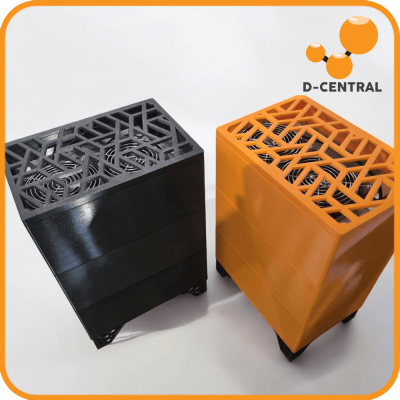
- Need heat? A miner’s electrical input becomes heat at the point of use, but its economic credit only equals the heating cost it actually displaces. Review Bitcoin space heaters against your existing heat source and seasonal load.
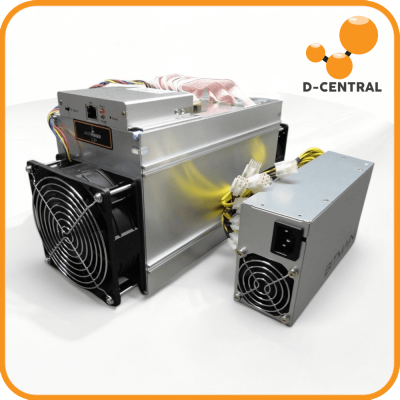
- No heat use case or no suitable circuit, ventilation, and noise plan? Do not treat a projected daily margin as a purchase recommendation. You may prefer to wait, buy BTC directly, or run a Bitaxe for education and sovereignty rather than predictable income.
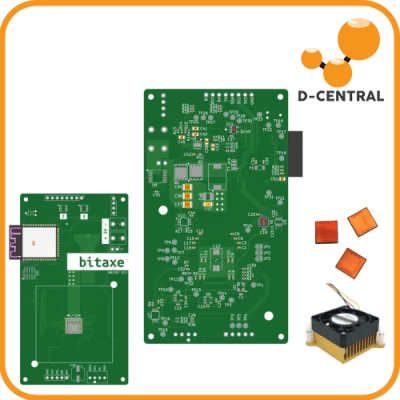
- Learning or solo mining? A Bitaxe is low-power open-source hardware, but solo results are highly variable and should not be budgeted as monthly income.
- Need site-specific help? Check the calculator first, then talk to us about electrical, ventilation, noise, or repair constraints.
Profitability by Electricity Rate × Hardware (Live)
The table estimates operating margin from the live network inputs and the listed machine assumptions. It does not include hardware and installation cost, pool fees, taxes, downtime, repairs, ventilation, financing, or resale value. Use it as a starting point, then run your own all-in case before buying.
| Your power rate (USD/kWh) | S21-class (current-gen) 234 TH/s · 15 J/TH |
S19 refurb 104 TH/s · 29.5 J/TH |
Bitaxe (solo) 1.2 TH/s · ~15 W |
Heat-reuse (S21, winter) power = sunk heating cost |
|---|---|---|---|---|
| $0.03 | +$6.58/day · Profitable | +$1.84/day · Profitable | Lottery1 | +$9.10/day · bonus2 |
| $0.05 | +$4.89/day · Profitable | +$0.36/day · Marginal | Lottery1 | +$9.10/day · bonus2 |
| $0.07 | +$3.21/day · Profitable | -$1.11/day · Loss | Lottery1 | +$9.10/day · bonus2 |
| $0.10 | +$0.68/day · Marginal | -$3.32/day · Loss | Lottery1 | +$9.10/day · bonus2 |
| $0.12 | -$1.01/day · Loss | -$4.79/day · Loss | Lottery1 | +$9.10/day · bonus2 |
| $0.15 | -$3.53/day · Loss | -$7.00/day · Loss | Lottery1 | +$9.10/day · bonus2 |
| $0.20 | -$7.74/day · Loss | -$10.68/day · Loss | Lottery1 | +$9.10/day · bonus2 |
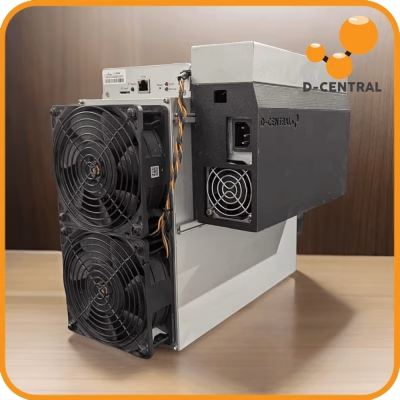
Worked example — Antminer S21 Pro in Quebec (Hydro-Québec, 7.1¢ CAD/kWh):
- Daily revenue: 234 TH/s at the live network state ≈ $9.10 USD (≈ C$12.56).
- Daily power: 3.51 kW × 24 h × 0.071 CAD = C$5.95.
- Daily net: C$12.56 − C$5.95 = +C$6.61/day.
- That is roughly +C$201/month (≈ +C$2,413/year) before pool fees and hardware payback — at one of the cheapest residential power rates in North America.
Quebec's ~7.1¢ CAD (≈ 5.1¢ USD) is why Canadian home miners hold a structural edge: you earn USD-priced sats and pay in cheaper CAD. In Alberta or the high-rate U.S. states the same machine flips to a loss unless you reuse the heat.
How Mining Economics Actually Work
Mining economics are a moving estimate, not a fixed threshold. BTC price, difficulty, block transaction fees, hashrate, uptime, pool fee, energy rate, and hardware condition all matter. The calculator above is the current view; the method below explains what it should include.
The Bitcoin Mining Profitability Equation
Expected daily BTC = (Your hashrate in H/s × 86,400 ÷ (Difficulty × 2³²))
                   × (block subsidy + expected transaction fees per block)
                   × uptime × (1 − pool fee)

Daily electricity cost = measured wall power (kW) × operating hours × delivered marginal electricity rate

Estimated operating margin = BTC revenue at your chosen reference price − electricity − pool fees − other operating costs
Difficulty is the more stable input for an expected-reward calculation; network hashrate is an estimate that depends on the observation window. Expected revenue is an average, not a promise. A full-project return also requires hardware, installation, taxes, repairs, downtime, depreciation or resale value, and financing.
For a current estimate, use our mining profitability calculator with measured machine settings and your own power bill. Recheck it after difficulty changes, tariff changes, or a meaningful change in BTC price.
The Three Factors That Determine Your Mining Profit
Factor #1: Delivered Marginal Electricity Cost
Electricity is often the largest operating cost, but the relevant number is the cost caused by the miner’s additional kWh—not the first energy-only rate on a bill and not a provincial average. Include energy tiers, delivery, fixed and demand charges where applicable, taxes, time-of-use or peak pricing, and your existing household load.
For a 24/7 miner, calculate a range: a low case for hours and kWh that genuinely receive the lower tariff, and a high case for the marginal tier that the new load reaches. Positive operating margin is not the same as recovery of the hardware and installation cost.
Factor #2: Hardware Efficiency and Real Wall Power
Efficiency is measured in joules per terahash (J/TH); lower is generally better for SHA-256 mining. Compare the exact model, power mode, firmware setting, ambient conditions, and measured wall power. Nameplate figures, used-machine condition, and underclock settings can materially change both hashrate and power draw.
Do not choose hardware from a stale purchase-price, payback, or profit ranking. Put the exact seller price, shipping, taxes, electrical work, expected uptime, and a conservative repair/resale assumption into your own full-cost case.
Factor #3: BTC Price, Difficulty, and Fees
BTC price changes the fiat value of mined BTC, while difficulty and transaction-fee conditions change the expected BTC earned per hash. Those inputs can move in opposite directions. Do not model a price increase while holding difficulty, network conditions, and hardware value constant; use conservative scenarios and revisit them regularly.
Mining Approaches: What Changes the Calculation
- Pool mining with an ASIC: use expected revenue after the pool fee, measured wall power, realistic uptime, and the full installed cost. Pool payouts reduce variance but do not eliminate operating or counterparty risk.
- Heat-integrated mining: credit only the heating expense that the miner demonstrably displaces at the needed time and place. The counterfactual heat source matters.
- Solo mining: expected reward is proportional to hashrate, but actual payouts are extremely uneven. Treat a small solo miner as education, sovereignty, or high-variance participation—not predictable monthly income.
The Hidden Benefits of Bitcoin Mining (Beyond Pure Profit)
If you only evaluate mining through the lens of “monthly cash profit,” you are missing most of the picture. Here are the benefits that do not show up on a simple profitability calculator:
1. Heat Recovery: Value It Correctly
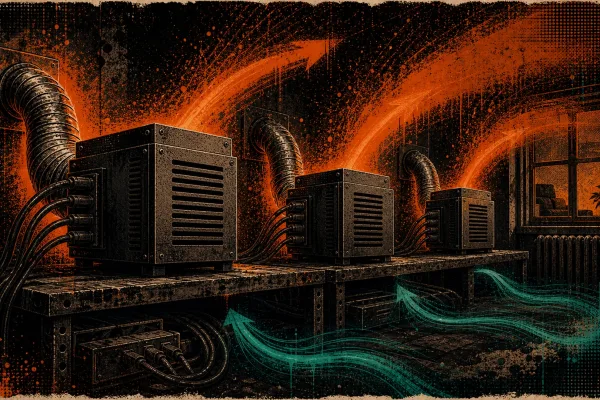
A miner’s electrical input becomes heat at the point of use, so it can replace resistance-electric heat watt-for-watt when its heat is needed in the right room. That does not make mining automatically profitable. The economic credit is limited to the heating cost actually avoided, and may be lower when the alternative is a heat pump, fuel-fired system, or central system with a different efficiency.
Account for the seasonal heat load, ducting or fan power, noise control, ventilation, installation, and the months when the heat is not wanted. See Bitcoin space heaters for equipment options, then model the heat credit separately from mining revenue.
2. Non-KYC Bitcoin Accumulation
Mining can acquire bitcoin without buying it through a retail exchange. Privacy and account requirements vary by pool, payout method, and local obligations; miners still face pool, wallet, custody, operational, and tax-recordkeeping risks.
3. Supporting Network Decentralization
Every home miner running hashrate is a vote for decentralization. The more hashrate distributed across homes, garages, and basements worldwide, the harder it is for any government or corporation to attack the Bitcoin network. Mining is not just an investment — it is an act of sovereignty.
4. Dollar-Cost Averaging Without Exchange Risk
Mining converts operating expenses into variable BTC output over time, but it is not fee-free or risk-free dollar-cost averaging. Pool fees, hardware depreciation, downtime, and changes in expected revenue remain part of the result.
5. Potential Tax Advantages
Canadian tax treatment depends on the facts. Mining carried on as a business generally requires income and expense records, and qualifying ASIC or GPU equipment may be eligible for capital cost allowance. GST/HST treatment of mining has special rules and input-tax credits are generally unavailable for mining activities, subject to limited exceptions. Obtain advice for your circumstances and keep CAD-value, time, payout, power, and equipment records.
Canadian Home-Mining Cost Check
Do not use a provincial average as your mining rate. Canadian residential tariffs differ by utility, rate option, season, time of use, daily or monthly tier, fixed charge, tax treatment, and existing household consumption. A 24/7 ASIC can move a home into a higher marginal tier.
- Find the utility and rate option shown on your own bill.
- Calculate the additional bill caused by the miner’s kWh, including any higher tier, delivery, demand, fixed, and tax charges.
- Use the relevant operating hours rather than assuming an off-peak rate applies all day.
- Convert all inputs to one currency only for comparison; CAD/USD movement is an exposure, not an automatic mining advantage.
For a Quebec home, specifically check the applicable Hydro-Québec tariff and whether the miner’s added consumption reaches a higher tier. Use the Mining Power Cost Calculator and your bill before relying on a headline rate.
When Bitcoin Mining Is NOT Profitable (Be Honest With Yourself)
We sell mining hardware. It would be easy to tell you mining is always worth it. But that would be a lie, and lies erode trust. Here is when mining does not make financial sense:
1. Your Electricity Costs More Than $0.12/kWh (USD)
At rates above $0.12/kWh, even the most efficient air-cooled ASIC miners (S21 XP at 13.5 J/TH) struggle to break even at current BTC prices. If your all-in electricity rate exceeds this threshold and you do not have a heat-recovery use case, mining will cost you more than simply buying Bitcoin on an exchange.
2. You Have No Cooling or Ventilation Plan
ASIC miners are loud (70–80 dB) and hot (3,500W+ of continuous heat). Without proper ventilation, they will overheat, throttle, and eventually die. If you cannot duct the heat outside in summer or into your living space in winter, do not buy a full-size ASIC. Consider a Bitaxe instead — silent, low-power, and no ventilation needed.
3. You Are Buying Old-Gen Hardware to “Save Money”
A “cheap” S19 Pro at $300 sounds tempting until you realize its 29.5 J/TH efficiency means it consumes almost twice as much power per terahash as an S21 Pro. At $0.07/kWh, the S19 Pro loses money every single day it runs. The cheapest miner is often the most expensive miner — it just takes the electricity bill to prove it.
4. Cloud Mining (Almost Always a Bad Deal)
Cloud mining services promise hassle-free mining profits. The reality: they charge you a premium for hashrate, keep maintenance fees opaque, and many are outright scams. If the economics worked, they would mine for themselves instead of selling hashrate to you. We have seen too many people burned by cloud mining contracts. Buy your own hardware, control your own keys, mine your own Bitcoin. That is the way.
5. You Are Planning to Mine Altcoins “Because They Are More Profitable”
This article is about Bitcoin mining. We are Bitcoin maximalists, and we will not pretend otherwise. Altcoin mining introduces additional risks: uncertain emission schedules, centralized development teams that can change the rules, low liquidity that evaporates during downturns, and ASIC resistance that means your hardware can become worthless overnight if the algorithm changes. Bitcoin is the only Proof of Work network worth dedicating hardware to long-term.
How to Calculate YOUR Mining Profitability
The tables above give you general guidance, but your profitability depends on your specific situation. Here is how to calculate it for your exact setup:
Step 1: Find Your True Electricity Rate
Do not just look at the “energy charge” on your bill. Add up:
- Energy charge (per kWh)
- Delivery/distribution charge (per kWh)
- Regulatory charges
- Taxes
- Any demand charges (common in some Canadian provinces)
Divide your total bill by total kWh consumed. That is your true all-in rate. Most people are shocked to find their real rate is 20–40% higher than the advertised “energy charge.”
Step 2: Pick Your Hardware
For home mining in 2026, we recommend:
- Best efficiency (highest profit per watt): Antminer S21 XP (13.5 J/TH) or S21 Pro (15 J/TH)
- Best value (lowest acquisition cost for positive ROI): Antminer S21 (17.5 J/TH) — ~$1,500
- Best for heating: D-Central Space Heater Editions — purpose-built for home integration
- Best for sovereignty/education: Bitaxe — open-source, silent, runs on USB power
Step 3: Run the Numbers
Use our tools to calculate your exact profitability:
- D-Central Mining Profitability Calculator — Enter your hashrate, power consumption, and electricity rate to see daily, monthly, and annual profit projections.
- Mining Power Cost Calculator — Calculate your true all-in electricity cost per kWh, including delivery and regulatory charges.
Bookmark these and check monthly. Mining profitability is a moving target — difficulty adjusts every ~2 weeks, and BTC price changes daily. What is unprofitable today may be highly profitable next month, and vice versa.
When Heat Recovery Can Improve Mining Economics
Heat recovery can improve a case when a miner replaces resistance-electric heat that you would otherwise run and its output matches the real heating demand. Treat the avoided-heating amount as a separate, evidence-based credit—not as a blanket zero electricity cost or a guarantee of profit.
- Identify the existing heat source and its effective cost per unit of delivered heat.
- Estimate the share of miner heat used in the right space and season.
- Subtract added fan, ducting, installation, pool, maintenance, and hardware costs.
- Plan for summer operation or shutdown; added heat does not remove moisture from air.
That approach preserves the practical benefit of Bitcoin space heaters while keeping the financial claim testable against a household’s actual alternatives.
Solo Mining and the Bitaxe: A Different Kind of Participation
A small solo miner’s expected reward remains proportional to its hashrate, but its actual payout distribution is extreme: it may earn nothing for a very long time and, very rarely, find a block. That makes a Bitaxe better suited to education, open-source experimentation, sovereignty, and high-variance participation than predictable income.
Its electricity use and expected revenue still belong in the calculation. Do not describe a solo miner’s expected value as zero or use a block jackpot as a financial forecast.
What the 2028 Halving Changes
The next scheduled subsidy reduction is expected around 2028 and would reduce the block subsidy from 3.125 BTC to 1.5625 BTC if Bitcoin’s consensus rules remain unchanged. Price, transaction fees, hashrate, difficulty, machine efficiency, and operating costs will determine the result. No current machine can be described as post-halving profitable in advance.
If you are evaluating hardware with that event in mind, stress-test the full-cost case with lower revenue, lower uptime, repair costs, and no assumed price appreciation.
Frequently Asked Questions
Is Bitcoin mining profitable at home?
It can have a positive operating margin, but only your measured machine settings, delivered marginal electricity rate, current network inputs, uptime, pool fee, and full installed cost can answer the question. Use the calculator before buying.
What electricity rate should I use?
Use the cost added by the miner’s kWh on your own bill. Include tiers, delivery, fixed or demand charges, taxes, time-of-use pricing, and existing household load. Do not substitute a provincial average or an energy-only headline rate.
Does a mining heater make electricity free?
No. Heat recovery can credit only the heating cost actually displaced when the heat is needed. The counterfactual system, seasonal demand, installation, and hardware cost all still matter.
Is solo mining profitable?
Small solo mining has extremely variable payouts. Its expected reward is proportional to hashrate, but it should be treated as education, sovereignty, or high-variance participation rather than a predictable income stream.
Will a current miner be profitable after the 2028 halving?
No one can know in advance. The subsidy reduction, price, fees, difficulty, uptime, energy cost, and hardware condition will determine the result. Stress-test a full-cost case instead of relying on a promise.
The Bottom Line: Is Bitcoin Mining Profitable in 2026?
It depends on a full, current case—not a universal electricity threshold.
- Use the live calculator as an operating-margin estimate, with your measured settings and delivered marginal electricity cost.
- Add pool fees, installation, cooling or ventilation, downtime, repairs, taxes, hardware cost, and a conservative resale assumption before calling the project profitable.
- Value heat recovery only where it demonstrably displaces needed heat from your actual alternative system.
- Recheck the result after difficulty, tariff, machine-condition, or BTC-price changes.
Mining can be a practical way to operate hardware, recover useful heat, learn Proof-of-Work, or acquire BTC over time. It is not a guaranteed return. Use our mining profitability calculator before you buy, then contact us if you need help with hardware, setup, ventilation, or repair.
Ready to Start Mining?
Browse our complete selection of mining hardware, from the latest ASICs to open-source Bitaxe solo miners and purpose-built Space Heater Editions:
- Browse All Mining Hardware
- Bitaxe Solo Miners — Open-source, silent, sovereignty-first
- Bitcoin Space Heaters — Heat your home, stack sats
- ASIC Repair Services — Get your broken miner back online
- Mining Profitability Calculator — Run your own numbers
Mining Profitability Knowledge Base
Profit is the only metric that keeps a miner running. D-Central’s profitability deep-dives:
- Antminer T21 review (2026) — best-value current-gen profitability
- Maximizing ASIC profitability in 2026 — key tips & strategies
- Efficient, profitable mining with D-Central — closing the efficiency gap
- Maximizing Antminer S19 profitability — tips & tricks
- ASIC vs GPU: the profitable path — which actually pays
- Mining in Pennsylvania — nuclear power & deregulated rates
- Mastering the mining farm (2026) — the profitable-scale guide
- Mining in Georgia — rates, rules & profitability
- Mining in Texas — rates, laws & profitability
- Home-mining profitability & dynamic pricing — time-of-use economics