Skip to content

Bitcoin accepted at checkout  |  Ships from Laval, QC, Canada  |  Expert support since 2016

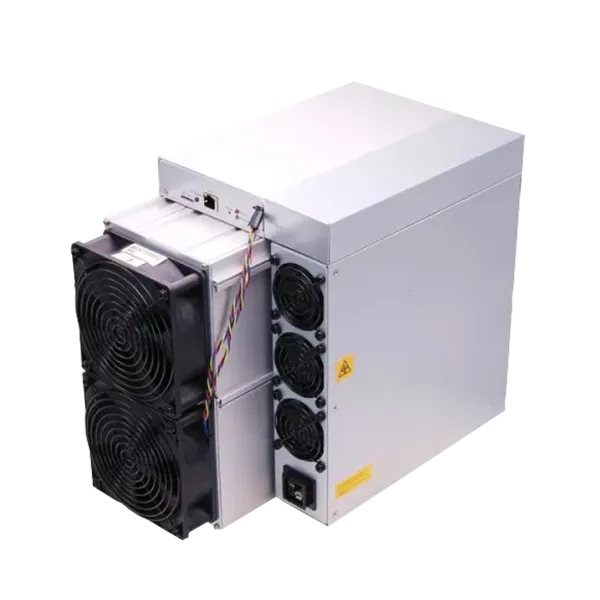
Antminer S21 ASIC miner specifications and profitability image
Active Bitmain SHA-256 Featured PRO HEATER

Antminer S21

Too loud and power-hungry for home use without modifications

Hashrate 200 TH/s
Power 3,500 W
Efficiency 17.5 J/TH
Noise 75 dB

Quick answer

The Antminer S21 is a Bitcoin miner rated about 200 TH/s at roughly 3,500 W (about 17.5 J/TH), built on 108× BM1368. An industrial-class unit — loud and power-hungry, best suited to a dedicated mining space, not living areas.

Professional-Grade Miner

This miner draws 3,500W and produces 75 dB of noise — it is designed for dedicated mining environments, not living spaces. Professional-grade miners deliver the highest hashrate and revenue per unit but require proper infrastructure: a 240V circuit, adequate ventilation or exhaust ducting, and a space where noise is not a concern (garage, basement, warehouse, or outdoor enclosure).

For home miners looking for a quieter alternative, consider our Bitcoin Space Heater builds or explore open-source miners like the Bitaxe that are purpose-built for residential environments.

Circuit Requirement 240V dedicated circuit

Heater-Class Miner

At 3,500W, this miner outputs approximately 11942 BTU/hr of heat — equivalent to a standard electric space heater. Every watt consumed by an ASIC miner is converted to heat with 100% efficiency, making it a space heater that also mines Bitcoin.

During heating season, miner heat can offset part of the heat a room would otherwise need from another electric heater. The economics depend on your electricity rate, room heat demand, BTC price, network difficulty, and noise constraints.

Heat Output 11942 BTU/hr
Explore Bitcoin Space Heaters →

Profitability Calculator

$62,658
Daily BTC Mined --
Breakeven Electricity $0.0751/kWh
Cost to Mine 1 BTC --
Network Hashrate Share --
Break-even Estimate --
Estimated mining profitability by period at current network conditions.
Period Revenue Electricity Cost Profit
Daily $6.31 $5.88 $0.43
Weekly $44.14 $41.16 $2.98
Monthly $189.17 $176.40 $12.77
Yearly $2,301.58 $2,146.20 $155.38

Buy from D-Central

Currently out of stock. Check back soon or contact us for availability.

$5,295.00 CAD
View Antminer S21

Where to Buy the Antminer S21

Official

D-Central Technologies

Canada

Bitcoin Mining Hackers since 2016. Ships from Laval, Quebec.

$5,295.00 CAD
View Antminer S21

Full Specifications

Full technical specifications for this miner.
Model Antminer S21
Model Number S21
Manufacturer Bitmain
Algorithm SHA-256
Coins Mined Bitcoin (BTC)
Hashrate 200 TH/s
Power Consumption 3,500 W
Efficiency 17.5 J/TH
Noise Level 75 dB
Chip Model BM1368
Chip Count 108
Cooling Air
Voltage Range 200-240V AC
Operating Temperature 5-40°C
Dimensions 400x195x290
Weight 14.6
Interface Ethernet
BTU Output 11942 BTU/hr
Equivalent Heater Equal to a 3,500W space heater
Daily Power Cost $5.88/day
Monthly Power Cost $176.40/mo
Circuit Requirement 240V circuit required
Release Date 2023-09-01
MSRP $5,500.00
Status Active

Custom Power Profiles

With custom firmware like DCENT_OS, this miner can be tuned across a wide range of power levels. Lower wattage improves efficiency and reduces electricity costs; higher wattage increases hashrate at the expense of efficiency.

Normal Mode

Custom power and tuning profiles for this model.
Wattage Hashrate Efficiency
1,630 W 92 TH/s 17.7 J/TH
1,960 W 109 TH/s 18 J/TH
2,280 W 127 TH/s 18 J/TH
2,610 W 145 TH/s 18 J/TH
2,930 W 163 TH/s 18 J/TH
3,250 W 181 TH/s 18 J/TH
3,580 W 199 TH/s 18 J/TH
3,880 W 217 TH/s 17.9 J/TH
4,210 W 235 TH/s 17.9 J/TH
4,530 W 253 TH/s 17.9 J/TH
4,860 W 271 TH/s 17.9 J/TH
5,180 W 289 TH/s 17.9 J/TH
5,500 W 307 TH/s 17.9 J/TH
5,830 W 324 TH/s 18 J/TH
6,150 W 342 TH/s 18 J/TH
6,480 W 360 TH/s 18 J/TH

Performance Mode

Custom power and tuning profiles for this model.
Wattage Hashrate Efficiency
2,500 W 148 TH/s 16.9 J/TH
2,900 W 173 TH/s 16.8 J/TH
3,300 W 197 TH/s 16.8 J/TH
3,620 W 222 TH/s 16.3 J/TH
4,000 W 247 TH/s 16.2 J/TH
4,370 W 272 TH/s 16.1 J/TH
4,780 W 297 TH/s 16.1 J/TH
5,360 W 321 TH/s 16.7 J/TH
5,600 W 346 TH/s 16.2 J/TH
6,050 W 371 TH/s 16.3 J/TH
6,300 W 383 TH/s 16.4 J/TH

Actual performance varies by individual unit silicon quality, ambient temperature, and cooling configuration. These operating points are achievable with custom tuning firmware such as DCENT_OS; values are calculated at runtime by the autotuner, not fixed presets.

Home Mining Assessment

8 /100
Not Recommended
Noise 75 dB
Loud - garage or basement recommended
Heat Output 3,500W / 11942 BTU
High heat - requires ventilation or duct system
Power Draw 3,500W (3.5kW)
240V dedicated circuit required

Too loud and power-hungry for home use without modifications

The Antminer S21 is Bitmain’s air-cooled, fifth-generation SHA-256 Bitcoin miner: 200 TH/s at a 3,500 W wall draw, or 17.5 J/TH. Built on the TSMC 5 nm BM1368 ASIC across three hashboards, it set the air-cooled efficiency bar when it launched in late 2023 and remains a workhorse today.

Chip and hashboard architecture

The S21 is driven by Bitmain’s BM1368, a TSMC 5 nm SHA-256 ASIC carrying roughly 894 hashing cores per die. Three identical air-cooled hashboards — Bitmain part BHB68603 — each carry 108 BM1368 chips, for 324 ASICs in a complete unit. We confirmed the board layout directly against Bitmain’s own AMTC single-board test fixture, so these are factory figures rather than estimates.

Each board organizes its 108 chips into 12 voltage domains of 9 chips wired in series. This matters for anyone tuning or repairing the machine: voltage is regulated per domain, not per chip. The nine chips in a domain share one regulated rail at roughly 1.2 V, so the full series string sits near 14.4 V. Domains 1–10 are fed by clusters of three LDOs each (one stepping the ~25 V boost rail down to 1.2 V for signaling, two more producing the 0.8 V core voltage); the top two domains use MP2019 buck converters. An added bank of 11 level shifters cleans up the longer signal chains versus earlier generations.

The biggest architectural change in this generation is what is not on the board. The BM1368 generation is a “no-PIC” design — Bitmain removed the dedicated PIC microcontroller that policed voltage and heartbeat on S9- and S19-era boards. The S21 also abandons the Xilinx Zynq FPGA control board of the S19 line. Instead it runs an Amlogic A113D (AXG) SoC with four ARM Cortex-A53 cores and 256 MB of RAM, booting from NAND — there is no FPGA in the data path at all. All three hashboards talk to the SoC over a single UART (chain selection is handled by GPIO), and an audio-class DAC (TAS5782M) handles voltage setpoints in place of the old PIC. A 25 MHz crystal (Y1), an onboard EEPROM (U6), and inlet/outlet temperature sensors (U5/U7) round out each board.

Real-world power and efficiency

Bitmain rates the air-cooled S21 at 200 TH/s drawing 3,500 W at the wall, which works out to 17.5 J/TH at 25 °C ambient. Real numbers drift with conditions: warmer intake air, a marginal PSU, or a single weak domain will nudge wall draw up and sustained hashrate down. Plan your circuit around the nameplate plus headroom — at 200–240 V the S21 pulls roughly 15–16 A, so a dedicated 240 V branch is the sane choice.

The S21 silicon has genuine tuning range. Across the wider S21 family, performance-mode profiles land around 16.1–16.9 J/TH while normal-mode tuning holds a remarkably flat ~17.9–18.0 J/TH, and low-power curves push efficiency lower still at the cost of raw terahash. Those operating points are not fixed presets baked into the chip — a firmware autotuner calculates per-domain frequency and voltage at runtime to hit a target, then trims continuously as the boards warm up. If you want to see concrete wattage/hashrate/efficiency steps for this class of hardware, our ASIC power profiles database lays out the curves so you can match the machine to your power budget rather than your ego.

Firmware compatibility

The S21 ships with Bitmain’s stock firmware (bmminer on the Amlogic Buildroot stack), which is stable, carries no developer fee, and is the right default for most operators. The chip is also well supported by the major third-party firmwares — we have run a live S21 on BraiinsOS+ 25.11, and the BM1368 is covered by the mainstream tuning firmwares as well. Be honest with yourself about the trade-offs: aftermarket firmware buys finer autotuning and curtailment control, but most options carry a developer fee in the ~2–3% range and replace Bitmain’s stock toolchain. If you require Stratum V2 — the encrypted, job-negotiating successor to V1 — note that BraiinsOS+ is the only firmware that natively speaks it today; stock and most aftermarket builds remain Stratum V1.

For operators who want sovereignty over their fleet, DCENT_OS — D-Central’s open, GPL-3.0 firmware — is in active development for the BM1368 S21 platform (it is in active closed beta on the Antminer S9 today; S21-class support is planned for a later stage, with a 0% mandatory dev-fee target you could optionally redirect to us as a donation). We build on the shoulders of the teams who proved this ground first; DCENT_OS is simply one more layer of decentralization for people who would rather own their stack than rent it. Whatever you flash, keep a verified copy of the stock NAND image before you start.

Common faults and troubleshooting

The S21’s series-domain wiring is efficient but unforgiving: because nine chips share a domain and twelve domains sit in series on a board, a single dead ASIC can drop an entire chain. The faults we see most on the bench are:

  • “0 ASIC found” / chain count short of 108 — an open in the series string, usually one failed chip, a cracked solder joint, or a damaged level shifter.
  • Hashrate that drops under load — thermal throttling from clogged fins, a tired fan, or a failing inlet/outlet temp sensor feeding the SoC bad data.
  • PSU/under-power faults — the APW-class supply sagging, or a circuit that cannot hold the full ~3,500 W under warm conditions.
  • No boot / control-board faults — corrupt NAND or a flash gone wrong on the Amlogic SoC.

Work the problem methodically: confirm all three boards enumerate their full 108 chips, check intake/exhaust temperatures, and reseat the signal and power connectors before condemning a board. Our ASIC fault finder walks the symptom-to-cause path for these error states, and one caution specific to this generation — because the S21 is a no-PIC design, do not apply old S9/S19 GPIO-reset habits to the chains; the control sequence is different.

Repair and longevity

An S21 is a long-lived asset when it is maintained, and a chip-level fault does not mean the board is scrap. D-Central has run an in-house ASIC repair lab in Laval since 2016, and we repair the Antminer S21 to the component level — diagnosing dead domains, reflowing or replacing individual BM1368 chips, rebuilding power stages, and servicing the Amlogic control board and PSU. Domain-level diagnosis is exactly where a series-string board rewards a real bench over a parts-swap, since the failure is often a single chip out of 324. If your S21 has dropped a board or won’t enumerate, see our ASIC repair service rather than retiring a machine that has years of useful life left.

Who the S21 is for

The S21 is a serious mining machine, not a living-room appliance. At ~75 dB and 3,500 W it is loud and hot — think dedicated mining space, garage, shed, or a purpose-built enclosure with real airflow, on a proper 240 V circuit. Its ~11,940 BTU/h of waste heat is genuinely useful if you duct it into a space that needs warming, turning a heating bill into hashrate, but it is too much machine to sit beside a desk. If you want Bitcoin hashing in a quiet home on a standard outlet, a small open-source device like a low-wattage Bitaxe-class miner is the saner entry point; the S21 is for operators ready to commit a circuit and a room. To compare it against other current hardware on hashrate, efficiency, and price, browse our ASIC miner catalog and database.

Generational context

The S21 is the anchor of Bitmain’s Gen-5 air-cooled lineup, succeeding the S19 series and its BM1398/BM1366 silicon. Credit where it is due: the jump from the S19’s ~29.5 J/TH-class chips to the S21’s 17.5 J/TH was one of the larger single-generation efficiency gains in SHA-256 mining, and Bitmain earned it with the move to the BM1368 and a leaner control board. The base S21 sits at the entry point of a family that scales well beyond it, all sharing the same Amlogic control platform:

Model ASIC Process Hashrate Wall power Efficiency
Antminer S21 (air) BM1368 TSMC 5 nm 200 TH/s 3,500 W 17.5 J/TH
Antminer S21+ (air) BM1368 (binned) TSMC 5 nm 235 TH/s 3,690 W ~15.7 J/TH
Antminer S21 Pro (air) BM1370 TSMC 5 nm 234 TH/s 3,510 W ~15.0 J/TH
Antminer S21 XP (air) BM1370 TSMC 5 nm 270 TH/s 3,645 W ~13.5 J/TH

The Pro and XP variants move to the BM1370 chip for better efficiency, while the hydro and immersion SKUs push well past 300 TH/s. The base air-cooled S21 remains the most accessible point of entry to this generation — straightforward to power, simple to cool, and supported by a deep firmware and repair ecosystem.

Antminer S21 specifications at a glance

Specification Detail
Manufacturer Bitmain
Algorithm SHA-256 (Bitcoin)
ASIC chip BM1368, TSMC 5 nm
Hashboards / chips 3 × BHB68603, 108 chips each (324 total)
Voltage domains 12 per board × 9 chips (series), ~1.2 V/domain
Control board Amlogic A113D (AXG), 4× Cortex-A53, no FPGA, no PIC
Nameplate hashrate 200 TH/s
Wall power 3,500 W
Efficiency 17.5 J/TH
Cooling Air (dual fans)
Noise ~75 dB
Input voltage 200–240 V AC
Operating temperature 5–40 °C
Heat output ~11,940 BTU/h
Dimensions 400 × 195 × 290 mm
Weight 14.6 kg
Interface Ethernet
Released Late 2023 (Gen 5)

D-Central’s in-house technicians repair, tune, and service the Antminer S21. View full specifications, live profitability, and side-by-side comparison data for the S21 in our comprehensive ASIC miner database.

Run open-source firmware on your Antminer

DCENT_OS is D-Central’s open-source, GPL-3.0 firmware effort for Antminer hardware — currently in closed beta, with public beta targeted for summer 2026. We build on the shoulders of the open-firmware projects that came before us. Want early access? Join the beta list. Collection only — we will not email you anything else yet.

Broken miner? Get a real quote.

Tell us the symptom and get an instant repair-tier estimate ($95 / $145 / $195 CAD). Mail-in from across Canada, bench in Laval, Quebec.

Send it to D-Central — start a repair →

Frequently Asked Questions

What are the current mining economics for the Antminer S21?

At $0.07/kWh electricity, the Antminer S21 currently shows an estimated $0.43 daily net result before pool fees and hardware cost. Results depend on your electricity rate and Bitcoin network conditions. Use the calculator above with your actual electricity rate.

Can I mine Bitcoin at home with the Antminer S21?

The Antminer S21 has a home mining score of 8/100. With 75 dB noise and 3,500W power draw, it may require a dedicated space like a garage, basement, or outdoor enclosure. Consider noise insulation and proper ventilation.

Can the Antminer S21 heat my home?

The Antminer S21 outputs approximately 11942 BTU/hr of heat. For reference, a typical space heater produces 5,000-5,500 BTU/hr. All electrical energy consumed by the miner is converted to heat, making it 100% efficient as a heater. D-Central offers Bitcoin Space Heater builds designed specifically for home heating integration.

Does D-Central repair the Antminer S21?

Yes, D-Central provides professional repair services for the Antminer S21. Services include hashboard repair, control board diagnostics, fan replacement, and full refurbishment. Ship your miner to our Laval, Quebec facility for diagnosis and repair.

What power supply does the Antminer S21 need?

The Antminer S21 draws 3,500W of power. You need a power supply rated for at least 3,850W with appropriate voltage (200-240V AC). D-Central stocks compatible power supplies in our shop. Always use a quality PSU from a reputable manufacturer to protect the miner and wiring.