
GPT-6 Astra Looks Extraordinary. Its “Release” Was a Gatekept Mess
GPT-6 Astra looks like a genuine leap. OpenAI’s overhyped, selectively gated non-release shows why local AI and open weights matter more than…
// d-central.tech / ai
AI content should separate model choice, hardware choice, privacy boundary, energy use, heat, noise, storage, drivers, inference runtime, and maintenance burden. The right answer depends on the task, not the largest model name.
D-Central connects AI to its infrastructure expertise through power, heat, local compute, repair-minded operations, privacy, and documentation. ASIC miners remain Bitcoin hardware and should not be described as LLM compute devices.
AI benchmark claims should preserve model version, quantization, context length, GPU or CPU, driver, runtime, prompt type, and test date. Leaderboards and vendor claims should be treated as references, not guarantees for a local deployment.
Last reviewed April 16, 2026.
AI pages should cite model cards, project repositories, release notes, hardware vendor specifications, driver/runtime documentation, and D-Central infrastructure experience. Benchmark claims should preserve model version, quantization, context length, hardware, driver, runtime, and test date.
ASIC miners do not run LLM workloads. D-Central connects AI to its practical infrastructure domain through power, heat, privacy, local compute, maintenance, and hardware operations.
Reviewed by D-Central editorial staff with a Bitcoin infrastructure, privacy, hardware, and operations lens. Sensitive data, private keys, customer records, and production secrets should not be loaded into experimental AI stacks.
Model releases, licenses, GPU prices, driver support, inference runtimes, and leaderboard results change quickly. AI pages should preserve the model and hardware version used, identify stale benchmarks, and separate local privacy guidance from performance claims.
Last reviewed April 16, 2026. D-Central editorial and repair intake, Montreal, Quebec.
Sovereign AI means running AI models locally on hardware you own, instead of renting cloud access. D-Central builds and curates open-source tools so individual Bitcoiners can run their own models — the self-custody move Bitcoin made for money, applied to compute.
Quick answer
Sovereign AI means running open-source AI models locally on hardware you own instead of renting cloud access — the self-custody move Bitcoin made for money, applied to compute. D-Central builds and curates open tools so individual Bitcoiners can run their own models, settle inference over Lightning, and keep money, compute, firmware, and energy self-custodied.
Bitcoin mining is one layer. Local inference is another. The computers below are real SKUs with CAD prices — not vapour workstations.
NVIDIA DGX Spark
$9,449 CAD. 128 GB unified, CUDA, DGX OS. Sourced NVIDIA box, first-boot in Quebec.
AMD Strix Halo 128 GB
$7,349 CAD. Ryzen AI Max+ 395. Not the US-only Micro Center Halo SKU.
Custom GPU inference rig
Quoted. Same shop that used to build GPU mining rigs. Discrete GDDR, owner-serviceable.
D-Central ships AI content and three live local-inference computers for Canadian buyers, plus the Bitcoiner guides for people who already think like miners. The same open-source instinct behind our mining firmware, DCENT_OS (GPL-3.0 source; guarded experimental artifacts on two exact XIL lanes), is how we approach compute — own it, run it on hardware you control, trust nothing you can’t read. None of this replaces the Bitcoin core of the shop — the AI vertical is additive. Same hashcenter mindset, new compute workload.
The sovereign compute loop is a closed circuit a Bitcoiner can own end to end: you hold your own money (Bitcoin), run your own compute (local AI models on hardware you control), on your own firmware (open-source, auditable — led by DCENT_OS), powered by your own energy (the heat your miners already produce), and settle the value directly — machine-to-machine micropayments over Lightning and the L402 protocol, no rented cloud, no middleman, no permission. Money, compute, firmware, energy, settlement — each layer self-custodied, each one more layer decentralized.
Every post on this site slots into one of these five. Pick the one that matches where your head is at.
Sovereignty
Why self-hosted AI is the next cypherpunk battle.
Self-Hosting
The pleb's whole-stack guide to running AI locally.
Hardware
DGX Spark, Strix Halo 128 GB, or a custom GPU tower — live Canadian SKUs.
Hashcenter
Hashcenter, not datacenter. Heat, sats, and sovereign intelligence under one roof.
Bitcoin × AI
When public miners left Bitcoin Hashcenters. Why plebs didn't.
Where the sovereign compute loop gets hands. Agents like Claude Code and Codex don’t just answer prompts — they control hardware, settle in sats, and (if you’re careless) walk off with your keys. Read these before you wire an LLM to anything that holds money.
Can you run AI on a Bitcoin miner?
The honest answer: an ASIC can’t run AI — but the miner around it can host the agent. Where the line really is.
Control a miner with Claude Code (DCENT_axe MCP)
Wire an agent to your rig over the DCENT_axe MCP server and let it tune, monitor, and report — in plain English.
Miner + Lightning node: sell inference for sats
Close the loop. Meter your local model behind L402 and let agents pay per request over Lightning — no account, no cloud.
The CLAUDE.md wallet-stealing attack surface
Agents read instruction files. A poisoned one can drain a wallet. The threat model every self-hoster needs first.
Read these in order. By the end you’ll have a local model running on your box, a real UI in front of it, and enough theory to pick the right quant.
The narrative anchor. Why sovereign AI is the same move Bitcoin made for money.
Whole-stack overview — models, runners, hardware, the works.
Ten minutes from zero to a local model answering prompts on your own box.
A ChatGPT-shaped front end that talks to your Ollama node. No cloud.
GGUF, Q4, Q8, FP16 — what actually fits in your VRAM and why.
Dictate locally with DCENT_Voice
Open-source local dictation: CPU Parakeet by default, Whisper fallback, and no cloud unless you explicitly opt in.
Newest posts across all six AI categories.
GPT-6 Astra looks like a genuine leap. OpenAI’s overhyped, selectively gated non-release shows why local AI and open weights matter more than…
The strongest tested agent fully solved 31.5% of realistic binary targets. D-Central tracks this metric because better LLM reverse engineering can accelerate…
Anthropic's proprietary Fable 5.1 leads across coding, science, computer use, and business workflows. The larger story is what today's closed frontier previews…
D-Central editorial / August 26, 2026 / National sovereignty Canada should own the stack: energy, data, inference, and Bitcoin Personal sovereignty scales.…
D-Central editorial / August 25, 2026 / Canadian energy Stop exporting Canada’s computing advantage one electron at a time Canada should reserve…
Analysis / August 24, 2026 / Canada The tariff crisis is an AI warning—not an AI tariff. Canada’s latest trade shock does…
D-Central editorial / August 24, 2026 / Canada Canada needs AI inference sovereignty now—not after the next crisis AI access is becoming…
D-Central analysis / August 23, 2026 / Canada Canada does not need one perfect national model to achieve AI sovereignty A foundation…
Long-form model pages — architecture, quantizations, hardware that runs them. Built on the dc_ai_model CPT.
DeepSeek's April 2026 open-weight pair — V4-Pro at 1.6T total/49B active and V4-Flash at 284B/13B active. MIT license,…
OpenAI's first open weights since GPT-2 — gpt-oss-120b runs in 80 GB, gpt-oss-20b in 16 GB. Apache 2.0,…
Alibaba's May 2025 release — first open family with hybrid reasoning (toggle-able chain of thought), Apache 2.0 across…
Meta's April 2025 MoE-and-multimodal release, headlined by Scout's 10M-token context window. The pre-announced Behemoth frontier model never shipped…
Google DeepMind's March 2025 Gemma family — vision-capable (4B+), 128K context, with official quantization-aware 4-bit variants.
Mistral AI's January 2025 24B model — Apache 2.0, competitive with Llama 3.3 70B, fits on a single…
The AI vertical’s own free calculators and open datasets — size a model to your GPU, price the electricity, pick a quant, or pull the raw data under CC BY 4.0. Built and maintained by D-Central.
LLM fine-tuning VRAM planner
How much GPU memory to TRAIN a model: full vs LoRA vs QLoRA, exact weights+optimizer math + activation estimate, fit-checked against real GPUs.
Self-hosted LLM & AI-agent security
The OWASP LLM Top 10 (2025) mapped to concrete defenses for self-hosted Ollama/vLLM/RAG/agent setups: prompt injection, excessive agency, supply chain and more.
GPU ↔ Local-LLM fit & sizing
Which local LLM your GPU can actually run, at Q4/Q8/FP16 — now KV-cache-aware for real context.
Local LLM model database
Open-weight models with params, context, license, VRAM and Ollama tag. CSV/JSON, CC BY 4.0.
AI-GPU hardware database
Consumer & datacenter GPUs plus Apple Silicon, ranked by VRAM for inference. CSV/JSON.
Self-hosted AI inference cost calculator
Tokens per second and electricity cost per model, on your own card and power rate.
GGUF quantization quality reference
Bits-per-weight and quality tier for every GGUF quant type — pick Q4 vs Q8 with eyes open.
AI inference accelerators beyond GPUs
NPUs, unified-memory SoCs and open accelerators that can (and cannot) run local LLMs.
Decentralized compute & DePIN networks
Rent GPU compute from decentralized marketplaces — the non-cloud option.
Local AI runtime comparison
Ollama vs llama.cpp vs LM Studio vs vLLM — pick the runner that fits your box.
LLM quantization format comparison
GGUF vs MLX vs EXL3 vs GPTQ vs AWQ vs FP8 — which quantized file your hardware actually wants (ExLlamaV2/AutoGPTQ/AutoAWQ are archived).
Local embedding models for RAG
20 open-source embedding models sorted by VRAM, with dimensions, context, MTEB scores and license.
Self-hosted vector databases
14 self-hostable vector DBs for RAG on index type, hybrid search, quantization and which are genuinely open source.
Local voice-AI models (STT/TTS)
21 speech-to-text & text-to-speech models graded by license, languages (EN/FR), speed and Raspberry-Pi viability.
LLM agent-capability (tool-calling)
Which self-hosted LLMs reliably drive agents and tools — BFCL / tau-bench scored, native tool-format vs grammar-constrained.
Local AI telemetry & air-gap audit
Does your self-hosted AI phone home? Source-verified default endpoints, opt-out env vars and air-gap recipes.
AI/LLM benchmark hub
A capability-organized map of AI-model benchmarks — coding, agentic, reasoning, vision, plus first-party hardware/PCB.
A Bitcoin Hashcenter and an AI hashcenter are the same building told twice: power in, heat out, dense silicon, an operator who already speaks watts and thermal. The hard part of AI compute — the power and the heat — is the part Bitcoin miners solved years ago. This is the path from the room you already run to the inference you can own.
A dedicated hardware CPT plus benchmarks database ships in v1. Until then, the foundational reads:
Heads up: a full hardware CPT plus benchmarks taxonomy lands in a later task on the roadmap.
Everything we build is open-source (GPL-3.0), led by our mining firmware DCENT_OS. The same shop that powers the Bitcoin side stocks the open-source miners and heat-reuse hardware to start your hashcenter today.
Shop sovereign AI hardware → Open-source miners All hardware
Go deeper: Local LLMs in Canada · Distributed compute · Part of the D-Central Sovereignty stack — see all layers →
Priced SKUs, not vapour workstations. Spark and Strix Halo include first-boot setup in Laval. The GPU tower is quoted from street.
NVIDIA DGX Spark — $9,449 CAD · AMD Strix Halo 128 GB — $7,349 CAD · Custom GPU inference rig (quote)
This rail is the mining layer: refurbished ASICs and open-source miners from the Laval workshop. An S19 is not a GPU.
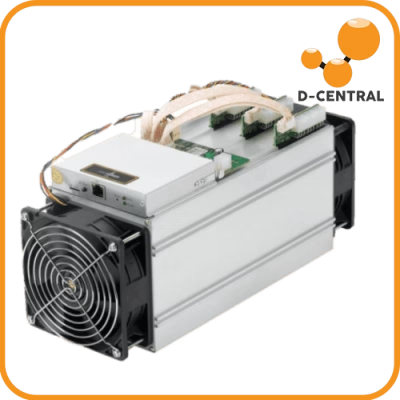 Bitmain Antminer S9
Price range: $35.00 through $155.00 CADIn Stock — Shop
Bitmain Antminer S9
Price range: $35.00 through $155.00 CADIn Stock — Shop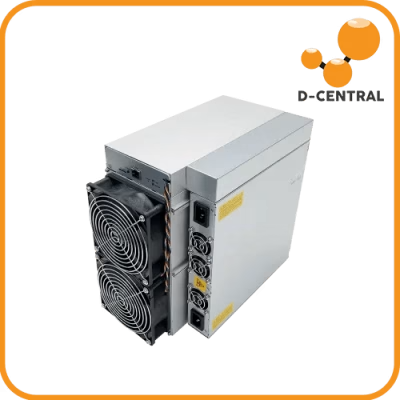 Bitmain Antminer S19
$600.00 CADIn Stock — Shop
Bitmain Antminer S19
$600.00 CADIn Stock — Shop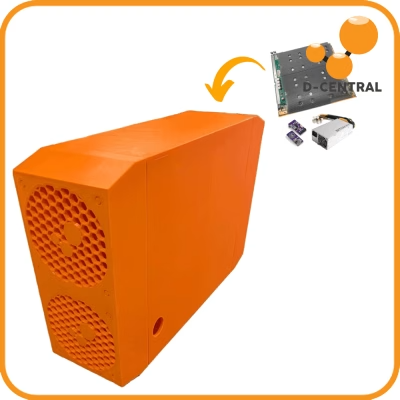 Antminer Slim Edition
Price range: $560.00 through $745.00 CADIn Stock — Shop
Antminer Slim Edition
Price range: $560.00 through $745.00 CADIn Stock — Shop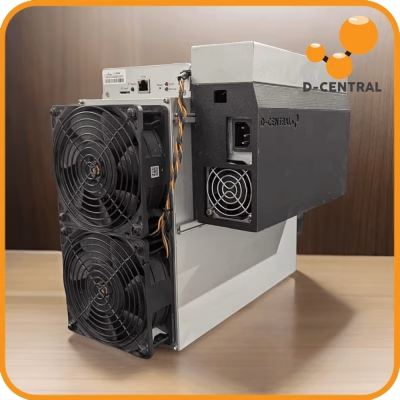 Antminer Loki Edition
Price range: $585.00 through $803.00 CADIn Stock — Shop
Antminer Loki Edition
Price range: $585.00 through $803.00 CADIn Stock — Shop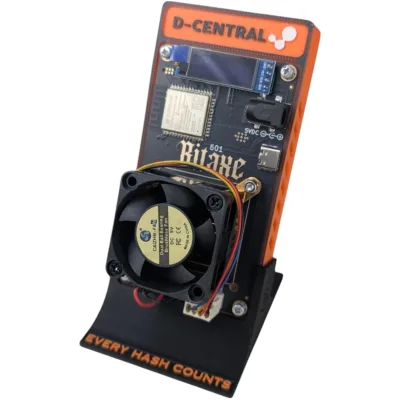 The Bitaxe
Price range: $184.99 through $224.99 CADIn Stock — Shop
The Bitaxe
Price range: $184.99 through $224.99 CADIn Stock — Shop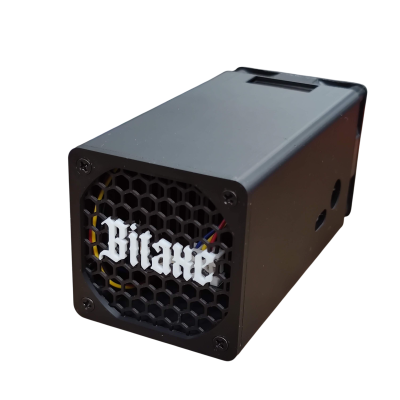 The Modern Minibit Gamma
$229.99 CADIn Stock — Shop
The Modern Minibit Gamma
$229.99 CADIn Stock — Shop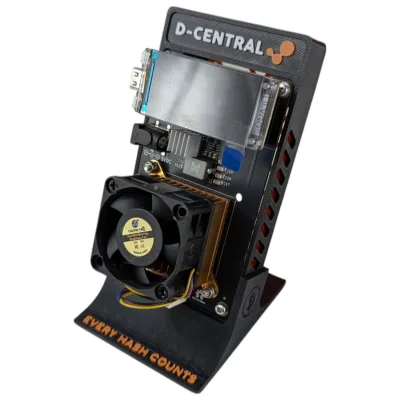 The Nerdaxe
Price range: $169.99 through $199.99 CADIn Stock — Shop
The Nerdaxe
Price range: $169.99 through $199.99 CADIn Stock — ShopReviewed by D-Central's mining hardware and ASIC repair editorial team for practical accuracy, buyer risk, repair context, and operational assumptions. Verify current hardware price, stock, network difficulty, BTC price, power rate, shipping, tax, firmware, and device condition before buying, hosting, repairing, or retiring mining hardware.
Last reviewed April 16, 2026. D-Central, Montreal, Quebec.
Last reviewed April 16, 2026.