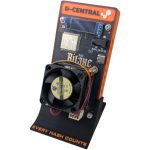
The Bitaxe GT 801 is the most powerful single-board Bitaxe ever made. With dual BM1370 ASIC chips, 12V power delivery, and a purpose-built cooling system, the GT takes everything the Bitaxe Gamma pioneered and pushes it further — delivering over 2 TH/s of solo mining hashrate in a compact, open-source package that fits in the palm of your hand.
At D-Central Technologies, we have been part of the Bitaxe ecosystem since the beginning — creating the original Bitaxe Mesh Stand, developing leading heatsink solutions for every model, and stocking the full Bitaxe lineup for Canadian and global miners. We have tested, overclocked, and shipped hundreds of Bitaxe units. This review draws on that hands-on experience.
If you are considering the GT 801 for solo mining, upgrading from a Supra or Ultra, or simply want to run the most capable Bitaxe available, this article covers everything you need to know — from raw specifications to overclocking headroom, solo mining probability, and how the GT stacks up against every other Bitaxe model.
What Is the Bitaxe GT 801?
The Bitaxe GT 801 — formally the Bitaxe Gamma Turbo — is the dual-chip evolution of the Bitaxe Gamma 602. Where the Gamma runs a single BM1370 chip from Bitmain’s Antminer S21 Pro, the GT doubles down: two BM1370 chips on a wider 6-layer PCB, powered by a 12V XT30 connector instead of the 5V barrel jack used by single-chip models.
The result is a Bitaxe that delivers approximately 2.0–2.5 TH/s at stock settings while consuming roughly 40–43 watts. That is nearly double the hashrate of the Gamma 602, with improved power delivery and cooling to match.
Like every Bitaxe, the GT 801 is fully open-source hardware. The complete design files — schematics, PCB layouts, bill of materials, and firmware — are publicly available on the official BitaxeGT GitHub repository. Anyone can inspect, modify, manufacture, or improve the design. This is the open-source ethos that makes Bitaxe different from every other miner on the market: no black boxes, no vendor lock-in, complete transparency.
The GT runs AxeOS, the same ESP32-S3-based firmware that powers every Bitaxe model. Configuration happens through a clean browser-based dashboard — set your WiFi, enter your Bitcoin address, pick a solo mining pool, and you are hashing. For a complete walkthrough, see our Bitaxe GT Setup Guide.
The BM1370 Chip: S21 Pro Silicon on Your Desk
The BM1370 is the ASIC chip at the heart of the GT 801, and it represents a significant leap in the Bitaxe chip evolution. Originally designed for Bitmain’s Antminer S21 Pro, the BM1370 delivers substantially better efficiency than its predecessors — the BM1368 (Supra) and BM1366 (Ultra).
Here is how the BM1370 compares to earlier Bitaxe chips:
| Chip | Source Miner | Bitaxe Model | Typical Hashrate (Single Chip) | Efficiency |
|---|---|---|---|---|
| BM1366 | Antminer S19 XP | Ultra | ~500 GH/s | ~21 J/TH |
| BM1368 | Antminer S21 | Supra | ~600–700 GH/s | ~17.5 J/TH |
| BM1370 | Antminer S21 Pro | Gamma / GT | ~1.0–1.2 TH/s | ~15–18 J/TH |
The BM1370 delivers more hashes per watt than any chip previously used in a Bitaxe. And with two of them on the GT 801 board, you get institutional-grade silicon efficiency in a device that draws less power than a laptop charger.
For a deep dive into the full chip lineage, read our Complete Guide to Bitcoin ASIC Chip Evolution.
Bitaxe GT 801: Full Specifications
| Specification | Bitaxe GT 801 |
|---|---|
| ASIC Chip | 2x BM1370 (Antminer S21 Pro) |
| Stock Hashrate | ~2.0–2.5 TH/s |
| Stock Power Consumption | ~40–43W |
| Efficiency | ~18 J/TH (stock) |
| Stock Frequency | 525 MHz |
| Stock Core Voltage | 1150 mV |
| Microcontroller | ESP32-S3 |
| Firmware | AxeOS (open-source) |
| WiFi | 2.4 GHz (via ESP32-S3) |
| Display | 0.91″ OLED (removable) |
| Power Connector | XT30 male (12V DC) |
| PCB | 120 x 60 mm, 6-layer, 1oz copper |
| Cooling | Anodized aluminum heatsink + 60mm fan (3500 RPM) |
| Noise Level | <40 dB |
| Ports | USB-C (firmware flashing), boot/reset buttons |
| Open Source | Full hardware + firmware (GitHub) |
The shift to 12V power via XT30 is not a minor detail — it is a significant engineering improvement. Single-chip Bitaxe models (Supra, Ultra, Gamma) run on 5V through a barrel jack. At higher power draws, 5V systems require more current, which generates more heat in connectors and traces. The GT’s 12V delivery means lower current for the same wattage, cleaner power regulation, and better stability — especially under overclock.
Bitaxe GT 801 vs Gamma 602 vs Supra vs Ultra: Complete Comparison
Choosing between Bitaxe models comes down to hashrate goals, power budget, and how much you want to spend. Here is the full comparison across the four main single-board Bitaxe models. For an even deeper breakdown, see our Bitaxe Comparison 2026 article.
| Feature | Bitaxe Ultra | Bitaxe Supra | Bitaxe Gamma 602 | Bitaxe GT 801 |
|---|---|---|---|---|
| ASIC Chip | 1x BM1366 | 1x BM1368 | 1x BM1370 | 2x BM1370 |
| Source Miner | Antminer S19 XP | Antminer S21 | Antminer S21 Pro | Antminer S21 Pro |
| Stock Hashrate | ~500 GH/s | ~600–700 GH/s | ~1.0–1.2 TH/s | ~2.0–2.5 TH/s |
| Max OC Hashrate | ~800 GH/s | ~1.0 TH/s | ~2.0 TH/s | ~3.5–4.0 TH/s |
| Stock Power | ~12W | ~15W | ~18–20W | ~40–43W |
| Efficiency | ~21 J/TH | ~17.5 J/TH | ~15–18 J/TH | ~18 J/TH |
| Power Input | 5V DC barrel jack | 5V DC barrel jack | 5V DC barrel jack | 12V DC XT30 |
| PCB Size | Standard | Standard | Standard | 120 x 60 mm (wider) |
| PCB Layers | 4-layer | 4-layer | 4-layer | 6-layer, 1oz copper |
| Fan | 40mm | 40mm | 40mm | 60mm (3500 RPM) |
| Display | OLED | OLED | OLED | OLED (removable) |
| Best For | Budget entry | Balanced performance | Most popular all-rounder | Maximum single-board hashrate |
GT 801 vs Gamma 602: The Key Differences
The GT is not simply “two Gammas bolted together.” The wider 6-layer PCB, upgraded cooling system, and 12V power delivery represent genuine engineering work to make dual-chip operation reliable and overclocking-friendly.
- Hashrate: The GT delivers roughly 2x the Gamma’s hashrate. At stock, expect 2.0–2.5 TH/s versus the Gamma’s 1.0–1.2 TH/s.
- Power delivery: The XT30 12V connector provides cleaner, more stable power than the 5V barrel jack. This matters most under overclock.
- Cooling: The larger 60mm fan and beefier heatsink give the GT significantly more thermal headroom. The Gamma’s 40mm fan is adequate for single-chip operation but limits aggressive overclocking.
- PCB: Six layers versus four, with 1oz copper. Better heat dissipation and power distribution across the board.
- Price: The GT costs more, but the cost-per-terahash is competitive when you consider you are getting two chips, better cooling, and better power delivery in one unit.
If you are running a single Bitaxe and want maximum hashrate, the GT 801 is the clear choice. If you prefer lower power draw and smaller form factor, the Gamma 602 remains excellent.
Performance Analysis: Stock, Conservative, and Overclocked
The GT 801 ships with conservative stock settings that prioritize stability and longevity. But the BM1370 chips have significant headroom, and the GT’s enhanced cooling system is designed to exploit it.
Performance Profiles
| Profile | Frequency | Voltage | Expected Hashrate | Power Draw | ASIC Temp |
|---|---|---|---|---|---|
| Stock | 525 MHz | 1150 mV | ~2.5 TH/s | ~40W | 45–55 °C |
| Conservative OC | 600 MHz | 1200 mV | ~2.9 TH/s | ~50W | 52–60 °C |
| Aggressive OC | 750 MHz | 1250 mV | ~3.5 TH/s | ~65W | 58–65 °C |
| Extreme OC | 900+ MHz | 1250–1300 mV | ~4.0+ TH/s | ~80W+ | 62–70+ °C |
Important caveats: Every chip is different due to silicon lottery. These are typical ranges based on community data and our own testing. Your specific unit may perform slightly above or below these numbers. Always monitor temperatures in AxeOS and increase settings incrementally — 25 MHz frequency and 25–50 mV voltage at a time.
The GT’s 12V power delivery gives it a stability advantage over single-chip models during overclocking. Voltage fluctuations that a 5V Gamma might tolerate can cause issues on lesser hardware, but the GT’s cleaner power regulation handles aggressive settings more gracefully.
Efficiency Under Overclock
As you push frequency higher, efficiency (J/TH) degrades — this is a fundamental law of silicon. At stock, the GT runs around 18 J/TH. At aggressive overclock, expect 18–20 J/TH. At extreme settings, efficiency drops further, but for solo mining, absolute hashrate matters more than efficiency because you are hunting for a block, not optimizing electricity costs per bitcoin mined.
For detailed overclocking instructions across every Bitaxe model, including the GT, read our Definitive Bitaxe Overclocking Manual.
Setting Up Your Bitaxe GT 801
The GT 801 setup process is straightforward if you have used any Bitaxe before. If this is your first Bitaxe, the process takes about five minutes:
- Connect power: Plug a 12V DC power supply into the XT30 connector. Ensure your PSU can deliver at least 60W (more if you plan to overclock).
- WiFi setup: The GT broadcasts a WiFi network named
Bitaxe_XXXX. Connect to it from your phone or laptop. - Configure AxeOS: Open your browser and navigate to the AxeOS dashboard. Select your home 2.4 GHz WiFi network and enter the password.
- Enter mining settings: In the Pool Settings tab, enter your Bitcoin wallet address and select a solo mining pool (Solo CKPool or Public Pool are popular choices).
- Start mining: The GT begins hashing immediately. Monitor hashrate, temperature, and share submissions through the AxeOS web interface.
The removable OLED display shows your current hashrate, temperature, best difficulty share, and network status at a glance — useful for desk placement where you want quick status checks without opening a browser.
One critical note: Bitaxe devices only support 2.4 GHz WiFi. They will not connect to 5 GHz networks. Make sure your router has a 2.4 GHz band enabled.
For a complete step-by-step walkthrough with screenshots, see our Bitaxe GT Setup Guide.
Overclocking the Bitaxe GT 801
The GT 801 was engineered with overclocking in mind. The dual-chip design, 6-layer PCB with 1oz copper traces, 12V power delivery, and oversized 60mm cooling solution all exist to give you headroom beyond stock settings.
How to Overclock
All overclocking happens through the AxeOS web interface — no firmware modifications or soldering required:
- Navigate to the AxeOS settings page in your browser.
- Locate the ASIC Frequency and Core Voltage settings.
- Increase frequency by 25 MHz increments.
- If the device becomes unstable (shares rejected, hashrate drops, device restarts), increase voltage by 25 mV.
- Monitor ASIC temperature. Stay below 70 °C for long-term reliability. AxeOS automatically throttles above 75 °C.
- Run each setting for at least 30 minutes to confirm stability before pushing further.
GT-Specific Overclocking Advantages
- 12V power delivery: Lower current at higher voltage means less heat in the power path. The XT30 connector handles the load cleanly.
- 6-layer PCB: Additional copper layers improve both thermal dissipation and power distribution to the chips.
- 60mm fan: Moves significantly more air than the 40mm fans on single-chip models, keeping chip temps lower at the same power draw.
- Dual-chip thermal spreading: Heat is distributed across a wider area rather than concentrated on a single chip.
Cooling Upgrades for Extreme Overclocking
If you plan to push beyond 750 MHz, consider upgrading the thermal paste and ensuring good ambient airflow around the device. D-Central stocks premium Bitaxe heatsinks and cooling accessories specifically designed for aggressive overclocking. See our Complete Bitaxe Accessories Guide for the full range of compatible cooling solutions.
Community results on the BM1370 show consistent gains of 60–90% above stock with proper cooling. That means a GT 801 pushed to its limits can potentially deliver 4.0+ TH/s — approaching the territory of the Bitaxe Hex (which uses six BM1366 chips) but in a smaller, simpler package.
Solo Mining Probability with the Bitaxe GT
Solo mining with a Bitaxe is lottery mining — your tiny hashrate competes against the entire Bitcoin network for the chance to find a block and claim the full block reward (currently 3.125 BTC after the 2024 halving).
As of February 2026, the Bitcoin network hashrate sits around 1,166 EH/s (1.166 ZH/s). Here are the GT’s odds:
Daily Block Find Probability
| GT Configuration | Hashrate | Daily Probability | Statistical Average Time to Block |
|---|---|---|---|
| Stock | 2.5 TH/s | ~0.000031% | ~8,800 years |
| Conservative OC | 2.9 TH/s | ~0.000036% | ~7,600 years |
| Aggressive OC | 3.5 TH/s | ~0.000043% | ~6,300 years |
| Extreme OC | 4.0 TH/s | ~0.000049% | ~5,500 years |
Those numbers look daunting, but here is the reality: solo mining is not about expected value. It is about the possibility. Every ten minutes, a new block is found. Your GT is submitting shares to the network, and any one of those shares could be the winning ticket. In March 2025, a cluster of six Bitaxe devices with just 3.3 TH/s combined found block #887,212 and earned 3.15 BTC — worth roughly $250,000 at the time.
A single GT 801 running at stock approaches that same hashrate all by itself.
The math is simple: more hashrate equals better odds. The GT 801 gives you roughly double the probability of a Gamma 602 and roughly 4x the probability of a Supra. If solo mining appeals to you, maximizing hashrate is the play, and the GT is the highest-hashrate single-board Bitaxe you can buy.
Run the numbers for yourself with our Solo Mining Probability Calculator.
Who Should Buy the Bitaxe GT 801?
The GT 801 is not for everyone — and that is fine. Here is who it serves best:
The GT Is Perfect For:
- Maximum hashrate seekers: If you want the most TH/s from a single Bitaxe board, the GT is it. Nothing else in the single-board Bitaxe lineup comes close.
- Supra/Ultra upgraders: If you have been running a Supra or Ultra and want a meaningful hashrate jump without going to a multi-board Hex setup, the GT is the natural upgrade path.
- Overclockers: The GT’s 12V power, 6-layer PCB, and 60mm cooling make it the most overclock-friendly Bitaxe. If you enjoy pushing hardware to its limits, this is your board.
- Serious solo miners: Every additional terahash improves your block-find odds. The GT maximizes your chances within the Bitaxe form factor.
- Desk miners who want presence: The GT is slightly larger than single-chip models, with a more substantial heatsink and fan. It looks and feels like a serious piece of mining hardware on your desk.
Consider the Gamma 602 Instead If:
- You want the lowest power consumption (18–20W vs 40–43W).
- You prefer the smaller single-chip form factor.
- You are on a tighter budget and do not need dual-chip hashrate.
- You plan to run multiple units and prefer more boards at lower individual power draw.
Consider the Bitaxe Hex Instead If:
- You want even more hashrate and are willing to accept a larger form factor.
- You want six-chip redundancy (if one chip underperforms, five others keep hashing).
Not sure which model fits your situation? Our Bitaxe Hub has comparison tools and buying guides to help you decide.
Compatible Accessories from D-Central
D-Central has been developing Bitaxe accessories since the early days of the ecosystem. We created the original Bitaxe Mesh Stand — the first purpose-built Bitaxe enclosure on the market — and have continued expanding our accessory lineup as new models launch.
Here are the accessories most relevant to GT 801 owners:
Power
- XT30 Female to DC Power Cable (12V) — Purpose-built for the GT’s XT30 connector, compatible with standard 12V DC power supplies.
Cooling
- Premium Bitaxe Heatsink — High-performance aluminum cooler for overclocking stability.
- Ice Cooler Tower Socket — Advanced cooling solution for maximum thermal headroom.
- Argon THRML Noctua Socket — Premium Noctua-based cooling for silent, aggressive overclocking.
Cases and Stands
- Bitaxe Mesh Stand (Black) — The original D-Central design. Mesh ventilation for optimal airflow.
- Modern Bitaxe Stand — Multi-orientation enclosure with enhanced cooling support.
- Bitaxe Infinity Case — Modular, clippable design for multi-unit setups.
- Bitaxe Mini Miner DIY Kit — Complete enclosure and cooling upgrade package.
Replacement Parts
- Replacement OLED Display (3-Pack) — Spare displays for the GT’s removable screen.
For the full accessory catalog with compatibility notes for every Bitaxe model, see our Complete Bitaxe Accessories Guide.
D-Central’s Role in the Bitaxe Ecosystem
D-Central Technologies has been involved with the Bitaxe ecosystem since its earliest days. We are not just a retailer stocking boxes on shelves — we are builders, testers, and contributors to the open-source mining movement.
- Created the original Bitaxe Mesh Stand — the first purpose-built enclosure for Bitaxe devices, now widely imitated.
- Developed leading heatsink solutions — for both standard Bitaxe and Bitaxe Hex models, optimized through hands-on testing and thermal analysis.
- Stock the complete Bitaxe lineup — every variant from the Ultra to the Hex, plus every accessory, PSU, stand, and case.
- Quality testing — every unit we ship is tested for hashrate stability, thermal performance, and WiFi connectivity before it goes into a box.
- Canadian support — real humans in Canada who understand mining hardware, not a faceless overseas ticket system.
- Full ecosystem coverage — we also carry the complete open-source lineup including NerdAxe, NerdNOS, Nerdminer, and NerdQAxe.
When you buy a Bitaxe GT from D-Central, you are buying from a company that has been building for and with this ecosystem since day one. That matters when you need support, accessories, or advice on getting the most from your hardware.
Frequently Asked Questions
What is the difference between the Bitaxe GT 800 and GT 801?
The GT 801 is the refined revision of the original GT 800 design. It includes component improvements, PCB refinements, and optimized header/component placement. If you are buying a GT today, you are almost certainly getting the 801 revision. Both use dual BM1370 chips and deliver similar performance.
Can I use my existing 5V Bitaxe power supply with the GT?
No. The GT 801 uses a 12V DC input via an XT30 connector. Your 5V barrel jack PSU from a Gamma, Supra, or Ultra will not work. You need a 12V power supply with an XT30 connection or an XT30 adapter cable.
How loud is the Bitaxe GT?
At stock settings, the GT runs under 40 dB — roughly the volume of a quiet library. The 60mm fan at 3500 RPM is designed for low-noise operation. Under aggressive overclocking with higher fan speeds, noise increases but remains far quieter than any full-size ASIC miner.
What power supply do I need for the Bitaxe GT?
You need a 12V DC power supply capable of at least 60W for stock operation. If you plan to overclock, a 100W+ rated supply gives you comfortable headroom. The PSU must have an XT30 connector or you can use D-Central’s XT30 to DC adapter cable.
Is the Bitaxe GT profitable?
In traditional mining profitability terms, no — the electricity cost to run a GT exceeds the expected bitcoin earned at current network difficulty. But Bitaxe solo mining is not about daily profitability. It is about the possibility of finding a full block (3.125 BTC) and supporting Bitcoin’s decentralization. Every home miner running a Bitaxe adds to the geographic and political distribution of Bitcoin’s hashrate. That has value beyond a spreadsheet.
Can I mine to a pool instead of solo mining?
Yes. AxeOS supports any Stratum-compatible mining pool. You can point your GT at a pool and receive proportional payouts. However, most Bitaxe owners choose solo mining for the lottery possibility and the ideological alignment with decentralization.
Will my existing Bitaxe accessories fit the GT?
The GT has a wider PCB (120 x 60 mm) than single-chip models, so not all cases and stands designed for the Gamma or Supra will fit. Heatsink compatibility depends on the specific product. Check our accessories guide for GT-specific compatibility notes.
How does the GT compare to the Bitaxe Hex?
The Hex uses six BM1366 chips and delivers higher total hashrate than the GT at stock. However, the GT’s BM1370 chips are more efficient per chip, and the GT is a smaller, simpler device. The GT is also significantly more overclocking-friendly due to its 12V power and better thermal design. For users who want high hashrate in a compact package with maximum overclocking potential, the GT is compelling. For users who want the highest possible stock hashrate in the Bitaxe family, the Hex wins.
Does D-Central ship the Bitaxe GT internationally?
Yes. D-Central ships worldwide from Canada. Canadian buyers benefit from local shipping speeds and no cross-border customs. US and international orders are shipped via tracked carriers.
What mining pools work best with the Bitaxe GT?
For solo mining, Solo CKPool and Public Pool are the most popular choices in the Bitaxe community. Both are purpose-built for solo miners. You configure the pool URL and your Bitcoin address in the AxeOS settings tab. For a full comparison of mining pools, see our Bitcoin Mining Pool Comparison 2026.
Final Verdict: The Bitaxe GT 801 Is the Solo Miner’s Power Play
The Bitaxe GT 801 represents the current peak of single-board Bitaxe engineering. Dual BM1370 chips delivering 2.0–2.5 TH/s at stock, a 12V power system that actually handles overclocking gracefully, a cooling solution that keeps temps in check, and the same AxeOS simplicity that makes every Bitaxe a plug-and-play experience.
Is it the right Bitaxe for everyone? No. The Gamma 602 remains the sweet spot for most solo miners who want great hashrate at minimal power. But if you want to maximize your odds of finding a block, if you want the best overclocking platform in the Bitaxe family, or if you simply want to run the most powerful open-source Bitcoin miner that fits on your desk — the GT 801 is it.
Every hash you contribute matters. Every home miner strengthens Bitcoin’s decentralization. The GT 801 just lets you contribute more of them.
Buy the Bitaxe GT 801 at D-Central | Explore the Bitaxe Hub | GT Setup Guide
What is the difference between the Bitaxe GT 800 and GT 801?
The GT 801 is the refined revision of the original GT 800 design. It includes component improvements, PCB refinements, and optimized header/component placement. If you are buying a GT today, you are almost certainly getting the 801 revision. Both use dual BM1370 chips and deliver similar performance.
Can I use my existing 5V Bitaxe power supply with the GT?
No. The GT 801 uses a 12V DC input via an XT30 connector. Your 5V barrel jack PSU from a Gamma, Supra, or Ultra will not work. You need a 12V power supply with an XT30 connection or an XT30 adapter cable.
How loud is the Bitaxe GT?
At stock settings, the GT runs under 40 dB — roughly the volume of a quiet library. The 60mm fan at 3500 RPM is designed for low-noise operation. Under aggressive overclocking with higher fan speeds, noise increases but remains far quieter than any full-size ASIC miner.
What power supply do I need for the Bitaxe GT?
You need a 12V DC power supply capable of at least 60W for stock operation. If you plan to overclock, a 100W+ rated supply gives you comfortable headroom. The PSU must have an XT30 connector or you can use D-Central’s XT30 to DC adapter cable.
Is the Bitaxe GT profitable?
In traditional mining profitability terms, no — the electricity cost to run a GT exceeds the expected bitcoin earned at current network difficulty. But Bitaxe solo mining is not about daily profitability. It is about the possibility of finding a full block (3.125 BTC) and supporting Bitcoin’s decentralization. Every home miner running a Bitaxe adds to the geographic and political distribution of Bitcoin’s hashrate. That has value beyond a spreadsheet.
Can I mine to a pool instead of solo mining?
Yes. AxeOS supports any Stratum-compatible mining pool. You can point your GT at a pool and receive proportional payouts. However, most Bitaxe owners choose solo mining for the lottery possibility and the ideological alignment with decentralization.
Will my existing Bitaxe accessories fit the GT?
The GT has a wider PCB (120 x 60 mm) than single-chip models, so not all cases and stands designed for the Gamma or Supra will fit. Heatsink compatibility depends on the specific product. Check our accessories guide for GT-specific compatibility notes.
How does the GT compare to the Bitaxe Hex?
The Hex uses six BM1366 chips and delivers higher total hashrate than the GT at stock. However, the GT’s BM1370 chips are more efficient per chip, and the GT is a smaller, simpler device. The GT is also significantly more overclocking-friendly due to its 12V power and better thermal design. For users who want high hashrate in a compact package with maximum overclocking potential, the GT is compelling. For users who want the highest possible stock hashrate in the Bitaxe family, the Hex wins.
Does D-Central ship the Bitaxe GT internationally?
Yes. D-Central ships worldwide from Canada. Canadian buyers benefit from local shipping speeds and no cross-border customs. US and international orders are shipped via tracked carriers.
What mining pools work best with the Bitaxe GT?
For solo mining, Solo CKPool and Public Pool are the most popular choices in the Bitaxe community. Both are purpose-built for solo miners. You configure the pool URL and your Bitcoin address in the AxeOS settings tab. For a full comparison of mining pools, see our Bitcoin Mining Pool Comparison 2026.