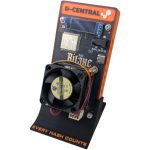
One of the most compelling aspects of Bitaxe solo miners is their remarkably low power consumption. Unlike industrial ASICs that devour 3,000+ watts and require dedicated 240V circuits, a Bitaxe runs on a standard USB-C power adapter and sips electricity like a laptop charger. But even at these modest wattage levels, understanding exact power draw and electricity costs matters — especially when you are running a device 24/7/365 in pursuit of a solo block.
This guide breaks down the real-world power consumption and running costs for every Bitaxe and open-source miner model, from the sub-1W Nerdminer V2 to the 100W+ Bitaxe Hex and NerdQAxe++. We will calculate monthly and annual electricity costs at multiple rate tiers, compare efficiency metrics, evaluate whether overclocking makes financial sense, and frame it all through the lens of what solo mining actually costs as a Bitcoin lottery ticket.
Why Power Consumption Matters — Even at 15 Watts
When people first discover Bitaxe miners, the reaction is usually the same: “It only uses 15 watts — who cares about the electricity cost?” That is a fair instinct. Fifteen watts is nothing compared to an Antminer S21 Pro pulling 3,500W from the wall. But there are several reasons why understanding your Bitaxe power consumption matters.
First, you are running 24/7. A device that draws 15W continuously for a full year consumes 131.4 kWh. At the US average residential rate of $0.12/kWh, that is $15.77 per year. Not bank-breaking, but not zero either — and it adds up across multiple devices.
Second, multi-device setups multiply fast. Many solo miners start with one Bitaxe and end up running three, five, or ten. A fleet of six Bitaxe Gamma units overclocked to 2 TH/s each draws roughly 150W total — now you are in space heater territory, and your annual electricity bill for mining alone is $157+.
Third, electricity rates vary enormously. A miner in Quebec paying $0.05/kWh has a fundamentally different cost structure than someone in California paying $0.30/kWh. The “it is just a few watts” dismissal only works if you actually know what those watts cost in your jurisdiction.
Fourth, it shapes your overclocking decisions. Pushing a Bitaxe Gamma from 1.2 TH/s stock to 2.0 TH/s overclocked roughly doubles your hashrate but can more than double your power consumption — from ~15W to ~25W. Whether that trade-off makes sense depends entirely on your electricity cost. Our complete Bitaxe overclocking guide covers the settings in detail, but this article gives you the financial picture.
Fifth, it is the honest way to evaluate solo mining. Solo mining with a Bitaxe is a probabilistic endeavor — you are not going to profit on electricity savings. You are buying a lottery ticket denominated in satoshis. Knowing the exact price of that ticket per month lets you make an informed, eyes-wide-open decision about participating in the most decentralized form of Bitcoin mining possible.
Power Consumption by Model: Every Bitaxe and Open-Source Miner
The following table covers every major open-source solo mining device available from D-Central’s Bitaxe Hub, including both stock (factory default) and overclocked power consumption figures. All wattage numbers represent wall power draw — what your Kill-A-Watt meter or smart plug will actually report — not board-level power estimates.
| Model | ASIC Chip(s) | Stock Hashrate | Stock Power (W) | OC Hashrate | OC Power (W) | Power Connector |
|---|---|---|---|---|---|---|
| Nerdminer V2 | ESP32 | ~50 KH/s | <1W | N/A | <1W | USB-C (5V) |
| NerdAxe | BM1366 | ~500 GH/s | ~5W | ~600 GH/s | ~8W | USB-C (5V) |
| Bitaxe Supra (BM1366) | 1x BM1366 | ~500 GH/s | ~12W | ~750 GH/s | ~18W | USB-C (5V 3A+) |
| Bitaxe Ultra (BM1368) | 1x BM1368 | ~625 GH/s | ~12W | ~800 GH/s | ~18W | USB-C (5V 3A+) |
| Bitaxe Gamma 602 (BM1370) | 1x BM1370 | ~1.2 TH/s | ~15W | ~2.0 TH/s | ~25W | USB-C (5V 3A+) |
| Bitaxe GT 801 (2x BM1370) | 2x BM1370 | ~2.4 TH/s | ~40W | ~3.6 TH/s | ~65W | Barrel / XT30 |
| NerdQAxe++ (4x BM1370) | 4x BM1370 | ~4.8 TH/s | ~70W | ~7.5 TH/s | ~110W | 12V DC barrel |
| Bitaxe Hex (6x BM1366) | 6x BM1366 | ~3.0 TH/s | ~65W | ~4.5 TH/s | ~100W | 12V barrel / XT30 |
Important notes on these figures: Real-world power consumption varies based on ambient temperature, voltage settings, cooling configuration, and the specific silicon quality of your ASIC chip. The figures above represent typical averages reported by the community and verified in our testing lab. Your actual numbers may differ by 10-15%. For exact measurements, always use a wall power meter (see the “Measuring Real Power” section below).
For a deeper dive into each model’s specifications, performance benchmarks, and which one is right for your use case, see our Bitaxe Gamma 602 review and Bitaxe GT 801 review.
Monthly Electricity Cost: Every Model at Five Rate Tiers
The formula is straightforward: (Watts / 1000) x 24 hours x 30.44 days x $/kWh = monthly cost. We use 30.44 days as the average month length. The following table shows the monthly electricity cost for each model at stock settings across five common electricity rate tiers.
| Model (Stock Power) | $0.05/kWh | $0.08/kWh | $0.10/kWh | $0.12/kWh | $0.15/kWh |
|---|---|---|---|---|---|
| Nerdminer V2 (1W) | $0.04 | $0.06 | $0.07 | $0.09 | $0.11 |
| NerdAxe (5W) | $0.18 | $0.29 | $0.37 | $0.44 | $0.55 |
| Bitaxe Supra (12W) | $0.44 | $0.70 | $0.88 | $1.05 | $1.31 |
| Bitaxe Ultra (12W) | $0.44 | $0.70 | $0.88 | $1.05 | $1.31 |
| Bitaxe Gamma 602 (15W) | $0.55 | $0.88 | $1.10 | $1.31 | $1.64 |
| Bitaxe GT 801 (40W) | $1.46 | $2.34 | $2.92 | $3.50 | $4.38 |
| NerdQAxe++ (70W) | $2.55 | $4.09 | $5.11 | $6.13 | $7.67 |
| Bitaxe Hex (65W) | $2.37 | $3.80 | $4.75 | $5.70 | $7.12 |
And here is the same table for overclocked power consumption:
| Model (OC Power) | $0.05/kWh | $0.08/kWh | $0.10/kWh | $0.12/kWh | $0.15/kWh |
|---|---|---|---|---|---|
| Nerdminer V2 (1W) | $0.04 | $0.06 | $0.07 | $0.09 | $0.11 |
| NerdAxe (8W) | $0.29 | $0.47 | $0.58 | $0.70 | $0.88 |
| Bitaxe Supra (18W) | $0.66 | $1.05 | $1.31 | $1.58 | $1.97 |
| Bitaxe Ultra (18W) | $0.66 | $1.05 | $1.31 | $1.58 | $1.97 |
| Bitaxe Gamma 602 (25W) | $0.91 | $1.46 | $1.83 | $2.19 | $2.74 |
| Bitaxe GT 801 (65W) | $2.37 | $3.80 | $4.75 | $5.70 | $7.12 |
| NerdQAxe++ (110W) | $4.01 | $6.42 | $8.03 | $9.63 | $12.04 |
| Bitaxe Hex (100W) | $3.65 | $5.84 | $7.31 | $8.77 | $10.96 |
The takeaway is clear: even the most power-hungry open-source miner at the highest residential rate barely exceeds $12/month. The most popular model — the Bitaxe Gamma 602 — costs between $0.55 and $1.64 per month at stock settings. That is less than a single cup of coffee.
Use our Mining Power Cost Calculator to plug in your exact electricity rate and get a personalized cost estimate for any model.
Annual Running Cost: Full-Year Projections
Solo mining is a long game. The probability of finding a block with a single Bitaxe is low in any given month, but over years of continuous operation, the cumulative chances become meaningful. Here is what a full year of 24/7 operation costs for each model. The formula is: (Watts / 1000) x 8,766 hours x $/kWh (8,766 = average hours per year accounting for leap years).
| Model | Stock (W) | $0.05/kWh | $0.08/kWh | $0.10/kWh | $0.12/kWh | $0.15/kWh |
|---|---|---|---|---|---|---|
| Nerdminer V2 | 1W | $0.44 | $0.70 | $0.88 | $1.05 | $1.31 |
| NerdAxe | 5W | $2.19 | $3.51 | $4.38 | $5.26 | $6.57 |
| Bitaxe Supra | 12W | $5.26 | $8.42 | $10.52 | $12.62 | $15.78 |
| Bitaxe Ultra | 12W | $5.26 | $8.42 | $10.52 | $12.62 | $15.78 |
| Bitaxe Gamma 602 | 15W | $6.57 | $10.52 | $13.15 | $15.78 | $19.73 |
| Bitaxe GT 801 | 40W | $17.53 | $28.05 | $35.06 | $42.08 | $52.60 |
| NerdQAxe++ | 70W | $30.68 | $49.09 | $61.36 | $73.63 | $92.04 |
| Bitaxe Hex | 65W | $28.49 | $45.58 | $56.98 | $68.37 | $85.47 |
A Bitaxe Gamma 602 at stock settings costs between $6.57 and $19.73 per year depending on your electricity rate. That is the total annual cost of your “lottery ticket” — a 24/7 chance at the current block reward of 3.125 BTC (approximately $215,000 at current prices). Even the most expensive model in this lineup, the NerdQAxe++ at the highest rate tier, costs less than $92/year — still cheaper than a Netflix subscription.
The “Lottery Ticket” Framing: What Your Monthly Ticket Actually Costs
Solo mining with a Bitaxe is not a profitability play. Let us be completely transparent about that. At 1.2 TH/s, a stock Bitaxe Gamma represents roughly 0.0000002% of the total Bitcoin network hashrate. The expected time to find a block solo at this hashrate is measured in hundreds of years. But miners do find blocks — the Bitaxe Block Wins Tracker proves it. And when they do, the reward is 3.125 BTC — roughly $215,000 at current prices.
So the real question becomes: what does your monthly lottery ticket cost?
| Model (Stock) | Monthly Cost @ $0.10/kWh | What It Buys You |
|---|---|---|
| Nerdminer V2 | $0.07/month | A 24/7 lottery ticket for $0.07 — literally pennies for the dream |
| NerdAxe | $0.37/month | Less than a gumball machine for real SHA-256 ASIC hashing |
| Bitaxe Supra | $0.88/month | Less than a dollar for 500 GH/s running around the clock |
| Bitaxe Ultra | $0.88/month | Under a buck for 625 GH/s of solo hashing power |
| Bitaxe Gamma 602 | $1.10/month | A dollar and a dime for 1.2 TH/s — the price of a gas station coffee |
| Bitaxe GT 801 | $2.92/month | Less than a fancy latte for 2.4 TH/s of dual-chip hashing |
| NerdQAxe++ | $5.11/month | A fast-food combo meal for 4.8 TH/s of quad-chip power |
| Bitaxe Hex | $4.75/month | A cup of premium coffee for 3.0 TH/s across six chips |
When you frame it this way, the cost-to-dream ratio of Bitaxe solo mining is extraordinary. A Bitaxe Gamma costs $1.10/month to operate for a shot — however slim — at a $215,000 block reward. No state lottery offers those odds at that price point for a prize that size. And unlike a lottery ticket, your Bitaxe is running millions of hashes every second, every minute, every day. The ticket never expires until you unplug it.
Explore your personal odds with our Solo Mining Probability Calculator.
Power Supply Recommendations by Model
Choosing the right power supply is critical for both safety and efficiency. An underpowered PSU will throttle your hashrate or cause instability. An overpowered one wastes money on hardware you do not need. Here is what we recommend for each model based on our testing at D-Central’s workshop.
Single-Chip Models (Supra, Ultra, Gamma)
USB-C Power Adapter (5V 3A minimum, 5V 4A recommended)
- Any quality USB-C adapter rated for 15W+ works at stock settings
- For overclocking, use a 20W+ USB-C adapter (5V 4A or USB-C PD capable)
- Avoid cheap, unbranded USB-C chargers — poor voltage regulation causes hashrate instability
- Phone chargers often work but may not sustain the required amperage under continuous load
- The D-Central recommended USB-C PSU is specifically rated for continuous mining duty
Bitaxe GT 801 (Dual-Chip)
12V DC barrel jack or XT30 connector (12V 5A minimum, 12V 8A recommended for OC)
- The GT requires more power than USB-C can deliver — it uses a 12V barrel jack or XT30 connector
- A quality 12V 5A (60W) power supply handles stock settings with headroom
- For overclocking, step up to a 12V 8A (96W) supply
- Ensure the barrel connector size matches (typically 5.5mm x 2.1mm)
NerdQAxe++ (Quad-Chip)
12V DC power supply (12V 10A minimum, 12V 15A for heavy OC)
- The included 12V 10A (120W) PSU handles stock and moderate overclocking
- For aggressive overclocking beyond 7 TH/s, consider a 12V 15A (180W) supply
- Server-grade PSUs offer the best voltage regulation for multi-chip miners
Bitaxe Hex (Six-Chip)
12V DC barrel jack or XT30 connector (12V 10A minimum, 12V 12A for OC)
- At stock 65W, a 12V 8A (96W) PSU works but leaves thin margins
- A 12V 10A (120W) supply is the recommended minimum for safe continuous operation
- For overclocking to 100W+, use a 12V 12A (144W) or higher supply
- The Hex demands consistent, clean 12V power — invest in a quality PSU
For a complete rundown of compatible power supplies, cables, and accessories for every model, see our Complete Bitaxe Accessories Guide.
Measuring Real Power: Why You Need a Kill-A-Watt Meter
The wattage figures in this guide are averages. Your specific Bitaxe might draw slightly more or less depending on the silicon lottery (some ASIC chips are more efficient than others), ambient temperature, overclock settings, and PSU efficiency. The only way to know your actual power consumption is to measure it.
Recommended: Kill-A-Watt Meter (P4400/P4460)
The P3 Kill-A-Watt meter is the gold standard for measuring home electronics power consumption. It costs around $20-30 USD and plugs between your outlet and your PSU. It displays real-time watts, volts, amps, and cumulative kWh. After running for 24+ hours, it gives you an extremely accurate daily consumption figure.
Alternative: Smart Plugs with Power Monitoring
WiFi smart plugs from brands like TP-Link Kasa, Shelly, or Tuya often include power monitoring features. These are convenient for remote monitoring and historical tracking, though they tend to be slightly less accurate than a dedicated Kill-A-Watt meter for low-wattage devices.
Wall Power vs. Board Power: Understanding the Difference
There is an important distinction between wall power and board power:
- Board power is what the Bitaxe itself consumes — reported in the AxeOS firmware dashboard
- Wall power is what you actually pay for — it includes PSU conversion losses (typically 10-20% overhead for cheap adapters, 5-10% for quality ones)
- A Bitaxe Gamma showing 15W in AxeOS might draw 17-18W from the wall due to PSU inefficiency
- Always use wall power figures for electricity cost calculations — that is what your utility meter sees
This is why a quality, efficient PSU matters. A bad USB-C adapter with 75% efficiency wastes 25% of the power as heat before it even reaches your Bitaxe. A good one at 90%+ efficiency minimizes that waste.
Efficiency Comparison: Joules Per Terahash Across All Models
Efficiency in Bitcoin mining is measured in Joules per Terahash (J/TH) — the amount of energy required to produce one terahash of computational work. Lower is better. This metric allows you to compare devices regardless of their absolute hashrate or power consumption.
| Model | Stock J/TH | OC J/TH | Industrial Comparison |
|---|---|---|---|
| Nerdminer V2 | ~20,000,000 J/TH | N/A | Not comparable (educational device) |
| NerdAxe | ~10 J/TH | ~13 J/TH | Better than Antminer S17 series |
| Bitaxe Supra (BM1366) | ~24 J/TH | ~24 J/TH | Comparable to Antminer S19 XP |
| Bitaxe Ultra (BM1368) | ~19 J/TH | ~22.5 J/TH | Near Antminer S21 territory |
| Bitaxe Gamma 602 (BM1370) | ~12.5 J/TH | ~12.5 J/TH | Matches the Antminer S21 Pro |
| Bitaxe GT 801 (2x BM1370) | ~16.7 J/TH | ~18 J/TH | Between S21 and S21 Pro |
| NerdQAxe++ (4x BM1370) | ~14.6 J/TH | ~14.7 J/TH | Near S21 Pro efficiency |
| Bitaxe Hex (6x BM1366) | ~21.7 J/TH | ~22.2 J/TH | Comparable to Antminer S19j Pro |
The standout here is the Bitaxe Gamma 602. With its single BM1370 chip (the same ASIC that powers the Antminer S21 Pro), it achieves approximately 12.5 J/TH at stock settings — matching the efficiency of industrial mining machines that cost thousands of dollars and consume thousands of watts. This is the magic of the BM1370: world-class silicon efficiency shrunk down to a single-chip form factor that runs off a USB-C cable.
The Nerdminer V2 deserves special mention: its J/TH figure is intentionally astronomical because it uses an ESP32 microcontroller, not a purpose-built ASIC. The Nerdminer is an educational tool and conversation starter, not a competitive miner. Its electricity cost is essentially zero, and its value is in learning, not hashing.
Does Overclocking Make Financial Sense?
This is the question every Bitaxe owner asks after their first week of mining. The answer depends on your electricity rate and what you are optimizing for. Let us run the numbers using the Bitaxe Gamma 602 as our reference model, since it is the most popular Bitaxe by a wide margin.
Bitaxe Gamma 602: Stock vs. Overclocked
| Metric | Stock | Overclocked | Change |
|---|---|---|---|
| Hashrate | 1.2 TH/s | 2.0 TH/s | +67% |
| Power | 15W | 25W | +67% |
| Efficiency | 12.5 J/TH | 12.5 J/TH | Same |
| Monthly cost @ $0.10 | $1.10 | $1.83 | +$0.73 |
| Annual cost @ $0.10 | $13.15 | $21.92 | +$8.77 |
In the case of the Gamma 602, a moderate overclock to ~2 TH/s actually maintains roughly the same J/TH efficiency — you get 67% more hashrate for 67% more power. This is the sweet spot. The BM1370 chip handles this frequency range gracefully.
But push beyond 2 TH/s, and diminishing returns hit hard. The relationship between frequency, voltage, and power consumption is not linear — as you push higher, each additional MHz requires disproportionately more voltage, which generates exponentially more heat and power draw. The last 10% of hashrate can cost 30%+ more power. For detailed overclock settings at every level, refer to our Complete Bitaxe Overclocking Guide.
The Verdict on Overclocking Economics
- If your electricity is cheap ($0.05-$0.08/kWh): Overclock aggressively. The extra cost is pennies per month, and more hashrate means more chances at a block. At $0.05/kWh, the difference between stock and max OC on a Gamma is only $0.36/month.
- If your electricity is moderate ($0.10-$0.12/kWh): A moderate overclock to ~2 TH/s is the sweet spot — maintain efficiency while boosting hashrate. The extra $0.73/month is trivial.
- If your electricity is expensive ($0.15+/kWh): Stock settings or mild overclock. The per-TH cost starts to matter more, and thermal management becomes more important in a device running 24/7 in a warm room.
- If you are running multiple devices: Consider running all at stock or mild OC rather than pushing one device to the max. More independent devices mean more independent chances at finding a block, and the aggregate hashrate can exceed a single heavily overclocked unit.
The honest truth: at Bitaxe power levels, the difference between stock and overclocked electricity costs is measured in single dollars per month. If you can keep the device cool and stable, overclocking almost always makes sense — the extra hashrate improves your solo mining odds for negligible additional cost.
Reducing Your Bitaxe Operating Costs
While Bitaxe electricity costs are already trivial, there are strategies to minimize them further or offset them entirely:
- Solar power: A single small solar panel (50-100W) can power a Bitaxe or two during daylight hours, bringing the effective electricity cost to zero during peak solar production. Pair with a small battery for 24-hour operation.
- Time-of-use rates: Some utilities offer lower rates during off-peak hours (nights and weekends). While a Bitaxe runs 24/7, understanding your rate structure helps with overall household energy budgeting.
- Heat recapture: In winter months, your Bitaxe produces heat that displaces your furnace or space heater. A Bitaxe Gamma producing 15W of heat offsets 15W of heating — making the effective mining cost zero during heating season. Multi-chip devices like the Hex or NerdQAxe++ produce enough heat to noticeably warm a small room.
- Efficient PSU selection: Switching from a cheap 75% efficient adapter to a quality 90%+ efficient one saves ~15% of wall power, which translates to ~15% lower electricity costs.
- Optimal overclock tuning: Finding the efficiency sweet spot for your specific chip — often slightly below maximum frequency — can give you 90% of the hashrate at 80% of the power.
Frequently Asked Questions
How much electricity does a Bitaxe use per month?
A Bitaxe Gamma 602 at stock settings (15W) uses approximately 10.95 kWh per month. At the US average residential rate of $0.12/kWh, that costs $1.31/month. Even an overclocked Gamma at 25W only uses 18.26 kWh/month, costing $2.19/month. See the complete cost tables above for every model and rate tier.
Can I run a Bitaxe on solar power?
Absolutely. A Bitaxe Gamma at 15W is easily powered by a small 50W solar panel with a basic charge controller and USB-C output. For continuous 24/7 operation, you would add a small battery (a standard USB power bank can run a Gamma for several hours overnight). This brings your electricity cost to effectively zero after the initial solar investment.
Does a Bitaxe use more electricity than my WiFi router?
A typical home WiFi router consumes 5-15W. A stock Bitaxe Gamma at 15W is comparable to a WiFi router. A Bitaxe Supra or Ultra at 12W actually uses less power than many routers. Multi-chip models like the GT, Hex, or NerdQAxe++ use more — comparable to a laptop charger or small LED TV.
Is it worth mining Bitcoin with a Bitaxe given the electricity cost?
If you are evaluating Bitaxe mining purely on electricity cost vs. expected Bitcoin income, the math does not work for “profit” in the traditional sense — the hashrate is too low relative to the network. But that is not why people run Bitaxes. Solo mining is about the chance at a full block reward (3.125 BTC, ~$215,000), supporting Bitcoin decentralization, learning about mining, and participating directly in the Bitcoin network. At $1-2/month in electricity, it is one of the cheapest ways to be an active part of Bitcoin infrastructure.
What is the most power-efficient Bitaxe model?
The Bitaxe Gamma 602 with its BM1370 chip achieves approximately 12.5 J/TH at stock settings — the best efficiency of any single-chip Bitaxe model and comparable to the Antminer S21 Pro. The NerdQAxe++ with four BM1370 chips also achieves excellent efficiency around 14.6 J/TH. If absolute efficiency is your priority, the BM1370-based models are the clear winners.
How much does it cost to run a Bitaxe for a year?
At the US average electricity rate of $0.12/kWh, annual costs are: Bitaxe Supra/Ultra — $12.62, Bitaxe Gamma 602 — $15.78, Bitaxe GT 801 — $42.08, NerdQAxe++ — $73.63, Bitaxe Hex — $68.37. In cheap electricity regions ($0.05/kWh, common in Quebec and parts of the US), the Gamma costs just $6.57/year. See the full annual cost table above.
Does overclocking a Bitaxe significantly increase electricity costs?
For single-chip models, the difference is modest. Overclocking a Bitaxe Gamma from stock (15W) to maximum (25W) increases monthly cost by roughly $0.73 at $0.10/kWh — going from $1.10/month to $1.83/month. For multi-chip models, the delta is larger: a NerdQAxe++ going from 70W stock to 110W overclocked adds about $2.92/month at $0.10/kWh. In most cases, the extra hashrate is worth the modest cost increase.
What happens to my electricity bill if I run multiple Bitaxes?
Multiply the single-unit cost by the number of devices. Five Bitaxe Gammas at stock settings draw 75W total — equivalent to a single old-fashioned incandescent light bulb. At $0.10/kWh, that is $5.48/month or $65.75/year. Even ten Gammas overclocked (250W total) cost only $18.26/month at $0.10/kWh. You would need a fleet of 50+ overclocked Gammas before the electricity cost approaches what a single industrial ASIC consumes.
Can I claim Bitcoin mining electricity as a tax deduction?
Tax treatment of home mining electricity costs varies by jurisdiction. In many countries, electricity directly attributable to mining can be deducted as a business expense if you are reporting mining as a business activity. Consult a tax professional familiar with cryptocurrency mining in your jurisdiction — this is especially relevant in Canada and the US where home mining is growing rapidly. A Kill-A-Watt meter reading provides the documentation you would need.
Bottom Line: The Cheapest Way to Mine Bitcoin
The Bitaxe family of open-source miners represents the most affordable way to actively participate in the Bitcoin network. With electricity costs ranging from $0.55/month for a stock Gamma to $12/month for an overclocked NerdQAxe++ at the highest rate tier, the running cost is genuinely negligible for most households.
The real cost of Bitaxe mining is the upfront hardware purchase — and even that is modest compared to industrial ASICs. Once you have the device, it costs less per month than a streaming subscription, less per day than a cup of coffee, and less per hour than the charger for your phone.
What you get in return is sovereignty. You are running SHA-256 hashes on your own hardware, on your own power, pointed at the Bitcoin network with a nonzero chance of finding a full block. Every hash you contribute strengthens network decentralization. Every watt you spend is a vote for a more distributed mining ecosystem.
That is the Mining Hacker way. And at $1.10/month? It is the cheapest conviction trade in Bitcoin.
Ready to start solo mining? Browse the complete Bitaxe collection at D-Central — Canada’s pioneering Bitaxe manufacturer and the original creator of the Bitaxe Mesh Stand. We stock every model, every accessory, and provide the expertise to get you hashing.
How much electricity does a Bitaxe use per month?
A Bitaxe Gamma 602 at stock settings (15W) uses approximately 10.95 kWh per month. At the US average residential rate of $0.12/kWh, that costs $1.31/month. Even an overclocked Gamma at 25W only uses 18.26 kWh/month, costing $2.19/month. See the complete cost tables above for every model and rate tier.
Can I run a Bitaxe on solar power?
Absolutely. A Bitaxe Gamma at 15W is easily powered by a small 50W solar panel with a basic charge controller and USB-C output. For continuous 24/7 operation, you would add a small battery (a standard USB power bank can run a Gamma for several hours overnight). This brings your electricity cost to effectively zero after the initial solar investment.
Does a Bitaxe use more electricity than my WiFi router?
A typical home WiFi router consumes 5-15W. A stock Bitaxe Gamma at 15W is comparable to a WiFi router. A Bitaxe Supra or Ultra at 12W actually uses less power than many routers. Multi-chip models like the GT, Hex, or NerdQAxe++ use more — comparable to a laptop charger or small LED TV.
Is it worth mining Bitcoin with a Bitaxe given the electricity cost?
If you are evaluating Bitaxe mining purely on electricity cost vs. expected Bitcoin income, the math does not work for “profit” in the traditional sense — the hashrate is too low relative to the network. But that is not why people run Bitaxes. Solo mining is about the chance at a full block reward (3.125 BTC, ~$215,000), supporting Bitcoin decentralization, learning about mining, and participating directly in the Bitcoin network. At $1-2/month in electricity, it is one of the cheapest ways…
What is the most power-efficient Bitaxe model?
The Bitaxe Gamma 602 with its BM1370 chip achieves approximately 12.5 J/TH at stock settings — the best efficiency of any single-chip Bitaxe model and comparable to the Antminer S21 Pro. The NerdQAxe++ with four BM1370 chips also achieves excellent efficiency around 14.6 J/TH. If absolute efficiency is your priority, the BM1370-based models are the clear winners.
How much does it cost to run a Bitaxe for a year?
At the US average electricity rate of $0.12/kWh, annual costs are: Bitaxe Supra/Ultra — $12.62, Bitaxe Gamma 602 — $15.78, Bitaxe GT 801 — $42.08, NerdQAxe++ — $73.63, Bitaxe Hex — $68.37. In cheap electricity regions ($0.05/kWh, common in Quebec and parts of the US), the Gamma costs just $6.57/year. See the full annual cost table above.
Does overclocking a Bitaxe significantly increase electricity costs?
For single-chip models, the difference is modest. Overclocking a Bitaxe Gamma from stock (15W) to maximum (25W) increases monthly cost by roughly $0.73 at $0.10/kWh — going from $1.10/month to $1.83/month. For multi-chip models, the delta is larger: a NerdQAxe++ going from 70W stock to 110W overclocked adds about $2.92/month at $0.10/kWh. In most cases, the extra hashrate is worth the modest cost increase.
What happens to my electricity bill if I run multiple Bitaxes?
Multiply the single-unit cost by the number of devices. Five Bitaxe Gammas at stock settings draw 75W total — equivalent to a single old-fashioned incandescent light bulb. At $0.10/kWh, that is $5.48/month or $65.75/year. Even ten Gammas overclocked (250W total) cost only $18.26/month at $0.10/kWh. You would need a fleet of 50+ overclocked Gammas before the electricity cost approaches what a single industrial ASIC consumes.
Can I claim Bitcoin mining electricity as a tax deduction?
Tax treatment of home mining electricity costs varies by jurisdiction. In many countries, electricity directly attributable to mining can be deducted as a business expense if you are reporting mining as a business activity. Consult a tax professional familiar with cryptocurrency mining in your jurisdiction — this is especially relevant in Canada and the US where home mining is growing rapidly. A Kill-A-Watt meter reading provides the documentation you would need.