Bitcoin is not a speculative asset. It is a protocol-level revolution in how human beings store and transfer value across time and space. If you understand that, then the question is not whether to accumulate Bitcoin — it is how to accumulate it in the most sovereign, efficient, and technologically sound way possible.
This article breaks down four Bitcoin accumulation strategies — Buy and Hodl, Dollar-Cost Averaging (DCA), Mine and Sell, and Mine and Hodl — using real-world mining data from Antminer S9 and S17 hardware. The results are clear: mining your own Bitcoin and holding it is the most powerful accumulation strategy available to individual Bitcoiners.
If you are serious about stacking sats, you need to understand why running your own hardware changes the game entirely.
The Four Bitcoin Accumulation Strategies
Every Bitcoiner faces the same fundamental question: what is the best way to increase my holdings over time? There are four primary approaches, each with different risk profiles, operational requirements, and philosophical alignment with Bitcoin’s core values.
Buy and Hodl
The simplest strategy. Purchase Bitcoin on an exchange and hold it in cold storage. You are betting on long-term appreciation with zero operational overhead. The downside: you are dependent on exchange access, KYC requirements, and you acquire no technical knowledge of the Bitcoin network itself. You are a passive participant.
Dollar-Cost Averaging (DCA)
Invest a fixed amount at regular intervals regardless of price. This smooths out volatility and removes the psychological trap of trying to time the market. DCA is solid for people who want consistent exposure without stress. But like Buy and Hodl, it keeps you on the consumer side of Bitcoin — you are buying sats, not producing them.
Mine and Sell
Run mining hardware and sell the mined Bitcoin immediately (or at regular intervals) to cover costs and generate fiat income. This is essentially running a Bitcoin production business. You gain operational knowledge and contribute hashrate to the network, but you do not benefit from long-term Bitcoin appreciation because you are liquidating your sats.
Mine and Hodl
Run mining hardware, sell only enough Bitcoin to cover electricity and maintenance costs, and hold everything else. This is the strategy that aligns most powerfully with both Bitcoin accumulation and decentralization. You are producing Bitcoin, contributing to network security, gaining deep technical knowledge, and stacking sats that compound in value over time.
Mine and Hodl is not just an accumulation strategy — it is a statement of sovereignty. You are not asking anyone’s permission to acquire Bitcoin. You are generating it with your own hardware, on your own electricity, in your own home.
Why Mining Changes the Accumulation Equation
The difference between buying Bitcoin and mining Bitcoin is the difference between consuming and producing. Both are valid. But mining adds dimensions that pure buying cannot match:
- Non-KYC acquisition: Bitcoin mined by your own hardware has no exchange history, no KYC trail. It is as pristine as Bitcoin gets.
- Network contribution: Every hash you produce strengthens Bitcoin’s security and decentralization. You are not just taking from the network — you are building it.
- Operational knowledge: Running mining hardware teaches you how Bitcoin actually works at the protocol level. You understand difficulty adjustments, block rewards, transaction fees, and network economics in a way that buying on Coinbase never will.
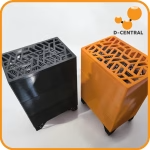
- Dual-purpose value: Modern home miners like Bitcoin Space Heaters convert electricity into both Bitcoin and usable heat. In cold climates like Canada, the effective cost of mining drops dramatically because you are offsetting your heating bill.
- Consistent accumulation: Your miner produces sats every day regardless of what the market is doing. Bear market, bull market — the hardware does not care. It just hashes.
Case Study: Antminer S17 — One-Year Comparison (2019-2020)
To put numbers behind the philosophy, let us examine a real-world comparison using the Antminer S17 over a one-year period from April 2019 to April 2020. Each strategy started with an identical investment of 2,153 CAD.
Results by Strategy
| Strategy | Initial Investment | Final Value (CAD) | Return |
|---|---|---|---|
| Buy and Hodl | $2,153 | $3,687 | +71% |
| Dollar-Cost Averaging | $2,153 | $2,441 | +13% |
| Mine and Sell | $2,153 | $3,734 | +73% |
| Mine and Hodl | $2,153 | $3,992 | +85% |
Key Takeaway
Even over a single year with relatively moderate price movement, Mine and Hodl outperformed every other strategy. It beat Buy and Hodl by 14 percentage points and crushed DCA by over 70 points. The Antminer S17 was producing Bitcoin daily while the hodl component captured upside from price appreciation. This dual-engine approach — production plus holding — is what makes Mine and Hodl structurally superior.
Case Study: Antminer S9 — Four-Year Comparison (2016-2020)
The Antminer S9 case study covers a much longer period — June 2016 to April 2020 — which includes the 2017 bull run, the subsequent bear market, and early recovery. Same setup: each strategy received an identical 2,114 CAD initial investment.
Results by Strategy
| Strategy | Initial Investment | Final Value (CAD) | Return |
|---|---|---|---|
| Buy and Hodl | $2,114 | $24,584 | +1,162% |
| Dollar-Cost Averaging | $2,114 | $8,421 | +398% |
| Mine and Sell | $2,114 | $9,462 | +447% |
| Mine and Hodl | $2,114 | $47,670 | +2,254% |
The Numbers Speak for Themselves
Over four years, Mine and Hodl delivered a 2,254% return — nearly double the already-impressive 1,162% from Buy and Hodl, and roughly five times what DCA produced. The Antminer S9, a workhorse machine that D-Central has repaired thousands of times, accumulated Bitcoin relentlessly through bull markets and bear markets alike. The hodl component then magnified returns as Bitcoin’s price appreciated over the full cycle.
This is the compounding effect of Mine and Hodl: you are stacking sats continuously while simultaneously benefiting from price appreciation on your entire accumulated balance. It is the closest thing to a positive feedback loop that individual Bitcoiners can access.
Comparative Analysis: Why Mine and Hodl Dominates
Placing both case studies side by side reveals consistent patterns:
Short-Term Performance (S17, 1 Year)
- Mine and Hodl: +85%
- Mine and Sell: +73%
- Buy and Hodl: +71%
- DCA: +13%
Long-Term Performance (S9, 4 Years)
- Mine and Hodl: +2,254%
- Buy and Hodl: +1,162%
- Mine and Sell: +447%
- DCA: +398%
What the Data Tells Us
Time amplifies the Mine and Hodl advantage. Over one year, it beat the second-best strategy by 12 percentage points. Over four years, the gap exploded to over 1,000 percentage points. This is because the hodl component creates an ever-growing stack of Bitcoin that appreciates with the market, while the mining component keeps adding to that stack regardless of price.
Mine and Sell leaves massive value on the table. In the four-year study, Mine and Sell returned 447% while Mine and Hodl returned 2,254%. The only difference is holding versus selling. Liquidating your mined sats for fiat is the single most expensive decision a home miner can make.
DCA underperforms both mining strategies in every scenario. DCA is a perfectly respectable approach to Bitcoin accumulation, but it cannot compete with the dual advantage of production plus appreciation that mining provides.
The Mine and Hodl Playbook for 2026
The case studies above used older-generation hardware (S9 and S17). In 2026, the principles remain identical but the tools have evolved dramatically. Here is how to execute a Mine and Hodl strategy today.
Choose Your Hardware Tier
Entry-Level Solo Mining: If you want to start small and mine with minimal footprint, open-source miners like the Bitaxe family are ideal. Bitaxe devices consume just 15-25 watts, run silently, and give you a shot at solo-mining an entire block — the ultimate lottery ticket. They will not produce the same volume of sats as full ASIC miners, but the sovereignty and educational value are unmatched.
Home Heating Integration: For serious accumulation, Bitcoin Space Heaters are the ultimate Mine and Hodl tool. These are full ASIC miners (S9, S19, or S21 series) enclosed in purpose-built heating cases that redirect waste heat into your living space. In Canadian winters, this effectively reduces your mining cost to near-zero because the electricity would have gone to an electric heater anyway. You mine Bitcoin and heat your home with the same watts.
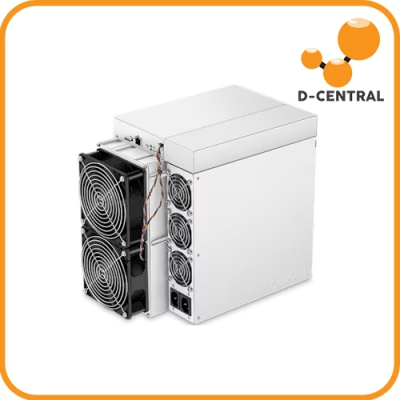
Full ASIC Deployment: Current-generation machines like the Antminer S21 series deliver massive hashrate efficiency. If you have dedicated space and cheap power, running full ASICs on a Mine and Hodl strategy is the maximum accumulation play.
Manage Operational Costs Ruthlessly
The Mine and Hodl strategy only works if you keep operational costs as low as possible. Every sat you sell to pay the electricity bill is a sat removed from your long-term stack. Key optimizations:
- Electricity rate: Canadian miners benefit from some of the cheapest electricity in the world, particularly in Quebec. Check our Mining Profitability Calculator to model your specific setup.
- Heat recovery: If you are heating your home with miners, your effective electricity cost for mining approaches zero during cold months. Canada has a lot of cold months.
- Maintenance: Keep your machines running at peak efficiency. Clean fans, replace thermal paste, monitor temperatures. A well-maintained miner earns more sats per watt over its lifetime.
- Firmware optimization: Underclocking or running custom firmware can dramatically improve efficiency (joules per terahash), allowing you to mine more sats per dollar of electricity.
Sell Only What You Must
The “hodl” part of Mine and Hodl means selling the absolute minimum to keep operations running. Set a monthly budget for electricity and maintenance, sell exactly that amount, and hold everything else. If your mining operation is heat-integrated, you may not need to sell anything at all — your heating budget covers the electricity.
The Halving Cycle Advantage
Bitcoin’s block subsidy halves approximately every four years. The most recent halving occurred in April 2024, reducing the block reward from 6.25 BTC to 3.125 BTC. The next halving is expected around 2028.
This matters for Mine and Hodl because the sats you mine today will never be this cheap to produce again. Each halving cuts the supply of new Bitcoin in half, which historically drives price appreciation. The sats your miner produces in 2026 at the current difficulty and block reward will likely be worth substantially more when viewed through the lens of the next halving cycle and beyond.
Every halving makes previously-mined Bitcoin more scarce and more valuable. Mine and Hodl exploits this dynamic directly: you accumulate sats at today’s production cost and hold them through the supply shock.
Network Decentralization: The Bigger Picture
Mine and Hodl is not just the most profitable accumulation strategy — it is the most important one for Bitcoin’s long-term health. When individuals mine at home and hold their Bitcoin, they are:
- Distributing hashrate geographically: Instead of concentrated in industrial facilities, hash power spreads across thousands of homes, apartments, and garages.
- Reducing censorship risk: Distributed miners are nearly impossible to shut down or censor. A miner in a Quebec basement is not subject to the same regulatory pressure as a 100 MW facility in Texas.
- Strengthening Bitcoin’s security model: More independent miners means more entities that must be compromised to attack the network. This is fundamental to Bitcoin’s censorship resistance.
- Creating a culture of sovereignty: Home miners understand Bitcoin at a level that casual buyers never reach. They become node operators, Lightning enthusiasts, and vocal advocates for decentralization.
At D-Central, decentralization is not a marketing slogan — it is the mission. Every miner we sell, every unit we repair, every guide we publish exists to put more hashrate into more hands. Mine and Hodl is the accumulation strategy that aligns your personal financial goals with Bitcoin’s network security. That is rare, and that is powerful.
Common Objections to Mine and Hodl
“Mining Is Not Profitable Anymore”
This objection confuses fiat profitability with Bitcoin accumulation. If your goal is to maximize fiat returns month-over-month, then yes, mining margins fluctuate with difficulty and price. But if your goal is to accumulate the most sats possible over a multi-year horizon, mining — especially with heat recovery — remains one of the most efficient methods available. The case studies above prove it with real numbers.
“The Difficulty Is Too High”
Network difficulty has increased substantially since the S9 and S17 eras. Current-generation hardware compensates with dramatically improved efficiency. The Antminer S21 series, for instance, operates at roughly 17.5 J/TH — compared to the S9’s ~98 J/TH. You mine fewer sats per unit of hashrate, but you mine them far more efficiently. The Mine and Hodl dynamic — production plus appreciation — still works.
“I Do Not Have Cheap Electricity”
Heat recovery changes the equation entirely. If you live in a climate where you heat your home for five or more months per year, a Bitcoin Space Heater replaces your electric heater. The electricity is not “mining cost” — it is “heating cost that also produces Bitcoin.” This is particularly relevant for Canadian miners where winter dominates the calendar.
“I Should Just DCA Instead”
DCA is a fine strategy and we respect it. But the data shows it consistently underperforms Mine and Hodl across every time horizon studied. DCA also does nothing for network decentralization, gives you no operational knowledge, and produces KYC-tainted Bitcoin. If you can run a miner, you should.
Frequently Asked Questions
What is the Mine and Hodl strategy?
Mine and Hodl means running Bitcoin mining hardware, selling only enough of the mined Bitcoin to cover operational expenses (electricity, maintenance), and holding the rest in cold storage for long-term accumulation. It combines the consistent production of a mining operation with the upside potential of holding Bitcoin through multiple market cycles.
How does Mine and Hodl compare to just buying and holding Bitcoin?
In the case studies analyzed, Mine and Hodl outperformed Buy and Hodl in every scenario. Over one year with the Antminer S17, Mine and Hodl returned 85% versus Buy and Hodl’s 71%. Over four years with the Antminer S9, Mine and Hodl returned 2,254% versus Buy and Hodl’s 1,162%. The advantage comes from continuous sat production on top of price appreciation.
What mining hardware is best for a Mine and Hodl strategy in 2026?
It depends on your situation. For home heating integration, Bitcoin Space Heaters (based on S9, S19, or S21 platforms) are ideal because they offset heating costs. For maximum hashrate efficiency, current-generation ASICs like the Antminer S21 series offer the best joules-per-terahash ratio. For sovereignty-focused solo mining with minimal footprint, open-source devices like the Bitaxe are excellent starting points.
Is Bitcoin mining still worth it after the 2024 halving?
The 2024 halving reduced the block reward to 3.125 BTC, which means fewer sats per block. However, each sat is expected to appreciate in value precisely because of the reduced supply. Mining hardware efficiency has also improved dramatically. The Mine and Hodl strategy is built for exactly this scenario — you accumulate sats at today’s production cost and hold them through future appreciation cycles.
How does heat recovery affect mining profitability?
Heat recovery fundamentally changes the economics. In a cold climate, if your miner replaces an electric heater, the electricity cost is not a mining expense — it is a heating expense that also produces Bitcoin. This can reduce your effective mining cost to near zero for five to eight months of the year in Canada, making the Mine and Hodl strategy dramatically more effective.
What are the risks of the Mine and Hodl strategy?
The primary risks are: hardware failure or obsolescence before recovering your investment, electricity cost increases, and extended bear markets that reduce the fiat value of your held Bitcoin. Mitigation strategies include proper hardware maintenance, monitoring your breakeven electricity rate, and maintaining a long enough time horizon (ideally spanning at least one full halving cycle).
How much Bitcoin can I expect to mine at home?
This varies enormously based on your hardware, electricity cost, and network difficulty. Use D-Central’s Mining Profitability Calculator to model your specific setup. As a rough reference, a single Antminer S21 (200 TH/s) at $0.06/kWh CAD produces a meaningful daily sat output, while a Bitaxe solo miner (500 GH/s – 1.2 TH/s) contributes to network decentralization with a small lottery-style chance at a full block reward.
Should I mine solo or join a pool with a Mine and Hodl strategy?
For full ASIC miners, pool mining provides consistent daily payouts that you can accumulate and hold. For small open-source miners like the Bitaxe, solo mining is the standard approach — you are essentially buying a lottery ticket with every hash. Both approaches are compatible with Mine and Hodl. Read our Pool Mining vs Solo Mining guide for a detailed breakdown.
Does the Mine and Hodl strategy work in all market conditions?
The case studies show it works across both bull and bear markets, but the magnitude of outperformance varies. In strongly appreciating markets (like the S9’s 2016-2020 period), Mine and Hodl dramatically outperforms because the growing stack benefits from rising prices. In flat or declining markets, you are still accumulating sats at production cost while waiting for the next cycle. The key is maintaining a long enough time horizon.
How do I get started with mining at home?
Start by assessing your electricity cost, available space, and noise tolerance. For a silent, low-power entry point, grab a Bitaxe from D-Central and point it at a solo mining pool. For serious accumulation with heat recovery, explore our Bitcoin Space Heater lineup. For guidance on hardware selection, setup, and optimization, visit the Bitaxe Hub or contact our team for a mining consultation. Every hash counts.