The Bitcoin network doesn’t care about your feelings, your business plan, or your marketing deck. It cares about one thing: proof of work. Every 10 minutes, on average, a block gets mined. The miner who finds the valid hash earns 3.125 BTC. That’s the deal. No negotiations, no middlemen, no permission required.
With the network hashrate now exceeding 800 EH/s and climbing, the margin for error in how you provision your ASIC mining operation has never been thinner. Get it right, and you’re contributing to the most secure monetary network ever built while stacking sats. Get it wrong, and you’re burning electricity for nothing.
This guide is the blueprint. Not the sanitized, vendor-neutral kind you find on corporate mining blogs. This is the Bitcoin Mining Hacker’s playbook for selecting, deploying, optimizing, and maintaining ASIC hardware — built from years of hands-on experience repairing, modifying, and pushing these machines to their limits.
What ASIC Mining Actually Is (and Why It Matters)
Application-Specific Integrated Circuits — ASICs — are silicon chips engineered for exactly one purpose: computing SHA-256 hashes as fast and efficiently as physically possible. Unlike CPUs or GPUs, which are general-purpose processors, an ASIC miner is a machine that does nothing else. It hashes. That’s it. And it does it billions of times per second.
Every ASIC miner on the network contributes to Bitcoin’s total hashrate, which is the collective computational shield that makes the blockchain effectively immutable. The higher the hashrate, the more energy an attacker would need to rewrite history. When you plug in an ASIC miner and point it at the network, you’re not just mining — you’re actively defending the hardest money ever created.
This is why ASIC provisioning matters. It’s not just about “making money from mining.” It’s about participating in a system that secures financial sovereignty for everyone on the planet. The technical decisions you make — which hardware to buy, how to cool it, where to point your hashrate, how to maintain the machine — directly impact both your operation’s viability and the network’s decentralization.
The Evolution from CPUs to Modern ASICs
In 2009, you could mine Bitcoin on a laptop CPU. By 2011, GPU mining had taken over. FPGAs appeared briefly in 2012. Then in 2013, the first ASIC miners hit the market, and everything changed permanently.
The progression has been relentless. Early ASICs operated at 65nm and 28nm process nodes. Today’s leading machines — the Antminer S21 series, the Whatsminer M60 and M63 lines — are built on 5nm processes, the same cutting-edge fabrication technology used in flagship smartphone chips. Each generation delivers more terahashes per watt, and the competitive pressure never lets up.
What this means for you: the ASIC you buy today will be outperformed by next year’s model. That’s not a reason to wait — it’s a reason to provision intelligently. The right machine at the right price with the right energy cost can be profitable for years. The wrong machine, bought at the wrong time, becomes an expensive paperweight.
Selecting the Right ASIC Miner
Choosing your ASIC miner is the single most consequential decision in your mining operation. Every downstream variable — power consumption, cooling requirements, noise management, profitability — flows from this choice. Here’s what actually matters:
The Metrics That Define a Mining Machine
- Hashrate (TH/s): Raw computational output. More terahashes per second means more lottery tickets per block. Current-gen machines range from 100 TH/s to over 300 TH/s for air-cooled units, with hydro-cooled models pushing even higher.
- Efficiency (J/TH): Joules per terahash — this is the metric that actually determines profitability. A 200 TH/s machine at 15 J/TH will outperform a 300 TH/s machine at 25 J/TH in almost every energy-cost scenario. Efficiency is king.
- Power Draw (Watts): Your electricity bill is your largest ongoing cost. Know exactly how many watts the machine pulls at the wall, not just the spec sheet number. Real-world power draw is typically 5-10% higher than manufacturer claims.
- Noise Output (dB): If you’re home mining — and you should be, because decentralization means mining where you live — noise matters. Stock ASIC fans can hit 75-80 dB. That’s lawn mower territory. Plan accordingly.
- Thermal Design: How does the machine reject heat? Air-cooled, immersion-ready, or hydro-cooled? This determines your cooling infrastructure requirements.
New vs. Used Hardware: The Real Calculus
The new vs. used debate is more nuanced than most guides suggest.
Buy new when: You need the latest efficiency (sub-17 J/TH), you want manufacturer warranty, you’re deploying at scale and need standardized fleet management, or you’re in a high-energy-cost environment where every joule matters.
Buy used when: You have cheap or free energy (hydro, solar, stranded gas), you’re building Bitcoin space heaters where efficiency is secondary to heat output, you want to learn the hardware before committing serious capital, or you can inspect and test the machines yourself.
The S9, for example, is ancient by mining standards — 13.5 TH/s at roughly 85 J/TH. By pure mining economics, it’s barely viable. But repurposed as a Bitcoin space heater, it’s a 1,300W heating element that also mines sats. That’s the Mining Hacker mentality: there’s no such thing as obsolete hardware, only hardware that hasn’t found its proper use case yet.
If you’re buying used, inspect thoroughly. Check hashboard temperatures for uniformity. Listen for fan bearing noise. Look for corrosion on connectors. Run the machine for 24 hours minimum and compare actual hashrate to spec. A machine that hashes at 90% of rated speed isn’t a bargain — it’s a machine with a failing hashboard that needs professional repair.
Provisioning Your ASIC Setup
You’ve picked your machine. Now you need to deploy it properly. Provisioning isn’t just plugging in cables — it’s engineering an environment where your hardware can operate at peak performance 24/7/365.
Electrical Infrastructure
This is where most home miners underestimate requirements. A single Antminer S21 draws roughly 3,500W. That’s a 15A circuit at 240V — dedicated, not shared. Two machines and you need a 30A circuit. Scale up from there.
Critical electrical rules:
- Always run ASICs on 240V where possible. Higher voltage means lower amperage, less heat in wiring, and more efficient power delivery.
- Use appropriately rated wiring and breakers. A 3,500W miner on a 15A/120V circuit will trip the breaker immediately — or worse, cause a fire.
- Surge protection is non-negotiable. A single power spike can kill a $3,000+ hashboard.
- Measure actual power draw at the wall with a kill-a-watt meter. Don’t trust spec sheets.
Thermal Management
Every watt your ASIC consumes becomes heat. A 3,500W miner produces approximately 12,000 BTU/hour of thermal energy. That’s equivalent to a large portable space heater — because that’s exactly what it is.
In cold climates like Canada, this is a feature, not a bug. Smart home miners duct their ASIC exhaust into living spaces during winter, offsetting heating costs. The Bitcoin Space Heater concept isn’t a gimmick — it’s basic thermodynamics applied to proof of work.
During summer, you need a plan to reject that heat. Options include:
- Exhaust ducting: Direct hot air outside through insulated ducting
- Dedicated rooms: Isolate miners in a well-ventilated space with intake/exhaust fans
- Garage or basement deployment: Naturally cooler spaces with good ventilation potential
- Immersion cooling: Submerge the hashboards in dielectric fluid for silent, temperature-stable operation
Network and Pool Configuration
Your ASIC needs a stable internet connection. Wired Ethernet is strongly preferred over WiFi — a dropped connection means lost hashrate and wasted electricity. The bandwidth requirements are minimal (under 1 Mbps), but latency and uptime matter.
Pool selection considerations:
- Payout scheme: FPPS (Full Pay Per Share) gives you the most predictable income. PPLNS rewards loyalty but has higher variance.
- Pool fees: Typically 1-2%. Don’t chase the lowest fee if it means joining a pool with poor infrastructure.
- Pool hashrate share: For the sake of decentralization, avoid pools that already control more than 25% of the network hashrate. The whole point of home mining is distributing hash power — don’t concentrate it.
- Stratum V2 support: The next generation of mining protocol gives miners more control over block template construction. Pools supporting Stratum V2 are aligned with decentralization.
For the adventurous: solo mining is always an option. With a current block reward of 3.125 BTC, hitting a block is a life-changing event. The odds are low for a single machine, but they’re not zero. Every hash counts. Tools like the Solo Mining Probability Calculator can help you understand the math.
Optimizing Your Mining Operation
Deployment is day one. Optimization is every day after that. The difference between a profitable mining operation and a money-losing one often comes down to the details of ongoing management.
Firmware and Software Tuning
Stock firmware from manufacturers is conservative. It’s designed to minimize warranty claims, not to maximize your returns. Custom and aftermarket firmware can unlock significant performance improvements:
- Underclocking: Reducing the clock frequency drops hashrate, but it drops power consumption even faster. A machine running at 80% hashrate might only draw 60% of the power. The J/TH ratio improves, and the machine runs cooler and quieter. This is the home miner’s secret weapon.
- Overclocking: Pushing the machine beyond stock speeds. Higher hashrate but disproportionately higher power draw and heat output. Only viable with cheap power and robust cooling.
- Auto-tuning: Some firmware variants automatically find the optimal frequency for each individual ASIC chip on the hashboard, maximizing the performance of every piece of silicon.
Energy Cost Optimization
Your electricity rate determines everything. Here’s the brutal math: at $0.10/kWh, a machine drawing 3,500W costs you $8.40/day in electricity alone. At $0.05/kWh, it’s $4.20/day. That difference — $1,533/year per machine — is the margin between profit and loss.
Strategies to reduce energy costs:
- Time-of-use rates: Many utilities offer cheaper electricity during off-peak hours. Configure your miners to run at full speed during cheap periods and underclock during expensive ones.
- Renewable energy: Solar panels, wind turbines, or micro-hydro can provide near-zero marginal cost electricity. Bitcoin mining is the ultimate buyer of last resort for intermittent renewable energy.
- Heat recapture: If you’re using your miner as a heater, your effective electricity cost for mining approaches zero — you’d be running a heater anyway.
- Negotiate with your utility: Large power consumers can often negotiate industrial rates. Even a few hundred watts of continuous load gives you leverage.
Monitoring and Maintenance
An unmonitored miner is a liability. Set up monitoring that alerts you to:
- Hashrate drops: A sudden drop usually indicates a failing ASIC chip or hashboard. Catch it early before it cascades.
- Temperature spikes: Inlet and outlet temperatures should remain within manufacturer specs. Persistent high temperatures accelerate component degradation.
- Hardware errors: A low hardware error rate (under 1%) is normal. Anything consistently above that indicates a problem.
- Fan speed anomalies: Fans spinning up to maximum without a corresponding temperature increase could mean blocked airflow or a failing temperature sensor.
Physical maintenance is equally important:
- Blow out dust quarterly with compressed air. Dust buildup on heatsinks degrades cooling performance and can cause chip failures.
- Inspect power connectors for discoloration or melting. Loose connections cause hot spots.
- Check fan bearings for noise. Replace fans proactively — a $15 fan replacement prevents a $500 hashboard failure from overheating.
- Keep firmware updated. Manufacturers regularly release patches for stability and performance improvements.
Financial Planning for Mining Operations
Mining is a business. Treat it like one. The romanticized “set it and forget it” narrative ignores the reality that successful mining operations require active financial management.
Understanding Your Cost Structure
Fixed costs:
- Hardware purchase (amortized over expected lifespan)
- Infrastructure buildout (electrical panel upgrades, ducting, networking)
- Power supply units and cooling equipment
Variable costs:
- Electricity (typically 70-85% of total operating costs)
- Maintenance and replacement parts
- Pool fees (1-2% of gross revenue)
- Internet connectivity
Often-overlooked costs:
- Difficulty adjustments: as the network hashrate grows, your share of block rewards shrinks. Model this into projections.
- Halving events: the block reward halved to 3.125 BTC in April 2024. The next halving is expected in 2028. Your revenue per terahash will drop 50% overnight when it hits.
- Hardware depreciation: ASIC miners are depreciating assets. Factor in the resale value decline over time.
- Tax obligations: mining income is taxable in most jurisdictions. Track your costs meticulously for deductions.
The ROI Framework
Calculate your break-even point before you buy:
- Determine total capital expenditure (hardware + infrastructure)
- Calculate daily revenue at current difficulty and Bitcoin price (use the Mining Profitability Calculator)
- Subtract daily electricity and operational costs
- Divide total CapEx by daily net profit = days to break even
If break-even exceeds 18 months, proceed with extreme caution. If it’s under 12 months at current conditions, you have a solid setup. Remember: this calculation changes daily with Bitcoin price and difficulty adjustments. Run the numbers regularly.
The Mine & Hold strategy deserves special mention. If you believe in Bitcoin’s long-term value proposition — and if you’re reading this, you probably do — then mining at a fiat loss today could still be the smartest possible accumulation strategy. You’re acquiring Bitcoin without KYC, directly from the protocol, at a cost basis determined by your electricity rate. That has value beyond the spreadsheet.
Working With ASIC Suppliers
The ASIC supply chain is a minefield. Scams, counterfeit machines, bricked units with locked firmware, machines that have been overclocked to death and then sold as “lightly used” — it’s all out there. Here’s how to navigate it.
Choosing a Reputable Source
- Established track record: Buy from companies that have been in the space for years, not fly-by-night resellers who appeared last month. D-Central has been in the mining industry since 2016, which means we’ve seen every scam, survived every bear market, and repaired thousands of machines that were purchased from less scrupulous sellers.
- Physical presence: A company with a real address, real staff, and a real repair facility is vastly more trustworthy than an anonymous Telegram account offering “best price guaranteed.”
- After-sale support: Who do you call when a hashboard fails six months after purchase? If the answer is “nobody,” you bought from the wrong vendor.
- Testing and quality control: Reputable sellers test every machine before shipping. They run it for a burn-in period, verify hashrate meets spec, and check for hardware errors. Ask about their QC process.
Red Flags to Watch For
- Prices significantly below market value. If it seems too good to be true, it is.
- Requests for payment via untraceable methods (gift cards, Western Union, etc.)
- No verifiable company information, physical address, or phone number
- Pressure to “act now” or “limited stock” without substantiation
- Unwillingness to provide photos or videos of the actual machines you’ll receive
- No return policy or testing guarantee
Security: Protecting Your Operation
You’re running machines that produce Bitcoin. That makes your operation a target — both digitally and physically. Security isn’t optional.
Digital Security
- Change default passwords immediately. Every ASIC ships with default credentials (usually root/root). If you don’t change them, anyone on your network can reconfigure your miner to point at their wallet.
- Isolate your mining network. Run your ASICs on a separate VLAN or subnet from your home network. If a miner’s firmware is compromised, the blast radius is limited.
- Monitor for hashrate hijacking. If your reported hashrate on the pool drops but the machine is still drawing full power, someone may have redirected your hashing to their pool.
- Secure your payout wallet. Use a hardware wallet for mining payouts. Never leave significant amounts on exchange or pool wallets.
- Keep firmware from trusted sources only. Third-party firmware can contain backdoors that redirect a percentage of your hashrate to the firmware developer’s wallet.
Physical Security
- Mining equipment is valuable and portable. Secure your mining space like you’d secure any other valuable asset.
- Install smoke detectors and consider a fire suppression system. Electrical equipment running 24/7 at high loads carries fire risk.
- Ensure adequate insurance coverage. Many homeowner’s policies don’t cover mining equipment — check with your provider.
The Future of ASIC Mining
The ASIC mining industry is far from mature. Several trends are reshaping the landscape:
Efficiency Gains Continue
ASIC manufacturers are pushing toward 3nm process nodes. Each node shrink delivers roughly 20-30% improvement in power efficiency. The sub-10 J/TH barrier has been broken, and further improvements are coming. For miners, this means newer hardware will continue to make older hardware less competitive — but it also means the network’s energy consumption per unit of security continues to improve.
Home Mining Renaissance
The combination of more efficient hardware, better noise management solutions, and the dual-purpose heating use case is driving a genuine home mining renaissance. Machines designed specifically for residential deployment — quieter fans, compact form factors, WiFi connectivity, mobile monitoring apps — are an emerging product category.
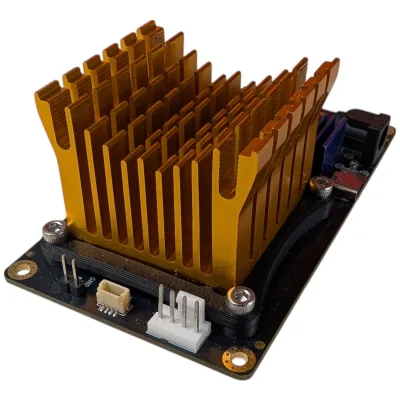
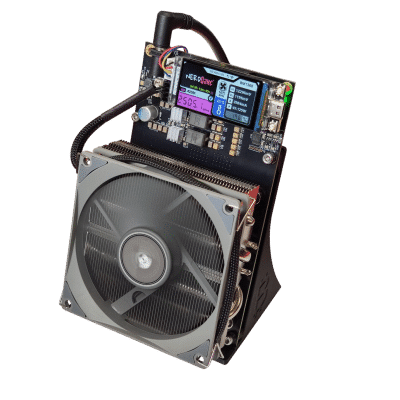
Open-source mining hardware like the Bitaxe represents the ultimate expression of this trend: fully transparent, community-developed mining hardware that anyone can build, modify, and deploy. It’s decentralization applied to the mining hardware itself.
Stratum V2 and Mining Decentralization
The shift to Stratum V2 protocol gives individual miners more say in block construction, reducing the centralization risk of large pools. Combined with the growth of home mining, this represents a fundamental improvement in Bitcoin’s censorship resistance. When you mine at home and construct your own block templates, you’re not just earning sats — you’re actively defending Bitcoin’s most important property: its resistance to censorship.
Energy Integration
Bitcoin mining is increasingly recognized as a tool for grid stabilization, methane mitigation, and renewable energy monetization. Miners are being deployed at flare gas sites, behind-the-meter at solar farms, and as controllable loads for demand response programs. The narrative has shifted from “Bitcoin wastes energy” to “Bitcoin makes energy systems more efficient.” The data supports this, and policy is starting to follow.
Conclusion
Provisioning an ASIC mining operation isn’t just a technical exercise — it’s an act of sovereignty. Every miner you deploy strengthens the Bitcoin network. Every hash you compute makes censorship harder. Every sat you mine is acquired without permission, without KYC, directly from the protocol.
The blueprint is straightforward: choose hardware that matches your energy cost reality, provision it with proper electrical and thermal infrastructure, optimize relentlessly, monitor continuously, and maintain proactively. The machines do the hashing. Your job is to create the conditions where they can do it efficiently, reliably, and profitably.
Whether you’re deploying a single machine in your basement or scaling to fill a shipping container, the fundamentals don’t change. And when your hardware eventually needs professional attention — a failed hashboard, a power delivery issue, a chip-level diagnostic — that’s what D-Central’s ASIC repair service exists for. We’ve been doing this since 2016, and we’ve repaired thousands of miners. We know these machines inside and out, down to the solder joints.
The network doesn’t care how big your operation is. It only cares that you show up with valid proof of work. So provision smart, mine hard, and stack sats.
Every hash counts.
FAQ
What is ASIC mining and why is it necessary for Bitcoin?
ASIC (Application-Specific Integrated Circuit) mining uses purpose-built chips designed exclusively for computing SHA-256 hashes — the proof-of-work algorithm that secures Bitcoin. ASICs are necessary because general-purpose hardware (CPUs, GPUs) cannot compete with their efficiency. Modern ASICs perform trillions of hashes per second while consuming a fraction of the energy that equivalent GPU setups would require. They are the only economically viable way to mine Bitcoin in 2026.
What is the most important specification when choosing an ASIC miner?
Efficiency, measured in joules per terahash (J/TH), is the single most important metric. It determines how much electricity you consume per unit of hashrate. A more efficient machine is more profitable at any given electricity price and stays viable longer as network difficulty increases. Current top-tier machines operate between 15-20 J/TH for air-cooled units and under 15 J/TH for hydro-cooled models.
How much electricity does an ASIC miner use?
Modern full-size ASIC miners typically draw between 3,000-3,500W for air-cooled units and up to 5,000W+ for hydro-cooled models. At $0.10/kWh, a 3,500W miner costs approximately $8.40/day or $252/month in electricity. This is why energy cost is the primary determinant of mining profitability. Miners in regions with cheap hydroelectric or renewable energy have a significant competitive advantage.
Can I mine Bitcoin at home?
Absolutely — and you should. Home mining is the backbone of Bitcoin’s decentralization. The main challenges are electrical capacity (you need a dedicated 240V circuit for each miner), noise management (stock fans are loud, but solutions exist), and heat dissipation (which becomes a benefit in cold climates when you use your miner as a space heater). Start with understanding your electrical panel’s capacity and your energy costs. Many home miners begin with a single machine and scale up as they learn.
Is it better to buy new or used ASIC miners?
It depends on your energy cost and use case. New miners offer the best efficiency (lowest J/TH), manufacturer warranties, and longest expected lifespan. Used miners offer lower upfront cost and immediate availability but come with risks: unknown maintenance history, no warranty, and lower efficiency. If you have cheap energy (under $0.05/kWh) or plan to use the miner as a heater, used hardware can be excellent value. Always buy from reputable sellers who test machines before shipping and offer after-sale support.
What is the current Bitcoin block reward?
As of 2026, the block reward is 3.125 BTC per block. This was set during the April 2024 halving event. The next halving is expected around 2028, when the reward will drop to 1.5625 BTC. Halving events are critical to mining economics because they cut miner revenue in half overnight (in BTC terms), making efficiency and low energy costs even more important.
How do I calculate mining profitability?
Mining profitability depends on four variables: your hashrate (TH/s), your power consumption (watts), your electricity cost ($/kWh), and the current network difficulty. Use a mining profitability calculator to model different scenarios. Remember to factor in hardware cost amortization, cooling expenses, pool fees (typically 1-2%), and the likelihood of future difficulty increases. If your break-even point is under 12-18 months at current conditions, you have a viable setup.
What is the difference between solo mining and pool mining?
Pool mining combines your hashrate with other miners, giving you small, frequent payouts proportional to your contribution. Solo mining means you’re searching for blocks alone — you get nothing until you find a block, at which point you receive the entire 3.125 BTC reward plus transaction fees. Pool mining is more predictable; solo mining is higher variance but avoids pool fees and gives you full sovereignty over your mining. With the network at 800+ EH/s, solo mining with a single ASIC is a long shot, but solo miners do find blocks. Every hash counts.
How often should I maintain my ASIC miner?
Perform a dust blowout with compressed air every 3 months. Inspect power connectors for discoloration or heat damage monthly. Monitor hashrate and temperatures daily through your pool dashboard or miner’s web interface. Replace fans proactively when you hear bearing noise — a $15 fan swap prevents a $500+ hashboard failure from overheating. Keep firmware updated to the latest stable version from the manufacturer. If you notice persistent hardware errors above 1% or a hashboard dropping off, it’s time for professional diagnosis and repair.
Can ASIC miners be used as heaters?
Yes. Every watt an ASIC miner consumes is converted to heat with near-100% efficiency (the same as any electric heater). A 3,500W miner produces approximately 12,000 BTU/hour — equivalent to a large portable space heater. In cold climates, this makes ASIC mining a dual-purpose activity: you heat your home and mine Bitcoin simultaneously. The effective cost of mining drops to near zero because you’d be spending that electricity on heating anyway. D-Central offers purpose-built Bitcoin Space Heaters designed specifically for residential heating applications.