Florida is the third most-populated state in the US and home to a growing community of Bitcoin miners — but it is also one of the most challenging environments to mine in. Year-round heat, hurricane risk, and electricity rates above the national average create a unique set of constraints that demand careful planning. The upside? Zero state income tax, a business-friendly regulatory environment, and a population deeply plugged into the digital economy.
Mining Bitcoin in Florida is not about brute-force ASIC deployments competing with Wyoming or Washington on cost-per-kilowatt-hour. It is about smart setups — low-power miners like the Bitaxe, strategic solar integration, and taking advantage of Florida’s tax structure. This guide covers every angle a Florida miner needs to evaluate before plugging in.
Florida Electricity Rates for Bitcoin Mining
Florida electricity is dominated by a few major utilities, and rates tend to run above the national average due to heavy summer air-conditioning demand and reliance on natural gas generation:
- Florida Power & Light (FPL): $0.12–$0.14/kWh — serves most of eastern and southern Florida, the largest utility in the state
- Duke Energy Florida: $0.12–$0.14/kWh — serves parts of central and northern Florida
- Tampa Electric (TECO): $0.11–$0.13/kWh — Tampa Bay area, slightly lower than FPL
- JEA (Jacksonville): $0.10–$0.13/kWh — municipally owned, occasionally competitive rates
- Gulf Power (now part of FPL/NextEra): $0.11–$0.13/kWh — Florida panhandle
- Rural Electric Cooperatives: $0.11–$0.14/kWh — various cooperatives across rural Florida
- Commercial/Industrial rates: $0.08–$0.10/kWh for qualifying high-demand customers
The bottom line: Florida residential electricity costs sit in the $0.12–$0.14/kWh range — roughly 20–40% above the cheapest mining states like Kentucky or Washington. This makes efficiency-per-watt the single most important metric for Florida miners choosing hardware. For the full national picture, see our Bitcoin Mining Electricity Cost by State guide.
Florida’s Energy Generation Mix
Understanding where Florida’s power comes from helps explain the pricing and its future trajectory:
- Natural gas: ~74% — the dominant fuel source, making Florida electricity prices closely tied to gas commodity markets
- Nuclear: ~12% — St. Lucie and Turkey Point plants provide baseload power
- Solar: ~6% and growing rapidly — Florida is the third-largest solar state by installed capacity
- Coal: ~5% and declining — most coal plants are being retired or converted
- Other renewables: ~3% — biomass and small hydro
The heavy natural gas dependence means Florida electricity prices fluctuate with gas markets. The rapid growth of solar is a bright spot — and an opportunity for miners willing to invest in their own solar installations to offset grid electricity costs.
Regulatory and Legal Environment
Florida’s regulatory approach to Bitcoin mining is best described as neutral-to-favorable. The state has not enacted mining-specific legislation (positive or negative), but its broader business-friendly posture benefits miners:
- No mining ban or restrictions: Florida has not enacted any moratorium or restrictions on proof-of-work mining at the state level
- Money Transmission: Florida’s money transmission statutes (Chapter 560) focus on money services businesses. Mining Bitcoin for your own account does not trigger money transmitter licensing requirements
- Business-friendly environment: Florida consistently ranks as one of the most business-friendly states in the US, with streamlined business formation and minimal red tape
- Political support: Florida’s political leadership has been publicly supportive of cryptocurrency innovation and has positioned the state as a crypto-friendly jurisdiction
- Local zoning: HOA restrictions and noise ordinances are the primary concern for home miners in Florida’s dense suburban communities. Many HOAs have rules about exterior equipment, noise levels, and visible modifications
- Building codes: Florida’s building codes are among the strictest in the nation due to hurricane requirements. Any exterior mining installation must comply with wind-load and storm-resistance standards
The practical takeaway: Florida will not stop you from mining, but your HOA might. Home miners in planned communities or condominiums should review their CC&Rs before investing in noisy equipment. This is another reason why near-silent options like the Bitaxe are particularly well-suited to Florida.
Tax Implications for Florida Bitcoin Miners
This is where Florida genuinely shines for miners:
- No state income tax: Florida is one of seven US states with zero state income tax. Every satoshi you mine is taxed only at the federal level — a significant advantage over states like Kentucky (5%), Georgia (5.39%), or California (up to 13.3%)
- Federal taxes: Standard IRS treatment applies — mined BTC is taxable as ordinary income at fair market value when received, and subsequent sale triggers capital gains or losses
- Sales tax: Florida charges 6% state sales tax (plus local surtaxes of 0.5–1.5%) on mining hardware purchases. No exemptions for mining equipment at the residential level
- Property tax: Florida property taxes are moderate. Mining equipment used in a home-based business may be subject to tangible personal property tax if the total value exceeds $25,000
- Business deductions: Electricity, hardware depreciation, internet, repairs, and other mining costs are deductible when mining is operated as a business (Schedule C or business entity)
The zero state income tax is Florida’s biggest mining advantage. At a 5% savings compared to an average state income tax rate, a miner generating $500/month in BTC revenue keeps an extra $300/year that would otherwise go to the state. Over the lifespan of a mining operation, this compounds significantly. For more on mining tax strategy, see our Bitcoin Mining Tax Guide.
Climate Considerations: The Florida Heat Challenge
This is the elephant in the room. Florida’s climate is the single biggest obstacle to profitable Bitcoin mining in the state:
- Summer (June–September): Temperatures of 88–95°F with humidity of 70–90%. ASIC miners generate massive heat — adding thousands of watts of thermal load into an already-hot environment. Cooling costs can add 30–50% to your effective electricity expense
- Winter (December–February): Mild temperatures of 55–75°F. This is the only period where traditional ASIC mining is comfortable without dedicated cooling, but it is too warm for meaningful heat recovery — you do not need supplemental heating in Florida
- Shoulder seasons: March–May and October–November range from 70–85°F. Manageable with good ventilation but still warmer than optimal for air-cooled ASICs
- Year-round humidity: High humidity reduces the effectiveness of evaporative cooling and can cause corrosion on exposed circuit boards over time
Heat management strategies for Florida miners:
- Go low-power: The Bitaxe and similar low-watt solo miners produce negligible heat — a Bitaxe draws 15–25W, roughly the same as a light bulb. This is the most climate-appropriate hardware for Florida
- Garage or outdoor enclosure mining: Dedicate a ventilated space away from your living area. Cross-ventilation with intake and exhaust fans can manage moderate heat loads
- No heat recovery value: Unlike cold-climate states, Florida miners get zero economic benefit from waste heat. Every watt of heat generated is pure waste that must be actively removed. This fundamentally changes the profitability equation
- Air conditioning penalty: If your miner heats your home, your air conditioner works harder to remove that heat. This “double penalty” — paying for the electricity the miner uses AND paying to remove the heat — is unique to hot-climate mining
- ASIC shrouds and ducting: If you run a full ASIC in Florida, a shroud with exterior ducting is mandatory to exhaust hot air outside rather than into your living space
Hurricane Risk and Power Reliability
Florida’s hurricane exposure is a factor that no other major mining state deals with at the same scale:
- Hurricane season (June–November): Florida averages a direct or near-miss hurricane impact every 2–3 years. Major storms can knock out power for days to weeks
- Power outage risk: Extended outages mean lost mining revenue and potential equipment risks from power surges when service is restored
- Equipment protection: Mining hardware should be protected from flooding, wind damage, and surge events. Invest in quality surge protectors, UPS units, and waterproof enclosures if mining in flood-prone areas
- Insurance: Standard homeowner’s insurance may not cover mining equipment. Consider a rider or separate policy for your hardware. See our Bitcoin Mining Insurance Guide
- Generator backup: A generator can keep low-power miners (like the Bitaxe) running during short outages, but powering a full ASIC rig off a generator is expensive and impractical for most home miners
The hurricane factor does not disqualify Florida from mining, but it requires preparation that miners in landlocked states do not need to worry about. Budget for surge protection, consider insurance, and have a shutdown procedure for approaching storms.
Solar + Mining Synergy in Florida
Florida is the Sunshine State for a reason, and solar-powered mining is one of the most compelling strategies for Florida miners to overcome the electricity cost disadvantage:
- Solar irradiance: Florida receives 5.0–5.5 peak sun hours per day on average — excellent for solar generation
- Net metering: Florida currently offers net metering, allowing solar system owners to offset their electricity usage. However, recent legislative efforts have attempted to reduce net metering benefits — check current status
- Solar + Bitaxe: A small solar panel system (500W–1kW) can fully power multiple Bitaxe units during daylight hours, effectively mining with free electricity
- Solar + ASIC: A larger solar installation (5–10kW+) can meaningfully offset ASIC electricity costs, but the economics depend heavily on system cost, net metering rates, and financing
- Battery storage: Pairing solar with battery storage allows 24/7 solar-powered mining, though the battery investment adds significant upfront cost
For Florida miners serious about profitability, solar is not optional — it is the path to competitive electricity costs. A solar-powered mining operation in Florida can achieve effective rates of $0.03–$0.06/kWh over the system lifespan, transforming the economics entirely.
Best Mining Hardware for Florida
Florida’s heat and electricity costs dictate a specific hardware strategy that differs significantly from cold-climate states:
Top Picks for Florida Miners
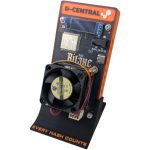
- Bitaxe Gamma / Bitaxe Hex: The ideal Florida mining hardware. Near-silent, draws only 15–25W, produces negligible heat, and fits anywhere — a condo, apartment, or office. Solo mining with zero cooling concerns. D-Central is a pioneer in the Bitaxe ecosystem with custom-manufactured accessories including the original mesh stand and custom heatsinks. Browse our full Bitaxe collection
- NerdAxe / Nerdminer / NerdQAxe: Open-source solo miners in the same low-power category. Educational, fun, and Florida-friendly. See our open-source miner collection
- Antminer S21 Pro (with caveats): If you have access to a well-ventilated outbuilding, garage, or commercial space with adequate cooling, the S21 Pro’s industry-leading efficiency (15 J/TH) makes it the best full-ASIC option for Florida’s higher electricity rates. But cooling costs must be factored in
Hardware to Avoid in Florida
- Older-generation ASICs (S9, S17, L3): Low efficiency + Florida electricity rates + cooling costs = guaranteed loss. These machines only make sense in cold climates where waste heat has value
- Any ASIC in an air-conditioned living space: The double penalty of powering the miner AND air-conditioning away its heat makes this economically destructive in Florida
Profitability Analysis: Mining in Florida (2026)
Florida’s higher electricity costs and zero heat recovery value make profitability margins tighter than in cold-climate states. Using an Antminer S21 (200 TH/s, 3,500W):
| Scenario | Electricity Rate | Monthly Power Cost | Monthly BTC Revenue* | Monthly Profit/Loss |
|---|---|---|---|---|
| FPL standard residential | $0.13/kWh | ~$328 | ~$350–$450 | $22–$122 profit |
| Solar-offset residential | $0.05/kWh (effective) | ~$126 | ~$350–$450 | $224–$324 profit |
| Commercial/Industrial | $0.09/kWh | ~$227 | ~$350–$450 | $123–$223 profit |
| Bitaxe Gamma (solo mining) | $0.13/kWh | ~$2 | Lottery (avg ~$0)* | -$2/mo (lottery ticket) |
*Revenue estimates based on early 2026 network conditions and BTC price. Bitaxe solo mining is a lottery — low probability of finding a block, but the reward is a full block (~3.125 BTC). Actual ASIC results vary with difficulty adjustments and price movements. Run your own numbers with our Mining Profitability Calculator.
The numbers tell the story: Florida full-ASIC mining operates on razor-thin margins at grid electricity rates. Solar integration or commercial rates are needed to achieve comfortable profitability. The Bitaxe, meanwhile, costs less than $2/month to run and gives you a chance at a full block reward — making it the most sensible Florida mining strategy for most home miners.
Home Mining Considerations in Florida
- Start with Bitaxe: In Florida’s climate and electricity environment, the Bitaxe is not a compromise — it is the right tool for the job. Near-zero heat output, near-zero electricity cost, and the thrill of solo mining
- Check your HOA: Florida has more HOA-governed communities than any other state. Review your CC&Rs for restrictions on exterior equipment, noise, and visible modifications before investing in full ASIC hardware
- Plan for hurricanes: Surge protectors, waterproof storage for backup hardware, and a shutdown checklist for approaching storms
- Evaluate solar: Get quotes for solar installation. Florida’s sunshine combined with federal tax credits (30% ITC through 2032) can make solar-powered mining highly profitable
- Avoid indoor ASIC mining: Do not run a full ASIC in your air-conditioned living space. The cooling penalty destroys your margins. Garage, shed, or outdoor enclosure only
- Electrical panel check: Florida homes vary widely in electrical capacity. Verify your panel can support mining loads before purchasing hardware
- Humidity protection: Florida’s persistent humidity can corrode electronics over time. Ensure adequate ventilation and consider dehumidification in enclosed mining spaces
- Internet redundancy: Florida’s summer storms can knock out cable internet. A cellular backup connection keeps your miner online during brief outages
Florida vs Other Mining States
| Factor | Florida | Texas | Georgia | Kentucky |
|---|---|---|---|---|
| Electricity Rate | $0.12–$0.14 | $0.08–$0.14 | $0.08–$0.13 | $0.07–$0.09 |
| State Income Tax | None | None | 5.39% | 5% |
| Climate for Mining | Poor (hot/humid) | Poor (hot) | Moderate (hot summers) | Good (4 seasons) |
| Heat Recovery Value | None | Minimal | Low | High (cold winters) |
| Hurricane Risk | High | Moderate (coast) | Low | None |
| Solar Potential | Excellent | Excellent | Good | Moderate |
| Regulation | Neutral-Favorable | Very Favorable | Neutral | Favorable |
| Best Hardware Fit | Bitaxe / Solar+ASIC | Efficient ASICs | Efficient ASICs | All (cheap power) |
Florida’s zero income tax and solar potential are genuine advantages, but the heat and electricity costs push the optimal strategy toward low-power miners and solar integration rather than raw hashrate deployment. For a comparison with Canadian provinces, see our Bitcoin Mining: Canada vs USA guide.
Frequently Asked Questions About Bitcoin Mining in Florida
Is Bitcoin mining legal in Florida?
Yes. Bitcoin mining is legal in Florida and throughout the United States. There are no federal or state/provincial laws prohibiting individuals from mining Bitcoin at home. However, you should check local zoning bylaws and noise ordinances, especially if running full-size ASIC miners in residential areas.
What is the best Bitcoin miner for Florida electricity rates?
The best miner depends on your specific electricity rate. At lower rates (under $0.08/kWh), high-hashrate miners like the Antminer S21 Pro or S21 XP offer the best absolute returns. At higher rates (above $0.10/kWh), ultra-efficient models like the S21 XP (13.5 J/TH) are essential for profitability. For home miners on standard residential power, open-source miners like the Bitaxe offer a low-power entry point. Use our Mining Profitability Calculator with your exact electricity rate.
Can I mine Bitcoin at home in Florida?
Absolutely. Home Bitcoin mining is popular across Florida. For apartments and noise-sensitive environments, the Bitaxe family of open-source solo miners runs silently on WiFi with minimal power draw. For dedicated setups, full ASIC miners can be installed in basements, garages, or purpose-built mining closets. Our How to Mine Bitcoin at Home guide covers everything you need to get started.
How much does it cost to mine Bitcoin in Florida?
Mining costs depend on your electricity rate, hardware efficiency, and Bitcoin’s network difficulty. Use our Mining Power Cost Calculator for an exact estimate based on your Florida electricity rate. As a general rule, you need electricity below $0.12/kWh for full ASIC mining to be profitable, though heat recapture can effectively lower your cost.
Can I use a Bitcoin miner as a heater in Florida?
Yes. Every watt consumed by a Bitcoin miner is converted to heat, making ASIC miners effective space heaters. D-Central’s Bitcoin Space Heaters are purpose-built for home heating while mining. During cold months, the heat offsets your heating bill, effectively reducing your electricity cost for mining to near zero.
Get Started Mining in Florida with D-Central
D-Central Technologies ships all mining hardware to Florida from our Canadian headquarters. For Florida miners, we especially recommend:
- Bitaxe and open-source miners — the perfect fit for Florida’s climate. Solo mine with near-zero heat and electricity cost. D-Central is a pioneer in the Bitaxe ecosystem with custom-manufactured accessories
- Latest-generation efficient ASICs — if you have dedicated, ventilated space and want to maximize hashrate, the S21 Pro offers the best efficiency for Florida’s higher rates
- ASIC repair services — humidity and heat stress Florida mining equipment. Our North American repair service keeps your hardware running
- Parts, cooling accessories, and shrouds — essential for managing heat in Florida mining setups
Florida mining is a different game than cold-climate mining — but it is still a game worth playing. Zero state income tax, abundant sunshine for solar, and the Bitaxe solo mining experience make the Sunshine State a viable mining jurisdiction for the smart, prepared miner. D-Central has the hardware and expertise to set you up right.
Browse our full catalog | Calculate your profitability | Contact our team
Is Bitcoin mining legal in Florida?
Yes. Bitcoin mining is legal in Florida and throughout the United States. There are no federal or state/provincial laws prohibiting individuals from mining Bitcoin at home. However, you should check local zoning bylaws and noise ordinances, especially if running full-size ASIC miners in residential areas.
What is the best Bitcoin miner for Florida electricity rates?
The best miner depends on your specific electricity rate. At lower rates (under $0.08/kWh), high-hashrate miners like the Antminer S21 Pro or S21 XP offer the best absolute returns. At higher rates (above $0.10/kWh), ultra-efficient models like the S21 XP (13.5 J/TH) are essential for profitability. For home miners on standard residential power, open-source miners like the Bitaxe offer a low-power entry point. Use our Mining Profitability Calculator with your exact electricity rate.
Can I mine Bitcoin at home in Florida?
Absolutely. Home Bitcoin mining is popular across Florida. For apartments and noise-sensitive environments, the Bitaxe family of open-source solo miners runs silently on WiFi with minimal power draw. For dedicated setups, full ASIC miners can be installed in basements, garages, or purpose-built mining closets. Our How to Mine Bitcoin at Home guide covers everything you need to get started.
How much does it cost to mine Bitcoin in Florida?
Mining costs depend on your electricity rate, hardware efficiency, and Bitcoin’s network difficulty. Use our Mining Power Cost Calculator for an exact estimate based on your Florida electricity rate. As a general rule, you need electricity below $0.12/kWh for full ASIC mining to be profitable, though heat recapture can effectively lower your cost.
Can I use a Bitcoin miner as a heater in Florida?
Yes. Every watt consumed by a Bitcoin miner is converted to heat, making ASIC miners effective space heaters. D-Central’s Bitcoin Space Heaters are purpose-built for home heating while mining. During cold months, the heat offsets your heating bill, effectively reducing your electricity cost for mining to near zero.