Ontario is Canada’s most populous province and its economic powerhouse — home to over 15 million people, a massive tech sector, and the country’s financial capital in Toronto. For Bitcoin miners, Ontario presents an interesting proposition: electricity isn’t the cheapest in Canada, but time-of-use (TOU) pricing creates genuine optimization opportunities for savvy operators. Combined with strong infrastructure, a large tech-literate population, and cold winters that make dual-purpose mining viable, Ontario has a real case as a Bitcoin mining province.
In this guide, we’ll break down Ontario’s electricity landscape, show you how to exploit TOU pricing to minimize your mining costs, cover the regulatory and tax picture, and recommend the best hardware for Ontario’s rate structure. Whether you’re in Toronto, Ottawa, Hamilton, or rural Ontario, this is your complete roadmap to mining Bitcoin profitably in the province.
Ontario’s Electricity Rates: Understanding TOU Pricing
Ontario’s electricity market is unique in Canada. Rather than a single Crown corporation like Hydro-Québec, Ontario has a deregulated retail market with multiple local distribution companies (LDCs) — Toronto Hydro, Hydro One, Alectra, Ottawa Hydro, and dozens more. However, the Ontario Energy Board (OEB) sets province-wide time-of-use rates that most residential customers follow.
Time-of-Use Rates (2026)
Ontario’s TOU pricing divides the day into three periods with different rates:
- Off-Peak: ~$0.076/kWh — weekdays 7pm to 7am, all day weekends and holidays
- Mid-Peak: ~$0.122/kWh — weekdays 11am to 5pm (summer) or 7am to 11am & 5pm to 7pm (winter)
- On-Peak: ~$0.158/kWh — weekdays 7am to 11am & 5pm to 7pm (summer) or 11am to 5pm (winter)
Critical for miners: These are just the electricity commodity charges. Your actual bill also includes delivery charges, regulatory charges, and debt retirement charges that add roughly $0.04–0.06/kWh to your total cost. This means your all-in effective rate ranges from approximately:
- Off-Peak all-in: ~$0.11–0.13/kWh
- Mid-Peak all-in: ~$0.16–0.18/kWh
- On-Peak all-in: ~$0.20–0.22/kWh
For context, these rates are 2–3x higher than Quebec’s residential rates, which is why hardware selection and optimization matter far more in Ontario. See our Bitcoin Mining Electricity Cost by Province guide for detailed comparisons.
Ultra-Low Overnight (ULO) Rate
Ontario introduced the Ultra-Low Overnight pricing plan specifically to incentivize shifting electricity consumption to overnight hours:
- Ultra-Low Overnight (11pm to 7am): ~$0.028/kWh
- Weekend Off-Peak: ~$0.076/kWh
- Mid-Peak: ~$0.122/kWh
- On-Peak: ~$0.158/kWh
The ULO rate is a game-changer for miners willing to schedule their operations. At $0.028/kWh commodity (roughly $0.07–0.09/kWh all-in), overnight Ontario mining approaches Quebec-level costs for 8 hours per day. This is where smart Ontario miners find their edge.
Tiered Pricing Alternative
Ontario also offers a tiered pricing option:
- Tier 1 (first 1,000 kWh/month): ~$0.076/kWh
- Tier 2 (above 1,000 kWh/month): ~$0.112/kWh
For 24/7 mining operations, the tiered rate may actually be cheaper overall since you avoid on-peak spikes, but the math depends on your consumption level and mining schedule.
TOU Optimization Strategies for Ontario Miners
Ontario’s variable pricing creates real opportunities for miners who optimize their schedules:
Strategy 1: Off-Peak Only Mining
Run your ASICs only during off-peak hours (7pm–7am weekdays, all day weekends). This gives you approximately 76 hours per week of mining at the lowest TOU rate. Use smart plugs or mining firmware with scheduling features to automate start/stop times.
Strategy 2: ULO Night Mining
If you’ve opted into the ULO plan, mine exclusively during the 11pm–7am window at the ultra-low $0.028/kWh commodity rate. This gives you 56 hours per week — less uptime, but at dramatically lower cost per hash.
Strategy 3: Dynamic Power Adjustment
Using firmware like Braiins OS+ or VNish, you can automatically adjust your miner’s power consumption based on the current TOU period. Run at full power during off-peak, reduce to 50–70% during mid-peak, and either idle or run at minimum during on-peak hours.
Strategy 4: Winter Heating Offset
During Ontario’s cold months (November through March), run your miner as a Bitcoin Space Heater. Since you’d be paying for electric heating anyway, the effective mining cost during heating season is $0 — regardless of TOU period.
Climate Advantages in Ontario
Ontario’s climate varies significantly by region, but broadly offers mining-friendly conditions:
- Southern Ontario (Toronto, Hamilton, London): Cold winters averaging -5°C to -10°C from December through February. Hot, humid summers reaching 30–35°C require active cooling or reduced mining in July–August.
- Eastern Ontario (Ottawa, Kingston): Colder winters averaging -10°C to -15°C, similar to Quebec. Excellent for mining heat recovery.
- Northern Ontario (Sudbury, Thunder Bay, Timmins): Very cold winters averaging -15°C to -25°C. Outstanding for mining operations — cheap cooling for 7+ months of the year.
The heating season in Ontario typically runs from October through April — about 6 months where your mining hardware can offset heating costs. This dual-purpose approach is one of the strongest arguments for Bitcoin mining in Canada, and Ontario’s cold climate makes it viable for the majority of the year.
Regulatory Environment
Bitcoin mining is fully legal in Ontario with no province-specific restrictions:
- No mining bans or restrictions: Ontario has no legislation targeting Bitcoin mining. You’re free to mine at home or commercially.
- Ontario Energy Board (OEB): The OEB regulates electricity rates and distribution but does not regulate what you use electricity for. Mining is treated the same as any other electricity consumption.
- Municipal considerations: Toronto and other cities have noise bylaws that could apply to loud ASIC miners. Home miners should use quiet setups — D-Central’s space heater editions, custom shrouds, or Bitaxe/open-source miners that run silently.
- Electrical permits: Adding a 240V circuit for ASIC mining requires a licensed electrician and an ESA (Electrical Safety Authority) inspection in Ontario. Budget $500–1,500 for proper installation.
- Condo and rental restrictions: If you’re renting or in a condo, check your lease or condo bylaws. Some buildings restrict heavy electrical loads or have noise requirements that could affect mining.
Tax Implications for Ontario Bitcoin Miners
Federal CRA rules apply uniformly across Canada, with Ontario adding its own provincial tax layer:
Hobby vs. Business Mining
The CRA distinction between hobby and business mining is the same across all provinces:
- Hobby mining: Mined Bitcoin taxed as capital gains when sold (50% inclusion rate). No expense deductions.
- Business mining: Mined Bitcoin taxed as business income at fair market value upon receipt. Full expense deductions for electricity, hardware (CCA Class 50), internet, and dedicated space.
Ontario-Specific Tax Considerations
- Combined marginal tax rate: Ontario’s highest combined federal + provincial rate is approximately 53.53% — marginally higher than Quebec.
- HST: Ontario uses Harmonized Sales Tax (13%). If your mining operation qualifies as a business exceeding $30,000/year in revenue, you must register for HST.
- Ontario small business deduction: If you incorporate your mining operation, the Ontario small business tax rate is approximately 12.2% (combined federal + provincial) on the first $500,000 of active business income.
For the full tax picture, see our Bitcoin Mining Tax Guide for Canada.
Best Mining Hardware for Ontario’s Rates
Ontario’s higher electricity costs mean hardware efficiency matters more here than in Quebec. You need the most efficient miners available to maintain profitability at $0.11–0.18/kWh all-in rates.
Best Choices for Ontario Home Miners
- Bitaxe (all variants): With power consumption of 10–25W, the electricity cost for a Bitaxe in Ontario is still under $8/month even at peak rates. The solo mining / lottery mining proposition is nearly identical to cheaper provinces because the power draw is so minimal.
- NerdQAxe++: At ~20W, this open-source quad-chip miner costs under $5/month to run in Ontario — an excellent solo mining option.
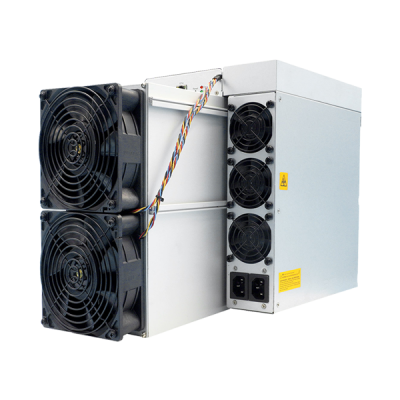
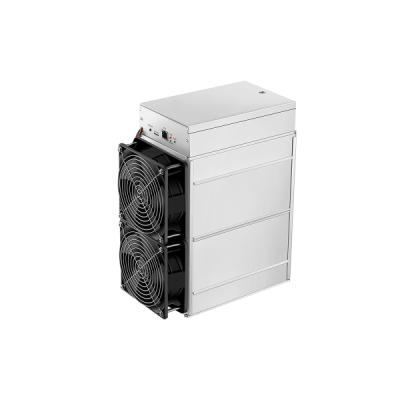
- Antminer S21 Pro (234 TH/s, 15 J/TH): The most efficient air-cooled miner available. At Ontario’s off-peak all-in rate (~$0.12/kWh), the S21 Pro is profitable. At on-peak rates, it’s marginal — which is why TOU scheduling is essential.
- Antminer S21 (200 TH/s, 17.5 J/TH): Profitable at off-peak rates, break-even during mid-peak. Use scheduling firmware to maximize off-peak runtime.
What to AVOID in Ontario
- Older-generation ASICs (S9, S17, L3+): At Ontario’s rates, anything above ~25 J/TH is unprofitable for pure mining. The exception: using these as space heaters during heating season, where the mining revenue is a bonus on top of heat you’d pay for anyway.
- 24/7 on-peak mining: Running any ASIC continuously without TOU scheduling in Ontario is leaving money on the table.
Profitability Analysis at Ontario Rates
Here’s how popular miners perform at Ontario’s key rate tiers (all-in costs including delivery charges):
| Miner | Hashrate | Power | Daily Cost @ $0.12/kWh (Off-Peak) | Daily Cost @ $0.17/kWh (Mid-Peak) | Est. Daily Revenue (CAD)* |
|---|---|---|---|---|---|
| Bitaxe Gamma | 1.2 TH/s | 15W | $0.04 | $0.06 | $0.04 (solo) |
| NerdQAxe++ | 4.8 TH/s | 20W | $0.06 | $0.08 | $0.15 (solo) |
| Antminer S19k Pro | 120 TH/s | 2,760W | $7.95 | $11.26 | $7.80 |
| Antminer S21 | 200 TH/s | 3,500W | $10.08 | $14.28 | $13.00 |
| Antminer S21 Pro | 234 TH/s | 3,531W | $10.17 | $14.41 | $15.21 |
*Revenue estimates based on February 2026 network conditions. Use our Mining Profitability Calculator for real-time figures.
Key takeaway: In Ontario, the S21 Pro is clearly profitable at off-peak rates ($15.21 revenue vs. $10.17 cost = $5.04/day profit). The standard S21 is also profitable off-peak ($2.92/day). But at mid-peak or on-peak rates, margins compress or disappear entirely. TOU scheduling is not optional — it’s required for Ontario profitability.
Winter bonus: During heating season, the electricity cost calculus changes completely. If your miner’s heat replaces your furnace or space heater, the effective mining cost drops to $0 and even older hardware becomes profitable as a heater-that-mines.
Ontario’s Tech Community Advantage
While electricity isn’t Ontario’s strength, the province offers other advantages:
- Large Bitcoin community: Toronto hosts Canada’s largest Bitcoin meetup groups, conferences, and educational events. Access to knowledge, troubleshooting help, and peer support is unmatched.
- Hosting options: Ontario has multiple data center and co-location facilities that accommodate mining equipment, often with negotiated industrial electricity rates.
- Business infrastructure: If you’re building a mining business, Ontario offers the best access to accountants, lawyers, and financial services familiar with cryptocurrency.
- Resale market: With the largest population base in Canada, Ontario has the most active used mining hardware market for buying, selling, and trading equipment.
Getting Started: Your Ontario Mining Checklist
- Check your electricity plan: Contact your LDC (Toronto Hydro, Hydro One, etc.) and determine whether you’re on TOU, ULO, or tiered pricing. Consider switching to ULO if you’ll mine primarily overnight.
- Calculate your all-in rate: Don’t just look at the commodity charge. Add delivery, regulatory, and debt retirement charges to get your true cost per kWh.
- Choose efficient hardware: In Ontario, efficiency is everything. Stick to the latest-gen miners (S21 Pro, S21) or ultra-low-power open-source miners (Bitaxe, NerdQAxe++).
- Set up scheduling: Install Braiins OS+ or similar firmware that supports power scheduling. Configure your miner to run at full power during off-peak and reduce/idle during on-peak.
- Consider the heating angle: Ontario winters are cold enough to make the space heater strategy work for 5–6 months. A Bitcoin Space Heater can offset your heating costs while mining.
- Track expenses meticulously: Ontario’s higher costs mean expense deductions matter more for your tax situation. Log everything.
Conclusion: Ontario Mining Requires Strategy, Not Just Hardware
Ontario isn’t the cheapest province to mine in — that crown belongs to Quebec and Manitoba. But Ontario rewards miners who think strategically about TOU optimization, seasonal heating offsets, and hardware efficiency. The province’s large tech community, strong business infrastructure, and cold winters make it a viable and active mining market.
The key to profitable Ontario mining is simple: run the most efficient hardware, exploit off-peak and ULO pricing, and use your miners as heaters during winter. Do all three, and Ontario’s numbers work.
Ready to start mining in Ontario? D-Central Technologies ships from Quebec — meaning fast, domestic delivery to anywhere in Ontario with no customs or cross-border hassles. Browse our catalog for the latest efficient miners and space heater builds, or visit our Bitcoin Mining in Canada hub for more province-by-province guidance.