Quebec is, without question, the single best province in Canada for Bitcoin mining — and one of the best jurisdictions on the entire planet. With hydroelectric power rates as low as $0.04–0.05 CAD/kWh for residential customers and $0.03 CAD/kWh for industrial consumers, Quebec offers electricity costs that most miners around the world can only dream about. Combined with brutally cold winters that slash cooling costs, a stable regulatory environment, and abundant renewable energy, la belle province is a Bitcoin miner’s paradise.
D-Central Technologies is headquartered right here in Laval, Quebec — and we didn’t pick this location by accident. We live and breathe the advantages of mining in this province every single day. In this comprehensive guide, we’ll break down everything you need to know about Bitcoin mining in Quebec: electricity rates, regulations, tax implications, hardware recommendations, and real profitability numbers at local rates.
Quebec’s Electricity Rates: The #1 Advantage
Quebec’s electricity is generated almost entirely from hydroelectric dams — roughly 95% of the province’s generation comes from water. Hydro-Québec, the provincial Crown corporation, operates one of the largest hydroelectric systems in the world, giving Quebec some of the cheapest and cleanest electricity available anywhere.
Current Residential Rates (2026)
Hydro-Québec’s residential Rate D breaks down as follows:
- First 40 kWh/day: ~$0.0473/kWh (Tier 1)
- Above 40 kWh/day: ~$0.0730/kWh (Tier 2)
- Effective blended rate for miners: $0.05–0.07/kWh depending on total household consumption
For home miners running even a single Antminer S21 (approximately 3,500W), you’ll consume about 84 kWh/day from the miner alone, pushing you into Tier 2 territory. Even so, at $0.07/kWh, Quebec remains dramatically cheaper than Ontario, British Columbia, or virtually any US state.
Industrial and Commercial Rates
For larger operations, Hydro-Québec offers several rate classes:
- Rate M (Medium Power): ~$0.0354/kWh — for loads up to 5,000 kW
- Rate L (Large Power): ~$0.0310/kWh — for loads exceeding 5,000 kW
- Rate LG (Large Industrial): Negotiated contracts, potentially below $0.03/kWh
These industrial rates are why major mining operations like Bitfarms and SATO Technologies chose Quebec as their home base. For a detailed comparison of electricity rates across all Canadian provinces and US states, see our Bitcoin Mining Electricity Cost by Province guide.
Climate Advantages: Nature’s Free Cooling
Quebec’s climate is a massive asset for Bitcoin miners. The province experiences long, harsh winters with average temperatures well below freezing from November through March. In cities like Montreal and Quebec City, January averages hover around -10°C to -15°C, while northern regions can plunge to -30°C or colder.
Why does this matter for mining?
- Reduced cooling costs: ASIC miners generate enormous heat. In warmer climates, operators spend significant money on air conditioning and cooling infrastructure. In Quebec, you can use ambient winter air for free cooling 6–7 months of the year.
- Extended hardware lifespan: Lower operating temperatures reduce thermal stress on ASIC chips, potentially extending the life of your mining hardware.
- Dual-purpose mining: In Quebec, your Bitcoin miner IS your space heater from October through April. A single Antminer S9-based Bitcoin Space Heater produces roughly 1,300W of heat — equivalent to a large electric space heater — while simultaneously earning Bitcoin. You’re not paying twice for electricity; you’re mining AND heating.
- Summer is manageable: Even Quebec summers rarely push past 30°C for extended periods, making year-round mining entirely feasible with basic ventilation.
For Quebec residents, Bitcoin mining in Canada makes the most economic sense during the heating season — but the numbers work year-round at these electricity rates.
Hydro-Québec’s Crypto Mining Policies
Hydro-Québec’s relationship with crypto mining has been a rollercoaster. Here’s where things stand:
The 2018 Moratorium and Its Aftermath
In 2018, when Bitcoin’s first major bull run attracted enormous mining operations to Quebec, the Régie de l’énergie (Quebec’s energy board) imposed a temporary moratorium on new electricity allocations for cryptocurrency mining. The concern was that large-scale mining would consume surplus power that Hydro-Québec could export profitably to the US.
This moratorium targeted large-scale industrial operations — not home miners. If you’re running a few ASICs at home on a residential electricity contract, Hydro-Québec has never restricted this usage. Your electricity is metered and billed at standard residential rates, and the utility has no mechanism (or interest) in monitoring what appliances you’re powering.
Current Status (2026)
The landscape has evolved significantly:
- Home mining: Fully unrestricted. No permits, no special approvals needed. You pay your electricity bill, you run your miners.
- Small commercial operations (under 50 kW): Generally unrestricted under standard commercial rates.
- Large industrial operations (above 5 MW): Subject to the Régie de l’énergie allocation process. Hydro-Québec requires demonstrated economic benefits (job creation, technology development) beyond pure electricity consumption.
- Surplus energy exports: Hydro-Québec has signed lucrative long-term contracts to export power to New York and New England, which has tightened the available surplus for new industrial consumers.
The bottom line: for the pleb miner and small-scale operator, Quebec remains wide open and incredibly attractive.
Regulations and Legal Status
Bitcoin mining is fully legal in Quebec and across Canada. There are no provincial laws restricting individuals from mining Bitcoin at home or commercially. Key regulatory points:
- No mining-specific legislation: Quebec has no laws specifically targeting or restricting Bitcoin mining at any scale for individuals.
- Municipal bylaws: Some municipalities may have noise bylaws that could apply to loud ASIC miners in residential areas. This is easily managed with proper enclosures, shrouds, or quiet mining setups like D-Central’s space heater editions.
- Electrical code compliance: If you’re running multiple high-power ASICs, you may need to upgrade your electrical panel. All electrical work should be done by a licensed electrician (maître électricien) and comply with the Code de construction du Québec.
- Right to Repair: Quebec has enacted progressive right-to-repair legislation, which D-Central has championed — meaning you can repair and modify your own mining hardware without voiding your legal rights.
Tax Implications for Quebec Bitcoin Miners
The Canada Revenue Agency (CRA) treats Bitcoin mining income according to whether you’re classified as a hobby miner or a business:
Hobby Mining
If you’re running a Bitaxe or a single ASIC at home without the intention of profit — or if your operation is clearly personal-scale — the CRA may consider this a hobby. Mined Bitcoin is typically taxed as a capital gain when sold, with only 50% of the gain being taxable. However, you cannot deduct mining expenses (electricity, hardware) against hobby income.
Business Mining
If mining is conducted with a reasonable expectation of profit — particularly with multiple ASICs, dedicated infrastructure, and regular revenue — the CRA will classify it as business income:
- Mined Bitcoin is taxed as business income at its fair market value at the time of receipt.
- Deductible expenses include: electricity costs, hardware depreciation (CCA Class 50 — 55% declining balance), internet, dedicated space (home office deduction), repairs, and maintenance.
- Quebec provincial tax: In addition to federal income tax, Quebec levies its own provincial income tax. Combined marginal rates can reach 53.31% at the highest bracket.
- GST/QST: If your mining revenue exceeds $30,000/year, you must register for GST/QST collection.
For a comprehensive breakdown, see our Bitcoin Mining Tax Guide for Canada. We strongly recommend consulting a Quebec-based accountant familiar with cryptocurrency taxation.
Best Mining Hardware for Quebec’s Electricity Rates
Quebec’s ultra-low electricity costs give you a unique advantage: you can profitably run a wider range of hardware than miners in most other jurisdictions. Here’s what we recommend:
For Home Miners: Open-Source Solo Miners
- Bitaxe (any variant): At Quebec rates, the electricity cost for running a Bitaxe is negligible — under $5/month. These are perfect for solo mining / lottery mining while supporting Bitcoin’s decentralization. The Bitaxe Gamma and GT models offer the best hashrate-per-watt for solo miners.
- NerdQAxe++: Quad-chip open-source miner with ~4.8 TH/s at ~20W. At Quebec rates, this costs about $1/month in electricity while giving you meaningful solo mining probability.
- NerdAxe / NerdNOS: Entry-level solo miners for Bitcoin enthusiasts who want to participate in the network for minimal cost.
For Serious Home Miners: ASIC Miners
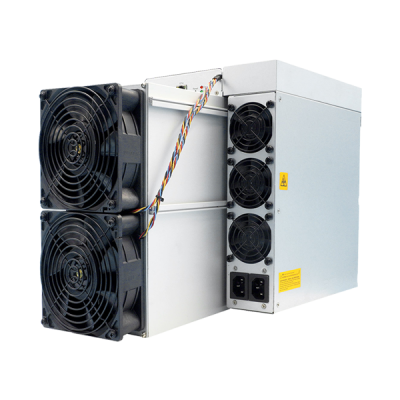
- Antminer S21 / S21 Pro: The latest generation offers 200+ TH/s at ~17.5 J/TH efficiency. At Quebec’s $0.05–0.07/kWh, these machines are comfortably profitable and represent the best performance per watt available.
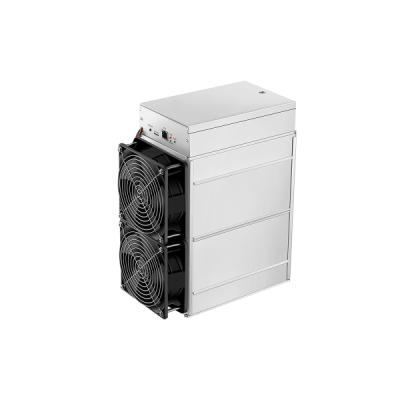
- Antminer S19 XP / S19k Pro: Previous-gen machines that are still profitable at Quebec rates. These can be found at significant discounts and make excellent dual-purpose miner/heaters.
- Bitcoin Space Heaters (S9, S17, S19 editions): D-Central’s custom builds are IDEAL for Quebec. During the 6+ month heating season, your miner replaces your electric heater — the electricity cost is effectively $0 because you’d be paying for heat anyway. This is the ultimate Quebec mining strategy.
For Scaling Up
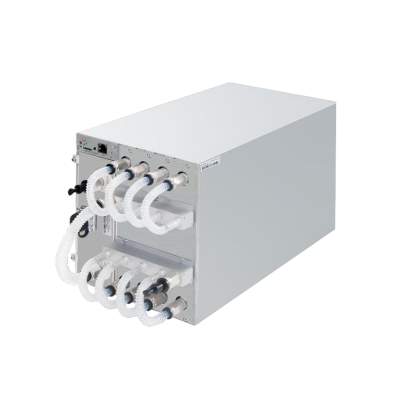
- Antminer S21 Hydro: Liquid-cooled for maximum density. At industrial Quebec rates (~$0.035/kWh), these machines offer exceptional returns.
- Whatsminer M60S / M50S+: Strong alternatives from MicroBT that perform well at Quebec’s electricity costs.
Profitability Analysis at Quebec Rates
Let’s run the numbers for popular miners at Quebec’s residential electricity rate of $0.06 CAD/kWh (blended average):
| Miner | Hashrate | Power | Daily Electricity Cost (CAD) | Est. Daily Revenue (CAD)* | Daily Profit (CAD) |
|---|---|---|---|---|---|
| Bitaxe Gamma | 1.2 TH/s | 15W | $0.02 | $0.04 | $0.02 (solo lottery) |
| NerdQAxe++ | 4.8 TH/s | 20W | $0.03 | $0.15 | $0.12 (solo lottery) |
| Antminer S19k Pro | 120 TH/s | 2,760W | $3.97 | $7.80 | $3.83 |
| Antminer S21 | 200 TH/s | 3,500W | $5.04 | $13.00 | $7.96 |
| Antminer S21 Pro | 234 TH/s | 3,531W | $5.08 | $15.21 | $10.13 |
*Revenue estimates based on February 2026 network conditions and BTC price. Actual results vary with difficulty adjustments and Bitcoin price movements. Use our Mining Profitability Calculator for real-time estimates.
The dual-purpose advantage: During Quebec’s heating season (roughly October through April), if you’re using your miner to heat your home, your effective electricity cost for mining drops to $0 — because you’d be paying that electricity cost for heating regardless. This makes even older, less efficient miners profitable in Quebec during winter months.
Why D-Central Is Your Best Partner for Quebec Mining
D-Central Technologies is based right here in Laval, Quebec — just north of Montreal. This isn’t just a marketing talking point. It means real advantages for Quebec-based miners:
- No international shipping: Your hardware ships from our Quebec facility. No customs, no cross-border delays, no brokerage fees. Often next-day delivery within the province.
- Local ASIC repair: If your miner needs service, you can drop it off in person or ship it to us within Quebec. No sending hardware across the border and waiting weeks for returns.
- Same timezone, same language: Our team speaks both English and French. Call us, email us, or visit us — we’re in the same time zone and understand Quebec’s unique mining landscape.
- We mine here too: We don’t just sell mining equipment. We mine in Quebec ourselves, test all our products in Quebec’s climate, and build our space heater editions specifically for Canadian homes.
- Local knowledge: We understand Hydro-Québec’s rate structures, Quebec’s electrical codes, the province’s tax landscape, and the practical realities of mining through Quebec winters.
Getting Started: Your Quebec Mining Checklist
- Assess your electrical capacity: Check your breaker panel. A single Antminer S21 needs a dedicated 20A/240V circuit. For multiple miners, you’ll likely need a panel upgrade by a licensed Quebec electrician.
- Choose your hardware: Start with a Bitaxe for solo mining education, or dive in with an S21 for serious returns. Quebec’s rates support both strategies.
- Plan your ventilation: Even in Quebec’s cold climate, you need to manage heat output. In winter, duct the hot exhaust into your living space. In summer, vent it outside.
- Set up your mining pool: For ASIC miners, choose a pool that aligns with decentralization values. For Bitaxe and open-source miners, solo mine directly on the Bitcoin network.
- Track everything for taxes: Log your mined Bitcoin amounts, fair market value at receipt, electricity costs, and all expenses from day one. Your future accountant will thank you.
- Run the numbers: Use our Mining Profitability Calculator to estimate your returns at Quebec’s electricity rates.
Frequently Asked Questions About Bitcoin Mining in Quebec
Is Bitcoin mining legal in Quebec?
Yes. Bitcoin mining is legal in Quebec and throughout Canada. There are no federal or state/provincial laws prohibiting individuals from mining Bitcoin at home. However, you should check local zoning bylaws and noise ordinances, especially if running full-size ASIC miners in residential areas.
What is the best Bitcoin miner for Quebec electricity rates?
The best miner depends on your specific electricity rate. At lower rates (under $0.08/kWh), high-hashrate miners like the Antminer S21 Pro or S21 XP offer the best absolute returns. At higher rates (above $0.10/kWh), ultra-efficient models like the S21 XP (13.5 J/TH) are essential for profitability. For home miners on standard residential power, open-source miners like the Bitaxe offer a low-power entry point. Use our Mining Profitability Calculator with your exact electricity rate.
Can I mine Bitcoin at home in Quebec?
Absolutely. Home Bitcoin mining is popular across Quebec. For apartments and noise-sensitive environments, the Bitaxe family of open-source solo miners runs silently on WiFi with minimal power draw. For dedicated setups, full ASIC miners can be installed in basements, garages, or purpose-built mining closets. Our How to Mine Bitcoin at Home guide covers everything you need to get started.
How much does it cost to mine Bitcoin in Quebec?
Mining costs depend on your electricity rate, hardware efficiency, and Bitcoin’s network difficulty. Use our Mining Power Cost Calculator for an exact estimate based on your Quebec electricity rate. As a general rule, you need electricity below $0.12/kWh for full ASIC mining to be profitable, though heat recapture can effectively lower your cost.
Can I use a Bitcoin miner as a heater in Quebec?
Yes. Every watt consumed by a Bitcoin miner is converted to heat, making ASIC miners effective space heaters. D-Central’s Bitcoin Space Heaters are purpose-built for home heating while mining. During cold months, the heat offsets your heating bill, effectively reducing your electricity cost for mining to near zero.
Conclusion: Quebec Is the Promised Land for Bitcoin Miners
No province in Canada — and very few places on Earth — offer the combination of cheap hydroelectric power, cold climate cooling, a stable regulatory framework, and a thriving mining community that Quebec provides. Whether you’re plugging in your first Bitaxe or scaling up to a multi-megawatt operation, Quebec’s fundamentals are unmatched.
D-Central Technologies is proud to call Quebec home. We’ve been here since 2016, pioneering home mining solutions, repairing ASICs, and building the Bitaxe ecosystem — all from our workshop in Laval. When you buy from D-Central, you’re supporting a local Quebec company that ships from right here in the province.
Ready to start mining in Quebec? Browse our full catalog of miners, space heaters, and accessories — all shipping from Quebec with fast Canadian delivery. For province-specific guidance, visit our Bitcoin Mining in Canada hub or contact our team directly.
Is Bitcoin mining legal in Quebec?
Yes. Bitcoin mining is legal in Quebec and throughout Canada. There are no federal or state/provincial laws prohibiting individuals from mining Bitcoin at home. However, you should check local zoning bylaws and noise ordinances, especially if running full-size ASIC miners in residential areas.
What is the best Bitcoin miner for Quebec electricity rates?
The best miner depends on your specific electricity rate. At lower rates (under $0.08/kWh), high-hashrate miners like the Antminer S21 Pro or S21 XP offer the best absolute returns. At higher rates (above $0.10/kWh), ultra-efficient models like the S21 XP (13.5 J/TH) are essential for profitability. For home miners on standard residential power, open-source miners like the Bitaxe offer a low-power entry point. Use our Mining Profitability Calculator with your exact electricity rate.
Can I mine Bitcoin at home in Quebec?
Absolutely. Home Bitcoin mining is popular across Quebec. For apartments and noise-sensitive environments, the Bitaxe family of open-source solo miners runs silently on WiFi with minimal power draw. For dedicated setups, full ASIC miners can be installed in basements, garages, or purpose-built mining closets. Our How to Mine Bitcoin at Home guide covers everything you need to get started.
How much does it cost to mine Bitcoin in Quebec?
Mining costs depend on your electricity rate, hardware efficiency, and Bitcoin’s network difficulty. Use our Mining Power Cost Calculator for an exact estimate based on your Quebec electricity rate. As a general rule, you need electricity below $0.12/kWh for full ASIC mining to be profitable, though heat recapture can effectively lower your cost.
Can I use a Bitcoin miner as a heater in Quebec?
Yes. Every watt consumed by a Bitcoin miner is converted to heat, making ASIC miners effective space heaters. D-Central’s Bitcoin Space Heaters are purpose-built for home heating while mining. During cold months, the heat offsets your heating bill, effectively reducing your electricity cost for mining to near zero.