Saskatchewan occupies a unique position in Canada’s Bitcoin mining landscape. The province doesn’t have the rock-bottom hydro rates of Quebec or Manitoba, but it offers a compelling combination of moderate electricity costs, extreme cold climate, agricultural and energy sector synergies, and a business-friendly environment that makes Bitcoin mining a viable and increasingly popular activity. SaskPower’s rates hover around $0.08–0.12/kWh for residential customers — not the cheapest, but competitive enough for efficient hardware, especially when combined with Saskatchewan’s extraordinary heating-season advantages.
In this guide, we’ll cover SaskPower’s rate structure, Saskatchewan’s climate and agricultural energy opportunities, the oil-and-gas mining overlap with neighboring Alberta, regulations, taxes, hardware recommendations, and profitability numbers at local rates.
Saskatchewan’s Electricity Rates: SaskPower Breakdown
SaskPower is Saskatchewan’s principal Crown corporation utility. Unlike Manitoba and Quebec, which rely almost entirely on hydroelectric generation, SaskPower’s grid is powered by a more diverse mix: natural gas (~40%), coal/lignite (~15%, declining), hydroelectric (~20%), wind (~15%), and other renewables. This mixed generation means SaskPower’s rates are higher than the hydro-dominated provinces but remain competitive nationally.
Residential Rates (2026)
SaskPower uses a tiered residential rate structure:
- Basic monthly charge: ~$25.29/month
- First 550 kWh/month (Standard): ~$0.0945/kWh
- Above 550 kWh/month (Standard): ~$0.1555/kWh
- For electrically heated homes — first 5,000 kWh/month (Nov–Apr): ~$0.0945/kWh
- Above threshold: ~$0.1555/kWh
Critical detail for miners: Saskatchewan offers a significantly higher Tier 1 threshold for electrically heated homes during winter months. If your home uses electric heat (and many Saskatchewan homes do), you get the lower $0.0945/kWh rate on the first 5,000 kWh/month from November through April. Since a single Antminer S21 consumes about 2,520 kWh/month, this means your miner’s entire consumption could fall within the cheaper tier during heating season — especially since the miner IS providing your heat.
Commercial and Industrial Rates
- Power Rate (small commercial): Energy charge ~$0.0937/kWh + demand charges
- General Service Rate (medium): ~$0.0608/kWh energy + demand charges
- Large Industrial: Negotiated rates, potentially $0.05–0.07/kWh effective
SaskPower’s rates are expected to continue increasing moderately as the province transitions away from coal generation. This makes efficient hardware selection increasingly important. For full rate comparisons, see our Bitcoin Mining Electricity Cost by Province guide.
Climate: Prairie Cold Means Prairie Profits
Saskatchewan’s climate is a major mining asset — similar to Manitoba, it’s one of the coldest provinces in southern Canada:
Temperature Profile
- Regina average January temperature: -14.7°C
- Saskatoon average January temperature: -15.8°C
- Prince Albert / Northern Saskatchewan: -20°C to -25°C averages, with -40°C cold snaps
- Wind chill: Exposed prairie wind pushes effective temperatures to -30°C to -45°C routinely in January and February
Mining-Specific Climate Advantages
- 7+ month heating season: October through April requires active heating throughout the province. Your Bitcoin miner replaces your space heater for more than half the year.
- Extremely dry climate: Saskatchewan is one of the driest provinces in Canada. Low humidity is excellent for electronics — no condensation concerns, minimal corrosion risk, longer hardware lifespan.
- Brief, manageable summers: Summers reach 25–30°C but are short (June through August). Basic ventilation handles cooling during the brief warm season.
- Dual-purpose mining economics: In Saskatchewan, where electric heating is common and heating season is long, Bitcoin Space Heaters from D-Central are an ideal solution — mine Bitcoin and heat your home simultaneously.
Saskatchewan’s heating season being roughly 7 months long means for more than half the year, your mining electricity cost is effectively $0 because you’d be paying for electric heat anyway. This dramatically changes the profitability math. For more on cold-climate mining, see our Bitcoin Mining in Canada hub.
Agricultural Energy Opportunities
Saskatchewan’s agricultural economy creates unique synergies with Bitcoin mining that don’t exist in urban-focused provinces:
Farm-Based Mining
- Existing heavy-duty electrical infrastructure: Saskatchewan farms often have high-capacity electrical service (200A+ at 240V) for grain dryers, irrigation pumps, and shop equipment. This infrastructure can support ASIC miners without expensive upgrades.
- Agricultural buildings: Quonsets, machine sheds, and heated workshops provide ready-made mining spaces with ventilation, heavy-duty power, and separation from the main residence (solving noise concerns).
- Grain dryer heat recovery: Some innovative farmers are exploring using ASIC miner waste heat for grain drying operations — replacing propane-fired dryers with Bitcoin-mining heat sources.
- Off-peak farm consumption: Farms with time-of-use metering can mine during off-peak hours when farm loads are low.
Renewable Energy Integration
- Wind potential: Saskatchewan has some of the best wind resources in Canada. Farmers with wind turbines can use Bitcoin mining to monetize excess generation that would otherwise be curtailed or sold back to SaskPower at low rates.
- Solar potential: Saskatchewan receives more sunshine than any other Canadian province. Solar panels combined with Bitcoin mining create an energy-to-Bitcoin conversion that doesn’t depend on net metering rates.
Oil and Gas Sector Overlap
Saskatchewan has a significant oil and gas sector, particularly in the southeast and west-central regions. Like neighboring Alberta, this creates flare gas mining opportunities:
- Stranded gas: Saskatchewan oil wells produce associated natural gas that is sometimes flared due to lack of pipeline access. Bitcoin mining at the well site can monetize this otherwise wasted energy at effective rates of $0.01–0.03/kWh.
- Provincial support: Saskatchewan’s government has been supportive of diversifying the oil and gas sector, and Bitcoin mining represents a low-infrastructure way to add value to marginal wells.
- Smaller scale than Alberta: Saskatchewan’s oil sector is smaller than Alberta’s, but the same fundamentals apply — and less competition means more opportunity for early movers.
Regulatory Environment
Saskatchewan’s regulatory environment for Bitcoin mining is minimal:
- Fully legal: No Saskatchewan provincial laws restrict Bitcoin mining at any scale.
- SaskPower: No moratoriums or special restrictions on cryptocurrency mining. SaskPower treats mining load the same as any other electrical consumption.
- Electrical permits: Adding 240V circuits requires a licensed electrician and appropriate permits per Saskatchewan Electrical Code.
- Municipal bylaws: Saskatoon and Regina have noise bylaws that apply to residential areas. Plan for noise management with ASIC miners.
- Agricultural exemptions: Mining operations on agricultural land may benefit from certain property tax classifications, though this varies by rural municipality.
Tax Implications for Saskatchewan Bitcoin Miners
Saskatchewan-Specific Tax Considerations
- Combined highest marginal rate: Approximately 47.50% (federal + Saskatchewan provincial) — the second lowest in Canada after Alberta (and Nunavut). Saskatchewan miners keep more of their income than those in Ontario, Quebec, or BC.
- PST + GST: Saskatchewan charges 6% Provincial Sales Tax + 5% federal GST = 11% total on mining equipment purchases — lower than Ontario (13% HST) or Quebec (~15% GST+QST).
- Small business rate: Saskatchewan’s combined federal + provincial small business rate is approximately 11% — competitive with Alberta and Manitoba.
- Farm income integration: For farmers who mine as part of their farm business, there may be opportunities to integrate mining income and expenses with existing farm tax structures. Consult an agricultural accountant.
Federal CRA Framework
- Hobby mining: Capital gains treatment (50% inclusion) when Bitcoin is sold.
- Business mining: Full business income at FMV upon receipt, with all expense deductions available.
For complete tax guidance, see our Bitcoin Mining Tax Guide for Canada.
Best Mining Hardware for Saskatchewan
Saskatchewan’s moderate electricity rates ($0.095–0.155/kWh depending on tier) mean hardware efficiency is important — you need current-gen machines for consistent year-round profitability.
Best Choices at SaskPower Rates
- Bitaxe (all variants): At 10–25W, electricity cost is negligible (~$5–8/month even at Tier 2). Solo mining remains affordable regardless of your rate tier.
- NerdQAxe++: ~20W for ~4.8 TH/s. Under $5/month at Saskatchewan rates — great solo mining value.
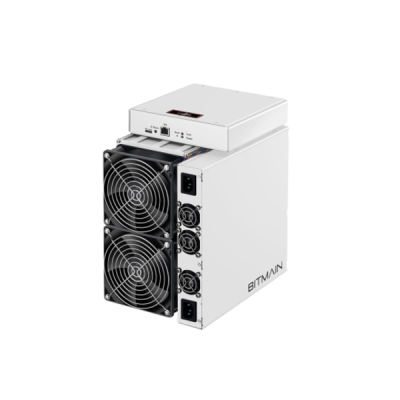
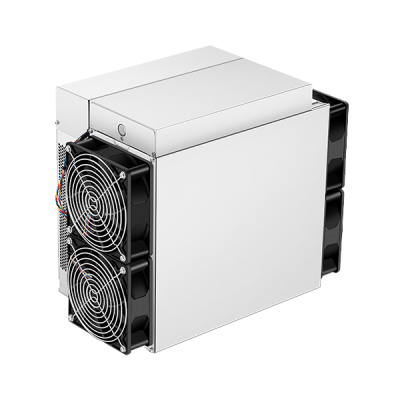
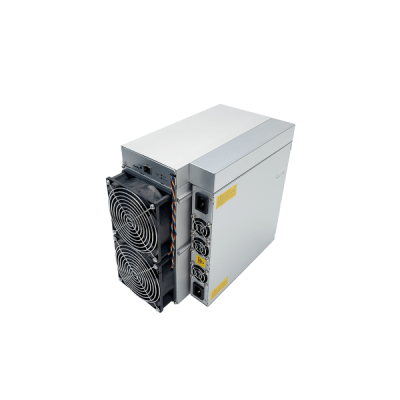
- Antminer S21 Pro (234 TH/s, 15 J/TH): At the electrically-heated-home Tier 1 rate ($0.0945/kWh), the S21 Pro is solidly profitable. At Tier 2 ($0.155/kWh), margins compress significantly — making the heating-season strategy essential.
- Antminer S21 (200 TH/s, 17.5 J/TH): Profitable at Tier 1 rates. At Tier 2, only marginally profitable without heating offset.
- Bitcoin Space Heaters: D-Central’s space heater editions are particularly well-suited to Saskatchewan. During the 7-month heating season, even older hardware generates free Bitcoin while heating your home.
The Electrically Heated Home Advantage
If your Saskatchewan home uses electric heat, you qualify for the expanded Tier 1 threshold (5,000 kWh/month) from November through April. This is a massive advantage for miners: you get the lower $0.0945/kWh rate on far more consumption. A single ASIC miner’s consumption falls entirely within this expanded threshold during heating season, keeping you at the cheaper rate.
Profitability Analysis at Saskatchewan Rates
| Miner | Hashrate | Power | Daily Cost @ $0.095/kWh (Tier 1) | Daily Cost @ $0.155/kWh (Tier 2) | Est. Daily Revenue (CAD)* |
|---|---|---|---|---|---|
| Bitaxe Gamma | 1.2 TH/s | 15W | $0.03 | $0.06 | $0.04 (solo) |
| NerdQAxe++ | 4.8 TH/s | 20W | $0.05 | $0.07 | $0.15 (solo) |
| Antminer S19k Pro | 120 TH/s | 2,760W | $6.29 | $10.27 | $7.80 |
| Antminer S21 | 200 TH/s | 3,500W | $7.98 | $13.02 | $13.00 |
| Antminer S21 Pro | 234 TH/s | 3,531W | $8.05 | $13.14 | $15.21 |
*Revenue estimates based on February 2026 network conditions. Use our Mining Profitability Calculator for current figures.
Key insight: At Tier 1 rates ($0.095/kWh), the S21 Pro clears $7.16/day and the S21 earns $5.02/day — healthy margins. At Tier 2 ($0.155/kWh), only the S21 Pro remains clearly profitable ($2.07/day), and the S21 essentially breaks even. This is why the electrically-heated-home Tier 1 expansion and the heating-season strategy are so critical in Saskatchewan.
The heating-season advantage: During October through April (7 months), if you’re using miners as space heaters, the effective electricity cost for mining is $0. At that effective rate, even an S19k Pro generates its full ~$7.80/day as pure profit. This seasonal strategy is the key to profitable Saskatchewan mining.
Getting Started: Your Saskatchewan Mining Checklist
- Confirm your rate class: Check with SaskPower whether you qualify for the electrically-heated-home threshold. If your home uses electric baseboard, electric furnace, or heat pump, you likely qualify for the expanded winter Tier 1.
- Plan for seasonal strategy: In Saskatchewan, mining profitability has two distinct seasons. During heating months, mine aggressively and capture all waste heat. During summer, scale back to only the most efficient hardware or continue if your rate supports it.
- Assess farm infrastructure: If you have access to agricultural buildings with heavy-duty power, you have a ready-made mining space with existing electrical capacity.
- Choose efficient hardware: At Saskatchewan rates, efficiency matters. Start with a Bitaxe for affordable solo mining, or an Antminer S21 Pro for maximum efficiency at local rates.
- Explore renewable integration: If you have wind or solar capacity, Bitcoin mining is an excellent way to monetize excess generation.
- Run your numbers: Use our Mining Profitability Calculator with your specific SaskPower rate to model your returns.
Frequently Asked Questions About Bitcoin Mining in Saskatchewan
Is Bitcoin mining legal in Saskatchewan?
Yes. Bitcoin mining is legal in Saskatchewan and throughout Canada. There are no federal or state/provincial laws prohibiting individuals from mining Bitcoin at home. However, you should check local zoning bylaws and noise ordinances, especially if running full-size ASIC miners in residential areas.
What is the best Bitcoin miner for Saskatchewan electricity rates?
The best miner depends on your specific electricity rate. At lower rates (under $0.08/kWh), high-hashrate miners like the Antminer S21 Pro or S21 XP offer the best absolute returns. At higher rates (above $0.10/kWh), ultra-efficient models like the S21 XP (13.5 J/TH) are essential for profitability. For home miners on standard residential power, open-source miners like the Bitaxe offer a low-power entry point. Use our Mining Profitability Calculator with your exact electricity rate.
Can I mine Bitcoin at home in Saskatchewan?
Absolutely. Home Bitcoin mining is popular across Saskatchewan. For apartments and noise-sensitive environments, the Bitaxe family of open-source solo miners runs silently on WiFi with minimal power draw. For dedicated setups, full ASIC miners can be installed in basements, garages, or purpose-built mining closets. Our How to Mine Bitcoin at Home guide covers everything you need to get started.
How much does it cost to mine Bitcoin in Saskatchewan?
Mining costs depend on your electricity rate, hardware efficiency, and Bitcoin’s network difficulty. Use our Mining Power Cost Calculator for an exact estimate based on your Saskatchewan electricity rate. As a general rule, you need electricity below $0.12/kWh for full ASIC mining to be profitable, though heat recapture can effectively lower your cost.
Can I use a Bitcoin miner as a heater in Saskatchewan?
Yes. Every watt consumed by a Bitcoin miner is converted to heat, making ASIC miners effective space heaters. D-Central’s Bitcoin Space Heaters are purpose-built for home heating while mining. During cold months, the heat offsets your heating bill, effectively reducing your electricity cost for mining to near zero.
Conclusion: Saskatchewan Rewards Strategic, Seasonal Mining
Saskatchewan may not have the headline-grabbing electricity rates of Quebec or Manitoba, but the province’s combination of affordable (especially during heating season) power, extreme cold climate, agricultural infrastructure, oil and gas synergies, low tax rates, and farm-friendly mining opportunities creates a compelling case. The key is playing to Saskatchewan’s strengths: maximize the 7-month heating season, qualify for the electrically-heated-home rate, and run efficient hardware.
For farmers and rural Saskatchewanians with existing heavy-duty electrical service and outbuildings, the barriers to entry are lower than almost anywhere else in Canada. And for urban miners in Saskatoon and Regina, the space heater strategy turns Saskatchewan’s brutal winters from a cost into a revenue opportunity.
Ready to mine in Saskatchewan? D-Central Technologies ships Canada-wide from Quebec — fast, domestic delivery to Saskatoon, Regina, Moose Jaw, and everywhere in between. Browse our catalog of efficient miners, Bitcoin space heaters, and open-source mining hardware, or visit our Bitcoin Mining in Canada hub for more province-by-province insights.