The traditional financial system extracts $74 billion per year from Americans in credit card processing fees alone. That number comes from a 2022 industry report, and it is not slowing down. Every swipe, every tap, every online checkout — a percentage vanishes into a labyrinth of intermediaries, processors, card networks, and issuing banks. Most people never see the toll because it is baked into the price of everything they buy.
But here is the part the legacy financial industry will never tell you: Bitcoin already solves this problem. Not “crypto.” Not a basket of 20,000 speculative tokens. Not a centralized exchange acting as a gatekeeper. Bitcoin — the only truly decentralized, censorship-resistant monetary network ever created — offers a path to financial sovereignty that no credit card company, payment processor, or government-controlled digital currency can match.
At D-Central Technologies, we do not talk about “crypto savings.” We talk about Bitcoin sovereignty. The difference is everything.
The $74 Billion Tax You Never Voted For
Credit card interchange fees in the United States hit an estimated $74 billion in 2022 — a figure that has only grown since. This is not a tax levied by any government. It is a toll collected by a cartel of payment networks (Visa, Mastercard, Amex) and the banks that issue their cards. Merchants pay between 1.5% and 3.5% on every transaction, and those costs are passed directly to consumers through higher prices.
Let that sink in: whether you use a credit card or not, you are paying credit card fees. The merchant raises prices to cover them, and everyone pays — including the person paying cash or Bitcoin.
| Payment Method | Typical Fee per Transaction | Settlement Time | Censorship Risk |
|---|---|---|---|
| Credit Card (Visa/MC) | 1.5% – 3.5% | 1 – 3 business days | High — chargebacks, freezes, account closures |
| PayPal / Stripe | 2.9% + $0.30 | 1 – 3 business days | High — accounts frozen without warning |
| Wire Transfer | $15 – $45 flat | 1 – 5 business days | Medium — requires bank approval |
| Bitcoin (on-chain) | $0.50 – $5.00 flat (varies with mempool) | ~10 minutes (1 confirmation) | None — permissionless, unstoppable |
| Bitcoin (Lightning Network) | < $0.01 (often fractions of a cent) | < 1 second | None — permissionless, instant |
The numbers do not lie. Bitcoin’s Lightning Network makes sub-cent transactions possible at the speed of light, and on-chain Bitcoin transactions settle with mathematical finality — no chargebacks, no reversals, no “pending” status for three business days while a bank decides whether to release your own money.
Why Bitcoin, Not “Crypto”
The original industry report that generated the $74 billion figure made a critical error: it conflated Bitcoin with the broader “crypto” ecosystem. Let us be direct about why that distinction matters.
Bitcoin is the only decentralized monetary network that has operated continuously since January 3, 2009, without a single hour of downtime. It has no CEO, no foundation controlling its protocol, no venture capital investors who can change the rules. The network is secured by over 800 EH/s of computational power — the largest deployment of energy for a single purpose in human history — with a mining difficulty exceeding 110 trillion.
Every other “cryptocurrency” makes trade-offs that Bitcoin refuses to make:
| Property | Bitcoin | Altcoins / “Crypto” |
|---|---|---|
| Fixed Supply | 21 million — hardcoded, immutable | Supply schedules change at the whim of founders |
| Decentralization | Tens of thousands of nodes, no single point of failure | Often controlled by a foundation or small group of validators |
| Censorship Resistance | No entity can block or reverse a confirmed transaction | Proof-of-Stake chains can be censored by validator cartels |
| Track Record | 17+ years, zero downtime, zero bailouts | Regular chain halts, exploits, and rug pulls |
| Energy Security | Proof-of-Work anchors the network to physical reality | Proof-of-Stake rewards existing wealth holders — digital feudalism |
When someone says “crypto could save you money,” ask: which one? The one backed by the laws of thermodynamics and the largest computer network ever built? Or the one where a team of insiders can change the monetary policy in a Discord call?
Bitcoin is not part of “crypto.” Bitcoin is Bitcoin.
Self-Custody: The Savings Nobody Talks About
The $74 billion in credit card fees is only the visible cost. The hidden costs of the traditional financial system run far deeper:
- Inflation: Central banks print money at will, eroding the purchasing power of every dollar in your bank account. The USD has lost over 25% of its purchasing power since 2020 alone.
- Account freezes: Banks and payment processors can freeze your funds without warning. Canadian truckers learned this lesson in 2022 when the government invoked emergency powers to freeze bank accounts of protesters and their supporters.
- Deplatforming: PayPal, Stripe, and traditional banks routinely close accounts of businesses and individuals based on political pressure — no due process required.
- Negative real yields: Your “high-yield” savings account pays 4-5% while real inflation eats away 6-8% of purchasing power. You are losing money by saving in fiat.
Bitcoin offers an exit from all of this. When you hold your own keys — true self-custody — no government, no bank, no corporation can seize, freeze, or inflate away your savings. Your wealth exists as a mathematical proof on the most secure network humanity has ever created.
This is not about “saving money on transaction fees.” This is about saving your money, period.
For a deeper dive into why self-custody is non-negotiable, read our guide on offline Bitcoin key storage — the sovereignty loop every miner must close.
Mining: The Ultimate Act of Financial Sovereignty
At D-Central Technologies, we believe the most sovereign way to acquire Bitcoin is to mine it yourself. When you mine Bitcoin, you are not buying it from an exchange that demands your identity documents. You are not trusting a third party to custody it. You are converting electricity into the hardest money ever created, directly into your own wallet.
In 2026, with the block reward at 3.125 BTC and the network hashrate exceeding 800 EH/s, home mining is more accessible than ever — especially with open-source hardware that puts institutional-grade technology in your hands:
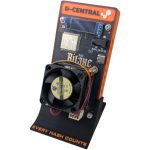
- Bitaxe: The open-source solo miner that gives every individual a shot at a full block reward. D-Central has been a pioneer in the Bitaxe ecosystem since day one — we created the original Bitaxe Mesh Stand and developed leading heatsink and accessory solutions for every variant.
- Bitcoin Space Heaters: Why waste electricity on a resistive heater when you can heat your home and stack sats simultaneously? Every watt becomes useful twice — heat for your home, hashrate for the network.
- Solo Mining: Every hash counts. A single Bitaxe running in your living room has the same mathematical chance per hash as any institutional operation. The lottery odds are real, and solo miners win blocks.
Mining is not just a way to acquire Bitcoin. It is a direct contribution to the security and decentralization of the network. Every hash you produce is a vote for a financial system that cannot be corrupted, censored, or inflated. Every miner running in a Canadian home is another node of resistance against the centralization of hash power.
The Real Cost of Trusting Third Parties
The original premise — that Americans could save $74 billion by switching payment methods — undersells the real issue by an order of magnitude. The true cost of the traditional financial system is not just the fees. It is the systemic risk of trusting third parties with your financial life.
Consider:
- FTX (2022): Billions in customer funds vanished because people trusted a centralized exchange instead of holding their own keys.
- Silicon Valley Bank (2023): A bank run triggered by interest rate risk — depositors lost access to their own money for days.
- Canadian Emergency Act (2022): Bank accounts frozen for political dissent, no court order required.
- Cyprus bail-in (2013): The government directly seized a percentage of bank deposits to fund a bailout.
Every one of these events shares a common thread: people trusted third parties with their money, and those third parties failed them. Bitcoin with self-custody eliminates this entire category of risk. Not your keys, not your coins is not just a slogan — it is an engineering principle.
How to Start Reclaiming Your Financial Sovereignty
You do not need to wait for institutions to adopt Bitcoin. You do not need permission from a bank. Here is how to start today:
- Set up self-custody: Get a hardware wallet. Move your Bitcoin off exchanges. Learn about private keys and what they mean for your sovereignty.
- Start mining at home: A Bitaxe solo miner costs less than a decent dinner out and runs on 15-25 watts — less than a light bulb. It heats your desk, contributes to network decentralization, and gives you a lottery ticket for a full 3.125 BTC block reward every ten minutes.
- Heat your home with hashrate: If you are paying for electric heating anyway, a Bitcoin Space Heater converts 100% of its electricity into both heat and hashrate. Zero waste. The economics are compelling: read the full 5-year cost comparison.
- Run a full node: Verify your own transactions. Trust no one. A Raspberry Pi and an old hard drive is all you need to become a fully sovereign participant in the Bitcoin network.
- Pay with Bitcoin: Use the Lightning Network for instant, near-free transactions. Spend and replace. Every sat spent on Lightning is a vote against the $74 billion fee extraction machine.
The Canadian Advantage
For Canadians, the case for Bitcoin sovereignty is even stronger. We have some of the cheapest electricity on the continent — especially in Quebec, where hydroelectric power is abundant and clean. The cold climate means your miners run cooler and more efficiently, and the “waste” heat is useful for 8+ months of the year.
D-Central operates from Laval, Quebec, and we have seen firsthand how Canadian energy and climate create ideal conditions for home mining. Whether you are running a single Bitaxe on your desk or a fleet of Antminers heating your garage, the math works in your favor here.
We are not just selling hardware. We are building the infrastructure for a decentralized future — one Canadian home miner at a time. We are the North, and every hash counts.
Frequently Asked Questions
How much could I actually save by using Bitcoin instead of credit cards?
The average American household pays an estimated $1,000+ per year in hidden credit card fees embedded in retail prices. By transacting in Bitcoin — especially via the Lightning Network where fees are fractions of a cent — you eliminate the intermediary extraction entirely. But the real savings come from holding Bitcoin as a store of value: unlike fiat currency, Bitcoin has a fixed supply of 21 million coins and cannot be inflated away by central bank policy.
Is Bitcoin too volatile to use as a payment method?
Bitcoin’s volatility is a feature of its price discovery phase, not a flaw in its protocol. The network has never gone down, never been hacked, and never failed to process a valid transaction. For payments, the Lightning Network enables instant settlement — the merchant receives value in seconds. For savings, Bitcoin’s long-term trajectory reflects its superior monetary properties: fixed supply, decentralization, and censorship resistance. Zoom out.
What is the Lightning Network and how does it reduce fees?
The Lightning Network is a second-layer protocol built on top of Bitcoin that enables instant, near-free transactions. Instead of recording every transaction on the main blockchain, Lightning opens payment channels between parties and settles the net result on-chain. This allows millions of transactions per second at costs well below one cent — making Bitcoin competitive with or superior to any payment network on Earth for everyday transactions.
Can I really mine Bitcoin at home in 2026?
Absolutely. Open-source miners like the Bitaxe make home mining accessible to anyone with a power outlet and a Wi-Fi connection. A Bitaxe runs on 15-25 watts, costs under $100, and gives you a real shot at a full 3.125 BTC block reward through solo mining. For larger operations, Bitcoin Space Heaters let you heat your home while mining — converting 100% of electricity into both heat and hashrate. D-Central has been pioneering accessible mining hardware since 2016.
Why does D-Central say “Bitcoin” instead of “crypto”?
Because they are fundamentally different things. Bitcoin is the only truly decentralized, permissionless, censorship-resistant monetary network with a fixed supply and 17+ years of unbroken operation. Most “cryptocurrencies” are centrally controlled, have mutable monetary policies, and exist primarily to enrich their founders. Lumping Bitcoin with altcoins is like comparing gold with Chuck E. Cheese tokens. We are Bitcoin maximalists because the technology demands it.
What does “self-custody” mean and why does it matter?
Self-custody means holding your own private keys — the cryptographic proof that you control your Bitcoin. When your Bitcoin sits on an exchange, the exchange holds the keys, and you hold a promise. Exchanges can be hacked (Mt. Gox), commit fraud (FTX), or freeze your account on government orders. With self-custody, your Bitcoin is mathematically secured and accessible only to you. Not your keys, not your coins.
How does Bitcoin mining contribute to decentralization?
Every miner running in a home adds hashrate that is geographically distributed and independently operated. This makes the Bitcoin network more resistant to censorship, government seizure, and coordinated attacks. When hash power is concentrated in large industrial facilities, it creates single points of failure. Home mining — even at small scale — is a direct act of strengthening the network that secures everyone’s Bitcoin.