In July 2024, Bitfarms Ltd. — a Quebec-born, publicly traded Bitcoin miner — appointed Ben Gagnon as CEO amid a hostile corporate battle with Riot Platforms. At the time, we covered the news as a significant leadership change in the Canadian mining landscape. But the story didn’t end there. It got worse. Much worse — at least for anyone who believes Bitcoin mining should remain decentralized.
By February 2026, Gagnon declared that Bitfarms is “no longer a Bitcoin company,” rebranding the operation as Keel Infrastructure and pivoting entirely to AI/HPC data centers. The company moved its legal base from Canada to the United States, exited Latin America, and abandoned the very mission that built it.
This isn’t just corporate news. This is a case study in why decentralized, sovereign mining matters — and why the “pleb miner” ethos that D-Central Technologies was built on is more critical than ever.
The Timeline: From Bitcoin Miner to AI Pivot
Let’s trace the arc. Because the speed at which a company can abandon its stated mission tells you everything about whether that mission was real in the first place.
| Date | Event |
|---|---|
| 2017 | Bitfarms founded in Quebec. Hydro-powered Bitcoin mining. Canadian roots. |
| Apr 2024 | Riot Platforms launches hostile takeover bid at $2.30/share (~$950M USD). Bitfarms rejects it. |
| Jul 2024 | Ben Gagnon appointed CEO. Riot increases stake to 19.9%. Bitfarms adopts poison pill defense. |
| Sep 2024 | Settlement reached. Board restructured. Riot agrees to standstill through 2026 annual meeting. |
| Jan 2025 | Bitfarms reaches 15.2 EH/s hashrate. Energizes new Quebec site in Baie-Comeau. |
| Mid 2025 | Riot dumps ~70% of its Bitfarms shares at ~$1.11/share (acquired at ~$2.30). $85M+ in losses. |
| Jul 2025 | Bitfarms launches share buyback program. Signals pivot to HPC/AI infrastructure. |
| Jan 2026 | Completes full exit from Latin America. Sells Paraguay operations for up to $30M. |
| Feb 2026 | “We are no longer a Bitcoin company.” Rebrands as Keel Infrastructure. Moves legal base to the U.S. |
Read that last row again. A company born in Quebec’s hydroelectric heartland — a company that built its brand and investor base on the promise of clean, Canadian Bitcoin mining — walked away from Bitcoin entirely. Not because mining stopped working. Because Wall Street decided AI is the hotter trade.
The Riot Takeover Saga: A Cautionary Tale
The Riot Platforms saga deserves scrutiny because it exposes how corporate miners treat hashrate as a financial instrument rather than a contribution to Bitcoin’s security model.
Riot’s playbook was textbook shareholder activism. Accumulate a large stake. Launch a public campaign (“ABetterBitfarms”). Propose new directors. Threaten to reconstitute the board. The goal wasn’t to improve Bitcoin mining — it was to acquire undervalued energy assets.
Bitfarms fought back with a poison pill defense, an independent board appointment, and ultimately a settlement in September 2024 that included board changes and standstill provisions through the 2026 annual meeting.
But here’s the punchline: by mid-2025, Riot had dumped over 70% of its accumulated Bitfarms shares — roughly 64.4 million shares sold at an average price of $1.11, compared to the $2.30 they offered in the takeover bid. That’s a fire sale. Riot’s Bitfarms position went from 19.9% to under 5% by August 2025. The entire hostile takeover, the proxy fight, the public campaign — all of it amounted to Riot losing tens of millions of dollars and Bitfarms losing its identity as a Bitcoin company.
Nobody won. Especially not Bitcoin.
Why This Matters for Decentralization
When we talk about decentralization at D-Central, we mean it at every layer. Not just the protocol. The actual physical infrastructure that secures the Bitcoin network.
Here’s what happens when publicly traded miners chase AI pivots:
- Hashrate concentration increases. Fewer entities controlling more of the network’s computational power means more single points of failure, more regulatory attack surfaces, and less censorship resistance.
- Energy infrastructure gets redirected. The hydro-powered facilities that Bitfarms built in Quebec — facilities that were securing Bitcoin blocks — now get repurposed for AI training runs. That’s hash power subtracted from the network.
- The “Bitcoin mining” brand gets diluted. When companies like Bitfarms use Bitcoin mining to build investor bases and then pivot to AI, it poisons the well for legitimate miners and makes regulators view the industry as opportunistic.
- Canadian mining capacity shrinks. Bitfarms moving its legal base to the United States is a loss for the Canadian mining ecosystem — fewer Canadian-domiciled miners means less political and economic incentive for Canadian jurisdictions to maintain mining-friendly policies.
This is precisely why the home mining movement exists. You can’t pivot a Bitaxe to AI. You can’t hostile-takeover someone’s basement mining operation. A solo miner running in your spare room, contributing hashrate to the network while heating your home, is a node of decentralization that no corporate board can vote to shut down.
The Canadian Mining Landscape in 2026
Canada remains one of the best jurisdictions on Earth for Bitcoin mining. The fundamentals haven’t changed — abundant hydroelectric power, cold climate for natural cooling, stable rule of law, and competitive electricity rates. What’s changed is the composition of who’s mining here.
| Factor | Canada | Impact on Home Mining |
|---|---|---|
| Energy Sources | 60%+ hydroelectric nationally, higher in QC/BC/MB | Low cost, clean energy base for mining operations |
| Climate | 6+ months of sub-zero temperatures in most provinces | Natural cooling + heating offset makes dual-purpose mining ideal |
| Electricity Rates | Quebec: ~$0.07/kWh residential | Among the lowest in North America for residential power |
| Regulation | Generally mining-friendly, provincial variation | No federal ban threats, but less corporate mining advocacy now |
| Corporate Miners | Declining — Bitfarms pivoting, others consolidating | Opportunity gap for independent and home miners to fill |
With large corporate miners like Bitfarms leaving the Bitcoin ecosystem, there is a growing opportunity — and responsibility — for independent miners to step up. Every hash matters. Every solo miner running in a Canadian basement, every Bitcoin Space Heater warming a Quebec home while securing the network, contributes to a more resilient and decentralized Bitcoin.
The Network in 2026: By the Numbers
Despite corporate defections, the Bitcoin network is stronger than ever. Here’s the current state of play:
| Metric | Value (2026) |
|---|---|
| Block Reward | 3.125 BTC |
| Network Hashrate | 800+ EH/s |
| Mining Difficulty | 110T+ |
| Next Halving | ~2028 (block 1,050,000) |
At 800+ EH/s of network hashrate and difficulty above 110 trillion, every terahash pointed at the Bitcoin network is a vote for decentralization. When corporate miners redirect their hardware to AI, those terahashes need to come from somewhere. That “somewhere” is us — the independent miners, the home miners, the Bitcoin Mining Hackers.
What You Can Do: Mine With Conviction
The lesson from the Bitfarms saga is clear: don’t outsource your conviction to a corporation. If you believe in Bitcoin’s decentralization, put hashrate where your mouth is. Here’s how:
Solo Mining: Every Hash Counts
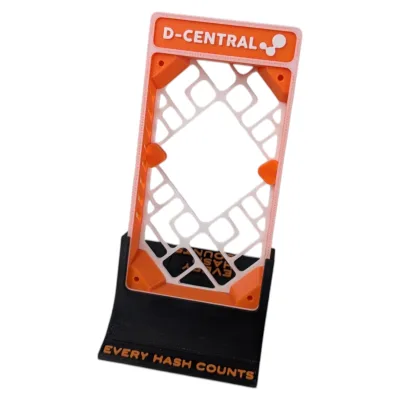
Open-source miners like the Bitaxe let you mine directly — no pool, no middleman, no corporate board that can vote to pivot your hashrate to AI training. D-Central Technologies is a pioneer in the Bitaxe ecosystem, having created the original Bitaxe Mesh Stand and developed industry-leading heatsink solutions. We stock every variant — Supra, Ultra, Hex, Gamma, GT — along with the full Nerd/Open-Source lineup (NerdAxe, NerdNOS, NerdQAxe, Nerdminer).
Is solo mining going to make you rich? Probably not. But every hash you contribute strengthens the network. And if you do hit a block — that’s 3.125 BTC. Pure, sovereign, lottery-style mining at its finest.
Dual-Purpose Mining: Heat Your Home, Secure the Network
Canadian winters are long, and heating bills are real. Bitcoin Space Heaters turn that cost into an opportunity. Run an ASIC miner as a space heater — 100% of the electricity consumed by a miner is converted to heat. You’re not paying to mine and paying to heat. You’re paying once and getting both.
When you factor in the heating offset, the effective electricity cost of mining drops significantly. For Canadian homes where you’re already spending thousands on heating during winter months, dual-purpose mining is one of the most practical entry points into the ecosystem.
ASIC Repair: Keep Hardware Running, Not in Landfills
Corporate miners treat hardware as disposable — upgrade cycles measured in months, perfectly functional machines scrapped because a newer model offers 5% better efficiency. At D-Central, we take the opposite approach. Our ASIC Repair service has fixed thousands of miners since 2016, extending the productive life of hardware that institutional operations would have trashed.
This is the Mining Hacker philosophy. You don’t throw away a perfectly good machine because a spreadsheet says so. You diagnose it, repair it, optimize it, and put it back to work securing the network.
Hosting and Consulting: Scale on Your Terms
For miners who want to scale beyond home operations, D-Central offers Bitcoin mining hosting in Quebec — hydroelectric-powered facilities in Montreal. And for those planning larger deployments, our mining consulting service provides the technical expertise to build efficient, profitable operations without the overhead of a corporate bureaucracy.
The Bigger Picture: Corporate Miners Were Never the Point
Satoshi didn’t design Bitcoin for publicly traded companies to mine it with shareholder value as the primary objective. The entire security model of proof-of-work is predicated on distributed computational power — not concentrated in the hands of entities that can be acquired, redirected, or shut down by board vote.
Bitfarms’ story is instructive, not because of the specific corporate drama, but because it illustrates a structural vulnerability. Any mining operation that answers to shareholders, quarterly earnings calls, and institutional investors is one bad quarter away from pivoting to whatever technology Wall Street finds exciting this cycle. Today it’s AI. Tomorrow it could be quantum computing, or carbon credits, or whatever narrative generates the best multiple.
The miners who can’t pivot — the ones running a Bitaxe on their desk, an S19 in their garage, a Bitcoin Space Heater in their living room — those are the bedrock of the network’s decentralization. They mine because they believe in Bitcoin. Full stop. No investor relations department needed.
D-Central: We Are the North
While Bitfarms packs up and moves south to chase AI dollars, D-Central Technologies stays exactly where we’ve been since 2016 — in Canada, serving Canadian and global home miners, building tools and solutions for the people who actually use Bitcoin as technology, not as a line item on an earnings report.
We are the Bitcoin Mining Hackers. We take institutional-grade technology and make it accessible for everyone. We repair what others discard. We build what the community needs. And we don’t pivot.
Browse the D-Central shop for open-source miners, ASICs, space heaters, parts, and accessories. Every purchase supports decentralization at the most fundamental level — the hash.
Frequently Asked Questions
What happened between Bitfarms and Riot Platforms?
In April 2024, Riot Platforms launched a hostile takeover bid for Bitfarms at $2.30/share (~$950M USD), which Bitfarms rejected. Riot escalated by increasing its stake to 19.9% and launching the “ABetterBitfarms” campaign to reconstitute Bitfarms’ board. In September 2024, the companies reached a settlement with board changes and standstill provisions. By mid-2025, Riot had sold over 70% of its Bitfarms shares at roughly $1.11/share — significantly below its acquisition cost — effectively abandoning the takeover at a steep loss.
Did Bitfarms abandon Bitcoin mining?
Yes. In February 2026, Bitfarms CEO Ben Gagnon announced that Bitfarms is “no longer a Bitcoin company.” The company rebranded as Keel Infrastructure, moved its legal base from Canada to the United States, and pivoted entirely to building HPC/AI compute center infrastructure. It also completed a full exit from Latin American operations.
What does Bitfarms’ pivot mean for Bitcoin mining decentralization?
When large publicly traded miners abandon Bitcoin for AI, it removes significant hash power from the network and concentrates the remaining hashrate among fewer entities. However, this also creates an opportunity for independent and home miners to fill the gap. Every hash contributed by a solo miner or home operation strengthens Bitcoin’s decentralization and censorship resistance.
Is home Bitcoin mining still profitable in 2026?
Profitability depends on your electricity costs and mining approach. With a 3.125 BTC block reward, network hashrate above 800 EH/s, and difficulty above 110T, Canadian home miners benefit from competitive residential electricity rates (Quebec ~$0.07/kWh). Dual-purpose mining with Bitcoin Space Heaters offsets heating costs, significantly improving the economics. Solo mining with devices like the Bitaxe offers lottery-style rewards — every hash counts.
How can I start mining Bitcoin at home in Canada?
Start with a solo miner like the Bitaxe for low-power lottery mining, or a Bitcoin Space Heater for dual-purpose heating and mining. D-Central Technologies offers the full range of open-source miners, ASICs, accessories, and expert mining consulting to help Canadians set up home mining operations. Visit our shop to browse all available hardware.
What is the Bitaxe and why does it matter for decentralization?
The Bitaxe is an open-source solo Bitcoin miner that lets individuals mine directly without relying on mining pools or corporate infrastructure. D-Central Technologies is a pioneer manufacturer in the Bitaxe ecosystem, having created the original Bitaxe Mesh Stand and developed industry-leading heatsink solutions. We stock every variant — Supra, Ultra, Hex, Gamma, GT — plus the full Nerd/Open-Source lineup.