Your Bitcoin is only as secure as the weakest link in your custody chain. That is not a scare tactic — it is a fundamental truth that every home miner, every solo stacker, and every sovereign individual needs to internalize before a single satoshi leaves a mining pool payout address. In 2026, the threat landscape has evolved far beyond the crude exchange hacks of a decade ago. State-level surveillance, sophisticated social engineering, SIM-swap attacks, supply chain compromises on hardware wallets, and AI-powered phishing campaigns are all live threats right now.
At D-Central Technologies, we have been building, repairing, and deploying Bitcoin mining hardware since 2016. We are Bitcoin Mining Hackers — not in the malicious sense, but in the original meaning: people who take systems apart, understand them deeply, and rebuild them better. That hacker ethos extends to how we think about security. You should not trust any single vendor, any single device, or any single protocol with the entirety of your Bitcoin stack. Verify everything. Trust nothing by default.
This guide covers the full spectrum of Bitcoin self-custody security in 2026 — from the fundamentals of key management to advanced multisig setups, operational security for miners, and the specific threats facing home mining operations. Whether you are running a Bitaxe on your desk for solo mining or operating a fleet of ASICs heating your home, these principles apply to you.
Why Bitcoin Security Is Different
Let us be clear about something upfront: this is a Bitcoin security guide, not a “crypto” security guide. The distinction matters. Bitcoin operates on a fundamentally different security model than the altcoin ecosystem. There are no admin keys that can freeze your funds, no governance tokens that can vote to reverse transactions, and no foundation that can push a hard fork to bail out a hack victim. Bitcoin’s security properties — immutability, censorship resistance, and trustless verification — are features, not limitations.
This also means the responsibility is entirely yours. When you hold your own keys, there is no customer support hotline. There is no “forgot password” flow. If your seed phrase is compromised, your Bitcoin is gone. If your backup is destroyed in a fire, your Bitcoin is gone. This is the price of sovereignty, and it is worth paying — but only if you take it seriously.
The Threat Model Has Shifted
In the early days, most Bitcoin losses came from exchange hacks — Mt. Gox (2014), Bitfinex (2016), and similar centralized points of failure. Those risks have not disappeared — exchanges still get compromised — but the attack surface has expanded dramatically:
- Supply chain attacks on hardware wallets — Tampered devices intercepted in shipping, modified firmware that leaks seed phrases, or counterfeit units sold through unofficial channels.
- SIM-swap attacks — Attackers bribe or social-engineer telecom employees to port your phone number, then bypass SMS-based two-factor authentication on exchanges and email accounts.
- AI-powered phishing — Large language models generate highly convincing phishing emails, fake customer support chats, and even deepfake voice calls impersonating known contacts.
- Physical attacks ($5 wrench attacks) — As Bitcoin’s value has increased, physical coercion — home invasions, kidnapping, extortion — has become a real threat vector, particularly for people who publicly disclose their holdings.
- Clipboard malware — Malware that silently replaces Bitcoin addresses in your clipboard with an attacker’s address when you copy-paste during a transaction.
- Dusting attacks and chain analysis — Surveillance firms sending tiny amounts to your addresses to cluster your UTXOs and de-anonymize your holdings.
The Foundation: Key Management Done Right
Everything in Bitcoin security starts with key management. Your private keys control your Bitcoin. Period. Here is how to handle them properly in 2026.
Hardware Wallets: Your First Line of Defense
A hardware wallet is a dedicated device that stores your private keys offline and signs transactions without ever exposing the keys to an internet-connected computer. This is the bare minimum for anyone holding a meaningful amount of Bitcoin. In 2026, the leading options include:
- Coldcard (Mk4 / Q1) — Bitcoin-only, air-gapped via microSD, no USB required for signing, open-source firmware, Canadian-made. We are not recommending it right now: Coinkite disclosed a seed-generation flaw on 2026-07-30 that affects seeds created on the device, and the firmware patch does not repair a seed that already exists. See our advisory and Coinkite’s.
- Trezor (Model T / Safe 5) — Open-source hardware and firmware. Supports Shamir backup (splitting your seed across multiple shares).
- Blockstream Jade — Fully open-source, supports air-gapped QR code signing, no secure element (uses a blind oracle model instead). Affordable entry point.
- SeedSigner — DIY hardware wallet built from a Raspberry Pi Zero, camera, and screen. Fully air-gapped, stateless (no storage), and open-source. The ultimate hacker’s wallet.
Critical rules for hardware wallets:
- Buy directly from the manufacturer. Never from Amazon, eBay, or third-party resellers. A tampered device can steal everything.
- Verify the firmware on first setup. Check cryptographic signatures against the manufacturer’s published hashes.
- Use a passphrase (the “25th word”) as an additional layer of protection. This creates a hidden wallet that cannot be accessed even if someone obtains your 24-word seed.
- Test your backup before depositing significant funds. Send a small amount, wipe the device, restore from seed, and verify you can access the funds.
Seed Phrase Backup: Metal, Not Paper
Your 12 or 24-word seed phrase is the master key to your Bitcoin. Lose it, and you lose everything. Let it be seen by the wrong eyes, and you lose everything. Here is the hierarchy of backup methods:
- Steel/titanium plates — Stamped or engraved metal plates survive fire, flood, and corrosion. Products like Seedplate, Cryptosteel, or Blockplate are purpose-built. This should be your primary backup.
- Paper backup — Acceptable only as a temporary measure. Paper is vulnerable to fire, water, and degradation. If you use paper, laminate it and store it in a fireproof safe.
- Digital backups — NEVER store your seed phrase on a computer, phone, cloud drive, email, or screenshot. Not encrypted, not in a password manager, not anywhere digital. The attack surface is too large.
Storage location matters. Keep your metal backup in a location you physically control. A home safe is good. A safety deposit box adds geographic distribution but introduces third-party access risk. For larger holdings, split your backup across multiple locations using Shamir’s Secret Sharing or a multisig setup.
Multisig: Eliminating Single Points of Failure
For holdings above a certain threshold — and that threshold is different for everyone — a single-signature wallet is not enough. Multisig (multi-signature) requires multiple independent keys to authorize a transaction. A common setup is 2-of-3: you need any 2 of 3 keys to move funds, and each key is held on a different hardware wallet stored in a different location.
Why this matters:
- If one key is compromised, your funds are still safe (the attacker needs at least 2).
- If one key is lost or destroyed, you can still access your funds with the remaining 2.
- No single point of failure — not your house, not one device, not one person.
Tools like Sparrow Wallet, Nunchuk, and Liana make multisig accessible without needing to be a developer. Collaborative custody services like Unchained Capital provide a hybrid model where they hold one key, you hold two, and they can assist with recovery but cannot unilaterally move your funds.
Operational Security for Bitcoin Miners
Miners face unique security challenges that go beyond standard self-custody. You are running always-on hardware that communicates with pools, receives payouts, and often sits on your home network. Here is how to lock it down.
Mining Pool Payout Security
Your mining pool payouts go to a Bitcoin address you configure. This is the most critical security setting on your miner.
- Use a hardware wallet address for payouts — Never use an exchange deposit address or a hot wallet address for pool payouts. Generate a receive address from your hardware wallet and configure that in your pool settings.
- Verify the address on the hardware wallet screen — When configuring your payout address, verify every character on the hardware wallet’s trusted display, not on your computer screen (which could be compromised by clipboard malware).
- Use a fresh address periodically — For privacy, rotate your payout address periodically. Reusing addresses makes chain analysis trivial.
- Enable pool account security — Use a strong unique password and TOTP-based 2FA (not SMS) on your mining pool account. If an attacker gains access, they can change your payout address.
Network Isolation for Mining Hardware
Your ASIC miners and open-source miners are network devices. They run embedded Linux, connect to your local network, and communicate with pool servers over the internet. Treat them like any other IoT device — which means do not trust them.
- VLAN or separate network — Put your miners on a separate VLAN or a dedicated network segment, isolated from your personal devices (computers, phones, NAS). Most modern routers support guest networks or VLANs.
- Change default credentials immediately — Every ASIC miner ships with default admin credentials (root/root on most Bitmain devices). Change these on first boot. Use unique passwords for each miner.
- Disable unnecessary services — If your miner’s web interface exposes SSH, Telnet, or other services you do not use, disable them. Reduce the attack surface.
- Firmware verification — Only flash firmware from official sources. Malicious firmware can redirect hashrate to an attacker’s pool, steal payout addresses, or even brick the device. D-Central’s ASIC repair service can verify and reflash firmware if you suspect tampering.
- Monitor outbound connections — Use your router’s traffic monitoring to verify that your miners are only connecting to expected pool endpoints. Unexpected outbound connections could indicate compromised firmware.
Physical Security for Home Mining Operations
Home miners have a physical presence that cloud-hosted miners do not. An S19 or a rack of Bitaxes is visible, audible, and generates a measurable heat and power signature.
- Do not advertise your mining operation — Keep your setup off social media. Do not post photos with identifiable location details. Do not tell casual acquaintances you “mine Bitcoin at home.”
- Secure the physical space — If your miners are in a garage, basement, or dedicated room, consider a lock on the door. An intruder with physical access to your miner can change pool settings or extract configuration data.
- Power signature awareness — A home drawing significantly more power than its neighbors is detectable. This is less about security and more about not attracting unwanted attention from utilities or curious neighbors. Bitcoin Space Heaters from D-Central are an elegant solution here — the power consumption looks like a normal space heater because that is literally what it is.
Digital Hygiene: The Unsexy Stuff That Saves You
The most common Bitcoin losses in 2026 do not come from sophisticated zero-day exploits. They come from basic operational security failures. Here is the checklist.
Two-Factor Authentication (2FA)
Enable TOTP-based 2FA (apps like Aegis, Authy, or a hardware key like YubiKey) on every account that touches your Bitcoin: exchange accounts, mining pool accounts, email, and password managers. Never use SMS-based 2FA. SIM-swap attacks are trivially easy for determined attackers.
Password Management
Use a dedicated password manager (Bitwarden, KeePassXC) with a strong master password. Every account gets a unique, randomly generated password. Reusing passwords across services is the single most common way accounts get compromised — when one service gets breached, attackers try those credentials everywhere else.
Email Security
Your email is the skeleton key to your digital life. If an attacker controls your email, they can reset passwords on nearly everything. Secure it accordingly:
- Use a privacy-focused provider (ProtonMail, Tutanota) for your Bitcoin-related accounts.
- Enable 2FA with a hardware key if possible.
- Use a dedicated email address for Bitcoin-related services — separate from your personal and work email.
- Never use your mining/Bitcoin email for social media or public registrations.
Device Security
- Keep your operating system and all software updated. Unpatched vulnerabilities are the bread and butter of attackers.
- Use a reputable open-source operating system if possible. For maximum security, use a dedicated machine (or a Linux live USB like Tails) for Bitcoin transactions.
- Full disk encryption on every device that has ever touched your Bitcoin workflow.
- Disable Bluetooth and NFC when not actively in use.
Privacy as Security
Privacy and security are not the same thing, but in Bitcoin they are deeply intertwined. The less information an attacker has about your holdings, your addresses, and your identity, the harder it is to target you.
- Run your own node — When you use someone else’s node to broadcast transactions or check balances, you leak your addresses and IP to that third party. Running Bitcoin Core on your own hardware is the gold standard. Pair it with your hardware wallet via Sparrow or Electrum Personal Server.
- Use Tor or a VPN — Route your Bitcoin traffic through Tor to prevent your ISP from seeing which nodes you connect to.
- Avoid address reuse — Every transaction should use a fresh receive address. HD wallets (which all modern wallets are) generate these automatically.
- CoinJoin and PayJoin — For advanced users, collaborative transaction techniques like CoinJoin (via Wasabi Wallet or JoinMarket) break the transaction graph and make chain analysis significantly harder.
The Solo Miner’s Security Advantage
Here is something that does not get discussed enough: solo mining with devices like the Bitaxe actually has a security advantage over buying Bitcoin on an exchange. When you mine Bitcoin directly to your own hardware wallet, there is no exchange account to hack, no KYC data to leak, no counterparty holding your funds, and no withdrawal process that can be frozen. The Bitcoin goes straight from the coinbase transaction to your key. That is the purest form of acquisition — and the most sovereign.
Every hash counts. And every hash that produces a payout directly to your cold storage is a payout that never touched a third party’s systems.
What To Do If You Suspect a Compromise
If you believe any part of your security has been compromised — a leaked seed phrase, a suspicious login, a lost device — act immediately:
- Move funds first, investigate second. Generate a new wallet on a known-clean device. Transfer all funds from the potentially compromised wallet to the new one. Speed matters.
- Rotate all credentials. Change passwords on every related account. Revoke API keys. Regenerate 2FA secrets.
- Audit the damage. Check transaction history for unauthorized movements. Review login logs on exchanges and pools.
- Isolate compromised devices. Disconnect them from the network. Do not wipe them yet — they may contain forensic evidence.
- Learn from it. Every security incident is a lesson. Document what happened and harden your setup against the same vector.
D-Central’s Role in Your Security Stack
Security is not just about wallets and passwords — it extends to the hardware you run. Compromised mining firmware, tampered ASICs purchased from unknown sellers, and misconfigured network setups are all real attack vectors. D-Central Technologies addresses these directly:
- ASIC Repair and Verification — Our repair lab can inspect, reflash, and verify the integrity of mining hardware. If you bought a used miner and want to ensure it is running clean, stock firmware with no backdoors, we handle that.
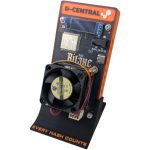
- Open-Source Mining Hardware — Devices like the Bitaxe run open-source firmware that can be audited by anyone. No black boxes, no proprietary code hiding potential vulnerabilities. This is security through transparency.
- Bitcoin Space Heaters — Our dual-purpose mining units are built from verified, tested hardware with clean firmware. Every unit leaves our shop in a known-good state.
- Technical Support and Consulting — Our team can advise on network configuration, firmware verification, and operational security for your home mining setup.
FAQ
What is the single most important thing I can do to secure my Bitcoin?
Use a hardware wallet and store your seed phrase backup on a metal plate in a secure physical location. This single step eliminates the vast majority of remote attack vectors. Never store your seed digitally, and never leave significant funds on an exchange.
Is a multisig wallet necessary for home miners?
It depends on the value of your holdings. For smaller amounts, a single-signature hardware wallet with a passphrase is sufficient. As your stack grows — and there is no fixed threshold, it is about your personal risk tolerance — multisig (such as a 2-of-3 setup) eliminates single points of failure and is strongly recommended.
Can mining firmware be compromised to steal my Bitcoin?
Yes. Malicious firmware can redirect your hashrate to an attacker’s pool or change your payout address without your knowledge. This is why you should only source firmware from official manufacturers, verify checksums, and consider open-source mining hardware like the Bitaxe where the firmware is publicly auditable.
Should I use a VPN when mining Bitcoin at home?
A VPN is not strictly necessary for the mining operation itself (pool connections are typically authenticated), but it can prevent your ISP from seeing that you are running mining traffic. For general Bitcoin transactions and node operation, routing through Tor or a trusted VPN adds meaningful privacy.
Why should I run my own Bitcoin node?
Running your own node means you verify every transaction yourself without trusting a third party. It also prevents you from leaking your addresses and transaction patterns to someone else’s server. Pair your hardware wallet with your own node via Sparrow Wallet for maximum sovereignty.
How does solo mining improve my security compared to buying on an exchange?
Solo mining with a device like the Bitaxe pays out directly to your own wallet address. There is no exchange account to hack, no KYC data to be leaked, and no third party that can freeze your withdrawal. The Bitcoin goes straight from the block reward to your keys — the most sovereign form of acquisition possible.
What should I do if I think my seed phrase has been exposed?
Act immediately. Generate a new wallet on a known-clean device and hardware wallet. Transfer all funds from the compromised wallet to the new one. Then rotate all associated passwords, regenerate 2FA secrets, and investigate how the exposure occurred so you can prevent it in the future.
How can D-Central help verify that my mining hardware is secure?
D-Central’s ASIC repair lab can inspect used or suspect hardware, verify firmware integrity, reflash to stock firmware, and confirm that no unauthorized modifications exist. If you purchased a miner from an unknown source and want peace of mind, our team can audit the device and return it in a verified, known-good state.