
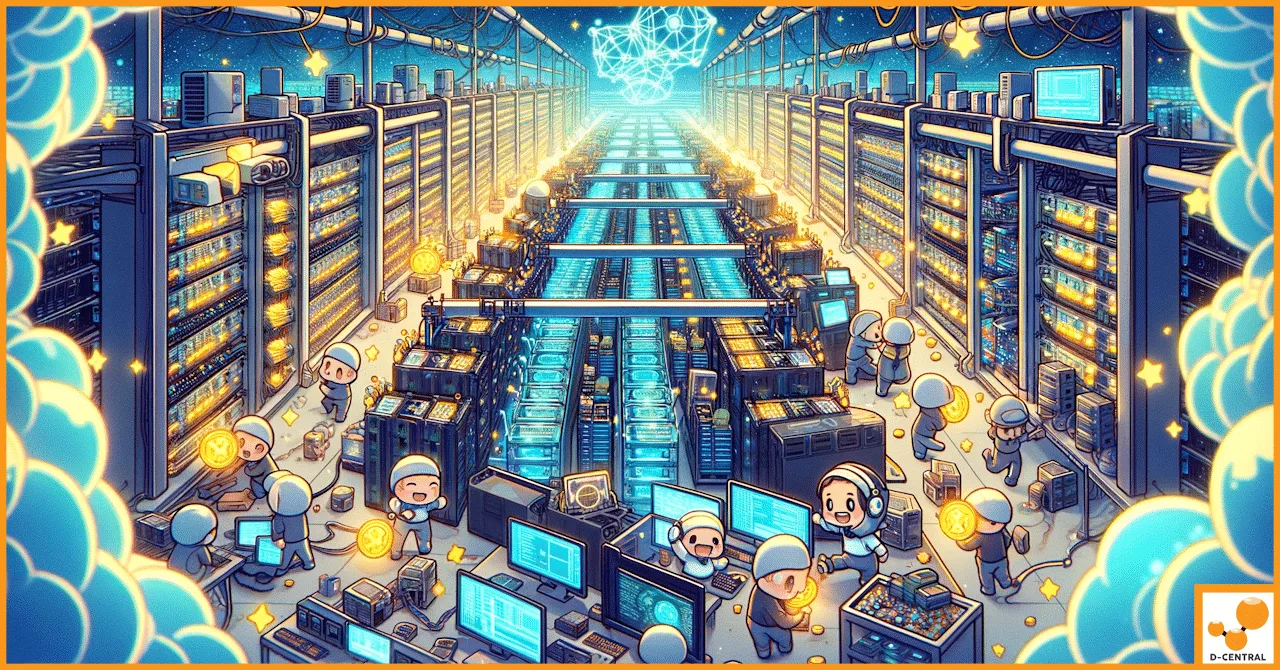
The Bitcoin network processes hundreds of thousands of transactions every day, secured by miners who dedicate real-world energy to proof-of-work. In 2026, with network hashrate exceeding 800 EH/s and difficulty climbing past 110 trillion, running mining hardware is more demanding than ever. The block subsidy sits at 3.125 BTC after the April 2024 halving, meaning every terahash you deploy needs to earn its keep.
For individual miners who want to scale beyond a couple of machines at home, the question becomes practical: where do you put the hardware? How do you manage power, cooling, noise, and uptime at scale without building your own industrial facility from scratch?
That is exactly where hosting facilities fit in. And at D-Central Technologies, we have been operating hosting infrastructure in Quebec since we started — because we believe that access to professional-grade mining infrastructure should not be gatekept by the largest corporations in the industry.
What Bitcoin Mining Hosting Actually Means
Mining hosting is straightforward: you own the ASIC hardware, and a facility provides the space, power, cooling, network connectivity, and physical security to keep it running 24/7. You do not need to negotiate commercial power contracts, install 240V circuits, build out ventilation systems, or worry about uptime during a Quebec winter storm. The hosting provider handles the operational side while you retain full ownership of your miners and the Bitcoin they produce.
This is fundamentally different from cloud mining, where you never touch hardware and are essentially buying a financial contract. With hosting, your machines are real, your hashrate is real, and the sats flow to your wallet. That distinction matters.
The D-Central Hosting Model
D-Central operates its hosting facility in Laval, Quebec (4479 Desserte Nord Autoroute 440, Laval, QC, H7P 6E2). Quebec is one of the best jurisdictions on the planet for Bitcoin mining, and there is nothing accidental about that choice:
| Quebec Advantage | Why It Matters |
|---|---|
| Hydroelectric power dominance | Over 99% of Quebec electricity comes from hydro — among the cleanest and cheapest grid power in North America |
| Cold climate | Sub-zero winters dramatically reduce cooling costs. Free cold air is the best heat exchanger money cannot buy |
| Political stability | Canada operates under rule of law with clear regulatory frameworks — no surprise bans or seizure risk |
| Energy cost competitiveness | Industrial power rates in Quebec are among the lowest in North America thanks to Hydro-Quebec infrastructure |
| Network infrastructure | Major metropolitan area with redundant fiber connectivity and reliable grid uptime |
This is not some remote warehouse in the middle of nowhere. Our Laval facility sits within the greater Montreal metropolitan area, accessible for client visits, hardware drop-offs, and in-person consultations.
Why Scale Demands Professional Hosting
Running one or two miners at home is entirely doable — we actively champion home mining with products like the Bitaxe and our Bitcoin Space Heaters that turn mining waste heat into home heating. But there is a hard ceiling on what residential infrastructure can support.
The Home Mining Wall
Most residential circuits in Canada deliver 15A or 20A at 120V, giving you roughly 1,800W per circuit. A single Antminer S21 pulls around 3,500W. You are already past what one circuit can handle, and you have not even thought about cooling, noise, or your spouse’s patience.
Scale that to five machines, ten machines, or fifty, and residential mining becomes physically impossible. You need:
- Dedicated electrical capacity — 50+ kW of reliable, clean power with proper voltage (typically 240V single-phase or 208/240V three-phase for larger deployments)
- Industrial cooling — ASIC miners generate roughly 3,400 BTU/hr per kilowatt of power consumed. Ten S21s produce heat equivalent to running ten space heaters simultaneously
- Sound isolation — A rack of ASICs at stock fan speeds sits around 75-80 dB. That is louder than a vacuum cleaner, running continuously, forever
- 24/7 monitoring — Hardware failures, network drops, pool connectivity issues, and firmware glitches do not wait for business hours
- Physical security — A single S21 represents thousands of dollars. A rack of them is a significant capital investment that needs proper protection
Hosting facilities solve all of these problems simultaneously, and they do it at a per-unit cost that individual miners cannot match on their own.
The Efficiency Equation: Power, Cooling, and Uptime
Efficiency in Bitcoin mining is not just about J/TH on the spec sheet. Real-world efficiency encompasses your total cost to produce hashrate, which includes power cost, cooling overhead, maintenance downtime, and operational labor. Hosting facilities optimize all four.
Power Management at Scale
Professional facilities negotiate bulk industrial power rates that are simply unavailable to residential or small commercial customers. The difference can be substantial — the gap between residential and industrial rates in Quebec can mean the difference between profitable and unprofitable mining, especially after the halving reduced the block subsidy to 3.125 BTC.
Beyond raw cost, hosting facilities provide:
- Power conditioning — Clean, stable voltage that prevents the brownouts and surges that degrade ASIC hashboard components over time
- Redundant feeds — Multiple utility connections or generator backup to minimize downtime from grid events
- Power monitoring — Per-unit metering that lets you track exactly what each machine consumes and identify efficiency degradation before it becomes a problem
Cooling That Actually Works
The single biggest operational challenge for scaled mining is thermal management. ASIC chips run at 70-90 degrees Celsius under normal operation. Ambient temperatures above 35 degrees Celsius start causing thermal throttling and potential chip damage.
Quebec’s climate provides a massive natural advantage here. During winter months — which in Quebec run from roughly November through March — outside air temperatures regularly drop below -10 degrees Celsius. This free cooling capacity is an enormous economic advantage that hosting facilities in warmer climates cannot replicate without massive additional investment in chillers and HVAC systems.
D-Central’s facility leverages this cold-climate advantage with engineered airflow systems that maximize the use of ambient cooling when available and supplement with mechanical cooling during the brief summer months.
Uptime Is Everything
Every hour your miner sits idle is hashrate you will never get back. The Bitcoin network does not pause, difficulty does not wait, and blocks keep getting found whether your machines are running or not.
Professional hosting facilities target 99%+ uptime through:
- On-site technical staff who can diagnose and address hardware issues in real time
- Spare parts inventory for common failure points (fans, PSUs, control boards)
- Network monitoring systems that detect connectivity issues before they cascade
- Established relationships with ASIC repair services for faster turnaround on hashboard failures
That last point is where D-Central’s integrated model shines. Because we operate both a hosting facility and one of Canada’s most experienced ASIC repair operations, hosted hardware that develops issues gets diagnosed and repaired in-house rather than shipped across the country to a third-party repair shop. Faster repair means less downtime, and less downtime means more Bitcoin.
Scalability: From One Machine to a Full Deployment
One of the most powerful aspects of hosting is that it removes the capital expenditure associated with building mining infrastructure. You do not need to lease industrial space, install electrical panels, build out cooling systems, or hire facilities staff. The hosting facility has already made those investments, and you benefit from their economies of scale.
How Scaling Works in Practice
| Scale | Home Setup | Hosted Setup |
|---|---|---|
| 1-2 machines | Feasible with dedicated circuits, noise management, and heat utilization (space heaters) | Possible but hosting overhead may not justify the cost at this scale |
| 3-10 machines | Requires electrical upgrades, dedicated room, proper ventilation — starts getting expensive and disruptive | Sweet spot where hosting economics start to make strong sense |
| 10-50 machines | Essentially impossible in residential setting. Requires commercial space | Full hosting advantage: bulk power rates, professional cooling, 24/7 monitoring |
| 50+ machines | You are now building your own facility regardless | Hosting provides turnkey scaling without the multi-year build-out timeline |
The key insight is that hosting removes the staircase of capital expenditure that typically gates mining growth. Instead of saving up to build infrastructure before you can add machines, you can scale linearly — add machines as capital allows, with infrastructure costs baked into your hosting rate.
Flexibility When Markets Shift
Bitcoin mining profitability is cyclical. Hash price fluctuates with BTC price, network difficulty, transaction fees, and the halving schedule. Hosting provides flexibility that owned infrastructure does not:
- Scale down without stranded assets — If hash price drops and you need to reduce operations, you can remove machines from hosting without being stuck with a warehouse lease and electrical infrastructure you are not using
- Upgrade hardware without infrastructure changes — When new-generation ASICs arrive with better efficiency, you can swap machines at the hosting facility without rewiring anything
- Geographic diversification — You can host machines in multiple facilities across different jurisdictions, reducing single-point-of-failure risk from regulatory changes or natural events
Security: Protecting Your Mining Investment
ASIC miners are not cheap, and a rack of current-generation hardware represents serious capital. Professional hosting facilities implement layered security that would be cost-prohibitive for an individual operator:
- Physical access control — Locked facilities with controlled entry, surveillance cameras, and visitor logging
- Fire suppression — Industrial fire detection and suppression systems designed for electronics environments
- Network security — Firewalled mining network segments, DDoS protection, and monitored network traffic
- Insurance coverage — Professional facilities carry insurance that covers client hardware in the event of disasters
The cost of implementing equivalent security for a home mining operation would be absurd relative to the scale of the operation. At a hosting facility, these costs are amortized across all clients.
Choosing a Hosting Provider: What to Look For
Not all hosting is created equal. The Bitcoin mining hosting industry includes everything from professional, well-managed facilities to sketchy operations running out of converted shipping containers with extension cords. Here is what separates a legitimate hosting operation from the rest:
Transparency
A trustworthy hosting provider publishes their facility address, invites clients to visit, and provides clear pricing breakdowns. If a hosting company will not tell you where your machines are physically located, that is a red flag the size of a billboard.
D-Central publishes our Laval facility address and welcomes client visits. We have been operating since 2016 — eight years of continuous operation in the Canadian Bitcoin mining space.
Integrated Services
The best hosting providers do more than just rack and stack. Look for providers that offer:
- Hardware procurement — Helping you source machines at competitive prices through established supply chain relationships
- Repair capabilities — In-house repair means faster turnaround and lower costs when hardware fails
- Consulting — Guidance on machine selection, overclocking strategies, pool selection, and profitability optimization
- Firmware management — Custom firmware deployment and management for performance tuning
D-Central offers all of these through our mining consulting services, creating a complete lifecycle from hardware purchase through hosting, maintenance, repair, and eventual resale or upgrade.
Track Record
How long has the provider been operating? Have they weathered bear markets? Do they have verifiable client references? The Bitcoin mining industry has seen plenty of hosting operations launch during bull markets and evaporate during downturns, taking client hardware with them.
D-Central has been in continuous operation since 2016, through multiple market cycles, halving events, and the complete transformation of mining hardware from S9-era to S21-era machines.
The Decentralization Argument for Hosting
There is an important philosophical dimension to mining hosting that often gets overlooked. The Bitcoin network is more secure when hashrate is geographically distributed across many operators in many jurisdictions. When mining concentrates in a few mega-facilities controlled by a handful of publicly traded companies, the network becomes more vulnerable to regulatory pressure, natural disasters, and corporate decision-making that may not align with Bitcoin’s values.
Hosting facilities that serve individual miners and small operations are a critical piece of hashrate decentralization. They allow the pleb miner — the individual Bitcoiner who believes in securing the network — to deploy hashrate at meaningful scale without becoming an industrial operator themselves.
At D-Central, this is not a marketing talking point. It is the core of our mission: the decentralization of every layer of Bitcoin mining. We believe that accessible hosting is just as important as accessible hardware like the Bitaxe for keeping the network decentralized and censorship-resistant.
Getting Started with Hosted Mining
If you are considering hosting for the first time, here is a practical framework:
- Define your scale and budget — Know how many machines you want to deploy and your total monthly budget including hardware costs, hosting fees, and a maintenance reserve
- Choose your hardware — Current-generation ASICs like the Antminer S21 series offer the best J/TH efficiency, but refurbished previous-generation machines can still be profitable at Quebec’s power rates. Browse our shop for available hardware
- Evaluate hosting providers — Visit the facility if possible. Ask about power rates, uptime history, repair capabilities, and contract terms
- Start and iterate — Begin with a manageable deployment, evaluate performance over 2-3 months, and scale based on real data rather than projections
D-Central’s hosting service in Laval, Quebec is designed for individual miners and small operations who want professional infrastructure without the six-figure capital expenditure of building their own facility. Reach out to discuss your deployment — we have been doing this since 2016 and we are happy to help you get it right.
Frequently Asked Questions
What is Bitcoin mining hosting, and how does it differ from cloud mining?
Bitcoin mining hosting means you own physical ASIC mining hardware that is housed and operated in a professional facility. The hosting provider supplies power, cooling, network connectivity, physical security, and monitoring. You retain full ownership of the hardware and all mined Bitcoin goes to your wallet. Cloud mining, by contrast, sells you a contract for hashrate — you never own hardware, cannot verify it exists, and are essentially buying a financial product. Hosting gives you real hardware producing real hashrate on the Bitcoin network.
Why does D-Central host miners in Quebec specifically?
Quebec offers a combination of advantages that is hard to match anywhere else in North America. Over 99% of electricity comes from hydroelectric generation, making it among the cleanest and cheapest power on the continent. The cold climate — with winters regularly dropping below -20 degrees Celsius — provides massive free cooling capacity that reduces operational costs. Canada’s political stability and clear regulatory environment reduce jurisdictional risk. And our Laval facility sits in the greater Montreal metropolitan area, providing excellent network infrastructure and easy accessibility for clients. D-Central’s hosting operations are in Quebec only.
How many miners do I need before hosting makes financial sense?
The crossover point where hosting economics become compelling is typically around 3-5 machines. At that scale, the infrastructure costs of running machines at home (electrical upgrades, cooling, noise management, dedicated space) start to approach or exceed hosting fees, while the hosting facility provides better uptime, professional monitoring, and lower per-unit power costs. That said, some miners host even a single machine if home mining is not feasible due to noise, heat, or electrical constraints. Contact D-Central’s hosting team for a personalized assessment based on your situation.
What happens if my hosted ASIC miner breaks down?
At D-Central, this is one of our biggest advantages. Because we operate both a hosting facility and a full ASIC repair service with experience across 38+ miner models, hardware issues are diagnosed and repaired in-house. There is no need to ship machines across the country to a third-party repair shop. This integrated model means faster turnaround on repairs and less downtime for your mining operation. Most common issues — fan failures, PSU faults, minor hashboard problems — can be resolved within hours rather than weeks.
Is Bitcoin mining hosting still profitable after the 2024 halving?
The April 2024 halving reduced the block subsidy from 6.25 BTC to 3.125 BTC, which absolutely compressed margins for miners running older, less efficient hardware. However, current-generation ASICs (like the Antminer S21 at approximately 17.5 J/TH) remain profitable when combined with competitive power rates like those available in Quebec. Transaction fees have also become a more meaningful component of miner revenue. The key factors for profitability in 2026 are hardware efficiency (J/TH), power cost (cents per kWh), and uptime. Professional hosting optimizes all three. The network currently runs at over 800 EH/s with difficulty above 110 trillion, so efficiency is more critical than ever.
{
“@context”: “https://schema.org”,
“@type”: “FAQPage”,
“mainEntity”: [{
“@type”: “Question”,
“name”: “What is Bitcoin mining hosting, and how does it differ from cloud mining?”,
“acceptedAnswer”: {
“@type”: “Answer”,
“text”: “Bitcoin mining hosting means you own physical ASIC mining hardware that is housed and operated in a professional facility. The hosting provider supplies power, cooling, network connectivity, physical security, and monitoring. You retain full ownership of the hardware and all mined Bitcoin goes to your wallet. Cloud mining, by contrast, sells you a contract for hashrate — you never own hardware, cannot verify it exists, and are essentially buying a financial product. Hosting gives you real hardware producing real hashrate on the Bitcoin network.”
}
}, {
“@type”: “Question”,
“name”: “Why does D-Central host miners in Quebec specifically?”,
“acceptedAnswer”: {
“@type”: “Answer”,
“text”: “Quebec offers a combination of advantages that is hard to match anywhere else in North America. Over 99% of electricity comes from hydroelectric generation, making it among the cleanest and cheapest power on the continent. The cold climate provides massive free cooling capacity that reduces operational costs. Canada’s political stability and clear regulatory environment reduce jurisdictional risk. D-Central’s hosting operations are in Quebec only, at our Laval facility in the greater Montreal metropolitan area.”
}
}, {
“@type”: “Question”,
“name”: “How many miners do I need before hosting makes financial sense?”,
“acceptedAnswer”: {
“@type”: “Answer”,
“text”: “The crossover point where hosting economics become compelling is typically around 3-5 machines. At that scale, the infrastructure costs of running machines at home start to approach or exceed hosting fees, while the hosting facility provides better uptime, professional monitoring, and lower per-unit power costs. Some miners host even a single machine if home mining is not feasible due to noise, heat, or electrical constraints.”
}
}, {
“@type”: “Question”,
“name”: “What happens if my hosted ASIC miner breaks down?”,
“acceptedAnswer”: {
“@type”: “Answer”,
“text”: “At D-Central, hardware issues are diagnosed and repaired in-house because we operate both a hosting facility and a full ASIC repair service with experience across 38+ miner models. There is no need to ship machines across the country to a third-party repair shop. This integrated model means faster turnaround on repairs and less downtime for your mining operation.”
}
}, {
“@type”: “Question”,
“name”: “Is Bitcoin mining hosting still profitable after the 2024 halving?”,
“acceptedAnswer”: {
“@type”: “Answer”,
“text”: “The April 2024 halving reduced the block subsidy from 6.25 BTC to 3.125 BTC, compressing margins for older hardware. However, current-generation ASICs remain profitable when combined with competitive power rates like those available in Quebec. The key factors for profitability in 2026 are hardware efficiency (J/TH), power cost (cents per kWh), and uptime. Professional hosting optimizes all three.”
}
}]
}
 Space Heater Edition" width="80" height="80" loading="lazy" style="width:80px;height:80px;object-fit:contain;border-radius:6px;background:#1A1A1A;flex-shrink:0;">
