Africa is not waiting for permission to mine Bitcoin. Across the continent, from the copper belt of Zambia to the highlands of Kenya, individuals and small operations are plugging in ASIC miners, stringing up hydroelectric turbines, and building the decentralized future one hash at a time. This is not some venture-capital pitch deck fantasy. This is real hardware, real energy, and real people taking sovereignty over their financial infrastructure.
At D-Central Technologies, we have spent nearly a decade as Bitcoin Mining Hackers — taking institutional-grade mining technology and making it accessible to individuals. We see the same spirit in the African Bitcoin mining movement. The challenges are different from what we face in Canada, but the mission is identical: decentralize every layer of Bitcoin mining, everywhere.
This deep-dive examines the Bitcoin mining landscapes of Zambia and Kenya, two nations that represent fundamentally different approaches to the same goal. One is a story of grassroots grit in the face of regulatory ambiguity. The other is a case study in renewable energy innovation that the rest of the world should be paying attention to.
Why Africa Matters for Bitcoin’s Hash Rate
Bitcoin’s security model depends on a globally distributed hash rate. When mining concentrates in any single jurisdiction — as it did in China before the 2021 ban — the network becomes vulnerable to policy shocks, infrastructure failures, and political pressure. Every terahash that comes online in a new region strengthens the network for everyone.
Africa brings unique advantages to this equation:
| Advantage | Details |
|---|---|
| Untapped Hydroelectric Power | Africa holds roughly 12% of global hydroelectric potential, with less than 10% currently developed. Stranded hydro energy is ideal for proof-of-work mining. |
| Geographic Diversity | Adding hash rate from the African continent directly reduces Bitcoin’s reliance on North American and European grid infrastructure. |
| Young, Tech-Savvy Population | Median age across Africa is under 20. A generation raised on mobile money (M-Pesa) intuitively understands programmable money. |
| Need for Sound Money | Currencies like the Zambian Kwacha have experienced significant devaluation. Bitcoin mining offers a hedge denominated in the hardest money ever created. |
With the current block reward at 3.125 BTC and the network hash rate exceeding 800 EH/s, the economics of mining demand cheap energy and efficient hardware. Africa has the energy. The hardware is increasingly available. What remains is building the knowledge infrastructure — and that is exactly where projects on the ground in Zambia and Kenya are making progress.
Zambia: Grassroots Mining in Regulatory Fog
Zambia’s Bitcoin mining story is one of determination in the absence of clear rules. The Bank of Zambia has issued warnings about the risks associated with digital assets, but it has not explicitly banned Bitcoin mining. The Zambia Revenue Authority classifies mining revenue as business income subject to taxation under guidelines issued in 2018, creating a situation where the activity is taxed but not formally endorsed.
This regulatory ambiguity is not unique to Zambia — many countries find themselves in the same gray zone. What matters is what people do within that uncertainty.
Infrastructure Realities
Zambia’s energy infrastructure is dominated by hydroelectric generation, primarily from the Kariba Dam and Kafue Gorge stations. The country generates over 80% of its electricity from hydro sources. In theory, this is a dream scenario for Bitcoin mining: abundant, renewable baseload power. In practice, the grid suffers from transmission losses, distribution bottlenecks, and periodic load-shedding during drought years when dam levels drop.
Internet connectivity presents an additional constraint. While urban centers like Lusaka and Ndola have broadband access, rural areas — where the cheapest electricity often exists — may lack the stable internet connections that mining operations require. A Bitcoin miner needs a reliable connection, but it does not need high bandwidth. Even a basic mobile data connection can keep an ASIC miner connected to a mining pool.
The Grassroots Movement
What is most compelling about Zambia’s mining landscape is its bottom-up character. Online communities of Zambian miners share knowledge about hardware sourcing, power management, and operational security. These are not institutional actors with megawatt-scale facilities. These are individuals running one or two machines, often navigating import logistics and power infrastructure that was never designed with proof-of-work in mind.
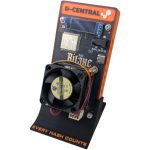
This grassroots approach mirrors what we see in the home mining movement globally. At D-Central, we have built our entire business around empowering exactly this kind of miner — the individual who wants to participate in securing the Bitcoin network without needing a warehouse and a utility contract. Our Bitaxe Hub exists precisely because we believe that every hash counts, whether it comes from a data center in Texas or a single Bitaxe unit in Lusaka.
Untapped Potential
Zambia’s hydroelectric surplus during high-water seasons represents stranded energy — electricity that is generated but cannot be fully consumed by the existing grid. Bitcoin mining is the ultimate buyer of last resort for stranded energy. It requires no physical product to be shipped, no supply chain to be maintained, and no customer to be located nearby. The miner converts joules into sats, period.
If Zambia can establish clearer regulatory frameworks and improve rural connectivity, the country could become a significant node in Bitcoin’s global hash rate distribution. The raw ingredients are already there.
Kenya: Hydroelectric Innovation and Community-Driven Mining
Kenya presents a strikingly different model. Where Zambia’s story is defined by grassroots resilience, Kenya’s is characterized by innovative enterprises that are building mining operations directly integrated with renewable energy generation and local community development.
GridlessCompute: Mining Where the Energy Is
GridlessCompute is the standout operation in Kenya’s Bitcoin mining landscape. The company builds small-scale, run-of-river hydroelectric installations in rural areas — primarily in the Aberdare Mountain Range — and uses the generated electricity to power Bitcoin mining hardware on-site.
The model is elegant in its simplicity: instead of building transmission lines to carry rural hydro power to distant urban consumers, GridlessCompute brings the energy consumer (the Bitcoin miner) directly to the energy source. The mining operation serves as the anchor load that makes the entire micro-hydro project economically viable. Excess capacity is then distributed to the surrounding community.
| GridlessCompute Feature | Impact |
|---|---|
| Run-of-River Hydro | No dam construction required. Minimal ecosystem disruption. Lower capital expenditure than traditional hydro projects. |
| On-Site Mining | Eliminates transmission loss. Mining hardware acts as the economic anchor for the entire energy project. |
| Community Electrification | Surplus energy powers homes, businesses, cold storage for farmers, EV charging stations, and public WiFi. |
| Responsive Baseload | Mining can be throttled or shut down instantly to redirect power to community needs during peak demand. |
This is exactly the kind of dual-purpose thinking we advocate at D-Central with our Bitcoin Space Heaters — the idea that a mining device should never just mine. In Canada, the waste heat from an ASIC warms your home. In rural Kenya, the economic anchor of a mining load brings electricity to an entire village. Different climates, same principle: mining is not a cost center, it is an infrastructure enabler.
The “21st Century Villages” Vision
GridlessCompute’s “21st Century Villages” initiative expands this model into a broader framework for rural electrification. The concept is straightforward: build small-scale power generation at the village level, use Bitcoin mining as the economic engine that justifies the capital investment, and distribute the benefits — electricity, connectivity, economic opportunity — to the surrounding community.
This is decentralization in its purest form. Not just decentralized money, but decentralized energy, decentralized infrastructure, and decentralized economic development. The mining hardware is the catalyst that makes it all financially viable.
Investment and Scaling
GridlessCompute secured $2 million in funding from Stillmark and Block, Inc., validating the model and providing capital for expansion across multiple African markets. The company has partnered with HydroBox to deploy pilot projects in rural Kenya, with plans to replicate the approach in other regions where stranded renewable energy meets unserved communities.
The success of this funding round matters beyond the dollars. It demonstrates that the market recognizes Bitcoin mining not as an environmental problem, but as a solution — a mechanism for monetizing stranded renewable energy and funding rural electrification in regions that traditional utilities have failed to serve.
Zambia vs. Kenya: A Comparative View
| Dimension | Zambia | Kenya |
|---|---|---|
| Regulatory Clarity | Ambiguous — warnings issued but no explicit ban | More defined — supportive stance toward innovation |
| Primary Energy Source | Large-scale hydroelectric (Kariba, Kafue Gorge) | Small-scale run-of-river hydro (GridlessCompute) |
| Mining Model | Individual grassroots miners, small-scale operations | Enterprise-led, community-integrated operations |
| Infrastructure | Grid reliability issues, rural connectivity gaps | Off-grid model bypasses infrastructure limitations |
| Community Impact | Knowledge-sharing communities, grassroots education | Direct electrification, economic development, infrastructure |
| Scalability Path | Depends on regulatory clarity and grid improvements | Replicable micro-hydro model across multiple regions |
Neither model is inherently superior. Zambia’s grassroots approach puts mining directly in the hands of individuals — the most decentralized outcome possible. Kenya’s enterprise model achieves broader community impact through integrated energy projects. Both contribute to Bitcoin’s geographic hash rate distribution, and both demonstrate that mining is not exclusively a developed-world activity.
What This Means for the Global Home Mining Movement
The developments in Zambia and Kenya reinforce a thesis we have held at D-Central since 2016: Bitcoin mining belongs in the hands of individuals and communities, not exclusively in the server rooms of publicly traded companies.
Every solo miner in Zambia running a machine off hydroelectric power is participating in the same network as a 200 MW facility in Texas. The protocol does not discriminate. A valid hash is a valid hash, whether it is generated in Montreal, Quebec, or Lusaka, Zambia. This is the beauty of Bitcoin’s proof-of-work consensus — it is permissionless, borderless, and fundamentally egalitarian.
For anyone inspired by what is happening in Africa and looking to start their own mining journey, the barriers to entry have never been lower:
- Solo mining devices like the Bitaxe lineup let you participate in block discovery from your desk — powered by a simple 5V barrel jack, no industrial power required. Explore every model and accessory in our Bitaxe Hub.
- Dual-purpose mining turns your ASIC’s waste heat into home heating, making mining profitable even in cold climates like Canada. Our Bitcoin Space Heater lineup integrates mining hardware directly into heating solutions.
- Professional repair services keep your hardware running longer. With nearly a decade of hands-on ASIC repair experience, D-Central’s ASIC Repair service has fixed thousands of machines that other shops would have scrapped.
The Pan-African Opportunity
Looking forward, the opportunity for Pan-African Bitcoin mining collaboration is enormous. Imagine a network of small-scale mining operations distributed across the continent’s diverse energy landscapes — hydro in East Africa, solar in the Sahel, geothermal along the Rift Valley. Each operation strengthening Bitcoin’s global hash rate while providing economic infrastructure to its local community.
This is not a far-fetched vision. The technology exists today. The economic model has been proven by GridlessCompute and others. What is needed is knowledge transfer, hardware accessibility, and the kind of stubborn determination that has always characterized the Bitcoin mining community.
D-Central Technologies is committed to supporting decentralized mining everywhere it takes root. From our headquarters in Canada, we ship mining hardware worldwide, provide consulting services for operations of any scale, and maintain the most comprehensive open-source mining resource library in the industry.
Africa’s Bitcoin mining story is just beginning. Whether it is a solo miner in Zambia running a single ASIC off the grid, or a hydroelectric-powered village in Kenya hashing blocks between powering homes and charging motorcycles — every hash counts. Every hash strengthens the network. Every hash is an act of decentralization.
And that is exactly why we are here.
Frequently Asked Questions
Why does Bitcoin mining in Africa matter for the global network?
Bitcoin’s security depends on a geographically distributed hash rate. When mining concentrates in any single region, the network becomes vulnerable to localized policy changes, grid failures, or political pressure. Every terahash added from Africa directly strengthens Bitcoin’s censorship resistance and resilience. With the network now exceeding 800 EH/s, geographic diversity is more important than ever.
What energy sources power Bitcoin mining in Zambia and Kenya?
Both countries leverage hydroelectric power. Zambia draws from large-scale installations like the Kariba Dam and Kafue Gorge, generating over 80% of national electricity from hydro. Kenya’s GridlessCompute builds small-scale, run-of-river hydro systems in the Aberdare Mountain Range that require no dam construction and minimize environmental impact. Both approaches use renewable energy to power proof-of-work mining.
Is Bitcoin mining legal in Zambia?
The legal status remains ambiguous. The Bank of Zambia has issued warnings about digital asset risks but has not explicitly banned Bitcoin mining. The Zambia Revenue Authority classifies mining income as taxable business revenue under 2018 guidelines. Mining activity continues in a regulatory gray zone — taxed but not formally endorsed.
How does GridlessCompute use Bitcoin mining to power rural communities?
GridlessCompute builds micro-hydro installations in rural Kenya and uses Bitcoin mining hardware as the economic anchor load. The mining revenue justifies the capital investment in the hydro project. Surplus electricity is distributed to surrounding communities for home power, cold storage, EV charging stations, and public WiFi. Mining can be throttled during peak community demand, making it a responsive baseload.
Can individuals start mining Bitcoin at home?
Absolutely. Solo mining devices like the Bitaxe use a standard 5V barrel jack power supply and connect via WiFi — no industrial infrastructure needed. Dual-purpose setups like Bitcoin Space Heaters convert mining waste heat into home heating. D-Central Technologies provides hardware, repair services, and comprehensive guides through our Bitaxe Hub to help anyone start mining, regardless of location or scale.
What role does D-Central Technologies play in global Bitcoin mining?
D-Central Technologies is a Canadian Bitcoin mining company founded in 2016, specializing in making mining accessible to individuals. We sell mining hardware (including Bitaxe solo miners, full ASICs, and Bitcoin Space Heaters), provide professional ASIC repair services, offer mining consulting, and operate hosting facilities in Quebec, Canada. We ship worldwide and support miners at every scale — from a single Bitaxe on your desk to multi-megawatt operations.