Canada has quietly become one of the most important nodes in the global Bitcoin network. Cold climate, abundant hydroelectric power, a technically literate population, and a growing community of cypherpunks and home miners make this country a natural hub for Bitcoin culture. Canadian Bitcoin conferences are where that culture crystallizes — where miners, developers, entrepreneurs, and sovereignty advocates meet face-to-face to share knowledge, forge partnerships, and push the decentralization mission forward.
If you are serious about Bitcoin — not the speculative noise, but the technology, the censorship-resistant protocol, the decentralized monetary network — then showing up at Canadian Bitcoin events is not optional. It is part of the work.
This guide covers everything you need to know: why Canadian conferences matter, what to expect, which events to prioritize, and how to get the most out of attending as a miner, builder, or Bitcoin maximalist.
Why Canada Is a Bitcoin Conference Powerhouse
Canada punches far above its weight in the Bitcoin ecosystem. The reasons are structural, not accidental:
| Factor | Why It Matters for Bitcoin |
|---|---|
| Cheap Hydroelectric Power | Quebec offers some of the lowest electricity rates in North America — ideal for mining operations of all sizes |
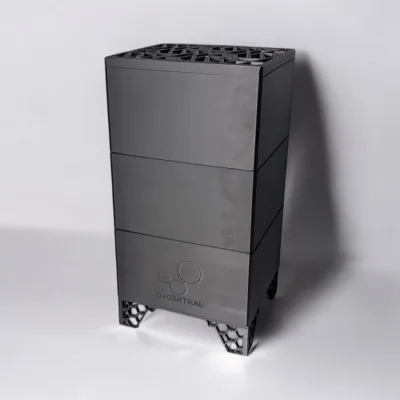
| Cold Climate | Natural cooling slashes operational costs. Miners double as space heaters during Canadian winters — a concept D-Central has pioneered with Bitcoin Space Heaters |
| Technical Talent Pool | Strong engineering schools and a maker culture that feeds into open-source hardware projects like Bitaxe |
| Regulatory Clarity (Relative) | Compared to many jurisdictions, Canada offers a workable regulatory environment for Bitcoin businesses |
| Cypherpunk History | Canada has a deep tradition of privacy advocacy and individual rights that aligns with Bitcoin’s ethos |
These structural advantages mean Canadian Bitcoin conferences attract serious builders, not just speculators. The conversations at these events tend toward mining infrastructure, energy optimization, open-source hardware, and sovereign technology stacks — exactly the topics that matter.
What to Expect at a Canadian Bitcoin Conference
If you have only attended generic “crypto” conferences, prepare for a different experience. Canadian Bitcoin conferences — the good ones, anyway — share several characteristics:
Bitcoin-Only Focus
The strongest Canadian events are Bitcoin-only. No altcoin shilling, no NFT pitches, no “Web3” marketing fog. This is intentional. Bitcoin maximalism is not tribalism — it is signal filtering. When you strip away the noise, the conversations become dramatically more productive.
Mining and Hardware Deep Dives
Canada’s mining advantage means these conferences feature serious technical content on mining operations: hashrate optimization, ASIC repair, firmware modifications, immersion cooling, and home mining setups. D-Central has hosted workshops at these events teaching attendees to build their own open-source Bitaxe miners — hands-on, solder-in-hand sessions that embody the Mining Hacker ethos.
Sovereign Technology Workshops
Expect hands-on sessions covering multisig wallet setups, Lightning Network node operation, Nostr protocol exploration, and self-custody best practices. These are not theoretical lectures — participants walk away with working setups.
Macroeconomic Context
Canadian Bitcoin events regularly feature deep analysis of monetary policy, inflation dynamics, and the structural decline of fiat currencies. Understanding why Bitcoin exists is as important as understanding how it works.
Key Canadian Bitcoin Events Worth Your Time
The Canadian Bitcoin conference landscape has matured significantly. Here are the events that consistently deliver value:
| Event | Location | Focus | Best For |
|---|---|---|---|
| Canadian Bitcoin Conference | Toronto, ON | Bitcoin-only, broad coverage | All levels — newcomers through veterans |
| Bitcoin Rodeo | Calgary, AB | Bitcoin culture, Western Canada community | Community builders, entrepreneurs |
| Adopting Bitcoin | Various | Lightning Network, protocol development | Developers, technical operators |
| Regional Meetups & Plebs Events | Montreal, Vancouver, Ottawa | Local community, grassroots adoption | Networking, local ecosystem building |
Pro tip: the smaller, community-driven events often deliver more value per hour than the large-scale conferences. A 50-person meetup where you can corner a mining engineer for 30 minutes beats a 5,000-person expo where you collect business cards.
The Mining Hacker’s Conference Playbook
Showing up is step one. Getting real value requires strategy. Here is how D-Central’s team approaches every Bitcoin conference:
1. Pre-Conference Preparation
Study the speaker list. Identify the three or four people whose work most directly impacts your mining operation or Bitcoin journey. Research their recent projects so you can ask meaningful questions, not generic ones.
Set specific objectives. “Learn about Bitcoin” is not an objective. “Understand the economics of running a Bitaxe solo miner at current difficulty” is. “Compare ASIC repair turnaround times across Canadian providers” is. Specificity drives value.
Prepare your gear. If there are hardware workshops — and at the best Canadian conferences, there are — bring your laptop with a serial terminal ready. If you are building a Bitaxe, have AxeOS documentation bookmarked. Come ready to work.
2. During the Conference
Prioritize workshops over panels. A hands-on session where you flash firmware onto a mining device teaches you more than any panel discussion about “the future of Bitcoin.”
Talk to the vendors. Companies like D-Central attend these events to share knowledge, not just sell hardware. Ask about ASIC repair techniques, mining optimization, heat recovery systems, and open-source miner modifications. The booth conversations are often more valuable than the main stage.
Connect with other home miners. The Canadian home mining community is tight-knit and generous with knowledge. Compare setups, share power cost data, discuss noise mitigation strategies. These peer connections are gold.
3. Post-Conference Action
Implement within 48 hours. The single biggest conference mistake is collecting information and never acting on it. If you learned about a firmware optimization, apply it when you get home. If you discovered a better mining pool strategy, switch before the motivation fades.
Bitcoin Mining at Canadian Conferences: What D-Central Brings to the Table
D-Central Technologies has been a fixture at Canadian Bitcoin events since 2016. As Canada’s Bitcoin Mining Hackers, we do not just attend conferences — we bring the workshop floor to the convention center.
Build-Your-Own-Miner Workshops
Our signature conference offering: hands-on workshops where participants assemble, configure, and bring home their own open-source Bitcoin miner. We have guided hundreds of attendees through Bitaxe builds, covering everything from component soldering to AxeOS configuration to pool selection. This is not a demo — participants leave with a working solo miner.
ASIC Repair Demonstrations
With 8+ years and thousands of repairs under our belts, D-Central brings actual ASIC boards to conferences for live diagnostic and repair demonstrations. Attendees see firsthand how hashboard failures are diagnosed, how ASIC chips are replaced, and what separates a proper repair from a hack job. This is the kind of knowledge that saves you money when a miner goes down.
Mining Consultation
Our team provides on-the-spot mining consultation at conferences — power analysis for home setups, hardware selection advice, noise management strategies, and heat recovery planning for Canadian climates. Whether you are running a single Bitaxe or scaling to a garage full of S21s, we help you optimize.
The State of Bitcoin Mining in Canada: 2026 Landscape
Understanding the current mining landscape makes conference discussions far more productive. Here is where things stand:
| Metric | Current Status (2026) |
|---|---|
| Block Reward | 3.125 BTC per block (post-April 2024 halving) |
| Global Hashrate | 800+ EH/s and climbing |
| Network Difficulty | 110T+ — continuously adjusting upward |
| Canadian Advantage | Hydro rates in Quebec as low as $0.05/kWh, natural winter cooling |
| Home Mining Trend | Accelerating — driven by dual-purpose heating and open-source hardware |
| Solo Mining | Growing community of Bitaxe solo miners contributing to network decentralization |
The post-halving environment has made efficiency paramount. Conferences are the best place to learn cutting-edge optimization techniques from operators who are actually running profitable mining operations — not armchair analysts.
Getting the Most Out of Mining Workshops
Mining workshops are the crown jewels of Canadian Bitcoin conferences. Here is how to maximize your workshop experience:
For beginners: Start with a Bitaxe solo miner build. These workshops are designed for people with zero hardware experience. The Bitaxe runs on a 5V barrel jack (5.5×2.1mm DC), draws minimal power, and mines solo — meaning every hash has a chance at the full 3.125 BTC block reward. It is the perfect entry point into mining-as-technology.
For intermediate miners: Focus on ASIC optimization workshops. Learn how to tune your S19 or S21 for maximum efficiency, how to diagnose common hashboard failures, and how to implement heat recovery. If D-Central is running an ASIC repair workshop, that is your priority — the diagnostic skills alone will save you thousands over your mining career.
For advanced operators: Seek out sessions on firmware modification, immersion cooling, energy arbitrage, and grid services. At the 800+ EH/s difficulty level, the margins belong to those who optimize relentlessly. Advanced workshops at Canadian conferences often feature real operational data that you will not find published anywhere else.
Conference Topics Every Canadian Miner Should Understand
Walking into a Canadian Bitcoin conference prepared means having a working understanding of these key topics:
Dual-Purpose Mining and Heat Recovery
In a country where heating season runs six to eight months, the economics of Bitcoin mining change dramatically when you factor in displaced heating costs. Bitcoin Space Heaters — ASIC miners enclosed in purpose-built heater units — are not a novelty. They are a legitimate energy strategy. Every watt consumed by a Bitcoin miner becomes heat. In Canadian winters, that is not waste — that is your heating bill, paid for by the Bitcoin network.
Open-Source Mining Hardware
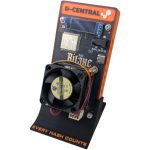
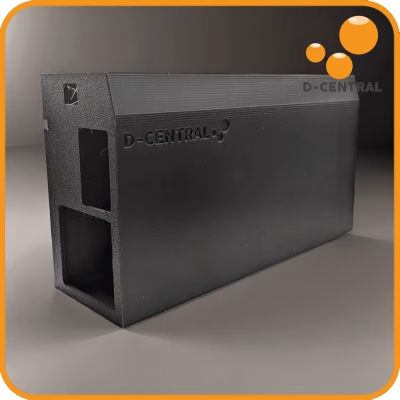
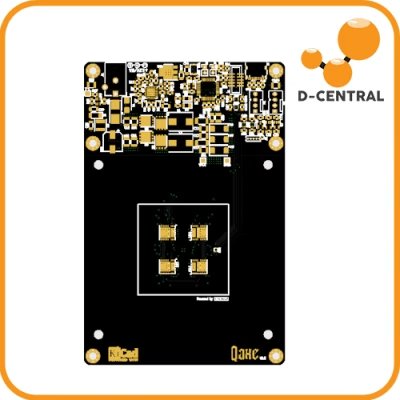
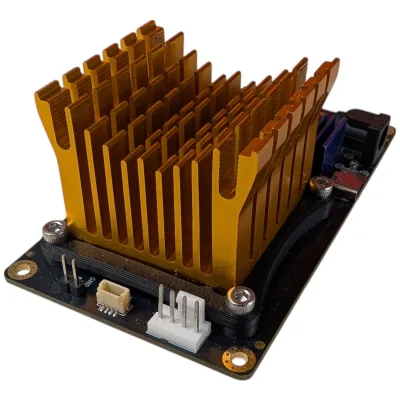
The open-source mining movement, led by projects like Bitaxe, represents the decentralization of mining hardware manufacturing itself. No longer dependent on a handful of Chinese manufacturers, the community can now build, modify, and improve mining hardware openly. D-Central has been a pioneer in the Bitaxe ecosystem from its earliest days — creating the original Bitaxe Mesh Stand, developing custom heatsinks and cases, and stocking every variant from Supra to Hex to Gamma.
Solo Mining and Network Decentralization
Solo mining with devices like the Bitaxe is not primarily about profitability — it is about decentralization. Every independent solo miner is a node of resistance against mining centralization. When a solo miner finds a block, it proves that the network remains open and permissionless. Conference discussions around solo mining focus on probability analysis, pool diversity, and the philosophical importance of distributed hashrate.
Hosting and Colocation in Canada
For miners who outgrow their home setup, Canadian mining hosting facilities offer industrial-grade infrastructure with the country’s natural advantages. Conference hallway conversations often lead to hosting partnerships. Understanding the hosting landscape — power contracts, uptime guarantees, security measures, and fee structures — prepares you for productive conversations with hosting providers at these events.
Building Your Canadian Bitcoin Network
Conferences are temporary. The network you build there is permanent. Here is how to make connections that last:
Join the local meetup scene. Every major Canadian city has Bitcoin meetups — Montreal, Toronto, Vancouver, Calgary, Ottawa. These are the feeder communities for conferences. Show up consistently, and you will know half the conference attendees before registration opens.
Contribute to open source. Nothing builds credibility in the Bitcoin community faster than contributing to open-source projects. Test Bitaxe firmware, file bug reports, write documentation, or design 3D-printable accessories. Conferences become dramatically more productive when people already know your work.
Share your data. The home mining community thrives on shared operational data — power costs, hashrate performance, noise levels, heat output, uptime statistics. Bringing real numbers to conference conversations immediately elevates you from tourist to peer.
Planning Your Conference Calendar
The Canadian Bitcoin conference season typically runs from spring through fall, with the major events clustered in Q2 and Q3. Here is a strategic approach:
Q1 (January-March): Attend local meetups. This is preparation season. Build relationships, study the landscape, and finalize your conference budget.
Q2 (April-June): Peak conference season. The major Canadian Bitcoin conferences happen in this window. Budget for at least one multi-day event and one workshop-focused event.
Q3 (July-September): Secondary conference season plus outdoor Bitcoin meetups. Smaller events, but often higher signal-to-noise ratio.
Q4 (October-December): Implementation season. Apply everything you learned. Set up new mining equipment before heating season. Optimize your operations based on conference insights.
Bookmark the D-Central shop before attending — knowing the current product lineup means you can ask specific technical questions at the booth instead of browsing a catalog.
Frequently Asked Questions
Are Canadian Bitcoin conferences beginner-friendly?
Yes. Most Canadian Bitcoin conferences include dedicated introductory tracks covering Bitcoin fundamentals, wallet setup, and basic mining concepts. Events like the Canadian Bitcoin Conference specifically design programming for newcomers alongside advanced technical sessions. The community is welcoming to genuine learners.
How much do Canadian Bitcoin conference tickets cost?
Prices vary significantly. Community meetups are typically free. Regional one-day events range from $50 to $200 CAD. Multi-day conferences with workshops can run $300 to $800 CAD. Early-bird pricing and bundled tickets (when events partner together) offer the best value. Many events accept Bitcoin payment.
Can I buy mining hardware at Bitcoin conferences?
Yes. Companies like D-Central bring inventory to conferences, including Bitaxe solo miners, accessories, and parts. Conference-exclusive deals are common. More importantly, you can examine hardware in person, ask technical questions directly to the engineers, and get setup guidance on the spot.
What should I bring to a mining workshop at a Bitcoin conference?
Bring a laptop with a serial terminal application installed (PuTTY, screen, or minicom), a USB-C cable for firmware flashing, and your WiFi credentials for connecting miners. If the workshop involves soldering, tools are typically provided, but bringing your own precision screwdriver set is recommended. Check the event page for specific requirements.
Are there French-language Bitcoin conferences in Canada?
Yes. Quebec has a growing French-language Bitcoin community with meetups in Montreal and Quebec City. Some national conferences offer bilingual sessions. The French-speaking Bitcoin mining community in Quebec is particularly strong given the province’s hydroelectric advantages and low power costs.
How do Bitcoin conferences help with mining operations?
Conferences provide access to operational knowledge that is rarely published online: real-world power consumption data, cooling strategies for specific climates, firmware optimization techniques, bulk purchasing contacts, and repair skills. The hallway conversations and workshop sessions are where the actionable mining intelligence lives. Many miners report that a single conference insight — a firmware tweak, a cooling modification, or a power optimization — paid for the entire trip within weeks.
Is it worth traveling across Canada for a Bitcoin conference?
If you are operating mining hardware or planning to start, absolutely. The cost of a flight and hotel is trivial compared to the optimization opportunities you will discover. A single efficiency improvement learned at a conference can save thousands over a year of mining. Beyond the technical value, the network of Canadian miners you build is an ongoing resource for troubleshooting, deal-finding, and knowledge sharing.