DCENT_OS 0.9.0 Experimental Downloads: 19 Exact-Board Artifact Sets
DCENT_OS 0.9.0 — beta20261002 now provides 20 exact-board Experimental artifact sets across 19 model names on the beta channel: 17 native raw SD images, two…
Mining knowledge, repair guides, and industry insights from the workshop floor.
DCENT_OS 0.9.0 — beta20261002 now provides 20 exact-board Experimental artifact sets across 19 model names on the beta channel: 17 native raw SD images, two…
GPT-6 Astra looks like a genuine leap. OpenAI’s overhyped, selectively gated non-release shows why local AI and open weights matter more than ever.
The strongest tested agent fully solved 31.5% of realistic binary targets. D-Central tracks this metric because better LLM reverse engineering can accelerate DCENT_OS.
Anthropic’s proprietary Fable 5.1 leads across coding, science, computer use, and business workflows. The larger story is what today’s closed frontier previews for tomorrow’s local AI.
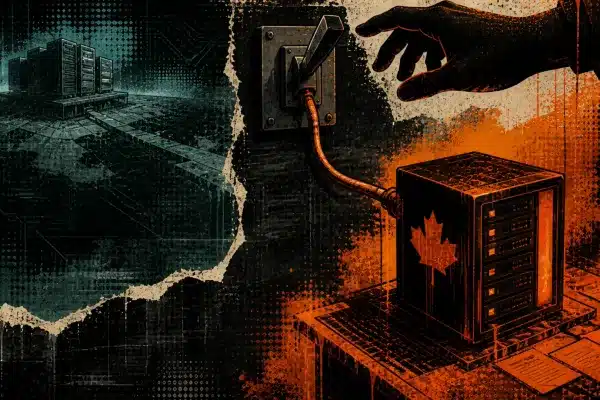
D-Central editorial / August 26, 2026 / National sovereignty Canada should own the stack: energy, data, inference, and Bitcoin Personal sovereignty scales. A country that…
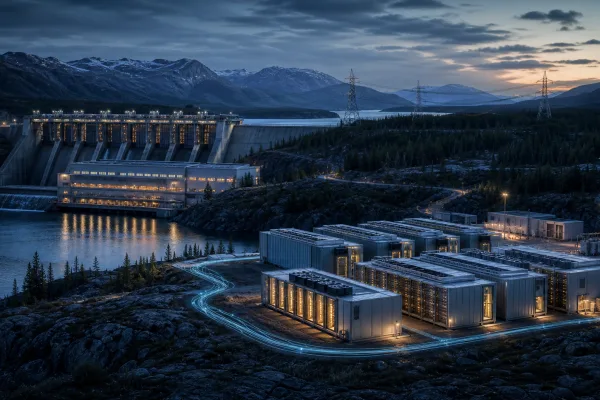
D-Central editorial / August 25, 2026 / Canadian energy Stop exporting Canada’s computing advantage one electron at a time Canada should reserve more of its…
Analysis / August 24, 2026 / Canada The tariff crisis is an AI warning—not an AI tariff. Canada’s latest trade shock does not mean a…
D-Central editorial / August 24, 2026 / Canada Canada needs AI inference sovereignty now—not after the next crisis AI access is becoming a condition of…
D-Central analysis / August 23, 2026 / Canada Canada does not need one perfect national model to achieve AI sovereignty A foundation model can be…
D-Central analysis / August 22, 2026 / Canada CUSMA is still in force. Canadian AI still needs a Plan B. The agreement has not vanished,…
D-Central analysis / August 21, 2026 / Canada The U.S. AI platform risk Canadian businesses can no longer ignore The new Canada-U.S. tariffs do not…
AI procurement / published August 20, 2026 Open Weights vs Open Source AI vs API-Only: Read the Label Before You Deploy Downloadable weights can make…
AI automation / published August 19, 2026 AI Agents vs Chatbots vs Workflows: What Should a Business Automate? A chatbot produces a response, a workflow…
Local AI / published August 18, 2026 Can You Run AI Without the Internet? What an Offline LLM Still Needs Yes: downloaded model weights and…
LLM customization / published August 17, 2026 RAG vs Fine-Tuning: Two Different Ways to Customize an LLM RAG supplies selected information when a request is…
LLM architecture / published August 16, 2026 A Context Window Is Not Memory: How LLMs Handle Long Documents and Conversations A context window is the…
AI operations / published August 15, 2026 What Is AI Inference? Training, Fine-Tuning and Model Serving Explained Inference is the moment a trained AI model…
GLM-5.3 tops CyberGym at 84.5 but sits 24 points behind on ExploitBench and half of Mythos 5 on ExploitGym. What the three charts actually say, and why the weights are delayed.
AI fundamentals / published August 14, 2026 What Is a Large Language Model? Tokens, Transformers and Parameters Without the Hype A large language model is…
Mujina is a fast-moving open-source Bitcoin mining firmware project from the 256 Foundation, and as of today there is almost nothing written about it outside…
Two benchmarks measure whether an AI model can turn a suspected bug into a proven exploit. A joint UK-US government evaluation put Kimi K3 at 0 of 41 on arbitrary code execution against 20 of 41 for frontier models. Bitcoin’s defenders were pushed toward the wrong end of that gap.
Sixteen volunteers, a 171,599-line AI harness and 390 open-source Bitcoin repositories in a single sprint. What the Bitcoin Red Team did, why it was overdue, and the two honest criticisms the effort deserves.
Three Bitcoin infrastructure failures in eleven days: a four-year Coldcard entropy defect, an actively exploited BTCPay Server credential leak, and a swap service that shut down because it could not patch fast enough. The factual record and the actions each one demands.
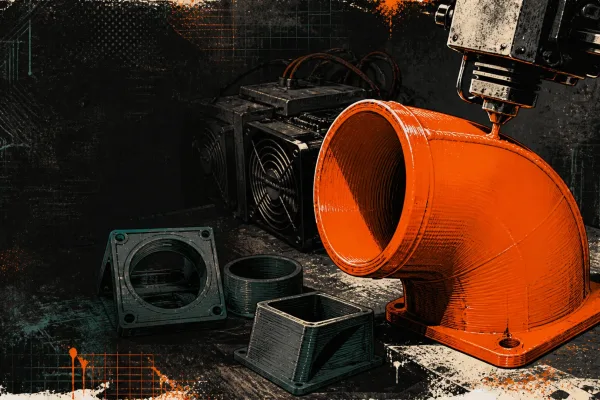
There has never been a better time to own a 3D printer and a bitcoin miner at the same time. The gap between “I need…
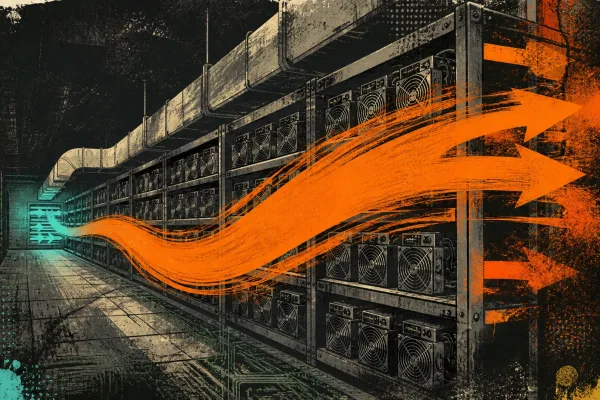
One miner in a garage is an airflow problem you can solve with a window. Twenty miners in a converted storage room is a different…
Canaan has always been the manufacturer that refuses to copy the other two. While Bitmain and MicroBT argued about 120 versus 140 mm fans, Avalon quietly…
Every home mining setup thread shows the same picture: a beautiful exhaust job — shroud, insulated duct, sealed window port — bolted to a miner…
Search for an ASIC miner silencer and you will find products promising to make a 75-plus-decibel machine apartment-friendly, with confidence no acoustics lab would sign.…
A window is the most common exit point for home-miner exhaust, and also the most commonly botched one. Cracked-open sashes with a duct wedged in…
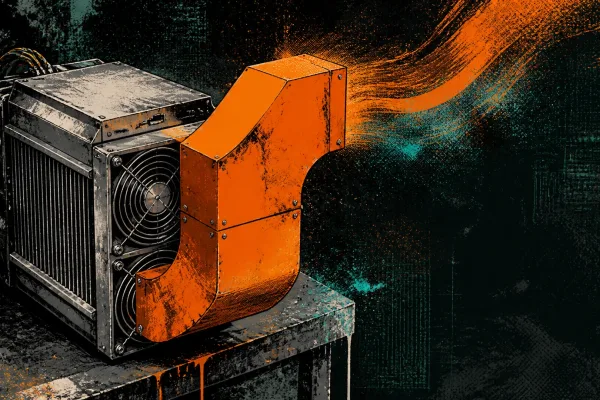
Search for a duct adapter for your miner and you will drown in Antminer gear. Dual-120 shrouds, 120 mm silencers, 120 mm filter rings — an entire…
Last reviewed August 6, 2026.