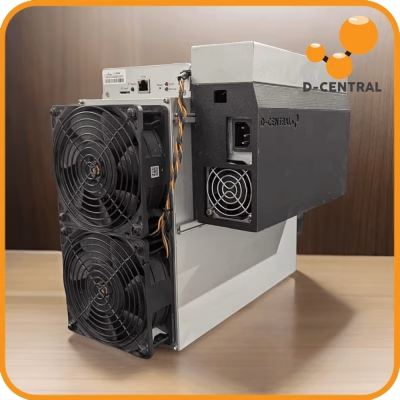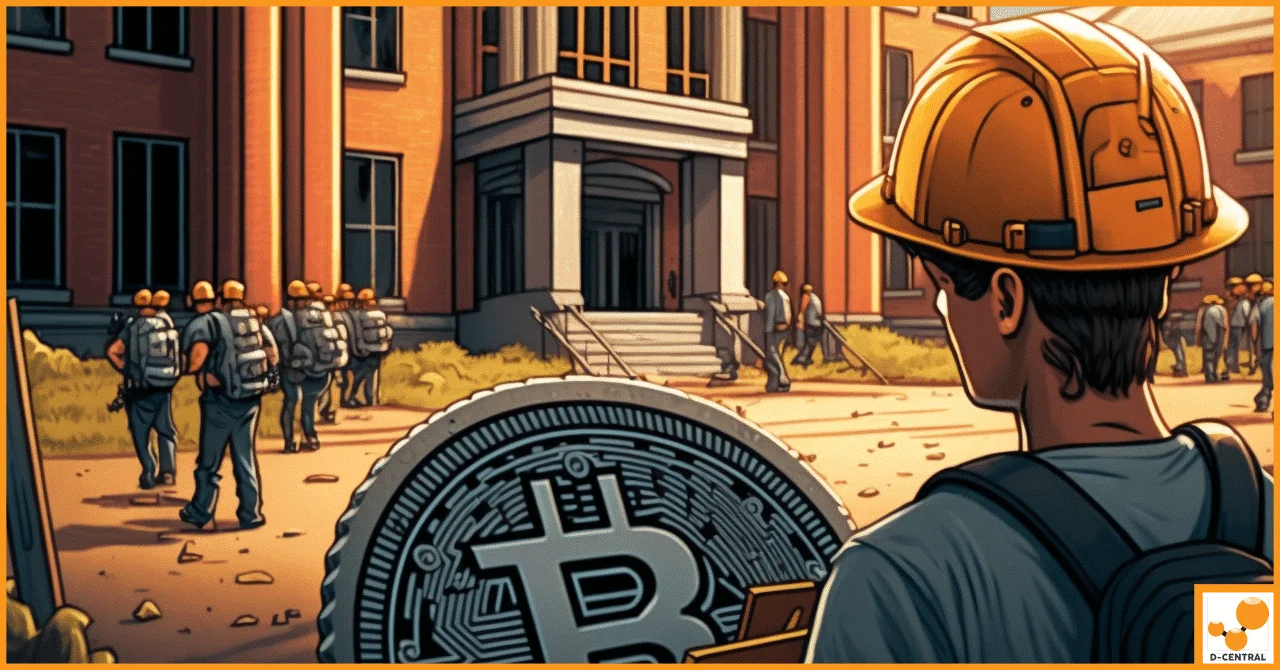
Every ASIC miner is a heater. That is not a design flaw — it is thermodynamics. A modern Antminer S21 converts roughly 3,500 watts of electricity almost entirely into heat, with the only “byproduct” being SHA-256 hashes that secure the most resilient monetary network ever built. Universities and colleges across North America spend millions each year heating dormitories, lecture halls, laboratories, and athletic facilities. The convergence of these two facts presents what might be the most elegant energy arbitrage in higher education today: replace electric resistance heaters with Bitcoin miners and get paid to heat your campus.
At D-Central Technologies, we have been building dual-purpose mining and heating solutions since 2016. Our Bitcoin Space Heaters — purpose-built units that route ASIC exhaust into living and working spaces — prove the concept daily in Canadian homes and businesses. The same physics that heat a Quebec living room can heat a university library. The only question is scale, and universities have scale in spades.
Why Every Watt of Mining Heat Matters in 2026
In 2026, the Bitcoin network operates at over 800 EH/s of total hashrate, with mining difficulty surpassing 110 trillion. The block subsidy sits at 3.125 BTC following the April 2024 halving. These numbers mean that every mining operation must extract maximum value from every watt consumed. For institutional settings like universities, that value extraction takes a powerful new form: offset heating costs while earning Bitcoin.
The thermodynamic reality is simple. An ASIC miner converts electrical energy to thermal energy at nearly 100% efficiency — the same as any electric heater. The difference is that a standard space heater produces only heat, while a Bitcoin miner produces heat plus a revenue stream. When a university installs mining hardware in place of (or alongside) traditional heating infrastructure, the effective cost of heating drops by the value of the Bitcoin mined.
| Heating Method | Input Energy | Heat Output | Secondary Output | Net Heating Cost |
|---|---|---|---|---|
| Electric Resistance Heater | 3,500 W | ~3,500 W (thermal) | None | Full electricity cost |
| Natural Gas Furnace | 3,500 W (gas equiv.) | ~2,800–3,150 W | CO₂ emissions | Full gas cost + carbon tax |
| Bitcoin Miner (S21-class) | 3,500 W | ~3,500 W (thermal) | ~200 TH/s of SHA-256 hashing (BTC revenue) | Electricity cost minus BTC earned |
In jurisdictions like Quebec, where hydroelectric power costs as little as $0.04–0.07 CAD/kWh, the math becomes extremely compelling. A university running 100 mining units at 3,500 W each would consume 350 kW — producing roughly 1.2 million BTU/hour of heat while simultaneously generating Bitcoin revenue that offsets a significant portion of the electricity bill.
The Campus Heating Problem: Why Universities Are Ideal Candidates
University campuses are among the most energy-intensive institutional environments in North America. The typical Canadian university spends between $5 million and $30 million annually on energy, with heating representing 40–60% of that total in cold-climate provinces. Several characteristics make campuses uniquely suited to mining-as-heating:
- Massive thermal demand: Dormitories, laboratories, lecture halls, gymnasiums, and administrative buildings require consistent heating for 6–8 months per year in Canada.
- Existing electrical infrastructure: Universities already have high-capacity electrical feeds, transformer stations, and dedicated energy management teams.
- Mechanical rooms and data centres: Most campuses have purpose-built spaces for HVAC equipment and server rooms that can accommodate mining hardware with minimal retrofitting.
- Sustainability mandates: Canadian universities face increasing pressure from provincial governments and student bodies to reduce carbon emissions. Mining heat from clean hydroelectric power is zero-emission heating.
- Research opportunities: A campus mining-heating installation becomes a living laboratory for engineering, computer science, economics, and environmental science departments.
Architecture of a Campus Mining-Heating System
Deploying Bitcoin miners as campus heaters is not as simple as placing an Antminer in a broom closet. A properly engineered system requires thoughtful integration with existing HVAC infrastructure. Here is how it works at a high level:
Centralized Mining Room with Heat Recovery
The most practical approach for large campuses is a centralized mining facility — essentially a hardened data centre — connected to the building’s hydronic (hot water) or forced-air heating loop. ASIC miners exhaust hot air at 55–65°C. Heat exchangers capture this thermal energy and transfer it to the building’s heating distribution system. The cooled air recirculates back through the miners.
Distributed Unit Placement
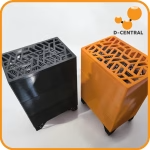
For smaller deployments or pilot programs, individual Bitcoin Space Heater units can be placed directly in rooms that need heating. D-Central’s Space Heater editions — available in S9, S17, and S19 configurations — are designed exactly for this purpose: enclosed ASIC miners with noise-dampening enclosures and directed airflow that function as plug-and-play room heaters.
Hybrid Systems
Many institutions will benefit from a hybrid approach: a centralized mining room handles base heating load during the coldest months, while the existing HVAC system covers peak demand and shoulder seasons. During summer months, mining heat can be redirected for domestic hot water heating, pool heating (for athletic facilities), or simply exhausted outdoors while the Bitcoin revenue continues.
Noise Management
Noise is the primary concern for campus deployments. Standard ASIC miners produce 70–80 dB — unacceptable for occupied spaces. Solutions include:
- Immersion cooling: Submerging miners in dielectric fluid eliminates fan noise entirely and allows heat capture via liquid-to-liquid heat exchangers.
- Dedicated mechanical rooms: Acoustic isolation in existing plant rooms where HVAC equipment already operates at similar noise levels.
- Custom enclosures: D-Central’s Space Heater units incorporate sound dampening, reducing noise to levels comparable to a standard forced-air furnace.
- Underclocking: Running miners at reduced power (e.g., 2,000 W instead of 3,500 W) lowers noise significantly while still producing useful heat and revenue.
The Financial Model: Numbers That Make CFOs Pay Attention
Let us walk through a realistic scenario for a mid-sized Canadian university considering a pilot program.
| Parameter | Value |
|---|---|
| Number of miners | 50 units (Antminer S21-class) |
| Power per unit | 3,500 W |
| Total power draw | 175 kW |
| Electricity rate | $0.06 CAD/kWh (Quebec institutional rate) |
| Annual electricity cost | ~$92,000 CAD |
| Heating season (months active as primary heat) | 7 months (October–April) |
| Total heat output | ~597,000 BTU/hour (~175 kW thermal) |
| Equivalent heating offset (natural gas) | $40,000–$65,000 CAD/year |
| Estimated annual BTC revenue (at 2026 network conditions) | Variable — depends on BTC price and difficulty |
The key insight is that even if Bitcoin mining revenue merely reduces the effective heating cost by 30–50%, the university is still ahead compared to traditional electric or gas heating — because the heat output is identical. The Bitcoin is a bonus. And if BTC appreciates over time, those accumulated sats become an appreciating reserve on the university’s balance sheet.
Real-World Deployments: Who Is Already Doing This
The concept of mining-as-heating has moved well beyond theory. Several notable deployments demonstrate the viability at institutional scale:
- MintGreen and Lonsdale Energy Corporation (North Vancouver, 2022–present): MintGreen’s “Digital Boilers” capture heat from Bitcoin mining to supply the Lonsdale Energy district heating network, warming residential and commercial buildings. This is the closest existing analogy to a campus heating deployment.
- Whistle Bend, Whitehorse, Yukon: A northern Canadian pilot project using Bitcoin mining waste heat for community building heating, demonstrating viability even in extreme cold climates.
- Multiple European district heating pilots: Sweden and Finland have seen integration of data centre and mining waste heat into municipal heating networks, validating the approach at scale.
- D-Central’s home and commercial installations: Hundreds of our Bitcoin Space Heater customers across Canada use mining heat as their primary or supplementary heating source, proving the concept at the individual building level every day.
Addressing the Sustainability Narrative
Any university considering mining-as-heating will face questions from stakeholders about environmental impact. Here is the framework for answering them:
When Powered by Clean Energy, Mining Heat Is Zero-Emission Heating
In Quebec, over 99% of electricity comes from hydroelectric generation. A Bitcoin miner running on Quebec hydro produces zero direct carbon emissions. The heat it generates is as clean as any electric heater — cleaner than natural gas, oil, or propane alternatives that many campuses still rely on. In fact, replacing fossil fuel heating with mining-powered heating reduces campus emissions.
Bitcoin Mining Incentivizes Renewable Energy Development
Mining operations are uniquely flexible loads. They can consume surplus energy during off-peak hours, absorb curtailed renewable generation that would otherwise be wasted, and shut down instantly during peak demand periods. A university with on-site solar or wind generation can direct surplus renewable energy to mining operations, effectively storing that energy as Bitcoin rather than losing it.
The Decentralization Imperative
Beyond carbon accounting, there is a deeper reason universities should participate in Bitcoin mining: decentralization. The security and censorship resistance of the Bitcoin network depends on a diverse, geographically distributed set of miners. When universities, governments, and institutions run their own mining hardware, they contribute to the health and resilience of a monetary network that serves billions of people. This is not just an energy decision — it is a civic one.
Implementation Roadmap for Universities
For any institution serious about exploring this approach, here is a phased implementation plan:
Phase 1: Feasibility Study (1–3 Months)
- Audit current heating costs, fuel sources, and HVAC infrastructure.
- Identify candidate buildings or mechanical rooms for miner placement.
- Calculate available electrical capacity and upgrade requirements.
- Model Bitcoin revenue scenarios at various difficulty and price levels.
- Engage mining consultants (like D-Central) for site assessment and system design.
Phase 2: Pilot Deployment (3–6 Months)
- Install 5–20 miners in a single building or mechanical room.
- Integrate with existing HVAC using heat exchangers or direct air routing.
- Monitor thermal output, electricity consumption, noise levels, and BTC production.
- Gather data for a full semester to validate the financial model.
Phase 3: Scale-Up (6–18 Months)
- Expand to additional buildings based on pilot results.
- Consider immersion cooling for larger deployments (quieter, higher heat capture efficiency).
- Establish a Bitcoin treasury policy for the institution.
- Publish research findings — this is a university, after all.
Phase 4: Optimization and Research Integration
- Integrate mining operations into engineering and CS curricula.
- Experiment with demand-response programs (curtail mining during grid peak demand).
- Explore on-site renewable generation paired with mining load.
- Partner with other institutions to share findings and establish best practices.
What D-Central Brings to the Table
D-Central Technologies has been in the Bitcoin mining business since 2016 — long before “mining-as-heating” became a buzzword. We are Canada’s Bitcoin Mining Hackers: we take institutional-grade mining technology and hack it into solutions that work for everyone, from home miners to universities.
- Bitcoin Space Heaters: Purpose-built mining-heating units in S9, S17, and S19 configurations, ready for deployment in individual rooms or as distributed campus heating.
- ASIC Repair Services: When hardware needs maintenance, our repair facility in Montreal, Quebec handles everything from hashboard repair to full unit refurbishment — keeping your mining-heating fleet operational.
- Mining Consulting: Site assessments, system design, financial modeling, and ongoing optimization for institutional mining deployments.
- Hosting Services: For institutions that want Bitcoin exposure without on-site hardware, our Quebec hosting facility offers managed mining with competitive power rates.
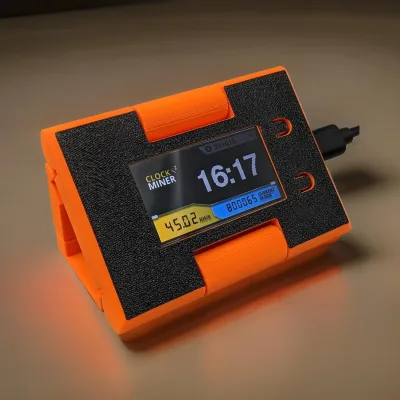
- Full Hardware Catalog: From individual Bitaxe solo miners to fleet-scale ASIC deployments, we supply everything needed for any size operation.
The Bigger Picture: Universities as Nodes of Decentralization
Universities have always been engines of technological adoption. They were early adopters of the internet, pioneered open-source software, and built the research foundations for everything from cryptography to renewable energy. Bitcoin mining — particularly when paired with heat recovery — is the next logical step in this tradition.
When a university runs Bitcoin miners, it does more than save on heating bills. It contributes hashrate to a decentralized network that resists censorship and empowers individuals. It creates hands-on learning opportunities for students in electrical engineering, computer science, economics, and environmental studies. It demonstrates that sustainability and Bitcoin are not in opposition — they are deeply complementary.
The heat is already there. Every watt consumed by an ASIC miner becomes thermal energy. The only question is whether that heat goes to waste or goes to work. For Canadian universities sitting in some of the coldest climates on the continent, with access to some of the cleanest and cheapest electricity on Earth, the answer should be obvious.
Stop paying to heat your campus. Start mining Bitcoin and let the heat pay for itself.
Ready to explore mining-as-heating for your institution? Contact D-Central’s consulting team for a campus feasibility assessment, or browse our Bitcoin Space Heater lineup to see dual-purpose mining in action.
Frequently Asked Questions
How much heat does a Bitcoin miner actually produce?
A Bitcoin ASIC miner converts virtually 100% of its electrical input into heat. A modern S21-class miner consuming 3,500 watts produces approximately 11,942 BTU/hour of thermal energy — equivalent to a medium-sized electric space heater. The difference is that the miner also produces SHA-256 hashes that earn Bitcoin revenue, making it a heater that pays you back.
Is it too loud to run Bitcoin miners on a university campus?
Standard ASIC miners produce 70–80 dB, which is too loud for occupied spaces. However, several proven solutions exist: immersion cooling (eliminates fan noise entirely), dedicated mechanical rooms with acoustic isolation, custom enclosures like D-Central’s Space Heater units, and underclocking miners to reduce both power and noise. With proper engineering, mining noise is no greater than typical HVAC equipment.
What happens during the summer when heating is not needed?
Universities have several options for summer months. Mining can continue year-round with heat exhausted outdoors (Bitcoin revenue continues regardless). Hot water demand for dormitories, kitchens, and athletic facilities persists year-round and can absorb mining heat. Pool heating is another excellent use case. Some institutions may choose to reduce mining capacity in summer and scale up in winter to align with heating demand.
Does Bitcoin mining on campus conflict with sustainability goals?
When powered by clean electricity — such as Quebec hydroelectric power, which is over 99% renewable — Bitcoin mining produces zero direct carbon emissions. The heat output is identical to any electric heater. If mining-heated buildings replace natural gas or oil heating, the campus actually reduces its carbon footprint. Additionally, mining operations can absorb surplus renewable energy from on-site solar or wind installations.
How much can a university realistically save on heating costs?
Savings depend on scale, electricity rates, current heating fuel, and Bitcoin network conditions. A pilot deployment of 50 S21-class miners consuming 175 kW would produce approximately 597,000 BTU/hour of heat while generating Bitcoin revenue that offsets a significant portion of the electricity cost. In Quebec, where institutional electricity rates are $0.04–0.07/kWh, the effective cost of mining-generated heat can be 30–60% lower than equivalent electric or gas heating.
What initial investment is required for a campus mining-heating pilot?
A meaningful pilot program with 10–20 miners, heat recovery integration, and monitoring equipment typically requires an investment in the range of $50,000–$150,000 CAD, depending on the complexity of HVAC integration and whether immersion cooling is used. Many institutions start with a smaller proof-of-concept using 3–5 units in a single mechanical room. D-Central’s consulting team can provide detailed cost estimates based on your specific campus infrastructure.