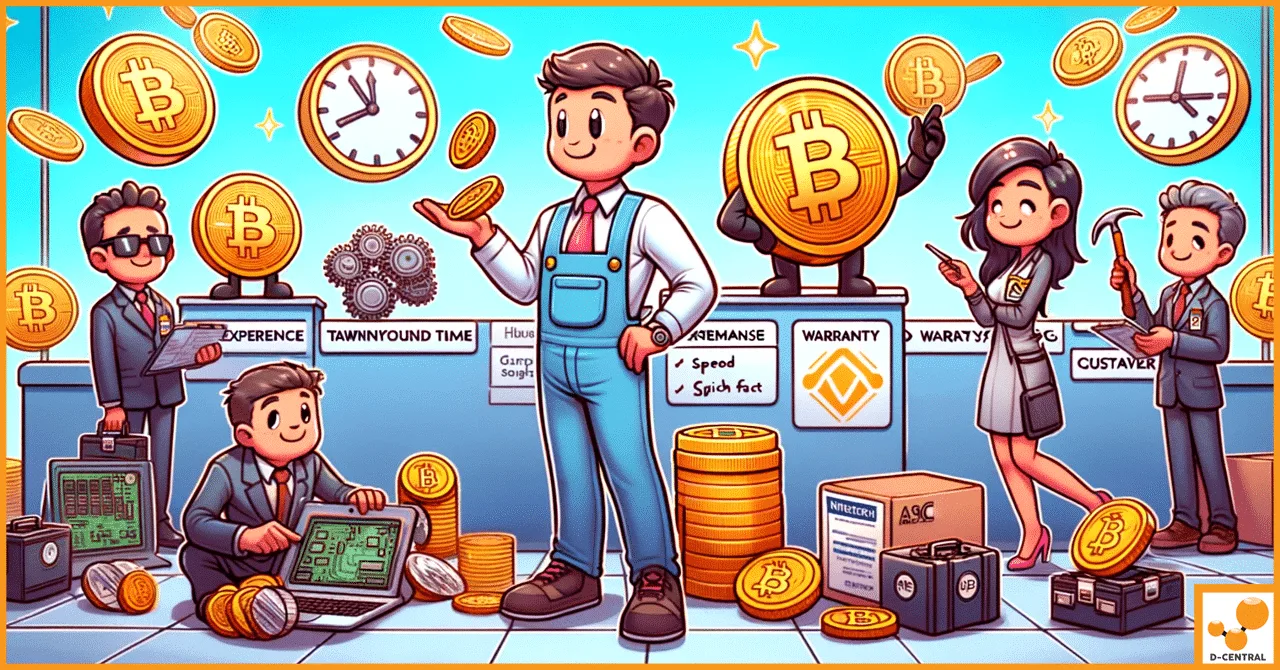
Your ASIC miner is down. Hashboards are throwing errors, fans are screaming, or worse — the unit is completely unresponsive. Every hour it sits idle is another hour of hashes you are not contributing to the Bitcoin network. You need a repair partner, not a parts-swapping shop. But how do you tell the difference?
The Bitcoin mining repair landscape is littered with fly-by-night operations, overseas outfits with dubious turnaround promises, and generalist electronics shops that have never cracked open a BM1397 chip in their lives. Choosing the wrong repair provider does not just cost you money — it can destroy your hardware permanently. A botched hashboard reflow, incorrect firmware flash, or careless handling of BGA components turns a repairable miner into scrap metal.
D-Central Technologies has been repairing ASIC miners since 2016. We have seen thousands of machines come through our Montreal, Quebec workshop — from early-generation Antminer S9s to current-gen S21 units pushing 200+ TH/s. We know what separates a legitimate repair operation from a liability. Here is what you should demand from any ASIC repair service provider before you ship your hardware.
Why ASIC Repair Expertise Matters More Than Ever
Bitcoin’s network hashrate now exceeds 800 EH/s, with mining difficulty above 110 trillion. The block reward sits at 3.125 BTC following the April 2024 halving. In this environment, every terahash matters. Downtime is not just inconvenient — it is a direct hit to your operation’s contribution to network security and your bottom line.
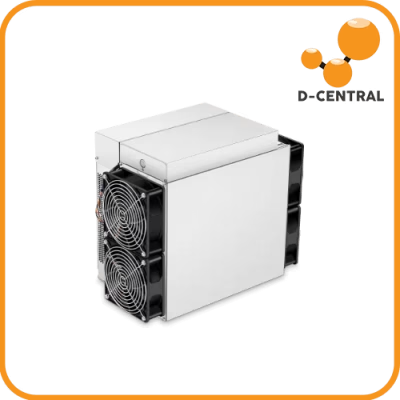
Modern ASIC miners are extraordinarily complex machines. An Antminer S19 XP contains over 300 individual ASIC chips across three hashboards, each requiring precise voltage regulation, thermal management, and firmware coordination. A single failed chip can cascade into a full hashboard failure. A single power surge can take out voltage regulators across multiple domains. This is not consumer electronics repair — this is precision industrial equipment servicing.
The miners flooding the market after the 2024 halving have created a surge in repair demand. Older units that were marginal before the halving now need every possible efficiency gain to remain viable. That means component-level repair, not just board swaps. It means custom firmware tuning, not just factory resets. And it means working with a provider who understands Bitcoin mining at a fundamental level — not someone who treats your S19 like a broken laptop.
Deep Hardware Expertise Across Manufacturers
The first and most critical factor is genuine, demonstrable expertise. Not marketing claims — actual, verifiable technical knowledge across multiple ASIC manufacturers and generations.
A legitimate repair provider should be able to service hardware from Bitmain (Antminer S9 through S21 series), MicroBT (Whatsminer M30S through M60 series), Canaan (Avalon A1246 through A1566), and Innosilicon units. Each manufacturer uses different chip architectures, different control board designs, different power delivery systems, and different firmware ecosystems. A provider that only works on one brand is telling you their knowledge has limits.
Ask pointed questions:
- Can they perform BGA rework? Ball Grid Array soldering is the foundation of hashboard repair. If they cannot reball and replace individual ASIC chips, they are limited to swapping entire boards — which is expensive and often unnecessary.
- Do they have thermal imaging equipment? Identifying failed chips on a hashboard full of hundreds of identical components requires infrared cameras and specialized diagnostic tools, not guesswork.
- Can they repair control boards? Many issues stem from the control board rather than the hashboards. A provider that only services hashboards is leaving problems unresolved.
- Do they stock replacement components? Genuine ASIC chips, voltage regulators, capacitors, fans, and connectors should be on hand. If they have to order every part from Shenzhen, your repair timeline just doubled.
D-Central maintains dedicated repair pages for 38+ specific ASIC models, each with detailed information about common failure modes, diagnostic procedures, and repair approaches. That level of documented expertise is not something you can fake.
Comprehensive Service Range: From Cleaning to Component-Level Rework
A quality ASIC repair provider should offer a full spectrum of services, not just one-size-fits-all “we’ll take a look at it” promises.
Preventive Maintenance
The best repair is one that never becomes necessary. Look for providers that offer preventive maintenance services: compressed air cleaning, thermal paste replacement, fan bearing lubrication, connector inspection, and firmware updates. If you are running Bitcoin space heaters in your home, regular maintenance is essential to keep both your mining and heating operations running efficiently.
Diagnostic Services
Before any wrench turns, a thorough diagnostic should identify every issue. This includes hashrate testing under load, power consumption measurement, thermal profiling of each hashboard, fan speed and RPM verification, and control board communication testing. A good provider gives you a full diagnostic report before quoting any repair work.
Component-Level Repair
This is where the real expertise shows. Component-level repair means identifying and replacing individual failed components — a specific ASIC chip, a blown MOSFET, a cracked capacitor, a damaged trace on the PCB. This is dramatically more cost-effective than replacing entire hashboards, but it requires specialized equipment (rework stations, microscopes, thermal cameras) and genuine skill.
Firmware Services
Firmware issues can mimic hardware failures. A locked SD card, corrupted NAND, or incompatible firmware version can make a perfectly functional miner appear dead. Your repair provider should be able to flash factory firmware, install community-supported alternatives, and diagnose firmware-hardware compatibility issues.
Custom Modifications
The best providers go beyond restoration to optimization. This includes undervolting for efficiency, overclocking for performance, noise reduction modifications, and integration work for specialized setups like space heater conversions. At D-Central, we call this the Mining Hacker approach — taking institutional-grade hardware and adapting it for the home miner’s specific needs.
Transparency in Diagnostics and Pricing
The ASIC repair industry has a trust problem. Too many shops operate as black boxes: you ship your miner, you wait, you get a bill. No photos, no explanation, no proof of what was actually done. This is unacceptable when you are trusting someone with hardware worth hundreds or thousands of dollars.
Here is what genuine transparency looks like:
- Pre-repair diagnostic report with specific findings, not vague descriptions like “hashboard issue detected.” You should know which chips failed, which voltage domain is affected, and what the repair plan involves.
- Upfront pricing before work begins. No surprises. Get an instant estimate with tools like our ASIC repair cost estimator before you even ship your unit.
- Photo documentation of the repair process. Before-and-after shots of reworked components. Close-ups of replaced chips. Evidence that work was actually performed.
- Post-repair testing data showing the miner running at expected hashrates and power consumption levels before it ships back to you.
- Clear warranty terms on all repair work, with no ambiguous exclusions buried in fine print.
If a repair provider cannot or will not provide this level of transparency, that is a signal to look elsewhere. You are not paying for mystery — you are paying for documented, verifiable expertise.
Turnaround Time: Every Idle Hour Costs You Hashes
In Bitcoin mining, time is measured in hashes, not hours. Every minute your miner sits on a repair bench is a minute it is not contributing to network security and generating sats. Turnaround time is not a convenience metric — it is a profitability metric.
Evaluate a provider’s turnaround capabilities on these criteria:
- Diagnostic turnaround: How quickly do they assess your miner after receiving it? A well-equipped shop should complete diagnostics within 24-48 hours of receipt.
- Parts availability: Do they stock common replacement parts, or does every repair trigger a multi-week parts order from overseas? In-house parts inventory is a strong indicator of a serious operation.
- Repair queue management: A good provider is transparent about their current queue depth and gives you realistic timelines, not optimistic promises they cannot keep.
- Priority options: For critical hardware, some providers offer expedited service. This is valuable for miners whose entire operation depends on getting a specific unit back online fast.
Be wary of providers who promise unrealistically fast turnarounds. Quality component-level repair takes time — rushing BGA rework leads to cold solder joints and repeat failures. The goal is fast AND right, not just fast.
Location Matters: The Canadian Advantage
Where your repair provider is located affects far more than shipping costs. It impacts customs, communication, legal protections, and your ability to hold them accountable.
For North American miners, working with a North American repair provider eliminates the headaches of international shipping: customs delays, import duties, currency conversion, and the near-impossibility of pursuing warranty claims across international borders. If something goes wrong, you want a provider operating under the same legal framework you do.
D-Central operates from Montreal, Quebec — the heart of Canada’s affordable hydroelectric power region. Shipping within Canada is straightforward, and cross-border shipping to the United States is well-established with predictable timelines. For local miners, we even offer walk-in service at our workshop. Try that with an overseas repair shop.
Canada also offers a unique advantage for miners considering mining hosting alongside repair services. Having your repair provider and hosting facility in the same country — sometimes even the same region — means faster turnarounds and simpler logistics when hosted machines need servicing.
Warranty and Post-Repair Support
A repair without a warranty is a gamble. Legitimate repair providers stand behind their work because they are confident in their quality. Here is what to evaluate:
Warranty Coverage
The warranty should cover both the parts replaced and the labor performed. Read the terms carefully. Some providers offer warranties that exclude “pre-existing conditions” — a catch-all that can void coverage for almost anything. A straightforward warranty says: “If the specific repair we performed fails within X days, we fix it at no charge.” Period.
Post-Repair Technical Support
Your relationship with a repair provider should not end when the package arrives at your door. Good providers offer ongoing support: help with miner configuration after repair, guidance on optimal operating parameters, firmware recommendations, and troubleshooting assistance if issues recur. This is especially important if you are setting up a repaired miner in a new configuration — as part of a space heater build, for example, or integrating it into a home mining setup for the first time.
Repeat Customer Programs
Mining operations generate ongoing repair needs. Providers who offer priority service, loyalty pricing, or standing maintenance agreements for repeat customers demonstrate that they are thinking about long-term partnerships, not one-off transactions.
Reputation in the Mining Community
The Bitcoin mining community is tight-knit. Reputation travels fast — both good and bad. Before choosing a repair provider, do your homework:
- Check mining forums and communities. Reddit’s r/BitcoinMining, Bitcointalk, and dedicated Discord servers are where miners share real experiences. Look for specific, detailed feedback — not vague endorsements.
- Look for longevity. How long has the provider been in business? The mining industry is cyclical — providers who have survived multiple bear markets and halvings have proven their staying power. D-Central has been operating since 2016, through every market cycle since the early days of consumer ASIC mining.
- Verify their content. Does the provider publish genuine technical content — repair guides, teardowns, diagnostic walkthroughs? Or is their blog filled with generic SEO filler? Technical content demonstrates real knowledge. Check out the Bitaxe Hub or our extensive blog for examples of what substantive mining content looks like.
- Assess their product ecosystem. Providers who also sell mining hardware and replacement parts have skin in the game and a deeper understanding of the equipment they service.
Cost: Understanding the Real Economics of ASIC Repair
Price matters, but the cheapest repair is rarely the best value. Here is how to think about repair economics properly:
Repair vs. Replace Analysis
Before committing to any repair, calculate the break-even point. What is the miner worth on the secondary market in working condition? What is the repair cost? How many months of mining would it take for the repaired unit to earn back the repair cost? With the block reward at 3.125 BTC and network difficulty above 110T, this calculation is more important than ever. Marginal machines need cost-effective repairs to remain viable.
Component-Level vs. Board-Level Pricing
A provider who can perform component-level repair will almost always be more cost-effective than one who only offers board replacements. Replacing a single failed ASIC chip costs a fraction of what a new hashboard costs. This is where expertise directly translates to savings.
Hidden Costs to Watch For
Some providers quote low repair fees but add diagnostic charges, return shipping fees, “bench fees” for machines they cannot repair, or surprise parts markups. Get a complete, all-in quote before authorizing any work. Transparency in pricing is non-negotiable.
The Cost of Bad Repair
The most expensive repair is one you have to do twice. A cheap provider who uses counterfeit components, performs sloppy soldering, or skips proper testing will send you a machine that fails again within weeks. Then you are paying for shipping twice, repair twice, and suffering twice the downtime. Pay for quality the first time.
Red Flags: When to Walk Away
In our years of repairing miners that other shops have already attempted (and failed) to fix, we have seen every red flag in the book. Walk away from any provider that:
- Cannot name specific ASIC chip models they have worked with
- Has no physical address or refuses to share workshop photos
- Offers no warranty on repair work
- Cannot provide references or has no verifiable online presence in the mining community
- Quotes repairs without diagnostics — if they know the price before seeing the machine, they are guessing
- Has no visible inventory of replacement parts or diagnostic equipment
- Communicates poorly or slowly before they have your hardware (it only gets worse after)
- Pushes unnecessary upsells or claims everything needs replacement rather than repair
What D-Central Brings to the Table
We are not a neutral party in this guide — we are a repair provider ourselves, and we believe we are one of the best in North America. Here is why:
- Since 2016: Eight-plus years of continuous operation through every halving and market cycle
- 60+ model-specific repair pages: Documented expertise across Bitmain, MicroBT, Canaan, and Innosilicon hardware
- Canadian-based: Montreal, Quebec workshop with walk-in service available
- Full ecosystem: We sell the hardware, we repair it, we host it, and we train miners on maintaining it
- Mining Hackers: We do not just restore miners to factory spec — we optimize them for home mining, space heating integration, noise reduction, and efficiency
- Component-level capability: BGA rework, thermal imaging diagnostics, full board-level repair — not just swapping parts
- Parts in stock: ASIC chips, control boards, fans, PSUs, and accessories available in our online store
Whether you choose D-Central or another provider, use this guide as your checklist. Your ASIC miner deserves expert care from someone who understands Bitcoin mining at every level — from the silicon to the blockchain.
Frequently Asked Questions
What is component-level ASIC repair and why does it matter?
Component-level repair means diagnosing and replacing individual failed components on a hashboard — specific ASIC chips, MOSFETs, capacitors, or voltage regulators — rather than replacing the entire board. This approach is significantly more cost-effective and demonstrates genuine technical expertise. A provider capable of component-level repair can fix issues that board-swap shops would declare unrepairable.
How long should an ASIC repair typically take?
A well-equipped repair shop should complete diagnostics within 24-48 hours of receiving your miner. The total repair timeline depends on the complexity of the issue and parts availability, but most standard repairs should be completed within 1-2 weeks. Be wary of providers who promise 24-hour turnarounds on complex repairs — quality component-level work requires time and precision.
Is it worth repairing an older ASIC miner like the Antminer S9?
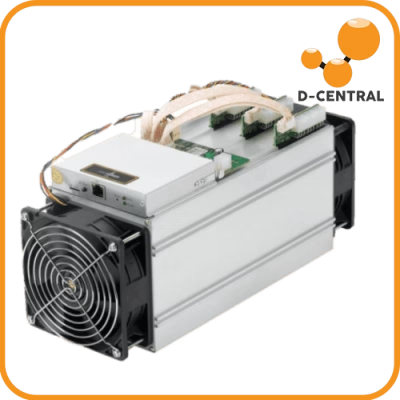
It depends on the repair cost relative to the miner’s earning potential. With the block reward at 3.125 BTC and difficulty above 110T, older miners need low repair costs to remain viable for standard mining. However, S9s are extremely popular for Bitcoin space heater conversions, where their heat output is the primary value and mining revenue is a bonus. In that use case, repair is often very worthwhile.
What should I do before shipping my miner for repair?
Document the issue thoroughly — note error codes, hashboard status, abnormal sounds or smells, and when the problem started. Take photos of the miner’s current condition. Remove any SD cards containing custom firmware configurations you want to preserve. Package the miner securely with adequate padding. And always get a shipping tracking number and insurance for the shipment.
How do I verify that a repair provider is legitimate?
Check their longevity in the industry, look for technical content on their website (not just sales pages), verify their physical address, search for real customer feedback on mining forums and Reddit, and ask them specific technical questions about your hardware model. A legitimate provider will answer knowledgeably without deflecting to sales pitches.
Can a repair provider also help me optimize my miner’s performance?
The best providers go beyond repair to optimization. This includes undervolting for improved efficiency (lower J/TH), custom firmware installation for better performance, fan curve adjustments for noise reduction, and modifications for specialized use cases like home heating integration. At D-Central, we call this the Mining Hacker approach — adapting institutional hardware for the home miner.
What warranty should I expect on ASIC repair work?
A reputable provider should offer a minimum 30-day warranty on repair work, with many offering 60-90 days on component replacements. The warranty should cover both parts and labor for the specific repair performed. Be cautious of providers who offer no warranty or whose warranty terms contain broad exclusion clauses that could void coverage for almost any reason.