The Bitcoin ASIC repair industry has a dirty secret: the deck is stacked. Large-scale mining operations with in-house engineering teams, direct relationships with chip manufacturers, and warehouses full of spare parts operate in a completely different universe than independent technicians and home miners trying to keep their rigs alive. The knowledge gap is deliberate. Manufacturers have zero incentive to make their hardware repairable by anyone other than themselves.
But here is the thing about Bitcoin miners — we hack systems. We route around gatekeepers. We decentralize everything we touch. The ASIC repair playing field does not have to stay tilted, and in 2026, the tools, communities, and knowledge to level it are more accessible than they have ever been.
This guide breaks down the real barriers in Bitcoin ASIC repair, the equipment you actually need, the communities worth joining, and how to build the skills that turn a dependent miner into a self-sovereign one.
Why the ASIC Repair Industry Remains Gatekept
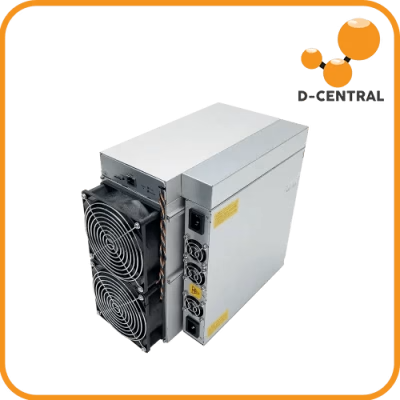
The core problem is straightforward: ASIC manufacturers design hardware for performance, not repairability. Bitmain, MicroBT, Canaan, and others have no economic reason to publish detailed schematics, share diagnostic procedures, or make replacement components readily available to independent repair shops.
This creates a multi-layered barrier:
- Documentation scarcity — Official repair manuals either do not exist or are locked behind manufacturer service agreements
- Component sourcing — Critical ASIC chips, custom connectors, and proprietary components are difficult to source in small quantities
- Diagnostic tooling — Test jigs designed for specific hashboard models are expensive and often manufacturer-exclusive
- Knowledge consolidation — Repair expertise concentrates in a few large operations, leaving independent technicians to figure things out through trial and error
The result? A home miner with a faulty Antminer hashboard faces an ugly choice: pay hundreds of dollars for a repair that might take weeks, attempt a fix with incomplete information and risk making things worse, or simply discard functional hardware because one component failed.
None of those options align with the Bitcoin ethos of individual sovereignty and resource efficiency.
The Real Cost of Repair Dependency
When miners cannot repair their own hardware, the consequences extend far beyond the individual:
| Impact Area | Consequence of Repair Dependency |
|---|---|
| Downtime costs | Every day a miner sits idle waiting for a manufacturer repair is lost hashrate — and lost sats |
| E-waste | Functional machines get scrapped because a single $2 component failed and nobody local can diagnose it |
| Centralization pressure | Only large operations with in-house repair teams can maintain uptime, pushing small miners out |
| Geographic inequality | Miners in regions without authorized service centers face shipping delays, customs fees, and extended downtime |
| Price gouging | Limited repair options mean limited price competition — the few available providers can charge what they want |
For the Bitcoin network itself, repair dependency is a centralizing force. When only well-funded operations can keep machines running, hashrate concentrates. Decentralization suffers. The entire security model of Bitcoin weakens.
Leveling the repair playing field is not just a business opportunity — it is a contribution to Bitcoin’s resilience.
Essential Equipment for ASIC Repair in 2026
Building a capable ASIC repair workstation does not require a six-figure budget. Here is the equipment that actually matters, organized by priority:
Tier 1: Absolute Essentials
| Tool | Purpose | Budget Range |
|---|---|---|
| Digital multimeter (Fluke 15B+ or equivalent) | Voltage, resistance, and continuity testing across hashboard domains | $80–$150 |
| Soldering station (Weller WE1010 or JBC) | Component-level soldering with precise temperature control | $120–$500 |
| Hot air rework station | BGA chip removal and reflow for ASIC chip replacement | $100–$400 |
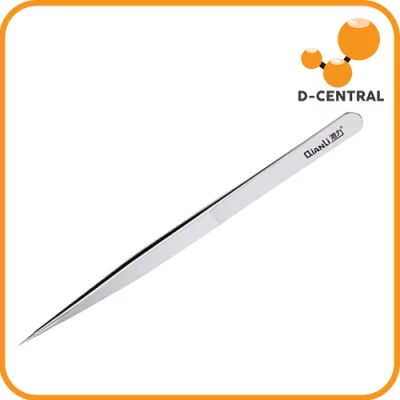
| ESD-safe tweezers and tools | Handling sensitive components without electrostatic damage | $20–$60 |
| Variable DC power supply (30V/10A minimum) | Controlled power delivery for isolated hashboard testing | $80–$200 |
| Isopropyl alcohol (99%+) and cleaning supplies | PCB cleaning, flux residue removal, corrosion treatment | $15–$30 |
Tier 2: Diagnostic and Advanced Repair
| Tool | Purpose | Budget Range |
|---|---|---|
| ARC tester / hashboard test fixture | Automated testing of individual ASIC chip domains on hashboards | $200–$1,000+ |
| Thermal imaging camera (FLIR or similar) | Identifying hot spots, failed chips, and thermal anomalies under load | $200–$500 |
| Stereo microscope (10x–45x) | Inspecting solder joints, PCB traces, and micro-cracks | $150–$400 |
| Preheater station | Even heat distribution for BGA rework, prevents thermal shock | $100–$300 |
| Quality solder paste (Chipquik or similar) and flux (AMTEC) | Reliable solder joints on fine-pitch ASIC chip pads | $30–$80 |
A complete Tier 1 setup can be assembled for under $500. Add Tier 2 equipment over time as your skills develop and you take on more complex repairs. The investment pays for itself after a handful of successful hashboard repairs that would otherwise cost $150–$400 each at a repair shop.
Building Repair Skills: From Beginner to Board-Level Technician
Equipment without knowledge is just expensive furniture. The path from novice to competent ASIC repair technician follows a progression:
Stage 1: Fundamentals
Before touching an ASIC hashboard, build foundational electronics knowledge:
- Basic electronics theory — Voltage, current, resistance, Ohm’s law, series and parallel circuits
- Soldering fundamentals — Through-hole first, then surface-mount components, then fine-pitch work
- PCB reading — Understanding board layouts, trace routing, power planes, and ground planes
- ESD safety protocols — Proper grounding, anti-static mats, wrist straps, and component handling
Stage 2: ASIC-Specific Knowledge
Once fundamentals are solid, move into mining-specific repair:
- Hashboard architecture — Understanding voltage domains, ASIC chip chains, temperature sensor circuits, and clock distribution
- Common failure modes — Burned chips, cold solder joints, corroded connectors, blown voltage regulators, failed capacitors
- Diagnostic workflows — Systematic approaches to isolating faults using voltage measurements, domain testing, and error log analysis
- Firmware and control boards — SD card flashing, control board diagnostics, network configuration, and fan controller troubleshooting
Stage 3: Advanced Repair
This is where you go from fixing simple issues to handling complex board-level repairs:
- BGA rework — Removing and replacing ASIC chips with proper reflow profiles
- Trace repair — Fixing damaged PCB traces with jumper wires or conductive epoxy
- Component substitution — Identifying compatible replacement components when originals are unavailable
- Custom test jig fabrication — Building model-specific testing fixtures for efficient diagnostics
Communities and Resources That Actually Help
The internet is full of vague “learn ASIC repair” content that circles around the topic without delivering actionable knowledge. Here are resources that actually move the needle:
Online Communities
- D-Central Discord — One of the most active communities for ASIC repair discussion, home mining troubleshooting, and hardware tinkering. Real technicians answering real questions, not just hobbyists speculating
- BitcoinTalk Hardware forums — Long-running threads with deep technical knowledge, especially for older generation miners
- Reddit r/BitcoinMining — Mixed quality, but useful for staying current on new hardware issues and firmware updates
- Telegram repair groups — Several active groups focused on specific manufacturers (Bitmain, MicroBT) with technicians sharing diagnostic findings
Hands-On Learning
The single best way to learn ASIC repair: buy broken hashboards. Faulty S9 hashboards can be found for $5–$15. They are perfect practice material — the S9 architecture is well-documented, components are inexpensive, and even if you destroy a board during practice, the loss is minimal. Graduate to S17 and S19 boards as your skills improve.
Safety First: Non-Negotiable Practices
ASIC repair involves voltages and currents that can cause serious injury. These safety practices are non-negotiable:
- Always disconnect power before working on any component — ASIC power supplies deliver 12V at 100A+ on some models. That will cause severe burns or start a fire
- Use proper ESD protection — A single static discharge can destroy ASIC chips worth hundreds of dollars
- Work in a ventilated area — Soldering flux fumes are toxic with prolonged exposure. Use a fume extractor or work near an open window
- Wear safety glasses during soldering and rework — Hot solder and flux can splash unpredictably
- Never bypass thermal protections — If a miner is overheating, fix the cooling problem. Do not disable thermal shutdowns
- Keep a fire extinguisher accessible — Lithium-based components and high-current connections can fail catastrophically
Replacement Parts and Component Sourcing
Sourcing quality replacement parts is one of the biggest challenges in independent ASIC repair. Here is how to navigate it:
What You Need to Stock
- ASIC chips — The most critical and expensive component. Source from reputable suppliers to avoid counterfeit chips that fail within weeks
- Capacitors and resistors — Common failure components. Keep an assortment of values matching popular hashboard designs
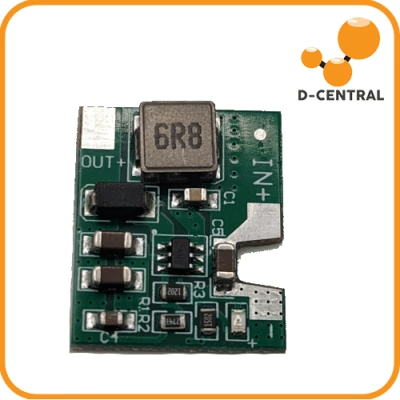
- Voltage regulators and MOSFETs — Power delivery components fail frequently in high-temperature environments
- Connectors and ribbon cables — Hashboard-to-control-board connectors are a common failure point due to corrosion and heat cycling
- Thermal paste and thermal pads — Essential for reassembly after any chip-level repair
- Cooling fans — Nidec and Delta fans are standard across most ASIC miners. Stock common sizes
Sourcing Strategy
D-Central stocks a comprehensive range of ASIC replacement parts and ships from Canada, avoiding the delays and customs complications of ordering directly from overseas suppliers. For independent technicians, having a reliable North American parts source eliminates one of the biggest bottlenecks in the repair workflow.
The Right to Repair and Bitcoin Mining
The right-to-repair movement has gained significant legal momentum in recent years. Quebec’s right-to-repair legislation, progressive consumer protection laws across Canadian provinces, and similar movements in the United States are all pushing toward a future where manufacturers cannot lock consumers out of repairing their own hardware.
For Bitcoin miners, this matters deeply. When a manufacturer can dictate who repairs their hardware, they hold centralized power over decentralized infrastructure. Every miner who learns to diagnose and fix their own equipment removes a single point of dependency from the network.
This is the Bitcoin ethos applied to hardware: do not trust, verify — and repair.
How D-Central Supports Independent Repair
D-Central has operated as Canada’s Bitcoin Mining Hackers since 2016, and ASIC repair has been a core pillar from day one. The approach is straightforward: make the knowledge, parts, and community accessible to every miner, not just the ones with institutional budgets.
What that looks like in practice:
- 60+ model-specific repair pages — Detailed information covering Bitmain, MicroBT, Innosilicon, Canaan, and Halong miners
- Retail-focused repair services — Built for individual miners and small operations, not just large farms
- Replacement parts inventory — Hashboards, control boards, ASIC chips, fans, and accessories stocked and ready to ship from Canada
- Active Discord community — Free access to experienced technicians who share diagnostic tips, repair walkthroughs, and troubleshooting advice
- Custom mining solutions — From Bitcoin space heaters to custom firmware, D-Central builds solutions that extend hardware life and maximize value for home miners
The goal is not to create dependency on any single repair provider — it is to equip every miner with the ability to maintain their own infrastructure. That is decentralization at the hardware layer.
Frequently Asked Questions
What equipment do I need to start learning ASIC repair?
Start with a quality digital multimeter, a temperature-controlled soldering station, ESD-safe tools, and a variable DC power supply. This core setup costs under $500 and handles most diagnostic and basic repair tasks. Add a hot air rework station and thermal camera as you progress to chip-level repairs.
How much can I save by repairing ASIC miners myself?
Professional hashboard repairs typically cost $150 to $400 depending on the model and fault. If you can diagnose and fix common issues like blown capacitors, cold solder joints, or failed voltage regulators, you save that cost minus the price of components — which is often under $20 for common repairs. For a home miner running multiple machines, the savings add up fast.
Is ASIC repair dangerous?
ASIC power supplies deliver 12V at very high amperage — some models pull over 100A. This can cause severe burns or fire if handled improperly. Always disconnect power before working on components, use proper ESD protection, work in ventilated areas when soldering, and never bypass thermal safety features. With proper precautions, the risks are manageable.
Where can I find broken hashboards to practice on?
Faulty Antminer S9 hashboards are widely available for $5 to $15 on secondary markets, mining forums, and through suppliers like D-Central. They are ideal practice material because the architecture is well-documented, replacement components are cheap, and the loss from destroying a board during practice is minimal.
What are the most common ASIC miner failures?
The most frequent failures include burned or shorted ASIC chips, cold solder joints from thermal cycling, corroded hashboard connectors, failed voltage regulators, blown capacitors, and fan failures. Many of these issues are straightforward to diagnose with a multimeter and visual inspection, and relatively simple to fix with basic soldering skills.
Can I turn ASIC repair into a business?
Yes. The demand for competent, independent ASIC repair technicians far exceeds the supply, especially in North America. A skilled technician with a proper workstation can charge $150 to $400 per hashboard repair. Building a reputation through community involvement, consistent quality, and transparent pricing creates a sustainable business that directly supports Bitcoin’s decentralization.
How does ASIC repair support Bitcoin decentralization?
When miners depend on a handful of manufacturers or large repair operations to keep their hardware running, it creates centralized points of failure and control. Every independent technician who can diagnose and repair mining equipment removes that dependency. More self-sufficient miners means more distributed hashrate, which strengthens the entire Bitcoin network.