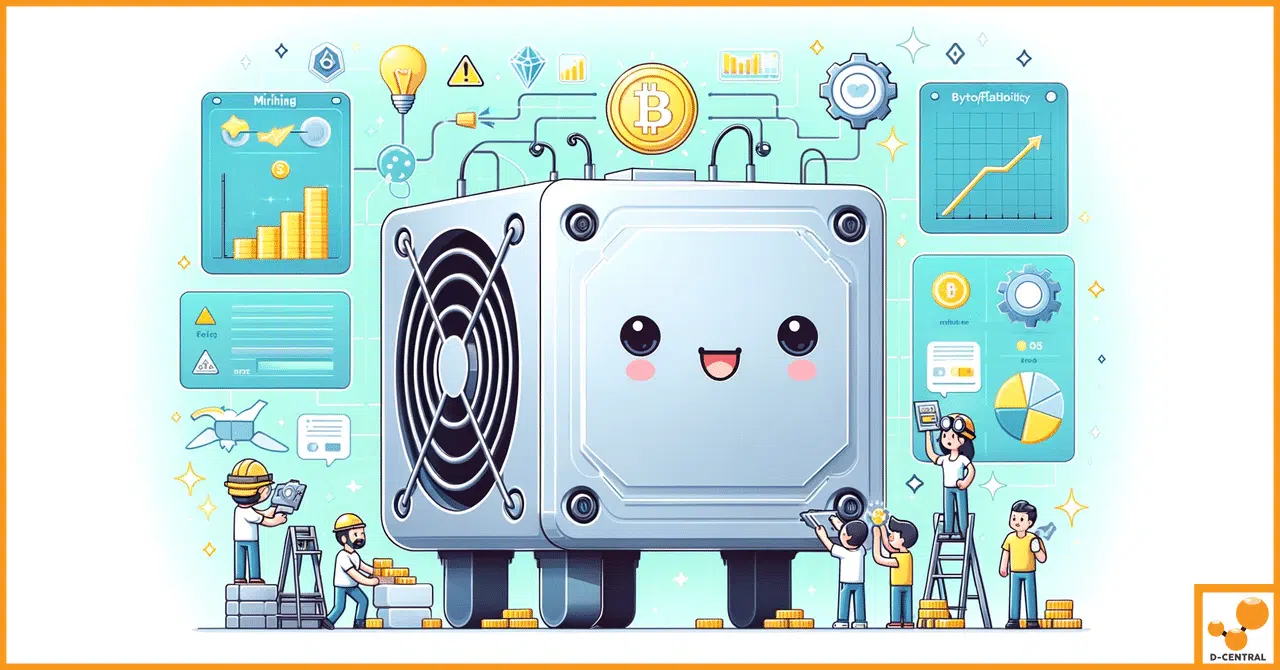
Every ASIC miner on the planet converts electricity into two things: SHA-256 hashes and heat. The hashes secure the Bitcoin network. The heat? Most operations blow it out the back of a warehouse and call it a cost of doing business. That is an engineering failure, not an inevitability.
District energy systems — centralized networks that pipe heating and cooling to entire neighbourhoods — have been running in Nordic countries and Canadian cities for decades. They are elegant, efficient, and perpetually hungry for thermal input. Bitcoin mining produces thermal output at industrial scale. The integration of these two systems is not some speculative thought experiment. It is already happening, and Canada is leading the charge.
This is the dual-purpose mining thesis carried to its logical extreme: mining hardware as municipal infrastructure.
How Bitcoin Mining Actually Produces Heat
Before diving into district-scale integration, it helps to understand the thermodynamics. An ASIC miner is a purpose-built machine that performs trillions of SHA-256 hash computations per second. Every computation dissipates energy as heat. A modern Antminer S21, for example, pulls roughly 3,500 watts and converts nearly 100% of that electricity into thermal energy. The hashrate is the useful work product; the heat is the physical byproduct.
At the home scale, this is the principle behind Bitcoin space heaters — an S9 or S19 inside a purpose-built enclosure replaces your electric baseboard heater, and you earn sats while staying warm. D-Central has been building and shipping these units since we started hacking ASIC hardware for home use.
At the district scale, the same thermodynamic reality applies. The difference is volume: instead of heating one room, you are heating entire buildings.
District Energy Systems: A Primer for Miners
A district energy system (DES) consists of a central plant that produces hot or chilled water, plus a network of insulated underground pipes that distribute that thermal energy to connected buildings. Residents and businesses receive heating and cooling without needing individual furnaces, boilers, or air conditioning compressors.
| Component | Function | Mining Parallel |
|---|---|---|
| Central plant | Generates thermal energy (gas boilers, heat pumps, biomass, etc.) | Mining facility with heat-capture system |
| Distribution piping | Insulated pipes carrying hot/cold water | Same infrastructure — no modification needed |
| Heat exchangers | Transfer thermal energy to building systems | Transfer heat from mining coolant loop to DES water loop |
| Connected buildings | Residential, commercial, institutional | Same end users — they don’t know the heat source changed |
The key insight: district energy systems are source-agnostic. They do not care whether the thermal energy comes from a natural gas boiler, a geothermal well, or a room full of Antminers. They just need hot water at the right temperature and flow rate.
The Canadian Advantage: Why This Works Here First
Canada has a unique confluence of factors that make Bitcoin mining + district energy a natural fit:
Abundant hydroelectric power. Quebec, British Columbia, and Manitoba generate massive surpluses of clean hydroelectricity. This cheap, renewable power is the reason D-Central operates its hosting facility in Quebec — and it is the same reason mining-powered district heat makes economic sense here.
Long heating seasons. Canadian cities have 5-8 months of heating demand annually. A mining operation generating heat year-round in a climate that needs heat year-round is a thermodynamic match. Compare this to Texas or Arizona, where waste heat is genuinely wasted for most of the year.
Existing district energy infrastructure. Cities like Vancouver, Toronto, and Montreal already operate district energy networks. The City of North Vancouver’s Lonsdale Energy Corporation has been running a district energy utility since 2003.
Hydroelectricity is already low-carbon. When the electricity feeding the miners is 95%+ hydro (as it is in Quebec), the mining operation’s carbon footprint is effectively zero. The heat output displaces natural gas boilers with no net emissions increase.
Real-World Case Study: North Vancouver and MintGreen
The most prominent North American example of mining-powered district heat is the partnership between Lonsdale Energy Corporation (the City of North Vancouver’s district energy utility) and MintGreen, a Canadian cleantech company. MintGreen’s “Digital Boilers” use Bitcoin mining hardware in immersion-cooled enclosures to capture over 96% of electricity consumed as recoverable thermal energy.
| Metric | Detail |
|---|---|
| Location | North Vancouver, BC, Canada |
| District energy operator | Lonsdale Energy Corporation (municipal utility) |
| Heat recovery rate | 96%+ of electricity consumed |
| Cooling method | Single-phase immersion cooling |
| CO2 reduction | Thousands of tonnes annually (displaces natural gas) |
| Power source | BC Hydro (clean hydroelectricity) |
This is not a pilot project or a whitepaper. It is operational municipal infrastructure. A Canadian city is heating buildings with Bitcoin mining hardware powered by hydroelectricity. The residents receiving that heat do not need to know or care that their radiators are warmed by SHA-256 computations. They just get reliable, low-carbon heat — often at lower cost than the natural gas it replaces.
The Engineering: How Heat Capture Works at Scale
At the home level, a Bitcoin space heater is simple: the miner sits in an enclosure, a fan blows the hot exhaust into your living space, and you benefit directly. At the district level, the engineering gets more sophisticated but follows the same principle.
Step 1: Immersion or liquid cooling. Mining hardware is submerged in dielectric fluid or connected to liquid cooling loops. This captures heat far more efficiently than air cooling, and it produces a hot liquid output that is easy to work with.
Step 2: Heat exchanger. The hot mining coolant passes through a heat exchanger, transferring its thermal energy to the district energy system’s water loop. The mining coolant cools down and recirculates; the DES water heats up and flows to buildings.
Step 3: Temperature boosting (if needed). ASIC miners typically produce heat in the 50-70 degrees C range. Some district heating systems require higher temperatures. Heat pumps can boost the output temperature, and even with the additional electricity cost, the system remains more efficient than burning natural gas.
Step 4: Distribution. The heated water flows through the existing DES pipe network to connected buildings, exactly as it would from any other heat source. No modifications to building-side equipment are needed.
Economic Model: Mining Revenue + Heat Revenue
This is where the dual-purpose thesis gets compelling. A conventional district energy plant has one revenue stream: selling heat. A mining-integrated plant has two: Bitcoin mining revenue and heat sales.
| Revenue Stream | Conventional DES | Mining-Integrated DES |
|---|---|---|
| Heat sales to buildings | Yes | Yes |
| Bitcoin mining rewards | No | Yes (3.125 BTC per block + fees) |
| Grid demand response payments | Limited | Yes (curtail mining during peak grid demand) |
| Fuel cost | Natural gas (volatile pricing) | Electricity (stable hydro rates in Canada) |
| Carbon emissions | Significant (combustion) | Near-zero (hydro-powered) |
The economics shift dramatically when you stop treating mining heat as waste and start treating it as a product. Electricity is no longer purely a cost — it is an input that produces two saleable outputs. The mining operation’s effective electricity cost drops because the heat has value, and the district energy system’s fuel cost drops because the “fuel” (mining waste heat) is a byproduct of a revenue-generating activity.
Grid Flexibility: Miners as Demand Response Assets
Bitcoin miners are the most flexible large-scale electrical loads on any grid. An ASIC can be powered down in seconds and restarted in seconds. No thermal cycling, no startup procedures, no production losses (beyond the missed hashes). This makes mining operations ideal demand response participants.
When the grid is under stress — a cold snap drives heating demand sky-high, or a transmission line goes down — the mining operation curtails power consumption instantly. The grid gets relief. The district energy system switches to backup heat sources (thermal storage, heat pumps, or conventional boilers) for the duration. When grid conditions normalize, the miners spin back up.
In markets like Quebec, where Hydro-Quebec already runs demand response programs, mining-integrated district energy systems can participate and earn additional revenue for their flexibility. The network hashrate in 2026 exceeds 800 EH/s globally, and the Bitcoin protocol does not care if individual miners go offline temporarily — difficulty adjusts, blocks keep coming every ten minutes on average.
From Home Scale to City Scale: The Same Principle
What D-Central does with Bitcoin space heaters — converting mining heat into home heating — is the exact same principle that district energy integration applies at municipal scale. The technology stack changes, but the thermodynamic logic is identical:
| Parameter | Home Scale (Space Heater) | District Scale (DES Integration) |
|---|---|---|
| Mining hardware | 1 ASIC (S9, S19, etc.) | Hundreds to thousands of ASICs |
| Power consumption | 1-3.5 kW | 1-50+ MW |
| Cooling method | Direct air (fan exhaust into room) | Immersion / liquid cooling with heat exchangers |
| Heat distribution | Single room or zone | Neighbourhood or district via pipe network |
| Revenue streams | Mining rewards + displaced heating bill | Mining rewards + heat sales + demand response |
| Who benefits | Individual homeowner | Entire community |
Whether you are running a single Antminer in your basement or integrating a megawatt-scale mining facility into a city’s heating grid, you are doing the same thing: converting proof-of-work computation into useful thermal energy. The only difference is scale.
Challenges and Practical Considerations
District-scale mining heat integration is not without hurdles. Here is what project developers and municipalities need to navigate:
Temperature grade. Air-cooled ASICs produce exhaust air at 50-65 degrees C. Immersion-cooled systems can deliver fluid at 50-70 degrees C. Some legacy district heating systems require supply temperatures of 80-90 degrees C. Heat pumps bridge the gap, but they add capital cost and parasitic electrical load.
Regulatory uncertainty. Bitcoin mining occupies a regulatory grey zone in many Canadian jurisdictions. Municipalities considering mining-powered heat need clear frameworks for zoning, noise, electrical permitting, and the classification of mining operations as “industrial” versus “utility infrastructure.”
Hardware lifecycle. ASIC miners have a useful life of 3-7 years depending on the generation and operating conditions. District energy contracts typically span 20+ years. The mining hardware will need to be refreshed multiple times over the life of a DES contract, and each hardware generation brings different thermal characteristics.
Bitcoin price volatility. The mining revenue component fluctuates with Bitcoin’s price and network difficulty (currently above 110T). District energy operators need financial models that account for periods of low mining profitability, with heat delivery obligations that cannot be interrupted.
Noise and siting. Large-scale mining operations generate significant noise from cooling fans. Immersion cooling reduces this substantially, but facility siting still needs to account for proximity to residential areas. The advantage of a DES integration is that the mining facility can be located at the central plant site, which is typically already zoned for industrial/utility use.
The Decentralization Angle
There is a deeper reason why Bitcoin mining hackers should care about district energy integration: it decentralizes hashrate.
When mining heat has a buyer — a municipality, a building developer, a district energy utility — it changes the economics of where mining operations can viably exist. Instead of concentrating in low-cost electricity jurisdictions with no use for the heat, mining becomes viable wherever there is heating demand and reasonable power costs.
Canada has both. Every Canadian city that integrates mining into its district energy system adds hashrate to the network from a stable, democratic jurisdiction with strong rule of law and clean energy. That is good for Bitcoin’s security, good for decentralization, and good for Canadian sovereignty over critical digital infrastructure.
This is the Mining Hacker philosophy applied at the municipal level: take institutional-grade technology and hack it into the fabric of everyday life. Instead of a warehouse in the middle of nowhere, your neighbourhood’s heating plant is quietly stacking sats while keeping your building warm.
Getting Started: From Space Heater to District Scale
If you are a home miner curious about dual-purpose mining, start where D-Central started: with a Bitcoin space heater. Run an S9 or S19 in an enclosure, heat your space, earn sats. Understand the thermodynamics firsthand.
If you are a municipal planner, energy utility operator, or building developer exploring district-scale integration, the technology is proven and the case studies are real. The critical success factors are clean electricity supply, heating demand density, and a willingness to think differently about what a “heat source” can be.
And if you need ASIC repair and maintenance to keep your mining hardware — whether it is a single unit or a fleet — running at peak efficiency, D-Central has been repairing miners since 2016. We have fixed thousands of machines across every major manufacturer. When your district energy system’s “boiler” is a rack of Antminers, you want a repair partner who understands the hardware inside and out.
Use our mining profitability calculator to model the economics of your operation, and our space heater BTU calculator to estimate the thermal output of different ASIC models.
Frequently Asked Questions
What is a district energy system and how does Bitcoin mining fit into it?
A district energy system (DES) is a centralized network that produces and distributes heating or cooling to multiple buildings through insulated underground pipes. Bitcoin mining fits in because ASIC miners convert nearly 100% of their electricity consumption into heat. By capturing that heat through immersion cooling and heat exchangers, a mining facility can serve as the thermal source for a DES, replacing natural gas boilers with computation-powered heat.
How much heat does a Bitcoin miner actually produce?
A Bitcoin miner converts virtually all of its electrical input into thermal energy. A 3,500-watt ASIC produces approximately 3,500 watts (about 11,942 BTU/hr) of heat. At district scale, a 10 MW mining facility produces roughly 10 MW of continuous thermal output — enough to heat thousands of residential units depending on climate and building efficiency.
Is this actually happening anywhere, or is it theoretical?
It is operational. The most notable North American example is the partnership between MintGreen and Lonsdale Energy Corporation in North Vancouver, BC. MintGreen’s immersion-cooled Bitcoin mining systems capture over 96% of electricity consumed as recoverable heat, which is fed into North Vancouver’s district heating network. The system runs on BC Hydro’s clean hydroelectricity.
Why is Canada particularly well-suited for mining-powered district heat?
Canada has three critical advantages: abundant clean hydroelectric power (especially in Quebec, BC, and Manitoba), long heating seasons requiring 5-8 months of thermal output annually, and existing district energy infrastructure in major cities. The combination of cheap clean electricity and year-round heating demand makes the dual-revenue model (mining + heat sales) economically compelling.
How does this relate to D-Central’s Bitcoin space heaters?
D-Central’s Bitcoin space heaters apply the same thermodynamic principle at the home scale. An ASIC miner inside a purpose-built enclosure heats your room while earning Bitcoin mining rewards. District energy integration scales this concept from one room to an entire neighbourhood. The physics are identical — only the engineering complexity and scale change.
What happens to the heat supply when Bitcoin mining is unprofitable?
District energy systems with mining integration maintain backup heat sources (thermal storage, heat pumps, conventional boilers) for continuity. Mining hardware can also be operated at reduced hashrate during periods of low profitability while still producing useful heat. The heat delivery obligation is contractual and must be met regardless of Bitcoin market conditions.
Does this actually reduce carbon emissions?
Yes, when powered by clean electricity. In Quebec or BC, where hydroelectricity is the primary source, a mining-powered DES displaces natural gas combustion with hydro-powered computation. The net effect is a significant reduction in CO2 emissions from the district heating system. The mining operation itself has near-zero emissions because the electricity is already clean.
 Bitaxe Heatsink — High-Performance Aluminum Cooler for Bitaxe & Nerdaxe Gamma / Supra / Ultra — Silent Operation & Stable Overclocking" width="80" height="80" loading="lazy" style="width:80px;height:80px;object-fit:contain;border-radius:6px;background:#1A1A1A;flex-shrink:0;">
Shop Heatsinks
Bitaxe Heatsink — High-Performance Aluminum Cooler for Bitaxe & Nerdaxe Gamma / Supra / Ultra — Silent Operation & Stable Overclocking" width="80" height="80" loading="lazy" style="width:80px;height:80px;object-fit:contain;border-radius:6px;background:#1A1A1A;flex-shrink:0;">
Shop Heatsinks