Every ASIC miner that lands on our repair bench tells a story. Burned MOSFETs from a power surge nobody saw coming. Hashboards caked in a year’s worth of dust from a garage setup in Northern Ontario. A control board that took a lightning hit through an unprotected PDU. We have seen thousands of these stories since 2016, and every single one reinforces the same truth: the quality of your repair service determines whether your mining hardware lives or dies.
In a network pushing past 800 EH/s of global hashrate and a block reward of 3.125 BTC after the 2024 halving, every terahash matters. When your miner goes down, you are not just losing a machine — you are losing your contribution to the most important decentralized network in human history. That is why we treat ASIC repair not as a transaction, but as a mission-critical service for the home mining community.
This guide breaks down what exceptional ASIC miner repair actually looks like — from diagnostics to component-level rework, preventive maintenance to the value-added services that separate a real repair shop from a parts-swapping operation.
Inside the Machine: ASIC Miner Anatomy and Failure Points
Before you can fix something, you need to understand how it works at a fundamental level. An ASIC miner is not a black box — it is an engineered system with interdependent components, and failure in one subsystem cascades into others if left unchecked.
Core Components of Every ASIC Miner
- Hashboards: The computational engines. Each board contains dozens to hundreds of custom ASIC chips performing SHA-256 (or other algorithm) calculations billions of times per second. These are where the actual mining happens — and where most failures originate.
- Control Board: The brain of the operation. It manages hashboard communication, network connectivity, pool configuration, and firmware execution. A dead control board means a completely unresponsive unit.
- Power Supply Unit (PSU): Converts AC mains power to the precise DC voltages your hashboards and control board demand. PSU failures are the second most common repair category we see, often caused by power surges or running units on undersized circuits.
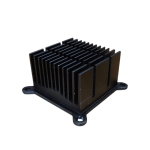
- Cooling System: Heatsinks bonded to ASIC chips, combined with high-CFM fans that move massive volumes of air across the boards. Thermal management is everything — a 10-degree increase in junction temperature can halve chip lifespan.
- Firmware: The software layer that ties it all together. Stock firmware, custom firmware like Braiins OS, or vendor-specific builds — each has different tuning capabilities, efficiency profiles, and potential failure modes.
The Failures We See Most Often
After repairing thousands of units across every major manufacturer — Bitmain, MicroBT, Innosilicon, Canaan, and more — the failure patterns are remarkably consistent:
- Hashboard failures (45-50% of all repairs): Dead ASIC chips, blown voltage regulators, cracked solder joints from thermal cycling, corroded traces from humidity exposure. Some of these are fixable with component-level rework. Others require chip replacement under a microscope.
- PSU failures (20-25%): Capacitor degradation, MOSFET blowouts, fan failures inside the PSU causing thermal shutdown. We always test PSUs independently before plugging them back into a repaired hashboard — a bad PSU will destroy good boards.
- Cooling system degradation (10-15%): Fan bearing failure, dust accumulation restricting airflow, dried-out thermal compound creating hot spots. This is the most preventable failure category.
- Firmware and control board issues (10-15%): Corrupted NAND flash, failed firmware updates that brick the control board, SD card failures on models that boot from removable media.
- Connector and wiring failures (5%): Oxidized power connectors, damaged ribbon cables, loose hashboard data connectors from shipping vibration.
Why Maintenance Is Non-Negotiable
A miner that runs 24/7 without maintenance is a miner on borrowed time. The math is simple: preventive maintenance costs a fraction of what emergency repair or full board replacement costs. Here is what a proper maintenance schedule looks like:
- Monthly: Visual inspection for dust buildup, fan noise changes, and error rate monitoring through your pool dashboard or miner interface.
- Quarterly: Compressed air cleaning, fan inspection and replacement if bearings are worn, firmware updates if stable releases are available.
- Annually: Full teardown, thermal compound replacement on heatsinks, thorough PCB inspection for early signs of corrosion or cracked joints, PSU capacitor health check.
This is not optional. This is how you protect a multi-thousand-dollar investment and keep your hashrate contributing to the network. If you are running a Bitcoin space heater in your home, maintenance is even more critical — these units run in living spaces where dust, pet hair, and humidity are constant factors.
What Real Diagnostic Excellence Looks Like
Here is the uncomfortable truth about most repair shops: they swap boards. They do not actually diagnose at the component level. You send in a miner with one bad chip on a hashboard, and they quote you for an entire new board because they lack the equipment or expertise to isolate the fault.
That is not repair. That is parts replacement, and it costs you far more than it should.
Component-Level Diagnostics
Proper ASIC diagnostics require a combination of specialized tools and deep experience:
- Thermal imaging: Infrared cameras reveal hot spots that indicate failing components — a chip running 20 degrees hotter than its neighbors is either failing or already dead.
- Oscilloscope analysis: We probe signal integrity on the hashboard communication bus, check clock signals for jitter, and verify voltage rail stability under load. A multimeter alone cannot catch timing-related failures.
- Individual chip testing: Isolating the chain to test each ASIC chip individually, identifying which specific chips have degraded or failed entirely. This is how we repair boards that other shops call “unrepairable.”
- PSU load testing: Running the PSU under simulated load conditions to verify it delivers clean, stable power across all voltage rails. A PSU that tests fine at idle can sag or oscillate under the 3,000+ watt draw of a modern ASIC.
- Hash test verification: After any repair, the unit runs on our test bench for an extended burn-in period. We monitor hash rate stability, chip temperatures, error rates, and power consumption before any unit goes back to a customer.
Why Accurate Diagnostics Save You Money
Misdiagnosis is expensive. If a tech replaces a hashboard when the actual problem is a bad voltage regulator on the control board, you have paid for a board you did not need — and the original problem persists. Accurate diagnostics mean you only pay for what actually needs fixing, and the repair holds long-term.
At D-Central, our ASIC repair service covers over 38 specific miner models with dedicated diagnostic protocols for each. We do not guess. We test, verify, and document every step.
Repair Best Practices: What Separates Professionals from Amateurs
The ASIC repair industry has a quality problem. Low barriers to entry mean anyone with a soldering iron and a YouTube tutorial can call themselves a repair technician. Here is what actually separates a professional operation from an amateur one.
Parts Quality Is Everything
The market is flooded with counterfeit and substandard ASIC chips, capacitors, MOSFETs, and connectors — especially from unvetted suppliers. Using cheap components in a repair is worse than not repairing at all, because it creates a ticking time bomb that fails again within weeks or months.
Professional repair means:
- Sourcing components from verified suppliers with full traceability
- Using OEM-spec or better replacement parts
- Testing every component before installation — not just trusting the label on the bag
- Maintaining an inventory of genuine replacement parts so repairs are not delayed by weeks of shipping from overseas
The Technician Skill Gap
ASIC repair is not consumer electronics repair. These machines run at extreme power densities, generate massive heat, and operate on custom silicon that does not exist anywhere else in the electronics industry. A technician who is excellent at fixing laptops may be completely lost in front of a Whatsminer M50S hashboard.
The skills required include:
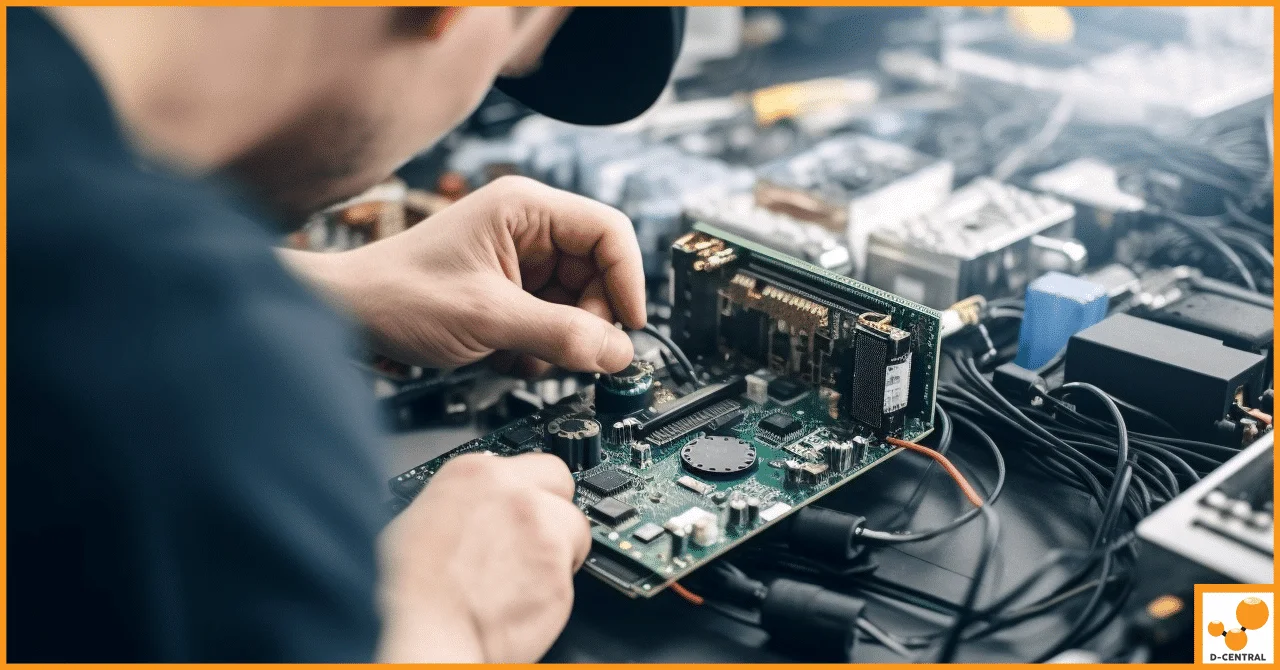
- BGA and QFN rework under microscope — replacing ASIC chips that are soldered with hundreds of tiny balls underneath
- Understanding of power delivery networks specific to each miner model
- Firmware-level troubleshooting including UART/serial console debugging
- Thermal profiling and reflow temperature management to avoid damaging adjacent components
- Understanding the full mining stack: pools, stratum protocol, difficulty adjustment, and how hardware errors manifest in pool-side statistics
Preventive Maintenance Protocols That Actually Work
We send every repaired unit back with specific maintenance guidance tailored to the model and the customer’s operating environment. A miner running in a temperature-controlled basement in Quebec needs a different maintenance schedule than one running in an insulated garage in Alberta.
The fundamentals are universal:
- Airflow management: Never restrict intake or exhaust. If you are using a shroud or duct adapter, ensure it does not create back-pressure that reduces airflow volume.
- Thermal compound replacement: Factory thermal compound degrades. Plan on replacing it annually for maximum chip longevity.
- Electrical protection: Surge protectors at minimum, UPS for critical operations. A $50 surge protector can save a $3,000 miner.
- Firmware discipline: Only update firmware when there is a specific reason — a bug fix, efficiency improvement, or security patch. Do not update just because a new version exists. And always have a rollback plan.
- Environmental monitoring: A cheap temperature and humidity sensor near your miners pays for itself by alerting you to conditions that accelerate hardware degradation.
Beyond the Bench: Value-Added Services for Serious Miners
Repair is where the relationship starts, but serious miners need more than a fix-and-forget service. The full lifecycle of a mining operation — from initial setup to ongoing optimization — benefits from a partner who understands the entire stack.
Mining Hosting in Quebec
Not every miner belongs in your home. If you are scaling beyond what your residential electrical panel and noise tolerance can handle, hosting in Quebec offers some of the lowest electricity rates in North America combined with a cold climate that dramatically reduces cooling costs.
D-Central operates hosting infrastructure in Quebec — not Alberta, not Texas, not a mystery location. Quebec specifically, because the combination of hydroelectric power and northern climate creates an energy efficiency advantage that directly impacts your bottom line.
Our hosting includes:
- 24/7 monitoring with automated alerts for hashrate drops or thermal anomalies
- On-site maintenance and repair capability — your miner does not need to be shipped anywhere if it needs service
- Transparent reporting on uptime, hash rate, and power consumption
- Flexible terms that respect the volatile nature of mining economics
Education and Self-Sufficiency
We believe in equipping miners with knowledge, not creating dependency. The home mining community is strongest when individual operators understand their equipment well enough to handle basic maintenance, troubleshoot common issues, and make informed decisions about upgrades and replacements.
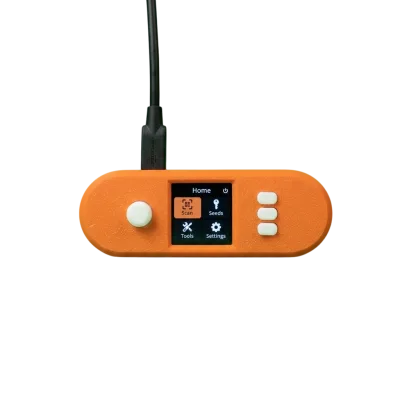
This is why we publish detailed technical content, maintain repair guides for specific models, and actively support the open-source mining ecosystem through products like the Bitaxe and NerdAxe lines. When you understand your hardware at a fundamental level, you make better decisions about maintenance, upgrades, and when to call in professional help.
Performance Optimization
A repaired miner should not just work — it should work optimally. Post-repair optimization includes:
- Custom frequency and voltage tuning for the best efficiency at your specific electricity rate
- Firmware recommendations based on your mining goals (maximum hashrate vs. maximum efficiency vs. minimum noise)
- Pool configuration advice — including solo mining options for those who understand the probability math and want to roll the dice on a full 3.125 BTC block reward
- Integration guidance for dual-purpose setups where the miner’s waste heat is captured for home heating
The D-Central Repair Philosophy
D-Central’s founder built this company on a simple premise: the Bitcoin network is stronger when mining is decentralized, and mining is only decentralized when individual operators have access to affordable, high-quality repair and maintenance services.
Every major manufacturer designs their hardware with planned obsolescence in mind. When a new generation launches, support for the previous generation quietly fades. Firmware updates stop. Parts become scarce. The message is clear: buy new hardware.
We reject that model entirely.
Our approach is to extend the operational life of mining hardware as long as it remains economically viable to run. An Antminer S19j Pro that has been properly maintained and repaired can still generate positive returns in the right energy environment. Throwing it away because the manufacturer has moved on to the S21 series is wasteful and it concentrates mining power in the hands of those who can afford to constantly buy new hardware.
That is the opposite of decentralization.
What Sets Our Repair Service Apart
- Component-level repair capability: We do not just swap boards. We diagnose and repair at the chip level, which means lower costs for you and less e-waste.
- Model-specific expertise: With dedicated repair documentation for 38+ ASIC models, we understand the specific failure patterns and repair procedures for your exact hardware.
- Transparent communication: You get a detailed diagnosis before any work begins, with clear pricing and realistic timelines. No surprises.
- Post-repair testing: Every unit runs through an extended burn-in test before it ships back. We catch intermittent issues that a quick power-on test would miss.
- Canadian-based operation: Your hardware stays in Canada. No shipping across borders, no customs delays, no uncertainty about where your equipment actually is.
Building Trust Through Transparency
Trust in the repair industry is earned through consistency, not marketing. Here is how we approach it:
- Documented diagnostics: We photograph and document the fault before repair, so you can see exactly what was wrong and what was done to fix it.
- Honest assessments: If a unit is not worth repairing — if the repair cost exceeds the hardware’s current value — we tell you. We would rather lose a repair fee than have you pay more for a fix than the machine is worth.
- Knowledge sharing: We publish our repair knowledge freely through blog content and guides. A more informed mining community benefits everyone, including us.
- Feedback integration: Every repair interaction informs our processes. Common failure patterns get flagged, maintenance recommendations get updated, and our diagnostic procedures evolve based on what we see on the bench every day.
Choosing the Right ASIC Repair Partner
Not all repair services are created equal, and choosing the wrong one can cost you more than money — it can cost you weeks of downtime and potentially destroy your hardware. Here is what to look for:
Red Flags
- No physical address or Canadian presence
- Vague repair descriptions (“we’ll fix it” with no specifics)
- No burn-in testing after repair
- Unwillingness to explain what failed and why
- Pressure to buy new hardware instead of repairing
- No model-specific expertise — treating all ASICs as interchangeable
Green Flags
- Component-level repair capability with proper tooling (hot air rework stations, BGA equipment, oscilloscopes)
- Model-specific knowledge and documented repair procedures
- Transparent pricing provided before work begins
- Extended test runs after repair with documented results
- Willingness to share technical knowledge and maintenance guidance
- Track record of operation — years in business, not months
D-Central has been operating since 2016. We have seen every generation of ASIC hardware, weathered every market cycle, and repaired units through every era of Bitcoin mining — from S9s hashing at 14 TH/s to modern machines pushing 200+ TH/s. That depth of experience is something that cannot be fabricated or fast-tracked.
Frequently Asked Questions
What types of ASIC miners does D-Central repair?
We repair units from all major manufacturers including Bitmain (Antminer series), MicroBT (Whatsminer series), Innosilicon, Canaan (Avalon series), and more. Our ASIC repair service covers 38+ specific models with dedicated diagnostic and repair protocols for each.
How long does a typical ASIC repair take?
Turnaround depends on the complexity of the repair and parts availability. Simple fixes like PSU replacements or fan swaps can be completed in a few days. Component-level hashboard repairs — including chip replacement and rework — typically take one to two weeks, including the extended burn-in testing period.
Is it worth repairing an older ASIC miner?
It depends on your electricity rate and the repair cost relative to the unit’s current mining revenue potential. We always provide an honest assessment — if repair costs exceed what the machine can reasonably earn, we will tell you. Many older units like the S19 series remain profitable in low-cost energy environments, especially when repurposed as Bitcoin space heaters for home heating.
What is component-level repair and why does it matter?
Component-level repair means diagnosing and replacing individual failed components — a specific ASIC chip, a voltage regulator, a capacitor — rather than replacing the entire hashboard. This approach costs significantly less than board-level swaps and produces less electronic waste. It requires specialized equipment and skilled technicians, which is why many shops do not offer it.
How can I prevent my ASIC miner from needing repairs?
Regular maintenance is the best prevention. Clean dust monthly, replace thermal compound annually, ensure adequate airflow, use surge protection, and monitor your miner’s performance metrics through your pool dashboard. Environmental factors matter too — control temperature and humidity in your mining space.
Does D-Central offer mining hosting services?
Yes, we operate hosting infrastructure in Quebec, Canada — leveraging low-cost hydroelectric power and cold climate for optimal efficiency. Hosting includes 24/7 monitoring, on-site maintenance, and transparent reporting. Learn more about our Quebec hosting service.
What should I do before shipping my miner for repair?
Document the symptoms you are experiencing (error codes, hash rate drops, which boards show issues). Take photos of any visible damage. Back up your miner configuration. Package the unit securely — original packaging is ideal, but thick foam and a sturdy box work. Do not ship the PSU unless it is part of the problem, as it adds weight and shipping cost unnecessarily.
Can open-source miners like the Bitaxe be repaired?
Yes, and this is one of the major advantages of open-source mining hardware. The Bitaxe and related devices use published schematics and standard components, making diagnostics and repair straightforward for anyone with the right skills and tools. Note that Bitaxe models (Supra, Ultra, Gamma) use a 5V barrel jack (5.5×2.1mm DC) for power — not USB-C, which is for firmware flashing only.
Why choose a Canadian-based repair service?
Shipping mining hardware internationally creates customs delays, duty charges, and increased risk of damage. A Canadian-based service means your equipment stays within the country, turnaround times are shorter, and communication happens in your time zone. D-Central has operated from Canada since 2016, serving the North American mining community with local expertise.