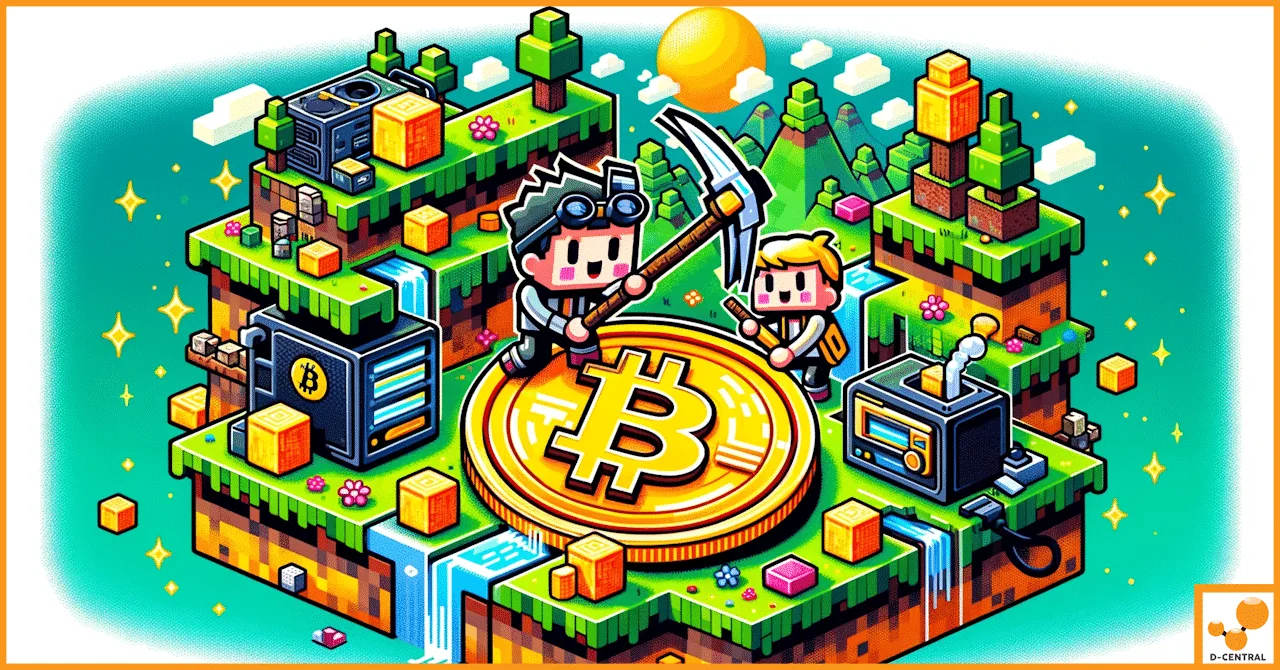
The concept of mining in Minecraft needs no introduction. You dig, you find resources, you build. But what happens when that familiar loop collides with actual Bitcoin mining — the computational process that secures the most decentralized monetary network ever built?
This is not a hypothetical thought experiment from 2018. Community-driven Minecraft servers have already attempted to bridge the gap between virtual block-breaking and real-world block rewards. Some succeeded briefly, some were shut down by policy changes, and some continue to push boundaries. At D-Central Technologies, Canada’s Bitcoin Mining Hackers, we have been watching this intersection closely — because anything that brings more people closer to understanding proof-of-work is worth paying attention to.
Let us break down what has actually happened, what works, what does not, and why the real mining action still happens outside the game.
How Bitcoin Mining Actually Works (The 30-Second Version)
Before we draw parallels to Minecraft, let us be precise about what Bitcoin mining is.
Bitcoin miners run specialized hardware — ASICs (Application-Specific Integrated Circuits) — that perform trillions of SHA-256 hash computations per second. The goal: find a hash below a target threshold set by the network’s difficulty adjustment. The miner who finds a valid hash first gets to propose the next block to the blockchain and earns the block subsidy (currently 3.125 BTC after the April 2024 halving) plus transaction fees.
This process is not decorative. It is what makes Bitcoin censorship-resistant, permissionless, and trustless. Every hash computed contributes to the security of the network. Every joule of energy spent on mining is a joule spent defending the monetary sovereignty of anyone who holds bitcoin.
The difficulty adjusts every 2,016 blocks (roughly two weeks) to maintain a 10-minute average block time, regardless of how much hashrate joins or leaves the network. In early 2026, global Bitcoin hashrate is measured in hundreds of exahashes per second — a scale that makes the computational metaphor in Minecraft look comically quaint, but also makes it a useful teaching tool.
Mining in Minecraft: The Original Gameplay Loop
Minecraft’s core mechanic is resource extraction. You punch trees, mine stone, dig for iron, and eventually hunt for diamonds deep underground. The parallels to Bitcoin mining are obvious on the surface:
- Effort in, reward out — you expend time and tool durability to extract valuable resources
- Scarcity mechanics — diamonds are rare, just like bitcoin’s fixed 21 million supply cap
- Tool progression — wooden pickaxe to diamond pickaxe mirrors the evolution from CPU mining to GPU mining to ASIC mining
- Risk vs. reward — mining deep underground risks lava pools and cave-ins, just as real mining involves capital risk, electricity costs, and hardware failure
These parallels are more than superficial. They make Minecraft an unexpectedly effective platform for introducing proof-of-work concepts to people who have never thought about Bitcoin mining.
Servers That Actually Tried It
Several Minecraft servers have attempted to merge in-game activity with real Bitcoin. Here is what happened.
BitQuest (2014-2015+)
BitQuest was a pioneering Minecraft server that connected in-game economics directly to a Bitcoin node. Every player who joined received a Bitcoin wallet, and the in-game economy ran on actual bitcoin transactions. Killing monsters, completing quests, and trading with other players all involved real satoshis.
The project went open-source in December 2015, allowing anyone to run a BitQuest-style server using the Spigot plugin. While the official server is no longer active, the code remains available on GitHub. BitQuest proved the concept was technically viable — the challenge was sustainability and player adoption at scale.
SatoshiQuest (2020)
SatoshiQuest took a different approach: a treasure hunt model where players paid a $1 Bitcoin entry fee, with the funds pooling into a prize for the winner who found the hidden treasure on the map. It generated significant buzz in the Bitcoin community and was covered widely in crypto media.
The server demonstrated that Bitcoin-incentivized gaming could drive real engagement. However, like many experimental projects, it struggled to maintain an active player base after the initial hype cycle.
Satlantis + ZEBEDEE (2023)
The most technically sophisticated attempt came from Satlantis, a custom Minecraft server that integrated ZEBEDEE’s Lightning Network payment infrastructure. The server distributed over 150,000 satoshis daily to a reward pool, with payouts happening every 10 minutes — directly mimicking Bitcoin’s block reward schedule.
The earning system was clever: it used concepts like hash rate, mining pools, ASICs, and block rewards as in-game mechanics. Players collected virtual “ASICs” through quests to improve their chances of earning sats.
However, in September 2023, Mojang’s updated usage guidelines forced Satlantis to disable Bitcoin rewards on the Minecraft platform. The team pivoted to developing a standalone game, and the Bitcoin-earning Minecraft experience effectively ended.
Mojang’s Blockchain Ban: The Policy Reality
In July 2022, Mojang Studios (owned by Microsoft) announced a formal ban on NFT and blockchain integrations in Minecraft. The policy was expanded and enforced through 2023-2024, with key provisions:
- No blockchain integrations on Minecraft servers
- No NFT-based items, skins, or worlds
- No cryptocurrency reward systems for players
- No use of Minecraft assets in blockchain or NFT projects
Mojang’s stated reasoning was that NFTs and blockchain mechanics “create models of scarcity and exclusion that conflict with Minecraft’s values” and that “speculative pricing takes the focus away from playing the game.”
This policy effectively killed all official Bitcoin-earning Minecraft servers. While community mods that simulate cryptocurrency concepts (without involving real coins) remain available on platforms like CurseForge and Modrinth, any server distributing actual bitcoin to players violates Minecraft’s current terms of service.
This is an important distinction. The policy targets the financial incentive layer, not the educational concept. You can still build Minecraft worlds that teach blockchain concepts — you just cannot pay players in bitcoin for doing it.
What Minecraft Gets Right About Mining Education
Despite the policy limitations, Minecraft remains one of the best platforms for teaching Bitcoin mining fundamentals. Here is why.
Proof-of-Work, Simplified
Every time a Minecraft player swings a pickaxe at a block, they are performing a simplified version of proof-of-work: expending effort (tool durability, time) to extract a reward (resources). The concept that “you do not get something for nothing” is baked into the gameplay.
This is the exact principle that underpins Bitcoin’s security model. Proof-of-work means that creating a new block requires real-world energy expenditure, making it prohibitively expensive to attack the network. Minecraft’s resource extraction loop teaches this intuitively.
Scarcity and Supply Schedules
Minecraft worlds generate finite diamond deposits. Bitcoin has a hard cap of 21 million coins. The halving mechanism — which cut the block reward from 6.25 BTC to 3.125 BTC in April 2024, with the next halving expected around 2028 — can be modeled in Minecraft by creating worlds where resource yields decrease over time.
Difficulty Adjustment
In Minecraft, as you mine deeper, you encounter harder materials and more dangers. Bitcoin’s difficulty adjustment serves a similar function: as more miners join the network, the puzzles get harder to maintain the 10-minute block interval. A well-designed Minecraft mod could simulate this beautifully — making resources harder to find as more players join the server.
The Tooling Arms Race
The progression from wooden pickaxe to netherite pickaxe in Minecraft mirrors the real-world progression of Bitcoin mining hardware. CPU mining (wooden pickaxe) gave way to GPU mining (iron pickaxe), then FPGAs (diamond pickaxe), and finally ASICs (netherite pickaxe). Each generation is dramatically more efficient than the last.
If you want to understand why ASIC miners dominate Bitcoin mining today, the Minecraft tool progression is a surprisingly effective analogy.
From Virtual Pickaxes to Real Hashboards
Here is where we get serious. Minecraft mining is a game. Bitcoin mining is infrastructure for the most important monetary network in human history. The differences are not just technical — they are philosophical.
Real Mining Secures Real Value
When you mine in Minecraft, you produce virtual resources in a centralized game owned by Microsoft. When you mine Bitcoin, you contribute to the security of a permissionless, censorship-resistant network that no single entity controls. Every hash you compute makes the network stronger for everyone.
This is why D-Central exists. Since 2016, we have been hacking institutional-grade mining technology into accessible solutions for home miners. From solo mining with a Bitaxe to heating your home with a Bitcoin Space Heater, we build the bridge between wanting to mine and actually doing it.
Solo Mining: The Real Lottery
The SatoshiQuest treasure hunt model — pay to play, hope to find the prize — is actually a pretty good analogy for solo Bitcoin mining. When you solo mine, you are competing against the entire network’s hashrate for the chance to find a block and earn the full 3.125 BTC reward plus fees.
The odds? With a Bitaxe running at ~1.2 TH/s against a network doing hundreds of EH/s, you are looking at extremely long odds. But unlike SatoshiQuest, solo mining is not a game — it is a direct contribution to network decentralization. Every hash counts. And when someone does hit a solo block with a small miner, it makes headlines in the Bitcoin community.
That is the spirit D-Central was built on. We do not mine because the expected value calculation says we should. We mine because decentralization demands participation.
Dual-Purpose Mining: Where the Real Innovation Is
Minecraft players build furnaces to smelt ore. Real Bitcoin miners produce heat as a byproduct of hashing. The innovation? Using that heat intentionally.
D-Central’s Bitcoin Space Heaters turn ASIC miners into functional home heaters. Instead of paying for electricity twice — once for your furnace and once for your miner — you pay once and get both heat and bitcoin. This is not a game mechanic. This is real thermodynamics applied to real economics.
In Canada, where heating season runs seven or eight months of the year, dual-purpose mining changes the profitability equation entirely. Your miner’s electricity cost effectively becomes your heating bill, which you were going to pay anyway.
Getting Started With Real Bitcoin Mining
If Minecraft got you curious about mining, here is how to start doing it for real.
Solo Mining With Open-Source Hardware
The closest real-world equivalent to Minecraft’s “punch a tree, get wood” simplicity is the Bitaxe — an open-source solo miner that connects to your Wi-Fi, points at a solo mining pool, and starts hashing. No data center required. No institutional hardware contract. Just plug it in and start contributing hashrate to the Bitcoin network.
D-Central is a pioneer in the Bitaxe ecosystem, having created the original Bitaxe Mesh Stand and developed leading accessories including heatsinks for both the standard Bitaxe and the Bitaxe Hex. We stock every variant: Supra, Ultra, Hex, Gamma, and GT.
Scaling Up With ASIC Miners
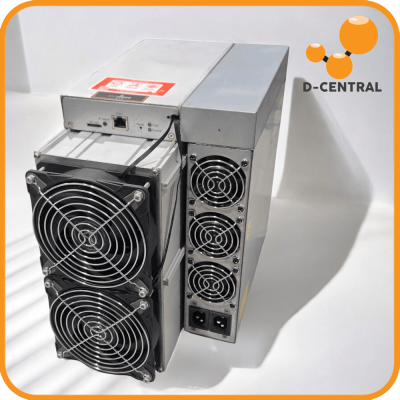
When you are ready to move beyond the Bitaxe equivalent of a wooden pickaxe, full ASIC miners like the Antminer S21 series deliver serious hashrate. D-Central provides the full lifecycle: sourcing, setup consultation, repair services when something breaks, and hosting in our Quebec facility if you do not want to run the hardware at home.
The Tools You Actually Need
Before you buy any hardware, run the numbers. D-Central offers several free tools that are more useful than any Minecraft mod:
- Bitcoin Mining Profitability Calculator — estimate your daily, monthly, and yearly returns based on hashrate, power cost, and current difficulty
- Solo Mining Probability Calculator — calculate your actual odds of finding a block with your specific hardware
- Mining Power Cost Calculator — understand the real electricity cost of running your miner
Why This Crossover Matters for Bitcoin
The Minecraft-Bitcoin crossover is not just a novelty. It matters because onboarding matters.
Minecraft has over 170 million monthly active players. Many of them are young, technically curious, and already comfortable with concepts like scarcity, resource extraction, and tool optimization. These are the future Bitcoiners — but only if someone connects the dots for them.
Every Minecraft player who understands why diamond is scarce in the game is one step closer to understanding why Bitcoin’s 21 million cap matters. Every player who grinds for resources understands proof-of-work intuitively. Every player who upgrades from a wooden pickaxe to netherite gets why ASICs replaced GPUs.
The policy limitations from Mojang are real, but the educational potential remains enormous. Community mods, custom servers that teach without paying, and content creators who bridge the two worlds all contribute to Bitcoin adoption in ways that no whitepaper ever could.
At D-Central, we believe decentralization starts with education. Whether your first “mining” experience was in Minecraft or in a Canadian basement with an Antminer S9, the destination is the same: a world where individuals control their own financial infrastructure.
FAQ
Can you actually earn Bitcoin by playing Minecraft?
Not through officially sanctioned means, no. Mojang (Microsoft) banned blockchain and cryptocurrency integrations from Minecraft servers in 2022, with enforcement tightening through 2023-2024. Previous servers like Satlantis (which used ZEBEDEE’s Lightning Network infrastructure) were forced to disable Bitcoin rewards. Community mods that simulate mining concepts still exist, but distributing real bitcoin through Minecraft gameplay violates current terms of service.
What was SatoshiQuest?
SatoshiQuest was a Minecraft server launched in 2020 that operated as a Bitcoin treasure hunt. Players paid a $1 Bitcoin entry fee, with funds pooling into a prize pot. The goal was to find hidden treasure on the map and claim the accumulated bitcoin. While the concept generated significant excitement, the server is no longer actively maintained.
How is real Bitcoin mining different from mining in Minecraft?
Real Bitcoin mining uses ASIC hardware to perform SHA-256 hash computations that secure the Bitcoin network. Miners compete to find a valid block hash below a target threshold, earning 3.125 BTC (as of the April 2024 halving) plus transaction fees per block. Minecraft mining is a gameplay mechanic involving virtual resource extraction. The key difference: real mining contributes to a decentralized, censorship-resistant monetary network, while Minecraft mining exists within a centralized game controlled by Microsoft.
What is the easiest way to start real Bitcoin mining at home?
The simplest entry point is a Bitaxe — an open-source solo miner that connects to Wi-Fi and starts hashing with minimal setup. It runs on a 5V power supply, produces negligible noise and heat, and lets you participate in solo mining from your desk. D-Central stocks all Bitaxe variants and accessories, and provides a comprehensive setup guide to get you running in minutes.
Can Minecraft be used to teach kids about Bitcoin mining?
Absolutely. Minecraft’s resource extraction mechanics naturally parallel proof-of-work concepts: effort produces reward, resources are scarce, better tools increase efficiency, and risk increases with depth. Custom Minecraft worlds can model difficulty adjustments, supply halvings, and even pool mining dynamics. Several educational initiatives already use Minecraft’s platform to teach STEM concepts, and Bitcoin mining maps naturally onto these frameworks. The key is to teach the principles without violating Mojang’s blockchain policy by keeping the educational layer separate from real financial incentives.
What happened to BitQuest, the Bitcoin Minecraft server?
BitQuest launched around 2014-2015 as one of the first Minecraft servers to integrate real Bitcoin transactions into gameplay. Every player received a Bitcoin wallet, and the in-game economy ran on actual satoshis. The project went open-source in December 2015. While the official server is no longer running, the code remains available on GitHub for anyone who wants to host their own instance. BitQuest proved the technical viability of Bitcoin-Minecraft integration before Mojang’s blockchain ban made such servers non-compliant.
Is solo mining with a small device actually worth it?
From a pure expected-value standpoint, solo mining with a small device like a Bitaxe is unlikely to find a block in any reasonable timeframe. But “worth it” depends on what you value. Solo mining contributes to network decentralization, teaches you how Bitcoin works at a fundamental level, and gives you a non-zero chance at a full block reward (3.125 BTC + fees). Many home miners run small devices not for profit, but for participation in the network — the same ethos that drives open-source development. Use D-Central’s Solo Mining Probability Calculator to understand your specific odds.
Why does D-Central care about the Minecraft-Bitcoin crossover?
D-Central’s mission is the decentralization of every layer of Bitcoin mining. That mission starts with education and awareness. Minecraft’s 170+ million players represent a massive audience that already intuitively understands proof-of-work concepts through gameplay. Anything that brings people closer to understanding — and eventually participating in — real Bitcoin mining aligns with our core purpose. We would rather have a million people running Bitaxes at home than a handful of corporations controlling the hashrate.