The Custom Firmware Arms Race: Why It Matters for Every Home Miner
The firmware running on your ASIC miner is the single most impactful variable you control. Not which pool you point at. Not what time of day you run. The firmware. It dictates hashrate, power draw, thermal behavior, fan curves, and ultimately whether your miner prints sats efficiently or bleeds watts into heat you never asked for.
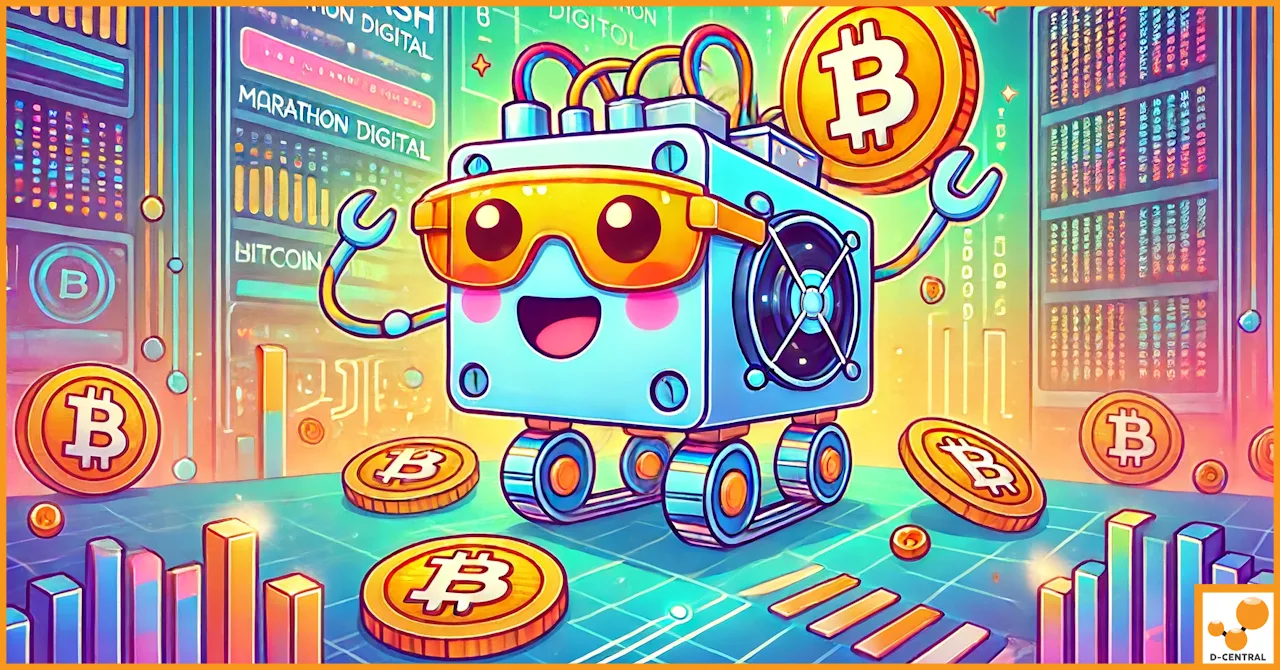
In mid-2024, NiceHash and Marathon Digital (MARA) dropped a joint firmware product into an already competitive landscape: NiceHash Firmware powered by MARA. The announcement turned heads. Two major players — one an institutional mining giant, the other a hashrate marketplace — combining resources to build autotuning firmware for the masses.
But announcements are not benchmarks. Let us break down what this firmware actually delivers, how it stacks up against established options like Braiins OS+ and VNish, and what all of this means if you are a home miner running ASICs in your basement, garage, or Bitcoin space heater setup.
NiceHash Firmware Powered by MARA: What It Actually Does
Marathon Digital has been running custom firmware across its own massive fleet for years. The logic was simple: if you control hundreds of thousands of machines, squeezing 3-5% more efficiency out of each one translates to millions in savings. NiceHash saw an opportunity to bring that institutional-grade tuning to retail miners through their platform.
| Feature | Details |
|---|---|
| Autotuning | Per-chip frequency optimization with per-domain voltage control. The firmware profiles each individual ASIC chip and tunes frequency per chip, while voltage is set per voltage domain (a group of chips shares each DC-DC converter), to maximize hashrate per watt. |
| Thermal Protection | Intelligent thermal throttling with multi-sensor monitoring. Downclocks chips approaching thermal limits rather than hard-shutting the entire board. |
| Environment Profiles | Pre-configured profiles for air-cooled, hydro-cooled, and immersion setups. Adjusts fan curves and thermal targets per cooling method. |
| Supported Models | Antminer S19, S19 Pro, S19J Pro, S19 XP, S19K Pro, S21, T21 |
| Installation | Via NiceHashTools software or SD card flash |
| Fee Structure | 2% dev fee (reduced to 1.4% when mining on NiceHash pool) |
The feature set is solid on paper. Autotuning per chip — not per board, per chip — is the gold standard. The environment profiles show that Marathon’s engineers understand the real diversity of cooling setups in the field. And the thermal protection is genuinely useful: a graceful throttle beats a hard shutdown every single time, especially when you are running miners as heaters and cannot afford downtime in January.
The Custom Firmware Landscape in 2026
The NiceHash-MARA firmware did not arrive in a vacuum. The custom firmware ecosystem for Bitcoin ASICs has matured significantly. Here is where the major players stand today:
Braiins OS+
Braiins (the team behind Stratum V2 and Slush Pool, now Braiins Pool) has been in the firmware game the longest. Braiins OS+ remains our go-to recommendation at D-Central for most Antminer deployments. The autotuning is battle-tested across millions of machines. The power target mode — where you set a wattage ceiling and the firmware optimizes hashrate within that envelope — is perfect for home miners managing electricity costs or thermal output for space heating.
Braiins OS+ is free to use on Braiins Pool (they take their cut from pool fees) or carries a 2–2.5% dev fee on other pools. The Braiins platform has partial open-source elements (the BCB100 hardware board design is open source), though the mining binaries (BOSminer, Boser) and web UI are proprietary.
VNish
VNish is the power user’s firmware. It exposes granular controls that Braiins keeps behind automated tuning — manual per-chip frequency adjustment, voltage curves, immersion-specific profiles. The interface is more complex, but for miners who want to squeeze every last megahash out of hardware running in controlled environments, VNish delivers.
The trade-off: VNish is fully closed-source, and the 2–2.8% dev fee applies regardless of pool. But for immersion setups and overclocking scenarios, it remains a serious contender.
LuxOS
Luxor’s firmware entry focuses on fleet management and enterprise tooling, with a 2.8% dev fee (per Luxor’s docs, mining on Luxor Pool adds 0% pool fees — no dev-fee waiver is documented). LuxOS also features 120V/110V PSU bypass mode for running full-size ASICs on household power, SOC 2 Type 2 certification for enterprise compliance, and ultra-fast curtailment response times under 5 seconds. The autotuning is competent, and Luxor’s integration with their own pool adds convenience for operators already in that ecosystem.
Stock Firmware
Bitmain’s stock firmware has actually improved in recent generations. The S21 and T21 ship with decent autotuning out of the box. But “decent” leaves 5-15% efficiency gains on the table compared to aftermarket firmware — gains that directly translate to more sats stacked per kilowatt-hour.
Head-to-Head: Firmware Comparison for Home Miners
| Criteria | Braiins OS+ | VNish | NiceHash/MARA | Stock (Bitmain) |
|---|---|---|---|---|
| Autotuning Quality | Excellent | Excellent | Good | Basic |
| Power Target Mode | Yes | Yes | Limited | No |
| Open Source | Partial (BCB100 hardware board only; mining binaries are proprietary) | No | No | No |
| Dev Fee | 0% on Braiins Pool / 2–2.5% | 2–2.8% | 1.4-2% | 0% |
| Home Miner Friendly | Very High | Moderate | Moderate | High (simple) |
| Immersion Profiles | Yes | Best-in-class | Yes | No |
| Model Support | S9 through S21 series | S17 through S21 series | S19 through T21 | Per-model from Bitmain |
| Thermal Throttling | Per-chip graceful | Per-chip graceful | Per-chip graceful | Board-level cutoff |
What About Open-Source Mining Hardware?
This entire firmware conversation applies to proprietary ASIC hardware — Antminers, Whatsminer, and their peers. But there is a parallel revolution happening in open-source mining hardware that sidesteps the firmware lock-in problem entirely.
Devices like the Bitaxe — which D-Central has been pioneering since the earliest days of the project — run open-source firmware from the ground up. AxeOS, the firmware powering Bitaxe devices, is fully open, community-auditable, and gives miners complete sovereignty over their hardware. No dev fees. No closed-source black boxes. No phone-home telemetry.
This is the cypherpunk approach to mining firmware: if you cannot read the code, you do not own the machine.
For home miners who want to solo mine and contribute to Bitcoin’s decentralization without trusting third-party firmware on their hardware, open-source devices represent the purest path. D-Central stocks the complete Bitaxe lineup — Supra, Ultra, Hex, Gamma, GT — plus all accessories, stands, heatsinks, and power supplies in our shop.
Firmware Flashing Gone Wrong: When You Need Repair
Here is the uncomfortable truth about aftermarket firmware: flashing can go wrong. Bricked miners, corrupted NAND, incompatible firmware versions, failed SD card flashes — our ASIC repair team sees it regularly. A botched firmware update is one of the most common reasons miners end up on our repair bench.
Common firmware-related failures we repair:
- Bricked control boards — Interrupted firmware flash, incompatible version, or corrupted SD card image. Often recoverable with UART/serial console access and fresh NAND image.
- Hashboard recognition failures — Firmware expecting different chip configurations than what the board actually has. Common when flashing firmware meant for a different S19 variant.
- Thermal sensor misreads — Custom firmware thermal profiles not calibrated for the specific hardware revision, causing premature shutdowns or dangerous overheating.
- Fan control failures — Aftermarket firmware fan curves conflicting with non-standard fan replacements. Particularly common in space heater conversions where original fans are replaced with duct adapters.
- Autotuning loops — Firmware stuck in endless autotuning cycles, never stabilizing. Usually indicates underlying hardware issues (weak chips, failing voltage regulators) that the firmware exposes rather than causes.
D-Central’s repair team works with miners running every firmware — stock Bitmain, Braiins OS+, VNish, NiceHash/MARA, LuxOS, and everything in between. We have seen every failure mode. We have the UART cables, the NAND programmers, the diagnostic tools, and eight-plus years of hands-on experience to bring your hardware back online regardless of what firmware was running when things went sideways.
Our Recommendation: Choosing the Right Firmware
After testing every major firmware option across thousands of machines, here is where we land for home miners in 2026:
For most home miners: Braiins OS+ remains the top pick. The power target mode alone makes it indispensable for anyone managing electricity costs or running miners as space heaters. Set your wattage ceiling, let the autotuner optimize within that envelope, and forget about it. The partial open-source approach (BCB100 hardware board is open source, mining binaries are proprietary) and zero fee on Braiins Pool sweeten the deal.
For immersion and advanced overclockers: VNish. The granular per-chip controls and immersion-specific profiles are unmatched. If you are pushing hardware to its limits in a controlled thermal environment, VNish gives you the knobs to turn.
For NiceHash users: The NiceHash/MARA firmware makes sense if you are already mining on NiceHash and want tight platform integration at 1.4% fee. The autotuning is competent, and the environment profiles show real engineering depth. But for pure Bitcoin mining on a standard pool, the established options still have the edge.
For sovereignty maximalists: Open-source hardware with open-source firmware. Bitaxe with AxeOS. No dev fees, no closed-source code, no trust required. Solo mine, point at your own node, verify everything yourself. This is the way.
The Bigger Picture: Firmware and Decentralization
Custom firmware is not just about efficiency gains. It is about sovereignty over your own mining hardware. When Bitmain ships stock firmware that phones home, that forces pool connections, that limits what you can do with hardware you paid for — custom firmware is the countermeasure.
The NiceHash/MARA firmware, for all its technical merit, still ties you into a specific ecosystem. Braiins OS+ is pool-agnostic but partially closed. VNish is entirely closed. Only fully open-source firmware — like what runs on Bitaxe devices — gives miners complete control.
As Bitcoin’s network hashrate pushes past 800 EH/s and block rewards sit at 3.125 BTC, every efficiency gain matters. Every percentage point of improved J/TH is more sats in your wallet per kilowatt-hour consumed. But the firmware you choose is also a statement about what kind of mining ecosystem you want to build.
At D-Central, we believe in decentralization at every layer. That means supporting miners who choose any firmware path — from Braiins OS+ on their Antminers to AxeOS on their Bitaxe — while building an ecosystem where open-source, sovereign mining is always an option. Whether you need consulting on optimizing your firmware setup, repairs after a flash gone wrong, or open-source hardware that does not need third-party firmware at all, we are here.
Every hash counts. Make sure your firmware is earning every one of them.
Frequently Asked Questions
Is custom ASIC firmware safe to install?
Yes, when using reputable firmware from established providers like Braiins, VNish, or the NiceHash/MARA collaboration. Always download from official sources, verify checksums, and follow the manufacturer’s installation guide. That said, flashing always carries some risk — a power outage mid-flash can brick a control board. If you are not comfortable with the process, D-Central’s ASIC repair team can flash firmware for you or recover bricked units.
What is the dev fee on custom mining firmware?
Custom firmware dev fees vary: Braiins OS+ charges 2–2.5%, VNish charges 2–2.8%, and LuxOS charges 2.8% (waived on Luxor Pool). Braiins OS+ waives its fee entirely when you mine on Braiins Pool. NiceHash/MARA reduces it to 1.4% on their pool. Stock Bitmain firmware has no dev fee but leaves significant efficiency gains on the table. Open-source firmware like AxeOS on Bitaxe devices has zero fees.
Can custom firmware damage my ASIC miner?
Firmware itself does not physically damage hardware, but aggressive overclocking profiles can push chips beyond safe thermal or voltage limits, leading to accelerated wear or chip death. Reputable firmware includes thermal protection to prevent this. The real risk is during installation — interrupted flashes, wrong firmware versions for your hardware revision, or corrupted flash media can leave your miner inoperable until the control board is reflashed via serial console.
Which firmware is best for Bitcoin space heater setups?
Braiins OS+ with power target mode is ideal for Bitcoin space heaters. Set the power draw to match your desired heat output — for example, 1,200W for a room heater — and the firmware optimizes hashrate within that power envelope. This gives you precise control over both heat output and electricity consumption, which is exactly what dual-purpose mining demands.
Does D-Central support miners running third-party firmware?
Absolutely. Our repair and consulting team works with every firmware — stock, Braiins, VNish, NiceHash/MARA, LuxOS, and others. We diagnose and repair hardware regardless of what firmware was running. We also provide firmware recommendations tailored to your specific setup, whether you are running a single miner at home or scaling a hosted operation in our Quebec facility.
How does open-source firmware on Bitaxe compare to custom ASIC firmware?
They serve different hardware categories. Custom ASIC firmware (Braiins, VNish, NiceHash/MARA) runs on proprietary mining hardware like Antminers. AxeOS on Bitaxe runs on open-source mining hardware. The key difference is sovereignty: AxeOS is fully open-source, community-auditable, and runs on hardware with published schematics. There are no dev fees, no telemetry, and no closed-source black boxes. The trade-off is hashrate — a Bitaxe produces far less than a full ASIC, but for solo mining and supporting decentralization, it is the purest approach.