Quebec sits on one of the most powerful energy advantages on the planet: cheap, abundant, clean hydroelectricity. Hydro-Quebec generates roughly 99% of its electricity from water, making the province one of the greenest energy jurisdictions anywhere. Meanwhile, a massive battery manufacturing buildout is underway, with billions pouring into lithium-ion and solid-state facilities across the province.
Here is what almost nobody in the mainstream press is connecting: Bitcoin mining is the missing piece that makes Quebec’s battery ambitions actually work at scale. Not as a competitor for energy, but as the flexible load that stabilizes the grid, monetizes surplus power, and makes the entire renewable ecosystem more economically viable.
At D-Central Technologies, we have operated Bitcoin mining infrastructure in Quebec since 2016. Our hosting facility in Laval runs on Hydro-Quebec power. We have watched this province’s energy story unfold firsthand, and we are here to tell you: Quebec is sitting on a goldmine that has nothing to do with geology.
Quebec’s Hydroelectric Dominance: The Foundation
Hydro-Quebec operates one of the largest hydroelectric systems on Earth. The numbers speak for themselves:
| Metric | Value |
|---|---|
| Installed generation capacity | ~37,000 MW |
| Hydroelectric share | ~99% |
| Average industrial rate | Among the lowest in North America |
| CO2 per kWh | Near zero (hydro) |
| Seasonal surplus | Significant (spring runoff, low-demand periods) |
This is not a theoretical advantage. This is infrastructure built over decades, paid for, operational, and generating surplus power that Quebec literally exports to neighboring provinces and U.S. states at discounted rates because local demand cannot absorb it all.
That surplus energy is the key to everything that follows.
The Battery Factory Buildout: What Is Actually Happening
Quebec has attracted major battery manufacturing investment. The province offers what the battery industry needs: clean energy (critical for ESG mandates), cold climate for thermal management, proximity to North American auto markets, and a skilled technical workforce.
Battery factories — whether producing lithium-ion cells, cathode materials, or next-generation solid-state batteries — share one critical operational requirement: they cannot tolerate power interruptions. A battery cell production line that loses power mid-process does not just pause. Materials are ruined. Quality is compromised. Restarts take time and money.
This means battery factories need grid stability above all else. They need to know that when they draw power, it is there — consistently, reliably, without fluctuation.
And this is where the conventional energy story runs into a problem that nobody wants to talk about openly.
The Grid Balancing Problem Nobody Talks About
Hydroelectric power is renewable and clean, but it is not perfectly dispatchable in the way people assume. Spring runoff floods reservoirs with more water than turbines can efficiently process. Seasonal demand varies dramatically — Quebec winters drive massive heating loads, while summers see demand drop. Export contracts absorb some surplus, but export pricing is often unfavorable.
The result: Quebec regularly produces more electricity than it can use or sell at fair value.
Traditional industrial loads — aluminum smelting, for example — have historically absorbed some of this surplus. But aluminum smelters are inflexible. Once you shut down a smelter, restarting it takes up to seven days and risks damaging the electrolytic cells. You cannot ramp aluminum production up and down to follow the grid’s real-time needs.
Battery factories have the same inflexibility problem. You do not tell a lithium-ion cell production line to “take a break” because the grid has excess power right now. These are continuous processes.
So Quebec faces a structural challenge: it has massive clean energy surplus at certain times, critical industrial loads that demand unwavering consistency, and no good mechanism to balance the two.
Enter Bitcoin mining.
Bitcoin Mining as Instant Grid Balancing
Bitcoin mining is the only major industrial load on Earth that can ramp from zero to full power and back to zero in seconds, with zero damage, zero material waste, and zero restart penalty.
This is not marketing hyperbole. This is physics and software:
- ASIC miners are solid-state electronics. There are no turbines to spin up, no chemical processes to stabilize, no furnaces to reheat. Power on, hashing begins. Power off, hashing stops. No degradation.
- Mining pools handle intermittency natively. If your machines go offline for an hour, the pool does not penalize you. You simply earn proportional to your uptime.
- Load can be granular. A facility with 1,000 miners can shut down 100, 500, or 999 of them independently. You can shape your load curve to match grid availability with precision no other industry can match.
For Quebec’s grid, this means Bitcoin mining can serve as a demand-response buffer. When surplus hydroelectric power floods the grid, miners absorb it. When battery factories or other critical loads need priority, miners curtail instantly. The grid stays balanced. The battery factories get their uninterrupted power. And the surplus energy that would otherwise be wasted or exported at a loss gets converted into Bitcoin — a globally liquid, bearer asset that holds value.
| Load Type | Ramp-Up Time | Ramp-Down Time | Restart Penalty |
|---|---|---|---|
| Aluminum smelter | Up to 7 days | Hours | Cell damage risk, massive cost |
| Battery factory | Hours to days | Not feasible mid-process | Material waste, quality loss |
| Bitcoin mining | Seconds | Seconds | None |
This comparison is not even close. Bitcoin mining is the most flexible industrial load ever created. And Quebec, with its surplus hydro and battery factory ambitions, needs exactly this kind of flexibility.
Monetizing Stranded Energy: Turning Waste into Bitcoin
Here is the economic argument that matters most: surplus energy has near-zero marginal cost but real infrastructure cost. Hydro-Quebec built the dams, maintains the turbines, and manages the reservoirs whether that power gets used or not. Every megawatt-hour of surplus that goes unconsumed or gets exported at below-cost rates is a missed economic opportunity.
Bitcoin mining converts that missed opportunity into revenue. At current network conditions (the block reward stands at 3.125 BTC, with network hashrate exceeding 800 EH/s), even modestly sized mining operations connected to surplus hydro can generate meaningful returns. And unlike export contracts that lock in low prices with neighboring utilities, Bitcoin is a globally priced commodity. You sell into a worldwide market, not a bilateral negotiation.
This revenue does not compete with the battery factories. It complements them. The mining load absorbs energy the factories are not using. The revenue it generates can fund further grid improvements, energy infrastructure, and local economic development.
For a province that already exports surplus electricity, running that same surplus through SHA-256 before it leaves the province is simply better economics.
The Dual-Purpose Advantage: Heat Recovery
There is another dimension that deserves attention: waste heat. Bitcoin miners convert virtually 100% of their electrical input into heat. In a province where winter temperatures regularly drop below -20C, that heat is not waste — it is a resource.
At D-Central, we build Bitcoin Space Heaters that use the thermal output of ASIC miners to heat homes and commercial spaces. The same principle applies at industrial scale. Mining facilities co-located with battery factories or other industrial operations can contribute waste heat to building heating systems, industrial processes, or district heating networks.
In Quebec’s climate, a Bitcoin miner is simultaneously a security device for the Bitcoin network, a revenue generator, a grid-balancing tool, and a heater. No other technology provides that combination.
Decentralizing the Hash: Why Quebec Matters for Bitcoin
From Bitcoin’s perspective, geographic diversity of mining is a security feature. The network is healthiest when hashrate is distributed across multiple jurisdictions, energy sources, and political environments. Concentration of mining in any single country or region creates systemic risk.
Quebec offers Bitcoin miners:
- Political stability — Canada is a constitutional democracy with strong property rights and rule of law.
- Clean energy — Nearly 100% hydroelectric eliminates the environmental criticism that haunts fossil-fuel-powered mining operations.
- Cold climate — Ambient cooling reduces or eliminates the need for energy-intensive air conditioning in mining facilities, directly improving efficiency.
- Skilled workforce — Quebec has deep expertise in electrical engineering, heavy industry, and technology.
For Bitcoiners who care about decentralization — and if you are reading this, you should — Quebec-based mining strengthens the network by adding geographically and jurisdictionally diverse hashrate powered by clean energy. This is not just good for Quebec. It is good for Bitcoin.
Our complete guide to Bitcoin mining in Canada covers the regulatory landscape, energy costs, and climate advantages in detail.
The Flywheel Effect: How Both Industries Strengthen Each Other
The relationship between battery manufacturing and Bitcoin mining in Quebec is not a zero-sum competition for electrons. It is a positive-sum flywheel:
- Battery factories attract investment in Quebec’s energy infrastructure, expanding generation and grid capacity.
- Bitcoin mining monetizes surplus from that expanded capacity, generating revenue that justifies further infrastructure investment.
- Grid stability improves because mining provides instant demand response, making the grid more attractive to all industrial users.
- Costs decrease for everyone because fixed infrastructure costs are spread across more productive load.
- Technical innovation accelerates as both industries push for more efficient energy conversion, thermal management, and power electronics.
This flywheel has already started turning. The question is not whether Quebec will pursue this path, but how aggressively.
What This Means for Home Miners and Individual Sovereignty
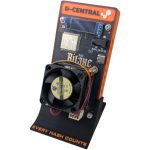
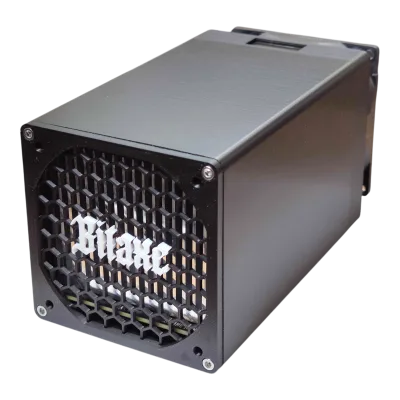
The industrial story is compelling, but at D-Central, we never lose sight of the individual. Quebec’s energy advantage is not limited to mega-scale operations. Home miners in Quebec benefit from the same cheap, clean hydroelectricity. A Bitaxe solo miner running in a Montreal apartment draws minimal power at some of the lowest residential rates in North America, contributes to Bitcoin’s decentralization, and in winter, every watt of power consumed also heats the living space.
The decentralization mission is not just about big facilities. It is about every Quebecer, every Canadian, every Bitcoiner running their own miner, controlling their own hashrate, and participating directly in the network’s security.
Whether you are running a full-scale Antminer S21 in your garage or a Bitaxe on your desk, you are part of the same story: decentralizing Bitcoin mining, one hash at a time.
Every hash counts.
Frequently Asked Questions
Why is Quebec specifically well-suited for the Bitcoin mining and battery industry synergy?
Quebec generates roughly 99% of its electricity from hydroelectric sources, producing significant seasonal surplus. Battery factories need consistent, uninterrupted power, while Bitcoin mining can instantly absorb or release load. This combination allows both industries to coexist on the same grid without competing — mining uses the surplus, factories get their stability, and the grid stays balanced.
Does Bitcoin mining compete with battery factories for energy?
No. Bitcoin mining functions as a flexible, interruptible load. When grid demand from battery factories or other critical users is high, mining curtails instantly. Mining only consumes power that is surplus or otherwise underutilized. This makes it complementary rather than competitive. Miners can ramp from full power to zero in seconds with no damage or restart penalty.
How fast can Bitcoin mining operations adjust their power consumption?
ASIC miners can power on and off in seconds. Unlike aluminum smelters (which take up to seven days to restart) or battery production lines (which cannot be interrupted mid-process), Bitcoin mining has zero ramp-up time, zero ramp-down time, and zero restart penalty. This makes it the most flexible industrial load available for grid balancing.
Is Bitcoin mining in Quebec environmentally friendly?
Yes. Quebec’s electricity is nearly 100% hydroelectric — one of the cleanest energy sources available. Bitcoin mining powered by Quebec hydro has near-zero carbon emissions per kilowatt-hour. Additionally, Quebec’s cold climate provides natural cooling for mining facilities, reducing the need for energy-intensive air conditioning and further improving environmental performance.
Can individual home miners benefit from Quebec’s energy advantages?
Absolutely. Quebec has some of the lowest residential electricity rates in North America, all from clean hydro. Home miners benefit from the same cheap energy as industrial operations. In winter, the heat output from miners also serves as supplemental space heating, effectively reducing the net cost of mining. D-Central builds Bitcoin Space Heaters specifically designed for home heating integration.
What is the current Bitcoin block reward and network hashrate?
As of 2025, the Bitcoin block reward is 3.125 BTC (following the April 2024 halving). The total network hashrate exceeds 800 EH/s. Despite the reduced block reward, mining remains profitable in jurisdictions with low energy costs like Quebec, especially when waste heat is captured for productive use.
How does D-Central Technologies participate in Quebec’s mining ecosystem?
D-Central has operated Bitcoin mining infrastructure in Quebec since 2016. We run a hosting facility in Laval, Quebec, powered by Hydro-Quebec electricity. We also provide ASIC repair services, sell mining hardware and accessories, build Bitcoin Space Heaters for home use, and are pioneers in the open-source mining movement through the Bitaxe ecosystem. We are deeply embedded in Quebec’s mining community.