
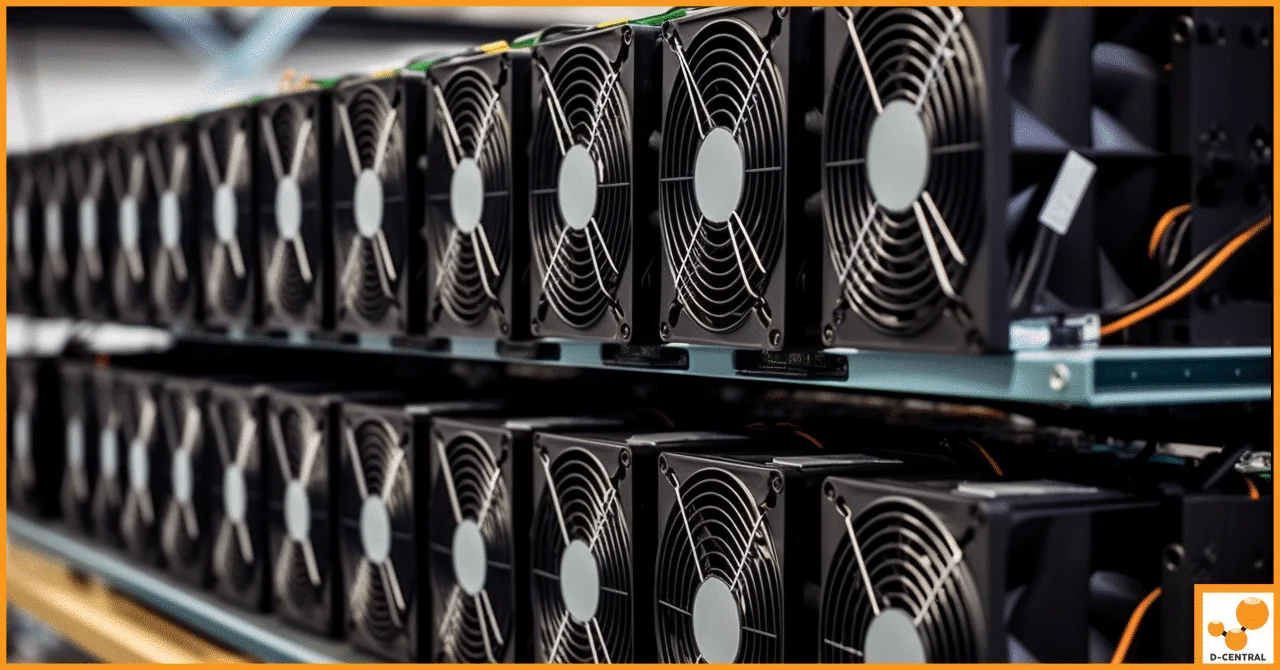
The Bitcoin mining arms race never stops. New ASIC generations drop every year promising better joules-per-terahash, and the marketing machine wants you to believe last year’s hardware is obsolete. But here is the reality that the manufacturers will never tell you: a properly refurbished ASIC miner can deliver serious hashrate at a fraction of the cost — and in many scenarios, it is the smarter play.
At D-Central Technologies, we have been repairing and refurbishing ASIC miners since 2016. We have seen thousands of machines come through our workshop in Laval, Quebec — boards with blown MOSFETs, fans caked in dust, control boards with corrupted firmware. We know exactly what fails, why it fails, and how to bring these machines back to full operational status. This guide breaks down the real differences between new and refurbished mining equipment so you can make an informed decision based on data, not marketing hype.
What “Refurbished” Actually Means in ASIC Mining
The term “refurbished” gets thrown around loosely in the mining hardware market. Let us kill the ambiguity. In the ASIC mining world, “refurbished” covers a wide spectrum — from a quick wipe-down and reboot all the way to a full board-level rebuild. The quality depends entirely on who does the work.
A proper refurbishment process at a facility like D-Central involves:
- Full diagnostic testing — running each hashboard individually to identify dead ASIC chips, failing voltage domains, and thermal anomalies
- Component-level repair — replacing blown MOSFETs, capacitors, temperature sensors, and damaged ASIC chips under a microscope with hot air rework stations
- Thermal paste and pad replacement — old thermal interface material degrades over time, reducing heat dissipation and throttling performance
- Fan inspection and replacement — bearings wear out, blades crack, and airflow drops. New fans restore proper cooling
- Firmware verification — ensuring clean, stock or optimized firmware with no malicious pool redirects or hidden dev fees
- Burn-in testing — running the fully assembled unit for 24-72 hours under load to confirm stable hashrate and catch intermittent failures
This is not “used hardware with a sticker on it.” This is engineering work — the same kind of board-level diagnostics and repair that keeps enterprise data centers running. The difference is we do it for individual miners, not just institutions.
New vs. Refurbished ASIC Miners: The Honest Comparison
Here is the comparison table that manufacturers do not want you to see:
| Factor | New ASIC Miner | Refurbished (D-Central) |
|---|---|---|
| Upfront Cost | Full retail — often 2-5x higher | 30-60% savings typical |
| Hashrate | Advertised specs (factory conditions) | Within 5-10% of rated specs, verified by burn-in |
| Efficiency (J/TH) | Latest gen leads (e.g., S21 ~17.5 J/TH) | Same silicon, same J/TH — older gen trades gen efficiency for lower $/TH |
| Warranty | 6-12 months manufacturer | 30-day D-Central warranty + ongoing repair support |
| Lead Time | Weeks to months (especially from China) | Usually in-stock, ships from Canada |
| Firmware | Stock manufacturer firmware | Verified clean firmware, custom options available |
| Repair Support | Ship back to manufacturer (weeks/months) | In-house Canadian repair, fast turnaround |
| ROI Timeline | Longer — higher capital outlay to recover | Shorter — lower entry cost, faster breakeven |
| Environmental Impact | New manufacturing, new e-waste cycle | Extends hardware lifecycle, reduces e-waste |
The key insight: efficiency is not everything. If your electricity cost is low — and in many parts of Canada, it absolutely is — the $/TH metric matters far more than J/TH. A refurbished S19j Pro at $500 producing 100 TH/s gives you hashrate at $5/TH. A new S21 at $5,000 producing 200 TH/s gives you hashrate at $25/TH. The math speaks for itself.
The Efficiency Myth: Why Older Miners Are Not Automatically Obsolete
Here is something the “always buy new” crowd does not tell you: ASIC chip efficiency does not degrade with use. A BM1397 chip in a refurbished Antminer S17 has the same joules-per-terahash as the day it was fabricated. What degrades are mechanical components — fans, thermal paste, connectors, and solder joints. All of which are replaceable during professional refurbishment.
The real question is not “new or refurbished” — it is “what is my all-in cost per terahash, and what is my electricity rate?”
Consider the math for a Canadian home miner:
| Scenario | New S21 (200 TH/s) | Refurbished S19j Pro (100 TH/s) |
|---|---|---|
| Purchase Price | ~$5,500 CAD | ~$1,200 CAD |
| Cost per TH/s | $27.50/TH | $12.00/TH |
| Power Draw | ~3,500W | ~3,050W |
| Efficiency | ~17.5 J/TH | ~30.5 J/TH |
| Dual-Purpose Value | ~12,000 BTU/hr heat output | ~10,400 BTU/hr heat output |
If you are running a miner as a Bitcoin space heater during Canadian winters — and you should be — the electricity is not wasted on mining. It is doing double duty: heating your space and stacking sats. In that scenario, the refurbished S19j Pro at $12/TH becomes extremely compelling because your effective electricity cost for mining approaches zero during heating season.
When New Makes Sense (And When It Does Not)
We are not going to tell you refurbished is always the answer. That would be dishonest. Here is when buying new actually makes strategic sense:
Buy new when:
- You have high electricity costs (above $0.08/kWh) and need maximum J/TH efficiency to stay profitable
- You need the absolute latest generation for a specific deployment with tight power budgets
- You are deploying at scale where uniform hardware simplifies management, firmware deployment, and maintenance scheduling
- You want a full manufacturer warranty as your only safety net because you have no repair capability
Buy refurbished when:
- You have access to cheap or surplus electricity (hydroelectric, solar, flared gas, off-peak rates)
- You are a home miner looking to maximize hashrate per dollar spent
- You want to build a Bitcoin space heater — older ASICs produce more heat per terahash, making them ideal for dual-purpose mining and heating setups
- You are expanding an existing operation and want to add hashrate without massive capital outlay
- You want to learn and experiment — firmware mods, underclocking, immersion builds — without risking a $10,000 machine
- You are in Canada and want local support from a company that actually knows the hardware at the component level
This is where D-Central’s full-service model becomes a real advantage. We do not just sell you hardware and disappear. We repair it, we consult on deployment, and we can even host it in our Quebec facility if you do not want to run it at home. No other refurbished hardware seller in Canada offers that lifecycle.
The D-Central Refurbishment Process
We are transparent about exactly what happens when a machine enters our workshop. Every refurbished unit we sell goes through a standardized multi-stage process:
| Stage | What We Do | Why It Matters |
|---|---|---|
| 1. Intake and Triage | Visual inspection, serial number logging, initial power-on test | Establishes baseline condition, identifies obvious failures |
| 2. Board-Level Diagnostics | Each hashboard tested individually — voltage domain checks, ASIC chip scans, temperature mapping | Finds dead chips, failing components, thermal hotspots |
| 3. Component Repair | Hot air rework for BGA chips, soldering of MOSFETs, capacitors, sensors | Restores hashrate without replacing entire boards |
| 4. Thermal Service | Old thermal paste/pads removed, surfaces cleaned, fresh TIM applied | Proper heat transfer prevents throttling and extends chip life |
| 5. Mechanical Service | Fan replacement, heatsink cleaning, enclosure inspection | Restores airflow and cooling efficiency |
| 6. Firmware and Config | Clean firmware flash, pool configuration reset, firmware integrity check | Eliminates malicious firmware, dev fee redirects, backdoors |
| 7. Burn-In Test | 24-72 hours continuous mining at full load, hashrate monitored | Catches intermittent failures that short tests miss |
| 8. QA and Ship | Final inspection, hashrate verification report, secure packaging | You know exactly what you are getting before you plug it in |
Every machine that leaves our shop has been touched by technicians who understand ASIC hardware at the component level — not warehouse workers running a script. This is repair-grade refurbishment, the same standard as our standalone ASIC repair service covering 38+ models across Bitmain, MicroBT, Innosilicon, and Canaan hardware.
The Dual-Purpose Advantage: Refurbished Miners as Space Heaters
Here is something the “buy new or bust” crowd never talks about: older-generation ASICs are actually better for dual-purpose mining setups.
An Antminer S9, S17, or S19 produces significant heat output. Instead of venting that heat outside — literally throwing money away — you can channel it into your home with a Bitcoin space heater setup. The electricity you would have spent on electric heating now earns you Bitcoin while keeping you warm. Your mining cost effectively drops to near zero during Canadian winters.
This is where refurbished hardware shines. You do not need the latest 17 J/TH efficiency when the “waste” heat is the entire point. A refurbished S19 at 30 J/TH produces roughly 3,000 watts of heat — equivalent to two high-end electric space heaters — while simultaneously mining Bitcoin. The worse the efficiency, the more heat you get per terahash. That is not a bug; it is a feature.
D-Central pioneered the Bitcoin space heater concept with our S9, S17, and S19 Space Heater Editions. These are refurbished miners configured specifically for home heating deployment with noise reduction and ducting options. Canada’s climate gives home miners a structural advantage that most of the world does not have — for 6-8 months of the year, you are paying to heat your home anyway, and every watt an ASIC consumes becomes heat at 100% efficiency.
Firmware: The Hidden Risk in Refurbished Hardware
One of the most overlooked risks when buying refurbished ASIC miners — especially from random sellers on eBay, Alibaba, or Telegram — is compromised firmware.
Malicious firmware can:
- Redirect a percentage of your hashrate to the seller’s pool (hidden dev fee)
- Lock you out of the control board after a set period
- Report inflated hashrate while actually underperforming
- Create a backdoor for remote access to your network
This is why the firmware verification stage in our refurbishment process is non-negotiable. Every machine gets a clean firmware flash from a verified source. We verify firmware checksums and ensure there are no unauthorized modifications. If you are buying refurbished from anyone, this is the single most important question to ask: “What firmware is on this machine, and have you verified its integrity?”
The Canadian Advantage
Buying refurbished from a Canadian company matters more than you might think:
- No cross-border customs headaches — Canadian buyers get domestic shipping with no import duties or brokerage fees
- Local warranty support — if something goes wrong, your machine goes to our Laval, Quebec workshop — not back to Shenzhen
- Cold climate synergy — Canada’s cold winters are a natural advantage for ASIC cooling, and the heat output is useful 6-8 months of the year
- Competitive electricity rates — Quebec hydro rates make even less-efficient refurbished units profitable where they would not be in other markets
- Repair expertise on demand — D-Central has been doing ASIC repair since 2016 with 38+ model-specific repair capabilities across Bitmain, MicroBT, Innosilicon, and Canaan hardware
Red Flags When Buying Refurbished Miners
Not all refurbished sellers are equal. Here is what to watch for:
| Red Flag | Why It Matters |
|---|---|
| No burn-in testing mentioned | Machine may fail within days of deployment |
| No warranty at all | Seller has no confidence in their own refurbishment work |
| Ships from overseas with no local support | Returns are expensive, warranty claims are impossible |
| Vague “tested and working” language | Plugged in for 5 minutes is not a refurbishment |
| Price too good to be true | May be running on 2 of 3 hashboards or have undisclosed issues |
| No repair capability disclosed | Resellers without repair labs cannot properly refurbish — they only sort and resell |
| No firmware verification process | Malicious firmware can redirect your hashrate or compromise your network |
Beyond the Hardware: The Full Mining Stack
Getting the right hardware — new or refurbished — is only one piece of the puzzle. A successful mining operation also requires:
- Proper power infrastructure — 240V circuits, appropriately rated breakers, quality PDUs
- Cooling and ventilation — whether ducting heat into your home or exhausting it outside
- Pool selection — solo mining for the true Bitcoiners chasing a 3.125 BTC block reward, or pooled mining for consistent payouts
- Monitoring and maintenance — hashrate tracking, temperature alerts, regular dust cleaning
- Strategic planning — mining consulting to optimize your deployment for your specific electricity rate and goals
If you are just getting started, check out the D-Central shop for both new and refurbished mining hardware. And do not overlook the open-source path — the Bitaxe is a fully open-source solo miner running on a 5V barrel jack (5.5×2.1mm DC — not USB-C, which is for firmware flashing only) that lets you contribute to network decentralization while chasing a full block reward. Every hash counts.
Making Your Decision: A Framework
Stop thinking about “new vs. refurbished” as a binary. Think about it as an optimization problem:
- What is your electricity cost? — Below $0.06/kWh makes refurbished very attractive. Above $0.10/kWh pushes toward latest-gen efficiency.
- Are you recovering heat? — If yes, refurbished wins on ROI almost every time.
- What is your risk tolerance? — Can you handle a machine going down and shipping it for service? If not, buy new with manufacturer warranty.
- What is your timeline? — Need to be mining tomorrow? Refurbished from inventory. Can wait weeks? New from manufacturer.
- Do you have repair access? — Miners near a repair service like D-Central’s can run refurbished hardware with confidence.
There is no wrong answer — only the answer that fits your situation. The wrong move is not mining at all. The Bitcoin network needs more distributed hashrate, and every miner plugged in at home is a vote for decentralization.
Frequently Asked Questions
What is the difference between a refurbished ASIC miner and a used one?
A used miner is simply a pre-owned machine sold as-is, with no guarantee of condition or remaining lifespan. A professionally refurbished miner has undergone component-level diagnostics, repair of any failed parts, thermal compound replacement, fan inspection or replacement, firmware verification, and extended burn-in testing. At D-Central, our refurbishment process is the same standard as our ASIC repair service — we do not cut corners.
How long does a refurbished ASIC miner last?
ASIC chips themselves do not have a fixed lifespan — they are solid-state silicon. What wears out are mechanical components: fans, thermal paste, and solder joints. A properly refurbished miner with all mechanical components replaced or serviced can run for years. Many refurbished S9s have been running continuously since 2017. The key factor is the quality of the refurbishment and ongoing maintenance like dust cleaning and fan replacement.
Is the hashrate lower on a refurbished miner?
A properly refurbished miner should produce hashrate within 5-10% of its factory-rated specifications. If a refurbished miner is producing significantly less than rated hashrate, it likely has failing ASIC chips that were not addressed during refurbishment — a sign of poor-quality refurbishment, not an inherent limitation of refurbished hardware. ASIC chip efficiency (J/TH) does not degrade with use.
Can I use a refurbished miner as a Bitcoin space heater?
Absolutely — this is one of the strongest use cases for refurbished ASIC miners. Every watt consumed by a miner becomes heat at 100% efficiency. A refurbished miner in a Space Heater Edition enclosure heats your room while mining Bitcoin. During heating season, the electricity cost is not an additional expense — it replaces your existing heating cost, making the Bitcoin you mine effectively free from an energy perspective. D-Central offers purpose-built Space Heater Editions based on the S9, S17, and S19 platforms.
Does D-Central offer warranty on refurbished miners?
Yes. All professionally refurbished mining equipment from D-Central includes a 30-day warranty covering defects in the refurbishment work. Our hashrate guarantee ensures performance within 10% of advertised specifications. Beyond the warranty period, our ASIC repair service in Laval, Quebec is available for any future maintenance or repair needs — we support the full lifecycle of your hardware.
Should I buy refurbished if I am a first-time miner?
Refurbished hardware is an excellent choice for first-time miners. The lower upfront cost reduces your financial risk while you learn the operational realities of running mining hardware — noise management, heat ducting, network configuration, pool selection, and electricity monitoring. Once you have hands-on experience, you can make a more informed decision about scaling up with new or additional refurbished units.
How do I verify the firmware on a refurbished miner is safe?
Every refurbished unit from D-Central receives a clean firmware flash from a verified source with checksum verification. If buying from other sellers, ask specifically about their firmware verification process. Check that the firmware version matches official releases from the manufacturer. Watch for signs of malicious firmware: unexpected pool configurations, hashrate that does not match dashboard readings, or dev fee addresses in the configuration. When in doubt, reflash with verified stock firmware before connecting to your network.
 Antminer S19 Space Heater Edition" width="80" height="80" loading="lazy" style="width:80px;height:80px;object-fit:contain;border-radius:6px;background:#1A1A1A;flex-shrink:0;">
