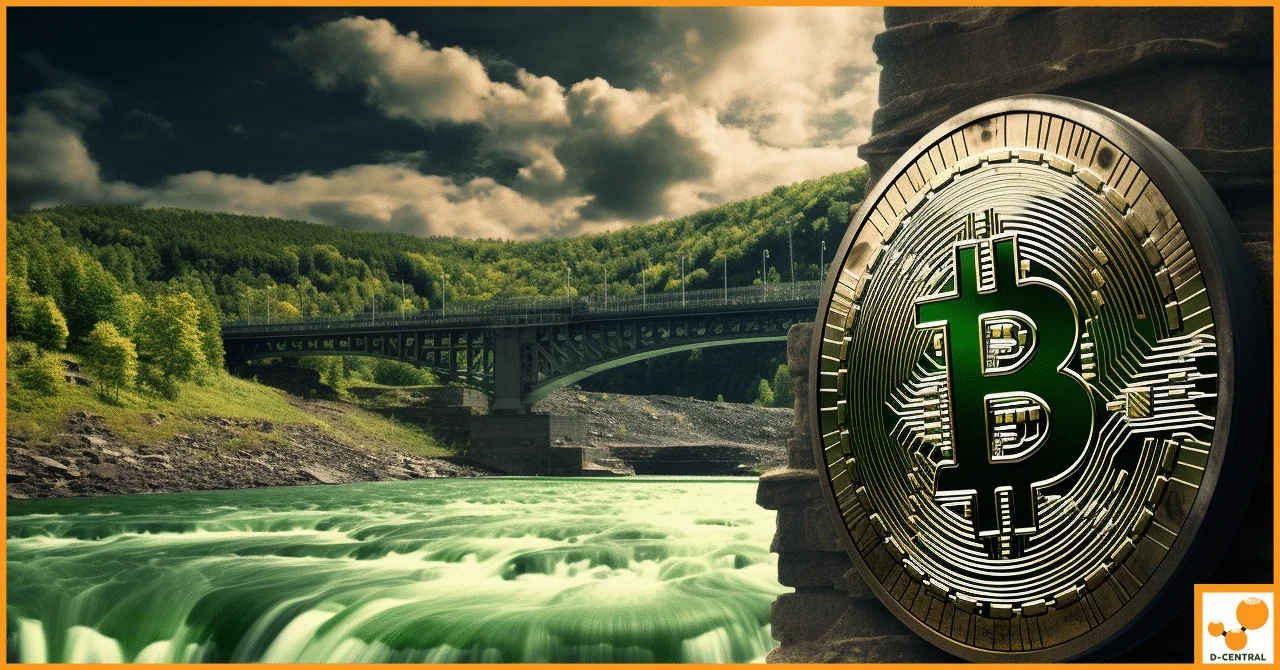
Bitcoin mining is not just about hashing power. It is about sovereignty — over your money, your compute, your energy, and your future. Quebec sits at a unique intersection where abundant hydroelectric power, cold climate, and a culture of technological independence create the ideal conditions for sovereign Bitcoin mining operations. This is not theory. This is infrastructure-level advantage, and D-Central Technologies has been building on it since 2016.
This article breaks down why Quebec’s green energy grid is a strategic asset for Bitcoin miners, how sovereign computing principles align with Bitcoin’s cypherpunk roots, and what home miners can do to participate in this revolution from their own basements.
What Is Sovereign Computing — and Why Should Miners Care?
Sovereign computing means owning and controlling your own computational infrastructure. No third-party cloud provider deciding what you can run. No government flipping a switch on your operations. No dependency on foreign data centers or centralized platforms that can deplatform you overnight.
For Bitcoin miners, this concept is not abstract — it is existential. The entire security model of the Bitcoin network depends on hashrate being distributed across independent operators who cannot be coerced or shut down by a single entity. Every miner running their own hardware, on their own power, under their own roof, strengthens the network’s censorship resistance.
This is why home mining matters. This is why open-source miners like the Bitaxe matter. Every solo miner hashing away in a Canadian basement is a node of resistance against hashrate centralization.
Sovereign computing extends to monetary sovereignty. Bitcoin itself is the monetary layer — a currency no central bank controls, no government can inflate at will, and no third party can confiscate without physical access to your keys. When you mine Bitcoin on your own hardware, powered by your own energy, you are participating in the most sovereign form of money creation ever devised.
Quebec’s Green Energy Advantage: The Numbers
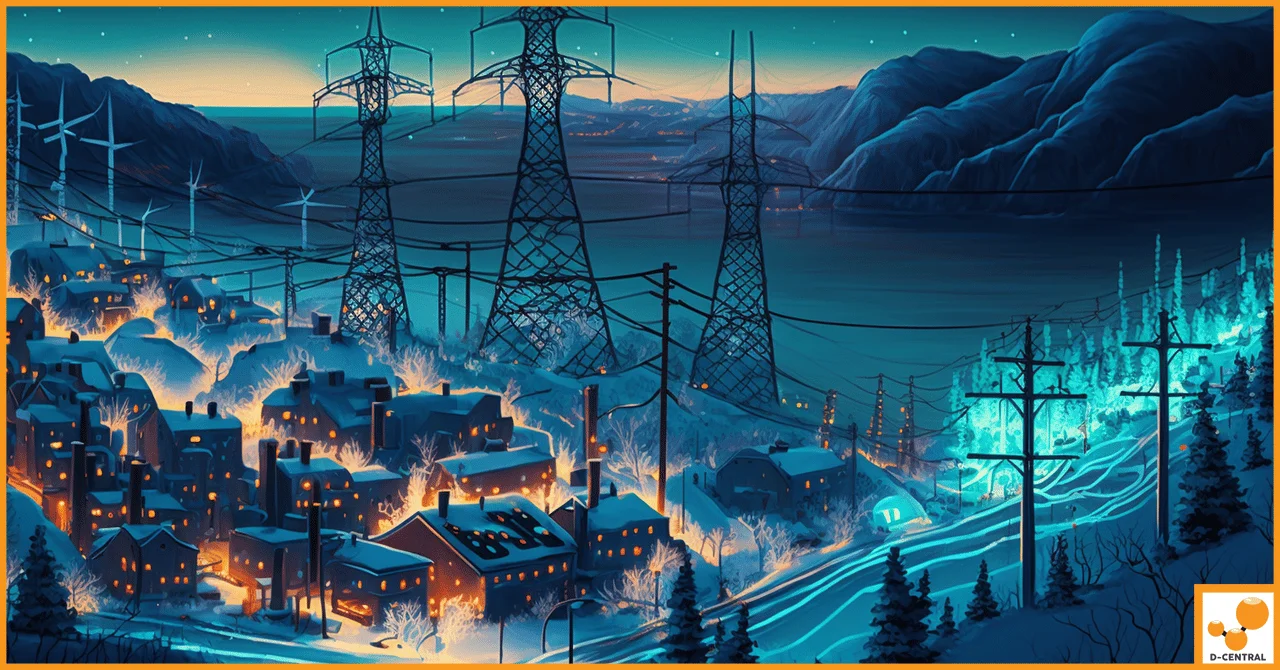
Quebec generates over 99% of its electricity from renewable sources, primarily hydroelectric dams operated by Hydro-Québec. This is not a marketing claim — it is a structural reality of the province’s geography, with massive river systems feeding some of the largest reservoirs on the planet.
For Bitcoin miners, this translates into concrete advantages:
| Factor | Quebec | Global Average |
|---|---|---|
| Renewable Energy Share | 99%+ (hydro) | ~30-40% |
| Industrial Electricity Rate | ~$0.05-0.07 CAD/kWh | $0.08-0.15+ USD/kWh |
| Average Annual Temperature | ~5°C (41°F) | Varies widely |
| Carbon Intensity (grid) | ~1.2 g CO2/kWh | ~400-500 g CO2/kWh |
| Cold Climate Cooling Benefit | 6-8 months free cooling | Requires active cooling year-round |
The combination of cheap hydroelectric rates and cold ambient temperatures means Quebec miners enjoy a double efficiency bonus: lower energy costs per terahash AND reduced cooling overhead. During Canadian winters — which, let us be honest, span a healthy portion of the year — miners can rely entirely on ambient air for cooling, eliminating the need for energy-hungry HVAC systems.
This is not a marginal advantage. In an industry where electricity cost is the single largest operational expense, Quebec’s grid gives miners a structural edge that is nearly impossible to replicate in warmer, fossil-fuel-dependent jurisdictions.
Bitcoin Mining as a Sovereign Monetary Act
Traditional monetary systems operate on trust in central authorities. You trust your central bank not to debase the currency. You trust your commercial bank to honor your deposits. You trust your payment processor not to freeze your account. History has shown, repeatedly, that this trust is misplaced.
Bitcoin eliminates the need for trust by replacing it with verification. Every 10 minutes, a new block is mined, transactions are confirmed, and the supply schedule advances according to rules that no one can change unilaterally. The current block subsidy of 3.125 BTC is mathematically predetermined — no committee meeting, no emergency decree, no quantitative easing.
When you mine Bitcoin, you are not merely “earning cryptocurrency.” You are actively participating in the consensus mechanism that secures over $1 trillion in value. You are validating transactions for a permissionless network. You are contributing hashrate — currently over 800 EH/s globally — to the most secure computational network ever built.
Why Decentralized Hashrate Distribution Matters
The Bitcoin network is only as censorship-resistant as the distribution of its hashrate. If mining becomes concentrated in a few large facilities controlled by a handful of entities, the network becomes vulnerable to coordinated attacks, regulatory pressure, or physical seizure.
This is why D-Central’s mission — decentralization of every layer of Bitcoin mining — is not just a tagline. It is a security imperative for the entire network. Every home miner running a Bitaxe, every small operation heated by Bitcoin space heaters, every basement setup pulling a few terahashes contributes to the geographic and jurisdictional distribution of hashrate.
Quebec, with its favorable energy economics and regulatory environment, is an ideal jurisdiction for this distributed model. Miners here are not just profitable — they are strategically positioned to contribute to network security while operating on some of the cleanest energy on Earth.
The Dual-Purpose Mining Opportunity in Cold Climates
Here is a fact that changes the economics of home mining entirely: ASIC miners produce heat as a byproduct. In cold climates like Quebec, this “waste” heat is not waste at all — it is home heating.
A Bitcoin space heater running an Antminer S9 produces approximately 1,300 watts of heat output — the equivalent of a standard electric space heater. Except this heater also mines Bitcoin. You are heating your home AND stacking sats simultaneously. The electricity cost you were already going to spend on heating now has a second function.
| Approach | Heating Output | Bitcoin Yield | Net Energy Cost |
|---|---|---|---|
| Standard Electric Heater | 1,500W thermal | 0 BTC | 100% electricity cost |
| Bitcoin Space Heater (S9) | ~1,300W thermal | ~13.5 TH/s mining | Electricity cost minus BTC mined |
| Bitcoin Space Heater (S19) | ~3,250W thermal | ~95 TH/s mining | Electricity cost minus BTC mined |
In Quebec, where winter temperatures regularly drop below -20°C and the heating season runs from October through April, the math is compelling. You are monetizing energy you would have consumed anyway. D-Central builds purpose-built Bitcoin space heater editions using refurbished ASIC hardware — machines that have been professionally repaired and tested in our Montreal workshop before being repackaged as heating solutions.
D-Central: Building Sovereign Mining Infrastructure Since 2016
D-Central Technologies has been operating from Quebec since 2016 — long before “home mining” became a trend. We are Bitcoin Mining Hackers: we take institutional-grade mining technology and hack it into accessible solutions for individual miners.
Our operation is vertically integrated:
| Service | What We Do |
|---|---|
| Hardware Sales | Full catalog of ASIC miners, Bitaxe open-source miners, parts, and accessories — shipped from Canada |
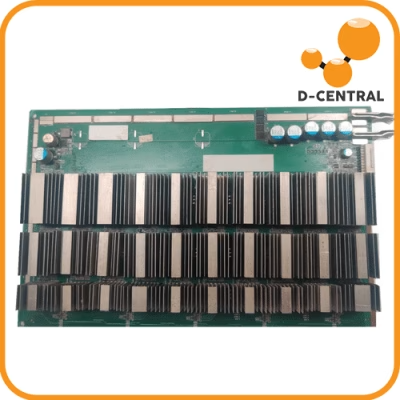
| ASIC Repair | Professional hashboard repair, diagnostics, and refurbishment for all major manufacturers — 60+ model-specific repair services |
| Mining Hosting | Facility-based hosting in Quebec (Montreal) for miners who need dedicated infrastructure |
| Consulting | Mining consulting for individuals and businesses planning mining operations |
| Bitcoin Space Heaters | Custom-built dual-purpose mining and heating units using refurbished ASIC hardware |
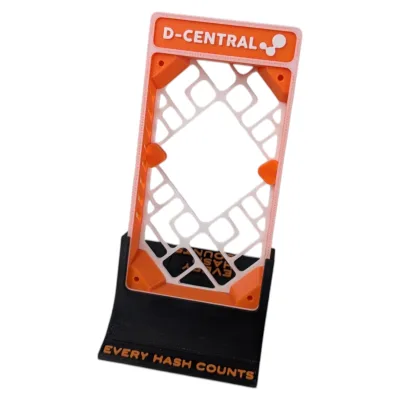
| Open-Source Pioneers | Pioneer manufacturer in the Bitaxe ecosystem — created the original Bitaxe Mesh Stand and developed leading heatsink solutions |
Everything we do serves one mission: decentralization of every layer of Bitcoin mining. From the individual running a Bitaxe on their desk to the small business deploying a rack of S19s, we provide the hardware, expertise, and infrastructure to make sovereign mining accessible.
How to Start Mining Sovereignly in Quebec
You do not need a warehouse. You do not need a six-figure investment. You need a power outlet, an internet connection, and the conviction that distributed hashrate matters. Here is a practical path:
Step 1: Assess Your Energy Situation
Quebec residential rates hover around $0.07-0.09 CAD/kWh. Check your Hydro-Québec bill. If you are on the standard D rate, you already have access to some of the cheapest renewable electricity in North America.
Step 2: Choose Your Entry Point
For solo mining enthusiasts: the Bitaxe lineup offers open-source miners starting at minimal wattage. These devices connect to solo mining pools and give you a chance — however small — at a full 3.125 BTC block reward. Every hash counts.
For serious home miners: a Bitcoin space heater replaces your existing electric heater while stacking sats. During Quebec’s long heating season, the economics are straightforward — you were going to spend that electricity on heat anyway.
Step 3: Plan Your Electrical and Ventilation
A single Bitaxe draws about 15-25 watts — plug it in anywhere. An S9 space heater draws ~1,300 watts — a standard 15A circuit handles it. Larger setups (S19-class) require 240V circuits and proper ventilation. D-Central’s consulting team can help plan installations at any scale.
Step 4: Point Your Hashrate
Solo mining pools like Solo CKPool let individual miners contribute hashrate with a lottery-style payout model. Pool mining through Braiins, Ocean, or other decentralization-focused pools is another option. The key principle: choose pools that do not censor transactions.
The Bigger Picture: Quebec as a Global Model
What is happening in Quebec is a template for sovereign computing worldwide. The ingredients are simple: renewable energy, cold climate, rule of law, and a population willing to embrace technological independence.
Bitcoin mining is the perfect use case for stranded or surplus renewable energy. Hydro-Québec regularly produces excess electricity — energy that would otherwise be exported at low margins or curtailed entirely. Bitcoin mining monetizes that surplus at the point of generation, creating economic value from energy that would otherwise be wasted.
This is the narrative the legacy media consistently misses. Bitcoin mining does not “waste” energy. It monetizes energy that has no other buyer. It acts as a buyer of last resort for renewable energy producers, improving the economics of green energy projects and accelerating the transition away from fossil fuels.
Quebec is proving this model at scale. And every home miner in the province — from the Bitaxe on a desk in Montreal to the space heater warming a workshop in Gatineau — is part of this proof.
Sovereignty Is Not Optional
The convergence of Bitcoin mining, renewable energy, and sovereign computing is not a trend. It is the logical conclusion of decades of centralization in both financial and computational systems. Central banks print. Cloud providers deplatform. Governments surveil. Bitcoin offers an exit.
Quebec’s structural advantages — cheap hydro, cold air, stable grid, strong property rights — make it one of the best jurisdictions on Earth for exercising that exit through mining. D-Central Technologies has spent nearly a decade building the tools, services, and community to make that accessible to everyone.
Whether you are running a single Bitaxe for the love of open-source hardware, heating your garage with an S9, or deploying a rack of next-gen ASICs in a Quebec hosting facility, you are contributing to something bigger than your individual hashrate. You are building a more decentralized, more censorship-resistant, more sovereign financial network.
And that is worth every watt.
Frequently Asked Questions
Why is Quebec considered one of the best places in the world for Bitcoin mining?
Quebec generates over 99% of its electricity from hydroelectric sources, offering some of the lowest industrial electricity rates in North America (approximately $0.05-0.07 CAD/kWh). Combined with cold ambient temperatures that provide 6-8 months of free cooling for mining hardware, Quebec delivers a double efficiency advantage that drastically reduces the cost per terahash compared to warmer, fossil-fuel-dependent regions.
What does “sovereign computing” mean for Bitcoin miners?
Sovereign computing means owning and controlling your own computational infrastructure — running your own mining hardware, on your own power, without dependency on third-party cloud services or centralized platforms. For Bitcoin miners, this directly strengthens the network’s censorship resistance by ensuring hashrate is distributed across independent operators who cannot be coerced or shut down by a single entity.
Can I mine Bitcoin at home in Quebec without a large investment?
Yes. Entry-level open-source miners like the Bitaxe draw only 15-25 watts and can be plugged into any standard outlet. For home miners who want to combine mining with heating, Bitcoin space heaters use refurbished ASIC hardware to produce heat while mining — effectively monetizing electricity you would spend on heating anyway. D-Central offers hardware, consulting, and support for setups at every scale.
How does Bitcoin mining with green energy benefit the environment?
Bitcoin mining monetizes surplus renewable energy that would otherwise be curtailed or exported at low margins. Quebec’s hydroelectric grid has a carbon intensity of approximately 1.2 g CO2/kWh — roughly 300-400 times lower than fossil-fuel grids. By acting as a buyer of last resort for renewable energy, Bitcoin mining actually improves the economics of green energy projects and accelerates the transition away from fossil fuels.
What services does D-Central Technologies offer for Quebec-based miners?
D-Central provides a full-service mining ecosystem: hardware sales (ASIC miners, Bitaxe open-source miners, parts and accessories), professional ASIC repair and refurbishment, mining hosting in our Quebec facility, consulting services for mining operation planning, custom Bitcoin space heaters, and comprehensive technical support. We have been serving the Canadian mining community from Quebec since 2016.
Is solo mining with a Bitaxe actually worth it?
Solo mining with a Bitaxe is a lottery-style proposition — with network hashrate exceeding 800 EH/s, the odds of any single low-hashrate device finding a block are extremely small. However, the block reward is 3.125 BTC, and blocks have been found by solo miners with modest hardware. Beyond the lottery aspect, running a Bitaxe supports network decentralization, teaches you how mining works at a fundamental level, and contributes to the open-source hardware ecosystem. Every hash counts.