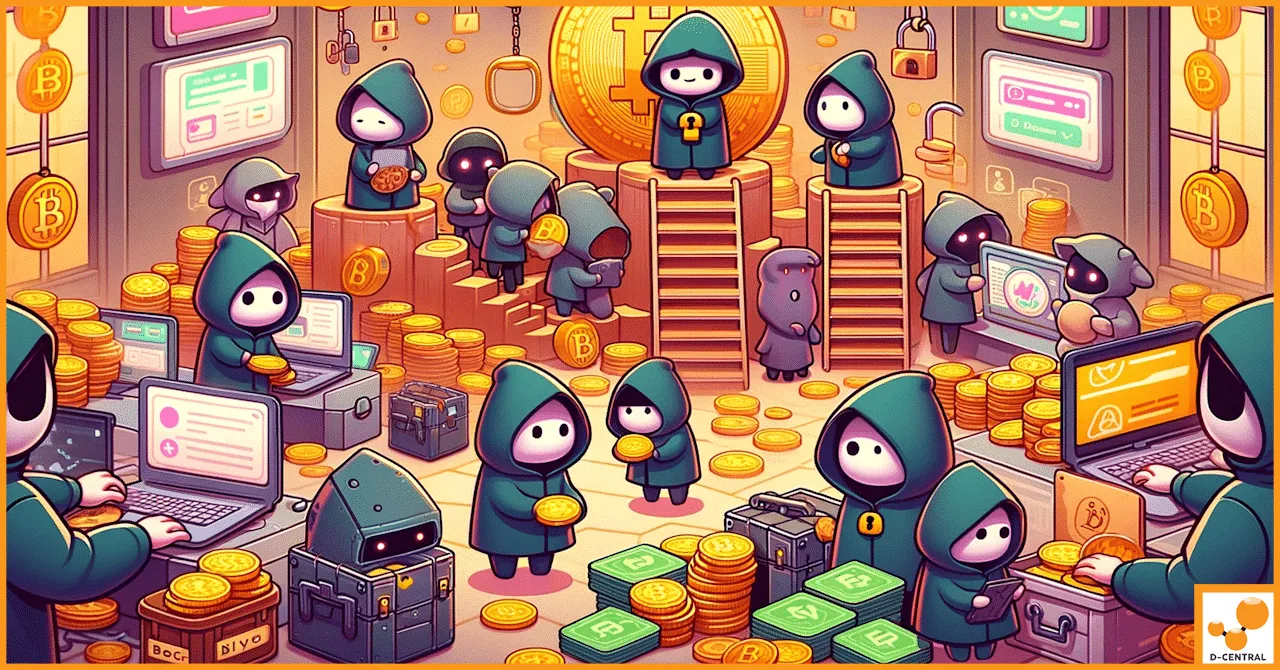
The phrase “non-KYC Bitcoin” sounds like jargon. It is not. It describes the most natural way to acquire bitcoin: without handing your government ID, selfie, and home address to a third party. Before centralized exchanges turned onboarding into an airport security checkpoint, every bitcoin transaction was non-KYC by default. That was the whole point.
Satoshi Nakamoto did not build a system that required permission. Bitcoin was designed as peer-to-peer electronic cash, where trust comes from mathematics, not from corporate compliance departments. Know Your Customer regulations are a legacy-finance import bolted onto an ecosystem that was built to make them obsolete.
If you are here because you want to understand how to acquire, hold, and use bitcoin without surrendering your identity to honeypot databases, you are in the right place. This guide is written for Bitcoiners who take sovereignty seriously: the home miners, the node runners, the plebs who refuse to ask permission to participate in sound money.
What Does Non-KYC Actually Mean?
KYC stands for Know Your Customer. In traditional finance, it means a bank verifies your identity before letting you open an account. Centralized cryptocurrency exchanges adopted the same process: upload your passport, take a selfie, prove your address. The exchange stores all of it. You get access to their order book in return.
Non-KYC bitcoin is bitcoin acquired through methods that do not require identity verification. You never hand over documents. There is no database linking your legal name to your UTXO set. The bitcoin sits in your wallet, tied to nothing but your private keys.
Why the Distinction Matters
When you buy bitcoin on a KYC exchange, that purchase creates a permanent record. The exchange knows your name, your bank account, the exact amount you bought, and the withdrawal address you sent it to. That information is shared with regulators, stored in databases, and vulnerable to breaches. Every major exchange has been hacked or leaked user data at some point. The Ledger data breach exposed 270,000 customer records. Canadian exchange QuadrigaCX collapsed entirely. These are not theoretical risks.
Non-KYC bitcoin breaks that chain. No database entry. No third-party record. Just you, your keys, and the blockchain. This is not about hiding. It is about refusing to create unnecessary attack surfaces against your own financial privacy.
Mining: The Purest Form of Non-KYC Bitcoin
Here is a fact that does not get enough attention: mining is the original non-KYC acquisition method, and it remains the most sovereign way to obtain bitcoin in 2026.
When you mine bitcoin, the network pays you directly. No intermediary. No exchange. No identity verification. The block reward (currently 3.125 BTC after the April 2024 halving) or pool payout lands in a wallet address that you control. The only entity involved is the Bitcoin protocol itself.
At D-Central, we have been saying this since 2016: mining is not just about hashrate. It is about sovereignty. Every hash you produce is a vote for decentralization, and every satoshi you earn through mining arrives in your wallet without a KYC string attached.
Home Mining with ASICs
Running an ASIC miner at home is the most direct route to non-KYC bitcoin. The economics have evolved: with network hashrate exceeding 800 EH/s and difficulty above 110T, solo mining a full block on a single unit is unlikely. But that is not the only path.
Pool mining with privacy-respecting pools (such as Ocean, which supports payouts directly to your wallet without requiring identity) gives you regular non-KYC sats. The miner runs in your home, on your power, and the rewards flow to an address only you control.
D-Central specializes in making this accessible. Our Bitcoin Space Heaters turn ASIC miners into dual-purpose machines: they mine bitcoin and heat your home simultaneously. A repurposed Antminer S19 running in a Space Heater enclosure earns sats while replacing your electric baseboard heater. In Canadian winters, the heat is not wasted; it is the whole point.
For those interested in home mining setups, our mining consulting service can help you design an operation that fits your space, power availability, and goals.
Solo Mining and Lottery Mining
Solo mining deserves its own category because it represents the purest form of non-KYC acquisition. You point your miner at the network (or through a solo mining pool like Solo CKPool), and if your machine finds a valid block, the entire 3.125 BTC block reward is yours. No pool. No intermediary. No KYC.
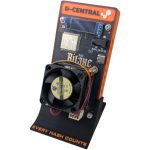
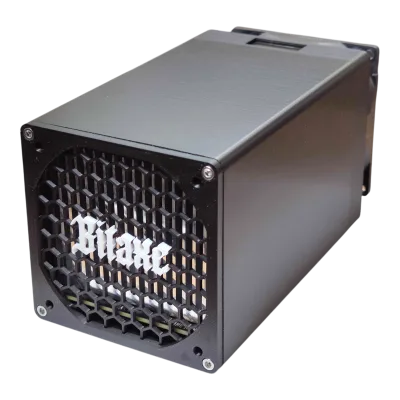
The probability is low for any single machine, but it is never zero. Bitaxe solo miners have found blocks against astronomical odds. If you run a Bitaxe, you are not just learning about Bitcoin’s proof-of-work mechanism firsthand; you are buying a lottery ticket that never expires, with every hash counted by the network. Every hash counts.
Open-Source Mining Hardware
The open-source mining movement is a direct expression of non-KYC values. Devices like the Bitaxe, NerdAxe, NerdQAxe, and Nerdminer are fully open-source: you can verify the hardware design, flash your own firmware, and mine without trusting a manufacturer’s black box.
D-Central has been a pioneer in this ecosystem from the beginning. We created the original Bitaxe Mesh Stand and developed leading solutions including custom heatsinks for the Bitaxe and Bitaxe Hex. We stock every Bitaxe variant (Supra, Ultra, Hex, Gamma, GT) along with the full Nerd and open-source device lineup. Browse the complete collection in our shop.
Peer-to-Peer Exchanges
If you are not mining, peer-to-peer (P2P) exchanges are the next best method for acquiring non-KYC bitcoin. These platforms connect buyers and sellers directly, without a centralized order book that requires your ID.
Active P2P Platforms in 2026
The P2P landscape has shifted significantly. LocalBitcoins, once the dominant platform, shut down in 2023. Samourai Wallet’s developers were arrested by the DOJ in April 2024. The ecosystem has consolidated around platforms that were built from the ground up for privacy:
- Bisq — A fully decentralized exchange that runs as desktop software. No central server. No accounts. No KYC. Trades are secured by a multisig escrow system. Bisq is the gold standard for non-KYC bitcoin acquisition after mining.
- RoboSats — A Lightning Network-native P2P exchange accessed through Tor. Fast, private, and designed for smaller transactions. No registration required.
- Peach Bitcoin — A mobile-first P2P platform popular in Europe and expanding globally. Focuses on ease of use while maintaining a no-KYC model.
- HodlHodl — A global P2P trading platform that uses multisig escrow without holding user funds. No mandatory KYC for standard trades.
- Azteco — Sells bitcoin vouchers at retail locations. Walk in, pay cash, redeem a voucher for bitcoin. No ID required.
P2P Trading Best Practices
- Use the platform’s escrow system. Never send bitcoin or fiat outside the escrow mechanism. If a counterparty asks you to bypass escrow, walk away.
- Check trade history and reputation. Established traders with dozens of completed trades are lower risk than brand-new accounts.
- Start small. Your first trade on any platform should be a small amount to test the process and your counterparty.
- Use encrypted communications. Stick to the platform’s built-in messaging. Do not move conversations to Telegram or email where context is lost.
- For in-person trades, meet in public. Coffee shops, libraries, or busy public areas. Never at a private residence.
Bitcoin ATMs: Fading but Still Useful
Bitcoin ATMs were once a reliable non-KYC acquisition channel. You fed cash into the machine and received bitcoin to your wallet. No ID required. That era is largely over.
Regulatory pressure in both Canada and the United States has forced most Bitcoin ATM operators to implement KYC verification for transactions above small thresholds (often as low as $250-900 CAD depending on the operator and jurisdiction). Some machines still allow small purchases without ID, but the trend is toward universal verification.
If you find a low-limit non-KYC ATM, it can be useful for small, regular purchases. But do not rely on this channel as a primary acquisition method.
Earning Bitcoin Directly
One of the most overlooked methods for acquiring non-KYC bitcoin is earning it. When someone pays you in bitcoin for goods or services, there is no exchange, no KYC, and no intermediary.
Freelancing for Bitcoin
Platforms like Microlancer, Stakwork, and various Lightning-integrated marketplaces allow freelancers to earn bitcoin for tasks ranging from writing and design to software development. The payments arrive via Lightning or on-chain, directly to your wallet.
Selling Goods for Bitcoin
If you run a business or side project, accepting bitcoin as payment is a direct path to non-KYC sats. BTCPay Server is a self-hosted, open-source payment processor that you can run on your own infrastructure. No third party processes the payment. No KYC.
Circular Economies
The strongest version of earning bitcoin is participating in a circular economy: a community where goods and services are traded for bitcoin without ever touching fiat. These exist in various Bitcoin communities worldwide and represent the endgame for sound money adoption.
Privacy Techniques for Bitcoin You Already Hold
What if you already hold bitcoin that was acquired through a KYC exchange? You cannot un-KYC a purchase, but you can take steps to break the chain of surveillance going forward.
CoinJoin
CoinJoin is a technique where multiple users combine their bitcoin transactions into a single transaction, making it significantly harder for chain analysis firms to trace which inputs correspond to which outputs. The concept was described by Gregory Maxwell in 2013 and has been implemented in various forms since.
After the Samourai Wallet seizure in 2024, the CoinJoin landscape shifted. Wasabi Wallet’s WabiSabi protocol and JoinMarket remain active implementations. The legal landscape around CoinJoin is evolving, so stay informed about regulations in your jurisdiction before using these tools.
Lightning Network
The Lightning Network provides practical privacy benefits. Once bitcoin moves onto Lightning channels, individual payments do not appear on the base-layer blockchain. Routing through multiple hops provides a degree of sender and receiver privacy that on-chain transactions do not offer.
Running your own Lightning node (rather than using a custodial Lightning wallet) maximizes this benefit. A Raspberry Pi, an old laptop, or a dedicated node box like Start9 or Umbrel will do the job.
Address Hygiene
Never reuse bitcoin addresses. Modern wallets generate a new receiving address for every transaction by default. If yours does not, switch wallets. Address reuse is the single easiest way to destroy your on-chain privacy.
Use a wallet that supports coin control, which lets you choose which UTXOs to spend in a given transaction. This prevents accidentally linking your KYC and non-KYC bitcoin in the same transaction.
Self-Custody: The Non-Negotiable Foundation
None of this matters if your bitcoin sits on someone else’s server. If you do not hold your private keys, you do not hold bitcoin. You hold an IOU from a company that can freeze your account, get hacked, or collapse overnight. Ask anyone who had funds on FTX, Celsius, BlockFi, or QuadrigaCX.
Hardware Wallets
A hardware wallet stores your private keys on a dedicated device that never exposes them to the internet. Trezor, Blockstream Jade, and Foundation Passport are popular options. Coldcard was long favoured in the non-KYC community for its air-gapped operation (it never needs to connect to a computer via USB) and its open-source firmware, but D-Central no longer recommends it: Coinkite disclosed a seed-generation flaw on 2026-07-30 and installing the fixed firmware does not repair a seed that already exists — see our advisory.
Multisignature Setups
For larger amounts, a multisig wallet requires multiple keys to authorize a transaction. A 2-of-3 multisig setup means you need any two of three keys to move funds. One key on a hardware wallet at home, one in a safety deposit box, one at a trusted location. Even if one key is compromised or lost, your bitcoin remains safe. Tools like Sparrow Wallet and Nunchuk make multisig accessible without requiring deep technical expertise.
Seed Phrase Security
Your 12 or 24-word seed phrase is your bitcoin. Engrave it on steel (Seedplate, Cryptosteel, or similar). Never store it digitally. Never photograph it. Never type it into a website. Store it in a secure physical location, ideally in a fireproof and waterproof container.
Running a Full Node: Verify, Do Not Trust
A full Bitcoin node downloads and verifies every transaction in Bitcoin’s history. When you run your own node, you do not trust anyone else’s copy of the blockchain. You verify it yourself.
This is directly relevant to non-KYC bitcoin: if you rely on someone else’s node to verify your transactions, they can see your addresses and transaction patterns. Running your own node means your wallet connects to your hardware, verifying your transactions without leaking data to third parties.
Bitcoin Core is the reference implementation. It runs on a standard computer with at least 1 TB of storage. Dedicated node solutions like Start9, Umbrel, or RaspiBlitz make setup straightforward for non-technical users.
The Canadian Context
Canada occupies a unique position in the non-KYC conversation. FINTRAC (the Financial Transactions and Reports Analysis Centre of Canada) regulates virtual currency dealers and requires registration for businesses that deal in virtual currencies. Individual miners, however, are not classified as money services businesses simply for mining and holding bitcoin.
This means home mining in Canada is one of the cleanest non-KYC acquisition methods available. You run hardware in your home, earn bitcoin from the network, and hold it in self-custody. No FINTRAC reporting requirement for the mining activity itself. (Tax obligations still apply: CRA treats mined bitcoin as income at fair market value at the time of receipt. Consult a tax professional for your specific situation.)
Canada’s cold climate is an additional advantage for miners. Where other jurisdictions struggle with cooling costs, Canadian home miners can use their ASIC heat output productively for eight months of the year. D-Central’s mining hosting in Canada takes advantage of Quebec’s low-cost hydroelectric power for those who want to scale beyond a home setup.
For those who want structured guidance, our mining training program covers everything from hardware selection to operational security.
Operational Security for Non-KYC Bitcoin
Acquiring non-KYC bitcoin is only half the battle. Maintaining that privacy requires ongoing operational discipline.
Network Privacy
- Use Tor or a VPN when interacting with bitcoin-related services. Your ISP can see that you connected to a bitcoin node or exchange. Tor masks your IP address.
- Run your node over Tor. Bitcoin Core supports Tor natively. This prevents your ISP from knowing you run a node and prevents peers from learning your real IP.
- Avoid browser-based wallets. They leak data through your browser fingerprint, cookies, and potentially compromised extensions.
Physical Security
- Do not talk about your holdings. The $5 wrench attack is real. If people know you hold significant bitcoin, you become a target.
- Separate your mining operation from your identity. If you post photos of your mining setup on social media, scrub metadata from images and avoid showing identifiable details.
- Use a dedicated device for bitcoin-related activities. A laptop that only runs your node, wallet software, and Tor. Nothing else.
Transaction Discipline
- Never mix KYC and non-KYC UTXOs. If you spend KYC bitcoin and non-KYC bitcoin in the same transaction, chain analysis links them. Use separate wallets and practice strict coin control.
- Label your UTXOs. Wallets like Sparrow let you tag each UTXO with its source. This helps you avoid accidentally mixing coins from different privacy levels.
- Spend on Lightning when possible. Lightning payments leave no on-chain footprint, preserving the privacy of your base-layer UTXOs.
The Bigger Picture: Why Non-KYC Matters for Bitcoin
This is not just about individual privacy. The ratio of KYC to non-KYC bitcoin in circulation has systemic implications for the network.
When the majority of bitcoin is acquired through KYC channels, chain analysis firms can map enormous portions of the UTXO set to real identities. This creates a de facto surveillance layer on top of what was designed to be a permissionless system. Governments can pressure exchanges to freeze funds, blacklist addresses, or refuse withdrawals based on transaction history.
Non-KYC bitcoin resists this. It is bitcoin that cannot be easily mapped, frozen, or censored. It strengthens the network’s censorship resistance, which protects everyone, including those who use KYC exchanges.
Mining is the most scalable source of non-KYC bitcoin. Every home miner who points an ASIC at the network contributes to the supply of untracked, sovereign bitcoin. This is why D-Central’s mission of decentralizing every layer of Bitcoin mining is not just a business proposition. It is a contribution to Bitcoin’s long-term health as a censorship-resistant monetary network.
If your ASIC needs repair to get back online, our ASIC repair service has been servicing miners since 2016 with thousands of units repaired. Every miner we bring back online is another source of non-KYC sats.
Frequently Asked Questions
What is non-KYC Bitcoin?
Non-KYC bitcoin is bitcoin acquired without identity verification. It is not linked to your name, address, or government ID in any exchange’s database. Mining, peer-to-peer trades, and earning bitcoin for goods or services are the primary acquisition methods.
Is non-KYC Bitcoin legal in Canada?
Acquiring bitcoin without KYC is legal in Canada. Individual mining does not require FINTRAC registration. However, all bitcoin holdings and dispositions are subject to CRA tax reporting. You are responsible for reporting mined bitcoin as income at fair market value. Consult a tax professional for your specific situation.
Is mining the best way to get non-KYC Bitcoin?
Mining is the most sovereign method. The bitcoin comes directly from the network protocol with no intermediary. Pool mining with privacy-respecting pools provides regular payouts without KYC. Solo mining with devices like the Bitaxe offers a chance at the full 3.125 BTC block reward with zero third-party involvement.
What happened to LocalBitcoins and Samourai Wallet?
LocalBitcoins shut down in February 2023, citing the challenging market environment. Samourai Wallet’s founders were arrested by the U.S. Department of Justice in April 2024 on charges related to operating an unlicensed money transmitting business. The P2P and privacy tool landscape has consolidated around Bisq, RoboSats, Peach Bitcoin, and other platforms built for resilience.
Can I use a Bitcoin Space Heater to mine non-KYC Bitcoin?
Absolutely. A Bitcoin Space Heater is an ASIC miner in a custom enclosure designed for home heating. It mines bitcoin and heats your space simultaneously. The mining rewards go directly to your wallet without any identity verification, making it one of the most practical non-KYC acquisition methods for Canadian homes.
What is the difference between a hot wallet and cold storage?
A hot wallet is connected to the internet and convenient for frequent transactions but more vulnerable to remote attacks. Cold storage (hardware wallets, paper wallets, air-gapped devices) keeps your private keys offline, providing maximum security for long-term holdings. For non-KYC bitcoin, cold storage with a hardware wallet like a Trezor or Blockstream Jade is the recommended approach.
How do I avoid linking my KYC and non-KYC Bitcoin?
Use separate wallets for KYC and non-KYC bitcoin. Never spend from both in the same transaction. Use a wallet with coin control (like Sparrow Wallet) and label every UTXO with its source. Run your own full node over Tor so your wallet does not leak address information to third-party servers.
Does D-Central sell mining hardware for non-KYC Bitcoin acquisition?
Yes. D-Central stocks a full range of mining hardware, from open-source solo miners like the Bitaxe and NerdAxe to full-scale ASICs and Bitcoin Space Heaters. All mining rewards go directly to your own wallet. We have been building mining solutions since 2016 and are pioneers in the open-source mining hardware ecosystem.