The Bitcoin network in 2026 is a force of nature. Over 800 EH/s of combined hashrate, difficulty consistently above 110 trillion, and a block subsidy of 3.125 BTC after the April 2024 halving. In this environment, the margin between profitable mining and burning money comes down to infrastructure decisions. Bad infrastructure kills operations. Good infrastructure is the foundation that separates miners who survive difficulty adjustments from those who capitulate.
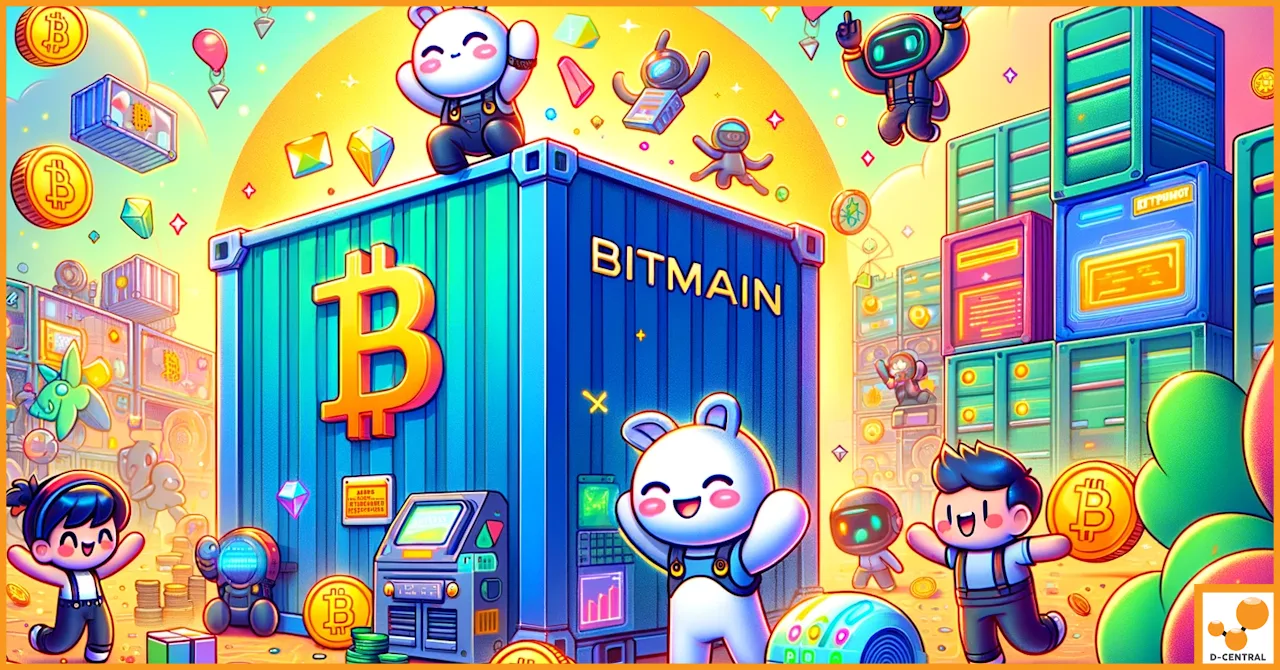
The Bitmain Antbox container is one of the most significant infrastructure innovations in Bitcoin mining history. It took the concept of a mining facility and compressed it into a modular, transportable, rapidly deployable unit. For operators looking to scale hashrate without the multi-year timeline and massive capital expenditure of traditional facility construction, container mining changed the game entirely.
At D-Central Technologies, we have been in the trenches of Bitcoin mining infrastructure since 2016. We have deployed, maintained, repaired, and optimized every generation of mining hardware. We have seen container mining evolve from a niche experiment to a mainstream deployment strategy. Here is the unfiltered, technically grounded breakdown of the Bitmain Antbox and what it means for mining operations in 2026.
What Is the Bitmain Antbox Container?
The Bitmain Antbox is a purpose-built, self-contained mining container designed to house and operate large numbers of ASIC miners in a single modular unit. Think of it as a plug-and-play data center built inside a modified shipping container, engineered specifically for the thermal, electrical, and environmental demands of Bitcoin mining.
Bitmain designed the Antbox to solve a fundamental problem: building a traditional mining facility takes months to years of planning, permitting, construction, and commissioning. The Antbox compresses that timeline dramatically. A prepared site can go from bare ground to hashing in days rather than months.
Core Architecture
The Antbox is built on a standard shipping container chassis, typically 20-foot or 40-foot variants, modified with:
- Integrated power distribution — High-amperage bus bars, PDUs, and circuit protection rated for the total load of the installed miners
- Forced-air cooling system — Large intake filters on one end, high-CFM exhaust fans on the other, creating a negative-pressure airflow tunnel through the miners
- Miner racking — Purpose-built shelving and mounting systems designed for specific ASIC form factors, maximizing density while maintaining adequate airflow between units
- Network infrastructure — Managed switches, cabling runs, and external connectivity points for pool connections and monitoring
- Environmental protection — Weatherproof shell, IP-rated cable penetrations, and optional dust filtration for harsh environments
Antbox Model Variants
Bitmain has released several Antbox variants over the years, each targeting different deployment scales:
| Model | Form Factor | Capacity (S19-class) | Power Capacity |
|---|---|---|---|
| Antbox N3 | 20-foot container | ~48 units | ~150 kW |
| Antbox N5 | 40-foot container | ~180 units | ~500 kW |
| Antbox V1 | 20-foot container | ~64 units | ~200 kW |
The exact capacity varies depending on the ASIC model installed. Newer-generation miners like the S21 series have different form factors and power requirements than the S19 series, so container configurations must be planned around specific hardware.
Why Container Mining Matters in 2026
The Bitcoin mining landscape has fundamentally shifted. The April 2024 halving cut the block subsidy from 6.25 BTC to 3.125 BTC, forcing every operator to scrutinize their cost structure with ruthless precision. At the same time, network difficulty has continued its relentless climb above 110T, meaning more hashrate is required to earn the same share of diminishing rewards.
In this environment, infrastructure efficiency is not a luxury. It is survival.
Speed to Hashrate
Traditional mining facility construction involves site selection, environmental assessments, utility interconnection agreements, building permits, construction, electrical work, HVAC installation, commissioning, and testing. In many jurisdictions, this process takes 12 to 24 months from concept to first hash.
Container mining compresses this dramatically. With a prepared site (concrete pad, utility connection, network), an Antbox can be delivered, connected, loaded with miners, and hashing within days. In a market where difficulty adjustments happen every two weeks and conditions change rapidly, speed to hashrate is a genuine competitive advantage.
Capital Efficiency
Building a permanent mining facility requires enormous upfront capital. Land acquisition or lease, construction costs, custom electrical engineering, HVAC systems, fire suppression, security infrastructure — the list is long and expensive. Container mining offers a significantly lower capital entry point for equivalent hashrate capacity.
The modular nature of containers also means operators can scale incrementally. Start with one container, prove the economics, add more as cash flow allows. This is fundamentally different from the all-or-nothing capital commitment of a traditional build.
Energy Arbitrage and Mobility
One of the most powerful advantages of container mining is mobility. Containers can be deployed at stranded energy sites — locations where power is available but traditional load is not. This includes:
- Flare gas sites — Converting wasted natural gas into hashrate
- Behind-the-meter renewable installations — Solar and wind farms with excess capacity
- Curtailed hydro — Hydroelectric facilities producing more power than the grid can absorb, a particularly relevant scenario in Canada
- Grid balancing — Acting as flexible load that can be curtailed during peak demand
This mobility is especially relevant in Canada, where vast hydroelectric resources and cold climate conditions create ideal mining conditions. At D-Central, we understand this advantage intimately — our mining hosting operations in Quebec leverage precisely these conditions.
Thermal Management: The Make-or-Break Factor
Heat is the enemy of ASIC miners. Every watt of power consumed by a mining chip is converted to heat that must be removed. In a container packed with dozens or hundreds of miners, thermal management is not just important — it is the single most critical engineering challenge.
How Antbox Cooling Works
The Antbox uses a simple but effective cooling strategy: forced-air, negative-pressure ventilation. Large intake openings on one end of the container draw ambient air through filter media (to catch dust and debris), across the miners, and out through high-CFM exhaust fans on the opposite end.
This creates a unidirectional airflow path that prevents hot exhaust air from recirculating back to miner intakes. The temperature differential between intake and exhaust can be 15 to 25 degrees Celsius depending on ambient conditions, miner density, and airflow volume.
Climate Considerations
The effectiveness of air-cooled container mining is heavily dependent on ambient temperature. This is where Canadian deployments have a natural advantage:
| Climate Zone | Avg. Ambient Temp | Cooling Challenge | Notes |
|---|---|---|---|
| Northern Canada / Scandinavia | -10 to +15 C | Low | Free cooling most of the year; may need intake pre-heating in extreme cold |
| Temperate (Southern Canada, Northern US) | +5 to +25 C | Moderate | Adequate air cooling with proper fan sizing; summer peaks may reduce performance |
| Hot / Arid (Texas, Middle East) | +25 to +45 C | High | Air cooling alone may be insufficient; evaporative or supplemental cooling required |
| Tropical / Humid | +25 to +35 C (high humidity) | Very High | Humidity accelerates corrosion; dehumidification may be needed |
In hot climates, operators often need to derate miners (reduce clock speeds and power consumption) to keep junction temperatures within safe limits. This directly reduces hashrate and revenue. Cold climate deployments avoid this penalty entirely and can often overclock miners for additional hashrate — a technique our ASIC repair and optimization team specializes in.
Dust and Filtration
The intake filtration system is critically important and often neglected. Mining containers deployed in dusty or agricultural environments can have their filters clog within weeks if not properly maintained. Clogged filters restrict airflow, increase internal temperatures, and can cause cascading miner shutdowns from thermal throttling.
Regular filter inspection and replacement is non-negotiable. In extreme dust environments, upgrading to higher-grade filtration or adding pre-filter stages is advisable.
Electrical Infrastructure: Getting the Power Right
The electrical design of a container mining deployment is where many operators make costly mistakes. The Antbox’s internal power distribution is engineered for mining loads, but the upstream infrastructure — the connection from the utility or generator to the container — requires careful planning.
Power Requirements
A fully loaded 40-foot Antbox running S21-class miners can draw 400 to 500+ kW. At standard North American voltages, this represents substantial current:
- 480V three-phase — approximately 600 to 700 amps per container
- 240V single-phase — impractical at these power levels; three-phase is mandatory
- Transformer requirements — medium-voltage to low-voltage step-down transformers, properly rated for continuous mining load (not intermittent commercial load)
Common Electrical Mistakes
- Undersized conductors — Mining is a continuous, 24/7 load. Wiring must be rated for 100% continuous duty, not the 80% rule used for intermittent loads
- Inadequate grounding — Poor grounding leads to ground fault nuisance trips, equipment damage, and safety hazards
- Missing surge protection — ASICs are sensitive electronics. Lightning strikes and utility switching transients can destroy hashboards. Proper SPDs (surge protective devices) at the service entrance and distribution panels are essential
- Ignoring power factor — ASIC power supplies have power factor correction (PFC), but large installations can still present reactive power issues to the utility, potentially incurring demand charges or requiring correction capacitors
Operational Realities: Running a Container Mining Operation
Owning an Antbox container is one thing. Running it profitably day after day, month after month, is another. Here are the operational realities that separate successful container mining operations from failed ones.
Monitoring and Management
Every miner in the container needs to be monitored for hashrate, temperature, fan speed, and error conditions. At scale, manual checking is impossible. Operators need:
- Centralized monitoring software — Tools like Foreman, Awesome Miner, or custom dashboards that aggregate data from all miners
- Automated alerts — Notifications for offline miners, high temperatures, hashrate drops, and fan failures
- Remote management — The ability to reboot, reconfigure, or update miners remotely without physical access to the container
- Environmental monitoring — Temperature and humidity sensors at intake, exhaust, and key internal points
Maintenance Cycles
Container mining hardware requires regular maintenance that many operators underestimate:
- Weekly: Visual inspection, filter check, monitoring review
- Monthly: Filter cleaning or replacement, connection inspections, firmware checks
- Quarterly: Deep cleaning, fan inspection, thermal paste assessment on critical machines, power connection torque checks
- Annually: Full inspection of container structure, electrical infrastructure review, cooling system overhaul
When miners inevitably fail — and they will — having a reliable repair partner is the difference between days of downtime and weeks. D-Central has been repairing ASICs since 2016, with dedicated repair pages for 38+ ASIC models and a team that understands every generation of Bitmain hardware at the component level.
Security
A container full of mining equipment represents significant value — both the hardware itself and the Bitcoin it produces. Security considerations include:
- Physical security — Fencing, cameras, tamper-evident locks, motion detection
- Network security — VPN access, firewall rules, firmware integrity verification to prevent hashrate hijacking
- Environmental monitoring — Flood, fire, and intrusion detection with remote alerting
Container Mining vs. Traditional Facilities: An Honest Comparison
Container mining is not universally superior to traditional facilities. Each approach has trade-offs that must be evaluated against specific operational requirements.
| Factor | Container (Antbox) | Traditional Facility |
|---|---|---|
| Deployment Speed | Days to weeks | Months to years |
| Capital Cost per MW | Lower | Higher (but better long-term value) |
| Scalability | Incremental (add containers) | Large increments (build phases) |
| Mobility | Relocatable | Fixed |
| Cooling Efficiency | Good (climate dependent) | Excellent (custom HVAC) |
| Maintenance Access | Tight spaces, ergonomically challenging | Walk-in, full ergonomic access |
| Noise Containment | Limited (open exhaust) | Better (sound attenuation options) |
| Lifespan | 10-15 years (corrosion, wear) | 30+ years |
| Permitting | Often simpler (temporary structure) | Full building permits required |
The sweet spot for container mining is in the small to mid-scale range (1 to 20 MW), stranded energy deployments, and situations where speed to market is critical. For very large operations (50+ MW), purpose-built facilities typically offer better long-term economics despite higher upfront costs.
The Decentralization Angle: Why This Matters for Bitcoin
Here is where the cypherpunk in us comes out. Bitcoin’s security model depends on a distributed, geographically diverse mining network. When mining is concentrated in a handful of large facilities owned by a handful of large companies, the network becomes vulnerable — to regulatory pressure, natural disasters, political instability, and coordinated attacks.
Container mining is inherently decentralizing. Its lower capital requirements and rapid deployment make mining accessible to a wider range of operators. Its mobility enables deployment at diverse locations — rural properties, industrial parks, agricultural land, remote energy sites. Every new independent mining operation, no matter how small, strengthens the Bitcoin network.
This is why we built D-Central. Not to serve institutions, but to serve the individuals, small businesses, and independent operators who are the backbone of a truly decentralized mining network. From our open-source miners like the Bitaxe for solo mining enthusiasts to our container-scale hosting and consulting services, every product and service we offer exists to put more hashrate in more hands.
Practical Considerations for Antbox Deployment in Canada
Canada offers some of the best conditions for container mining on the planet, but there are specific considerations that operators must account for.
Climate Advantage
Canada’s cold climate is a genuine competitive advantage for air-cooled mining. Six to eight months of the year, ambient temperatures provide free cooling that operators in Texas or the Middle East spend significant money to replicate mechanically. During Quebec winters, the challenge is actually preventing miners from getting too cold at startup — ASIC chips have minimum operating temperatures, and starting miners in extreme cold can cause thermal shock to solder joints.
Energy Landscape
Quebec’s hydroelectric power rates remain among the lowest in North America, and the grid is almost entirely renewable. This is not just an economic advantage — it is an environmental and narrative advantage. Bitcoin mined with Quebec hydro is some of the cleanest-energy Bitcoin on the network.
However, Hydro-Quebec has implemented specific rate structures and approval processes for cryptocurrency mining operations. Operators need to navigate these requirements carefully. Our mining consulting services can help operators understand the regulatory and utility landscape.
Regulatory Environment
Canadian regulations for mining operations vary by province and municipality. Key considerations include:
- Zoning — Container mining may be classified as industrial use, limiting viable locations in some municipalities
- Noise bylaws — Mining containers generate significant noise (80+ dB at exhaust). Setback requirements and noise attenuation may be required
- Electrical permits — High-power electrical installations require licensed electricians and inspections
- Environmental assessments — Depending on scale and location, environmental review may be required
Future of Container Mining
Container mining is evolving rapidly. Several trends are shaping its future:
Immersion Cooling Containers
The next frontier in container mining is immersion cooling — submerging miners in dielectric fluid rather than using air cooling. Immersion containers offer dramatically higher power density (more hashrate per square foot), near-silent operation, and the ability to operate in any climate without derating. The trade-off is higher upfront cost and more complex maintenance.
Hydro-Cooled ASICs
Bitmain’s hydro-cooled Antminer series (S19 XP Hyd, S21 Hyd) are designed specifically for liquid cooling deployments. Container systems designed around these miners can achieve even higher densities while maintaining excellent thermal performance.
Modular Data Center Standards
As container mining matures, industry standards for modular mining infrastructure are emerging. This standardization will improve interoperability, reduce costs through economies of scale, and make financing and insurance more accessible for container mining deployments.
Frequently Asked Questions
How many ASIC miners can fit in a Bitmain Antbox container?
Capacity depends on the Antbox model and the specific ASIC miner being installed. A 20-foot Antbox (N3/V1) can typically hold 48 to 64 S19-class miners, while a 40-foot Antbox (N5) can accommodate approximately 180 units. Newer-generation miners like the S21 series may have different form factors that change these numbers. Always verify physical dimensions and power requirements against the specific container model before ordering hardware.
What kind of power infrastructure do I need for an Antbox deployment?
A fully loaded 40-foot Antbox requires 400 to 500+ kW of three-phase power (480V in North America). This means a dedicated utility service or transformer, properly rated conductors for 100% continuous duty, appropriate circuit protection, and surge protective devices. Single-phase power is not practical at these scales. Work with a licensed electrician experienced in high-density computing loads, and coordinate with your utility provider well in advance — utility interconnection can be the longest lead-time item in a container deployment.
Is container mining profitable in 2026 with the 3.125 BTC block reward?
Profitability depends on three primary factors: your electricity cost (measured in cents per kWh), the efficiency of your mining hardware (measured in joules per terahash), and your operational overhead. At current network conditions (800+ EH/s, 110T+ difficulty), operators with all-in electricity costs below $0.05/kWh running current-generation hardware (sub-20 J/TH) can achieve positive margins. Older-generation hardware in the 30+ J/TH range is increasingly difficult to operate profitably unless electricity costs are exceptionally low. Container mining’s lower infrastructure overhead compared to traditional facilities can improve the margin picture, but it does not overcome fundamentally unfavorable power economics.
How does container mining compare to home mining with devices like the Bitaxe?
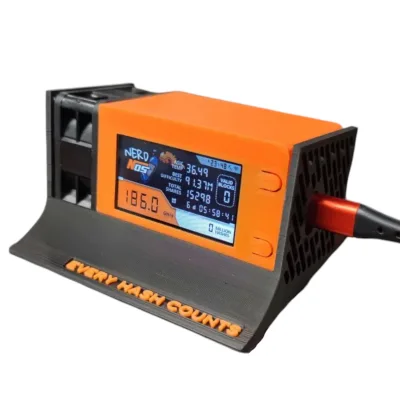
Container mining and home mining serve fundamentally different purposes. Container mining (Antbox-scale) is about maximizing hashrate for economic return — it is a business operation measured in petahash and kilowatts. Home mining with open-source devices like the Bitaxe is about participating in Bitcoin’s security, learning about mining, and taking a shot at solo mining a full block reward — it is about sovereignty and participation. Many passionate Bitcoiners do both: run a container operation for income and keep a Bitaxe on their desk as a statement of principle. Every hash counts.
What maintenance does a mining container require?
Mining containers require regular maintenance to operate reliably. Weekly visual inspections and monitoring reviews, monthly filter cleaning or replacement and connection checks, quarterly deep cleaning with fan inspections and thermal paste assessment, and annual structural and electrical infrastructure reviews. ASIC miners themselves will experience failures — fan motors wear out, hashboards develop faults, power supplies degrade. Having a relationship with a qualified ASIC repair service is essential for minimizing downtime. D-Central has been repairing ASICs since 2016 and supports every major ASIC platform across all major manufacturers.
The Bottom Line
The Bitmain Antbox container is not a magic solution — no infrastructure is. It is a well-engineered tool that, when deployed correctly with proper electrical infrastructure, adequate cooling considerations, and disciplined operational practices, enables miners to bring hashrate online faster and more cost-effectively than traditional facility construction.
In the post-halving reality of 2026, where every satoshi of margin matters, the infrastructure decision is one of the most consequential choices a mining operator makes. Container mining offers a compelling option for operators who value speed, flexibility, and capital efficiency — particularly in cold-climate jurisdictions like Canada where the natural environment does half the cooling work for free.
Whether you are planning your first container deployment or scaling an existing operation, D-Central has the expertise to help. From mining consulting and site planning to ASIC repair and ongoing technical support, we have been building mining infrastructure in Canada since 2016. We are the Bitcoin Mining Hackers — and we are here to help you mine smarter.