Quebec sits on one of the most powerful renewable energy grids on the planet. With over 37 GW of installed hydroelectric capacity, the province generates more clean electricity than most countries. And yet, when it comes to Bitcoin mining — an industry that converts surplus electrons into the hardest money ever created — Quebec’s state-owned utility has spent the better part of a decade slamming the door shut.
The consequences of Hydro-Quebec’s war on hashcenters are not theoretical. They are measured in billions of dollars of lost economic output, thousands of jobs that never materialized, and an entire industry that packed up and left for friendlier jurisdictions. For a province that claims to champion innovation and decarbonization, the hostility toward Bitcoin mining is not just bad policy — it is self-sabotage on a historic scale.
This is the story of what happens when a government lets ideology override economics. And more importantly, it is a case study in why home mining and decentralized hash power have never been more critical.
Quebec’s Hydroelectric Advantage: Built for Bitcoin Mining
Quebec’s electricity infrastructure reads like a Bitcoin miner’s wish list. The province operates 61 hydroelectric generating stations producing 37.2 GW of capacity — roughly 94% of the province’s total electricity generation comes from water. This is baseload power that runs 24/7/365, rain or shine, regardless of wind conditions or solar irradiance.
| Quebec Energy Metric | Value |
|---|---|
| Installed hydroelectric capacity | 37.2 GW |
| Share of electricity from hydro | ~94% |
| Number of hydroelectric stations | 61 |
| Current crypto mining allocation | ~441 MW total (190.6 MW Hydro-Quebec + 250.7 MW municipal) |
| Rate CB (crypto mining rate) | 16.603 cents/kWh (proposed increase to 19.5 cents/kWh in 2026) |
For Bitcoin mining, this kind of grid is ideal. Mining hardware runs at maximum efficiency with stable, uninterrupted power. Hydroelectric energy carries one of the lowest carbon footprints of any generation source. And Quebec’s cold climate provides free ambient cooling for roughly eight months of the year — a massive reduction in operating costs compared to operations in Texas, Georgia, or the Middle East.
Bitcoin mining also aligns perfectly with Quebec’s stated energy policy goals. When Minister of Economy Pierre Fitzgibbon outlined the four criteria for energy allocation — technical capacity, social acceptability, decarbonization potential, and economic value creation — Bitcoin mining checks every single box. It consumes renewable baseload power, creates local jobs, generates tax revenue, and can act as a flexible load that stabilizes the grid during periods of low demand.
The grid stabilization angle deserves special attention. Hydro-Quebec regularly spills water — literally wastes potential energy — because there is no demand to absorb it. Bitcoin miners are the perfect curtailable load: they can ramp down instantly during peak demand and absorb surplus power during off-peak hours. No other industry can switch on and off this quickly. Not aluminum smelting, not data centers, not manufacturing. Only Bitcoin mining offers true demand-response flexibility at scale.
The Moratorium: A Timeline of Escalating Hostility
Despite these advantages, Hydro-Quebec has spent years systematically pushing Bitcoin miners out of the province. Here is the timeline of escalation:
| Year | Event |
|---|---|
| 2018 | Hydro-Quebec imposes a moratorium on new energy allocations for Bitcoin mining and high-powered computing |
| 2019 | Special crypto mining rate (Rate CB) introduced — higher than standard industrial rates |
| 2022 | Hydro-Quebec proposes suspending 270 MW allocated to crypto miners entirely |
| 2023 | Regie de l’energie approves suspension of capacity allocation process for crypto mining |
| 2025 | Hydro-Quebec announces plans to eliminate crypto mining from its supply plan entirely |
| 2026 | Proposed rate increase to 19.5 cents/kWh for crypto mining (pending Regie de l’energie approval), with a 3-year transition period |
The pattern is unmistakable. What started as a temporary moratorium has evolved into a deliberate strategy to price Bitcoin miners out of the province entirely. The proposed rate of 19.5 cents/kWh — up from the already-punitive Rate CB of 16.603 cents/kWh — is designed to make large-scale Bitcoin mining economically unviable in Quebec. Standard industrial rates in Quebec hover around 5-7 cents/kWh. Crypto miners are being charged three to four times the rate paid by aluminum smelters, paper mills, and other heavy industrial users.
This is not energy policy. This is targeted discrimination against a specific industry.
The Economic Fallout: Billions Lost
The consequences of this policy are staggering. Since the 2018 moratorium, an estimated $1 billion worth of electricity has been effectively wasted — power that could have been sold to Bitcoin miners at premium rates instead of being spilled or exported at a loss.
But the direct electricity revenue is just the tip of the iceberg. Consider the cascading economic effects:
- Job losses and missed job creation: Bitcoin mining operations require electricians, HVAC technicians, IT professionals, security personnel, and facility managers. Each megawatt of mining capacity supports approximately 0.5 to 1.0 full-time jobs directly, with additional indirect employment in supporting industries. With over 100 MW of blocked capacity, Quebec has forfeited hundreds of direct jobs and thousands of indirect positions.
- Tax revenue evaporation: Mining companies generate corporate income tax, property tax on facilities, sales tax on equipment purchases, and payroll taxes for employees. Every mining operation that relocates takes this revenue stream with it.
- Business exodus: The most damaging consequence is the signal that Quebec sends to the global market. When one of the world’s largest hydroelectric producers actively drives away an industry that specifically needs cheap, clean electricity, it tells every other technology company to look elsewhere.
- Innovation drain: The expertise in power electronics, thermal management, firmware development, and hardware optimization that mining operations cultivate — all of it leaves with the companies.
The Bitfarms Exodus: A Case Study in Policy Failure
No single example illustrates the consequences of Quebec’s anti-mining policy better than the Bitfarms saga. Once one of Quebec’s largest Bitcoin mining operations, Bitfarms operated eight facilities across the province, consuming approximately 170 MW of hydroelectric power.
In November 2025, Bitfarms announced it would wind down all Bitcoin mining operations over the following two years. By February 2026, the company declared it was “no longer a Bitcoin company,” rebranded as Keel Infrastructure, and announced plans to relocate its legal headquarters from Canada to the United States.
The company’s pivot from Bitcoin mining to AI compute center infrastructure was driven directly by Quebec’s hostile rate environment. When your provincial utility actively works to triple your electricity costs while simultaneously courting AI compute centers with preferential rates, the message is clear: Bitcoin miners are not welcome, but AI companies — which consume comparable power and create fewer jobs per megawatt — are treated as premium customers.
The irony is devastating. Hydro-Quebec proposed doubling rates for large data centers in late 2025, yet still offered AI operations more favorable terms than Bitcoin miners. The double standard reveals that the issue was never about energy capacity or grid management — it was always about political acceptability. AI is fashionable; Bitcoin is not. And Quebec’s energy policy reflects that bias.
Bitfarms’ departure represents 170 MW of demand, hundreds of jobs, and millions in tax revenue that Quebec will never see again. This is the real cost of discriminatory energy policy.
Why This Matters for Decentralization
The Quebec case is not just an economics story. It is a sovereignty story.
When governments successfully drive Bitcoin mining out of regions with clean, abundant energy, they concentrate hash power in jurisdictions with weaker rule of law, dirtier energy grids, or more centralized control. Quebec’s loss is not just Quebec’s loss — it is a loss for the entire Bitcoin network.
Hash rate distribution is a security feature of Bitcoin. The more geographically dispersed the mining network, the more resistant it is to attack, censorship, or regulatory capture. Every time a jurisdiction like Quebec pushes miners out, it pushes hash power toward countries and regions that may not share the same values of transparency, rule of law, and environmental responsibility.
This is exactly why D-Central Technologies has been fighting for the decentralization of every layer of Bitcoin mining since 2016. The answer to hostile government policy is not surrender — it is adaptation. And the most powerful form of adaptation is home mining.
The Home Mining Solution: Ungovernable Hash Power
Here is the uncomfortable truth that Hydro-Quebec’s policy makers have not yet grasped: you cannot regulate away Bitcoin mining. You can only push it underground, offshore, or into people’s homes.
Home mining — particularly dual-purpose mining that doubles as space heating — is the ultimate response to discriminatory energy policy. When a Bitcoin miner is also your space heater, the economics change completely:
- The electricity cost becomes a sunk cost. You were going to heat your home regardless. Every satoshi mined during heating season is pure revenue from energy you were already spending.
- No special rate applies. Residential electricity in Quebec costs approximately 7-9 cents/kWh — less than half the proposed crypto mining rate of 19.5 cents/kWh. There is no Rate CB for your furnace.
- No capacity allocation needed. A 1,500-watt space heater draws no more power than a hair dryer. No megawatt-scale allocations, no Regie de l’energie approvals, no moratoriums.
- Completely legal. Heating your home with electricity is your right. What that electricity does before it becomes heat is nobody’s business.
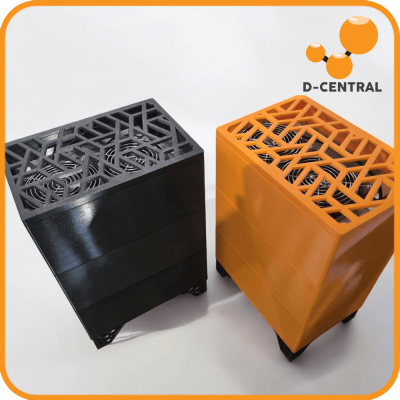
D-Central’s Bitcoin Space Heater editions are purpose-built for this use case. Every model ships with silent fan upgrades, custom firmware for noise management, and 3D-printed enclosures designed for residential environments. The S9 Space Heater Edition starts at $235 CAD and pushes warm air into your living space while mining Bitcoin. The S19 Space Heater Edition delivers up to 95 TH/s and outputs over 11,000 BTU/hr of heat — comparable to a commercial-grade electric heater.
In 2025-2026, the dual-purpose mining category has exploded. Canaan launched the Avalon Mini 3 at CES 2025 — a 37.5 TH/s miner designed as a home heater. Superheat unveiled a combined water heater and Bitcoin miner at CES 2026. Canaan also piloted a 3 MW system in Manitoba that recovers mining heat to warm greenhouses, producing water temperatures above 75 degrees Celsius. The industry is moving decisively toward heat recovery, and D-Central has been at the forefront of this movement since we built our first Space Heater Edition.
The Broader Canadian Landscape
Quebec is not the only Canadian province grappling with Bitcoin mining policy, but it is the most hostile. British Columbia introduced its own restrictions in 2024. Meanwhile, provinces like Alberta, Manitoba, and Saskatchewan have been more welcoming — though none offer the same hydroelectric advantage that Quebec squanders.
The Canadian federal landscape remains relatively open. Bitcoin mining is legal nationwide, mining income is taxable (which means the government benefits from the activity), and there are no federal restrictions on mining hardware or operations. The friction comes exclusively at the provincial utility level.
For Canadian miners looking for hosting, the equation has become more complex. D-Central operates its hosting facility in Montreal, Quebec, where we have secured competitive rates and continue to serve the Canadian mining community. But the long-term trajectory of Quebec’s policy means that home mining and small-scale distributed operations are increasingly the most resilient and sovereign approach.
What Needs to Change
The path forward requires a fundamental shift in how Quebec — and governments everywhere — think about Bitcoin mining. Here is what rational energy policy looks like:
- End rate discrimination. Bitcoin mining should be charged the same industrial rate as any other high-demand industry. Discriminatory rates like Rate CB are punitive and economically irrational.
- Recognize grid stabilization value. Bitcoin miners are the ultimate curtailable load. Pay them for demand-response services instead of punishing them for consuming power.
- Stop treating energy as a political tool. The decision to prefer AI compute centers over Bitcoin mining operations is ideological, not technical. Both consume power. Both generate economic value. The market should decide which uses are viable, not bureaucrats.
- Embrace stranded and surplus energy. Quebec regularly spills water because demand cannot absorb generation. Bitcoin mining converts this wasted energy into economic value. There is no cleaner, more efficient use of surplus hydroelectric capacity.
- Support home mining as a heating strategy. In a province that spends six to seven months per year in heating season, dual-purpose Bitcoin mining is not a curiosity — it is a climate-appropriate technology that reduces net energy waste.
The Bottom Line
Hydro-Quebec’s crusade against Bitcoin mining is a case study in what happens when government policy is driven by prejudice instead of data. The province possesses the single greatest hydroelectric resource in North America, ideally suited for clean Bitcoin mining, and it has spent eight years systematically destroying the industry instead of harnessing it.
The economic cost is measured in billions. The social cost is measured in thousands of jobs. The strategic cost is measured in hash power that now strengthens other jurisdictions instead of Canada.
But the Bitcoin network does not care about government policy. It adapts. Miners adapt. And the rise of home mining, dual-purpose space heaters, and open-source mining hardware means that no government can stop individuals from participating in the most important monetary network ever created.
Quebec’s loss is every home miner’s opportunity. Every hash counts.
FAQ
What is Hydro-Quebec’s current policy on Bitcoin mining?
As of 2026, Hydro-Quebec charges Bitcoin miners a special Rate CB of 16.603 cents/kWh — significantly higher than standard industrial rates of 5-7 cents/kWh. The utility has proposed increasing this to 19.5 cents/kWh (pending Regie de l’energie approval) and has stated its goal is to eliminate crypto mining from its supply plan entirely. A three-year transitional rate is available for current customers, but no new capacity allocations are being granted.
How much energy does Bitcoin mining currently consume in Quebec?
Approximately 441 MW of total capacity is currently used for crypto mining in Quebec — 190.6 MW on Hydro-Quebec’s network and 250.7 MW on municipal networks. This represents a tiny fraction of Quebec’s 37.2 GW of installed hydroelectric capacity (roughly 1.2%). Despite this minimal footprint, Hydro-Quebec has aggressively restricted further allocations and proposed rate increases designed to push miners out.
Why did Bitfarms leave Quebec?
Bitfarms, once one of Quebec’s largest Bitcoin mining operations with eight facilities and 170 MW of capacity, announced in November 2025 that it would wind down all mining operations. By February 2026, the company rebranded as Keel Infrastructure, declared itself “no longer a Bitcoin company,” and relocated its legal headquarters to the United States. The hostile rate environment and preferential treatment of AI compute centers over Bitcoin miners were key factors in the decision.
Can you still mine Bitcoin at home in Quebec?
Yes. There are no laws preventing individuals from mining Bitcoin at home in Quebec or anywhere in Canada. Residential electricity in Quebec costs approximately 7-9 cents/kWh — far below the 16.6 to 19.5 cents/kWh charged to commercial mining operations. Home mining using dual-purpose devices like Bitcoin Space Heaters is particularly effective during Quebec’s long heating season, as the electricity cost is offset by the heating value.
What are Bitcoin Space Heaters and how do they work?
Bitcoin Space Heaters are ASIC miners that have been modified for quiet residential use with silent fan upgrades, custom firmware, and noise-dampening enclosures. They mine Bitcoin while producing heat — every watt of electricity consumed becomes heat output, just like a traditional space heater, but with the added benefit of earning Bitcoin. D-Central offers multiple models starting at $235 CAD, including S9, S17, and S19-based editions producing up to 11,000+ BTU/hr of heat.
How does Bitcoin mining help stabilize the electrical grid?
Bitcoin miners are the ultimate curtailable load — they can power down instantly during peak demand periods and absorb surplus energy during off-peak hours. This demand-response capability helps utilities manage fluctuations without wasting excess generation (such as spilling water at hydroelectric dams). No other industry can ramp consumption up and down as quickly and flexibly as Bitcoin mining, making it an ideal complement to renewable energy grids.
Is Bitcoin mining legal in Canada?
Yes, Bitcoin mining is legal throughout Canada at the federal level. Mining income is subject to taxation (income tax for individuals, corporate tax for businesses), and there are no federal restrictions on mining hardware or operations. Restrictions exist at the provincial level — primarily through utility rate policies in Quebec and British Columbia. Alberta, Manitoba, Saskatchewan, and Ontario remain relatively miner-friendly jurisdictions.