In the arms race that is Bitcoin mining, infrastructure is the silent battleground. While everyone obsesses over hashrate per watt and the latest ASIC chip, the real question in 2026 is this: where do you actually put all that hardware? Bitmain answered that question years ago with portable containerized solutions like the Antbox series, and those answers have only become more relevant as the network pushes past 800 EH/s and difficulty hovers above 110 trillion.
At D-Central Technologies, we have been deploying, repairing, and consulting on containerized mining setups since before they were trendy. We run our own hosting facility in Quebec, and we have seen firsthand how containerized infrastructure changes the economics of mining. This is not a product review. This is a field report from the front lines.
Why Containerized Mining Exists
Traditional mining infrastructure follows the data center playbook: build a warehouse, install industrial HVAC, run heavy electrical, and bolt down racks of ASICs. It works, but it is slow, expensive, and anchored to a single location. When energy prices shift, regulations change, or a better site becomes available, your capital is literally cemented into the ground.
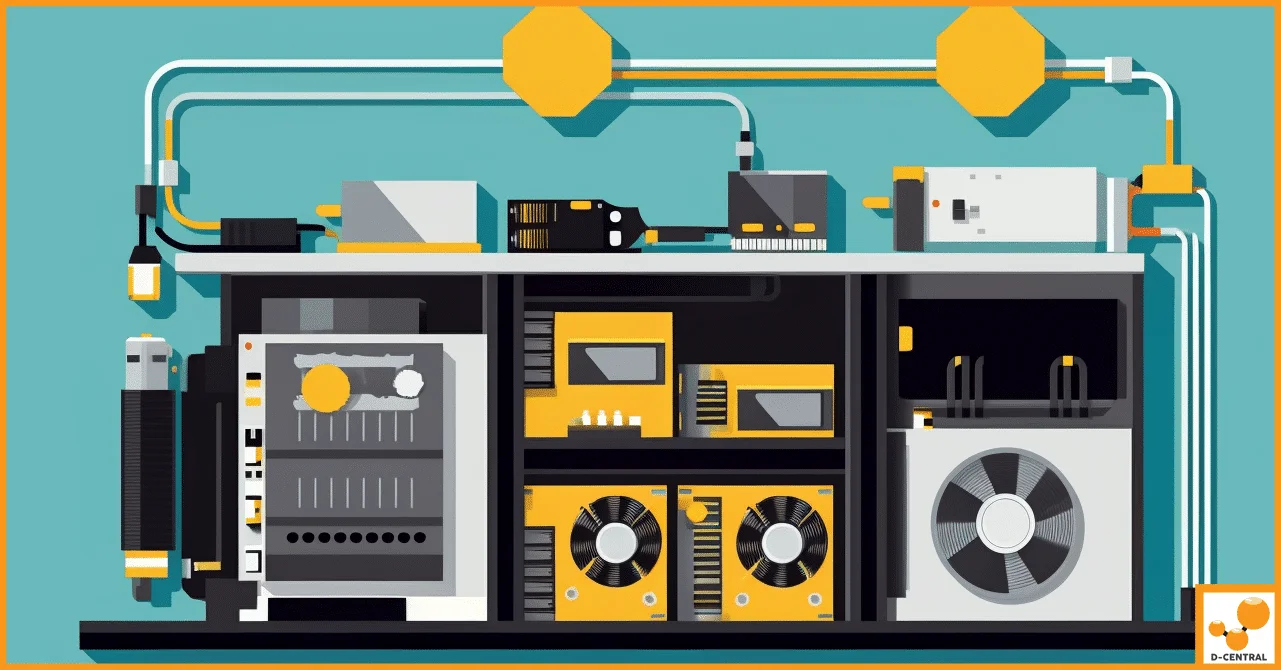
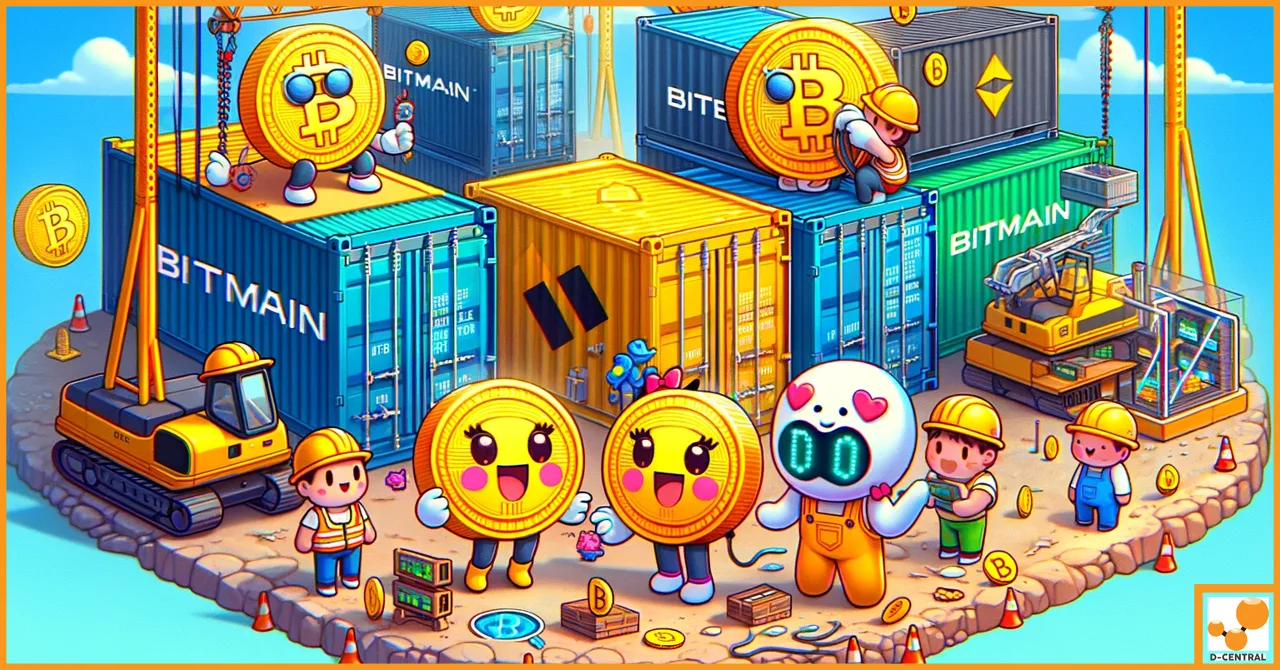
Containerized mining flips that model. A standard 40-foot shipping container, purpose-built for mining, becomes a self-contained data center. Power distribution, cooling, networking, fire suppression, and monitoring are all integrated. You drop it on a pad, connect power and internet, and you are hashing.
Bitmain’s Antbox series was among the first commercially available containerized mining solutions designed specifically for ASIC hardware. The Antbox N5, for example, was engineered to house up to 180 Antminer units in a standard 40-foot container with integrated evaporative cooling and power distribution rated for several hundred kilowatts.
The 2026 Mining Landscape Demands Flexibility
The post-halving era has been brutal on miners who cannot adapt. With the block reward at 3.125 BTC since April 2024, margins are thinner than ever. Network difficulty above 110 trillion means only the most efficient operations survive. In this environment, infrastructure flexibility is not a luxury — it is a survival mechanism.
| Factor | Traditional Facility | Containerized Solution |
|---|---|---|
| Deployment Time | 6-18 months | 2-8 weeks |
| Capital Cost per MW | $800K-$1.5M+ | $300K-$600K |
| Relocatability | Effectively zero | Full — flatbed truck |
| Scalability | Major construction required | Add another container |
| Permitting Complexity | High (building permits, zoning) | Lower (temporary structures in many jurisdictions) |
| Cooling Efficiency | Variable (depends on HVAC design) | Purpose-engineered for ASIC airflow |
The numbers speak for themselves. When you can deploy a megawatt of mining capacity in weeks instead of months, and relocate that capacity if conditions change, you have a fundamentally different risk profile.
How Bitmain’s Antbox Architecture Works
The Antbox is not just a shipping container with miners stuffed inside. Bitmain engineered these units around the specific thermal and electrical requirements of their Antminer line. Here is what makes them different from a generic container build.
Airflow Engineering
ASIC miners are essentially space heaters that happen to produce Bitcoin. A single Antminer S21 outputs around 3,500 watts of heat. Pack 180 of them into a container and you have over 600 kW of thermal energy to manage. The Antbox uses a negative-pressure design with intake on one end and exhaust on the other, creating a laminar airflow pattern across the miner racks. Evaporative cooling pads on the intake side can drop incoming air temperature significantly, which is critical in warmer climates.
Power Distribution
Each Antbox includes integrated power distribution units (PDUs) designed for the specific power connectors and voltage requirements of Antminer hardware. High-voltage input (typically 480V three-phase) is stepped down and distributed to individual miner positions with proper overcurrent protection. This eliminates the ad-hoc wiring that plagues many DIY container builds and reduces fire risk substantially.
Monitoring and Management
Modern containerized solutions include environmental monitoring — temperature sensors throughout the unit, humidity tracking, power metering per circuit, and network connectivity status. Some configurations integrate with Bitmain’s fleet management software, allowing remote monitoring and control of individual miners.
The Canadian Advantage for Containerized Mining
Canada has quietly become one of the best jurisdictions on Earth for Bitcoin mining, and containerized solutions amplify those advantages. Here is why, and here is where D-Central’s experience is particularly relevant.
Cold Climate as a Feature
When your ambient temperature is -20C for months of the year, your cooling costs drop to nearly zero. Containerized miners in Quebec can run on free air cooling for six to eight months annually. The remaining summer months require only modest evaporative cooling. Compare that to Texas or the Middle East, where cooling can consume 30-40% of total power budget year-round.
Hydroelectric Power
Quebec’s grid runs on over 95% hydroelectric power. This is not just good for optics — it translates to some of the lowest and most stable electricity rates in North America. When your power source is a dam that has been generating for 50 years, you are not exposed to natural gas price volatility or coal plant retirements.
D-Central operates a hosting facility in Montreal, Quebec, where we leverage these exact advantages. Our facility is purpose-built for ASIC mining, and we understand the specific requirements of deploying containerized infrastructure in Canadian conditions.
Regulatory Clarity
Canada has not banned mining. Quebec has specific frameworks for large power consumers, and while they have tightened energy allocation in some periods, the regulatory environment is clear and navigable. Containerized solutions actually help here — in many jurisdictions, they classify as temporary or portable equipment rather than permanent structures, simplifying permitting.
Containerized Mining and the Decentralization Imperative
Here is where this topic intersects with something we care deeply about at D-Central: the decentralization of Bitcoin mining. The current state of the network is concerning. A handful of publicly traded companies control an outsized share of the global hashrate. Geographic concentration in a few countries creates systemic risk. Mining pools with dominant market share can theoretically censor transactions.
Containerized mining is one of the most powerful tools for fighting this centralization trend. Here is why.
Lowering the Barrier to Entry
A full-scale mining facility requires millions in capital, years of planning, and specialized construction expertise. A containerized unit requires a concrete pad, a power connection, and internet. This makes mining infrastructure accessible to a much broader range of operators — from small businesses monetizing excess power capacity to rural landowners with favorable energy situations.
Energy Arbitrage and Stranded Power
Some of the cheapest energy on the planet is stranded — it exists in locations far from population centers or in quantities too small for traditional industrial consumers. Flare gas at oil wells, excess hydroelectric capacity at remote dams, oversized solar installations — all represent energy that is currently wasted. Containerized miners can be deployed directly to these sources, converting stranded energy into Bitcoin.
This is not theoretical. Operations across North America are already doing this. And every one of them adds hashrate outside the control of the mining mega-corporations, strengthening the network’s censorship resistance.
Geographic Distribution
When mining infrastructure fits on a truck, it can go anywhere there is power and internet. This naturally distributes hashrate across more locations, more jurisdictions, and more operators. From a network security perspective, this is exactly what Bitcoin needs.
Practical Considerations for Containerized Deployments
If you are considering containerized mining — whether with a Bitmain Antbox or a custom-built container — here are the real-world factors we have learned matter most from our years in the field.
Electrical Infrastructure
The container itself is only part of the equation. You need adequate electrical service at the deployment site. A single fully loaded container can draw 500-800 kW, which requires serious utility infrastructure. Transformer capacity, service panel ratings, and utility interconnection agreements all need to be sorted before the container arrives. Getting this wrong is the number one cause of deployment delays.
Internet Connectivity
Mining does not require massive bandwidth, but it does require reliable, low-latency connectivity. In remote locations, this might mean fixed wireless, Starlink, or dedicated fiber runs. Redundant connections are strongly recommended — losing internet connectivity means your miners are burning power without producing any revenue.
Noise Management
A container full of running ASICs is loud. Depending on the hardware and cooling configuration, noise levels at the container wall can exceed 80-90 dB. This is a critical consideration for deployment sites near residential areas. Noise bylaws vary by jurisdiction, and even in industrial zones, neighbor relations matter. Some operators invest in additional sound dampening enclosures around the container exhaust.
Maintenance Access
Miners fail. Fans die, hashboards degrade, PSUs trip. Your containerized operation needs a maintenance plan. At D-Central, our ASIC repair service handles everything from fan replacements to hashboard-level diagnostics. We have repaired thousands of Antminers across every generation, and we can tell you that planning for maintenance access inside a container — adequate lighting, working space, and cable management — makes a massive difference in operational efficiency.
Security
A container full of mining hardware represents significant capital. Physical security — cameras, access controls, perimeter fencing, and tamper detection — is non-negotiable. Remote monitoring systems that alert you to unauthorized access or environmental anomalies are standard practice for any serious deployment.
Containerized Solutions at Different Scales
Not everyone needs a 40-foot container running at 800 kW. The beauty of modular infrastructure is that it scales in both directions.
Small Scale: The Home Miner Approach
For home miners, the containerized concept scales down beautifully. A garden shed, a garage, or even a purpose-built small enclosure can follow the same principles — dedicated power, engineered airflow, noise isolation, and environmental monitoring. D-Central’s Bitcoin Space Heaters take this further by integrating miners into home heating systems, turning mining heat into useful thermal output.
This is the Mining Hacker spirit in action: taking industrial mining concepts and adapting them for the individual. You do not need a megawatt of power to contribute to network security. Even a single ASIC miner, properly deployed, adds decentralized hashrate to the network.
Medium Scale: The Entrepreneurial Miner
For operators running 10-50 ASICs, a single 20-foot container or a modified trailer can be the perfect solution. This scale allows you to negotiate better electricity rates than residential, while keeping capital requirements manageable. Many of our consulting clients operate at this scale, and we help them optimize their containerized deployments for maximum efficiency.
Large Scale: Industrial Deployments
At the industrial scale — multiple containers, megawatt-class power, and dedicated site infrastructure — containerized mining becomes a serious capital deployment strategy. The modular nature means you can start with one container and add capacity as cash flow allows, avoiding the all-or-nothing risk of a traditional facility build.
The Future of Containerized Mining Infrastructure
As we move deeper into 2026, several trends are shaping the future of containerized mining.
Immersion Cooling Integration
The next evolution of containerized mining is immersion cooling — submerging ASICs in dielectric fluid rather than using air cooling. Immersion containers can achieve significantly higher density and dramatically better cooling performance, but they require different plumbing, fluid management systems, and maintenance procedures. Several manufacturers are now offering immersion-ready containerized solutions.
AI and Bitcoin Mining Convergence
The explosion in AI compute demand has created an interesting dynamic. Some containerized infrastructure providers are designing dual-purpose containers that can run either ASIC miners or GPU clusters for AI workloads. While the economics and engineering are quite different, the shared infrastructure concept — modular, portable, rapidly deployable — applies to both.
Integration with Renewable Energy
Purpose-built mining containers co-located with solar farms, wind installations, or small hydro plants represent the future of sustainable Bitcoin mining. These hybrid deployments can absorb excess renewable generation that would otherwise be curtailed, providing a flexible load that improves the economics of renewable energy projects while securing the Bitcoin network.
D-Central’s Role in Containerized Mining
We do not manufacture containers. What we do is everything else. Our team has hands-on experience with every aspect of containerized mining operations:
- Hardware supply: We stock Antminers across every generation and can source hardware for container deployments of any scale through our shop
- Repair and maintenance: Our ASIC repair service keeps containerized operations running at peak efficiency
- Hosting: Our Quebec hosting facility provides turnkey mining infrastructure for those who prefer not to manage their own deployments
- Consulting: Our mining consulting service helps operators plan, deploy, and optimize containerized mining operations
We are Bitcoin Mining Hackers. We take institutional-grade mining technology and make it accessible to everyone — from the pleb miner running a single unit in their garage to the entrepreneur deploying their first container. The mission is the decentralization of every layer of Bitcoin mining, and containerized infrastructure is one of the most powerful tools in that fight.
Frequently Asked Questions
What is a containerized Bitcoin mining solution, and how does it differ from a traditional mining facility?
A containerized mining solution is a self-contained data center built inside a standard shipping container (typically 20 or 40 feet). It includes integrated power distribution, cooling systems, networking, and miner racking — everything needed to operate ASIC miners. Unlike traditional facilities that require building construction, industrial HVAC installation, and months of build-out, a containerized unit arrives ready to deploy. You connect power and internet, and you are mining. The key advantages are speed of deployment (weeks vs. months), portability (you can relocate the entire operation on a flatbed truck), and modularity (scale by adding containers rather than expanding buildings).
How many ASIC miners can fit in a standard Antbox container?
A standard 40-foot Antbox container can house approximately 180 ASIC miners, depending on the specific model and generation. The exact capacity varies based on the physical dimensions and power requirements of the miners being deployed. For example, newer-generation miners like the Antminer S21 series may have different space and power requirements than older S19 models. The container’s power distribution system is rated accordingly, typically supporting several hundred kilowatts of total load. Bitmain designed the internal racking and airflow specifically for their Antminer product line, optimizing both density and cooling performance.
Is containerized mining profitable in 2026 with the 3.125 BTC block reward?
Profitability depends on three primary variables: your electricity cost, your hardware efficiency, and Bitcoin’s price. With network difficulty above 110 trillion and the block reward at 3.125 BTC following the April 2024 halving, only operations with competitive power rates (generally under $0.06/kWh) and current-generation hardware maintain healthy margins. Containerized deployments can improve profitability by reducing infrastructure costs, enabling deployment at cheaper power sources, and allowing relocation when conditions change. In Canada, where hydroelectric power rates are low and cold climate reduces cooling costs, containerized mining remains viable for well-planned operations.
What electrical infrastructure do I need for a containerized mining operation?
A fully loaded 40-foot mining container typically draws 500-800 kW, requiring 480V three-phase power service. You will need a utility transformer capable of handling this load, appropriate switchgear and disconnect panels, and a utility interconnection agreement with your power provider. For smaller deployments (20-foot containers or partially loaded units), power requirements scale down proportionally. It is critical to confirm electrical capacity at your deployment site before ordering a container — utility upgrades can take months and cost tens of thousands of dollars. Many operators underestimate this requirement, and it is the most common cause of deployment delays.
Can D-Central help me set up or maintain a containerized mining operation?
Yes. While we do not manufacture containers, D-Central provides comprehensive support for every other aspect of containerized mining. We supply ASIC miners through our shop, provide ASIC repair services to keep your hardware running, offer hosting in our Quebec facility for those who prefer a managed solution, and deliver consulting services to help plan and optimize deployments. We have been in the Bitcoin mining business since 2016 and have hands-on experience with every major ASIC model and deployment configuration.