The legacy financial system was not built for the internet. It was bolted on after the fact — a patchwork of credit card networks designed in the 1960s, intermediaries extracting rent at every hop, and fraud models that punish merchants for the sins of a broken identity layer. When you swipe a card online, you are handing over the keys to your financial identity and trusting a chain of corporations to not lose them. They lose them constantly.
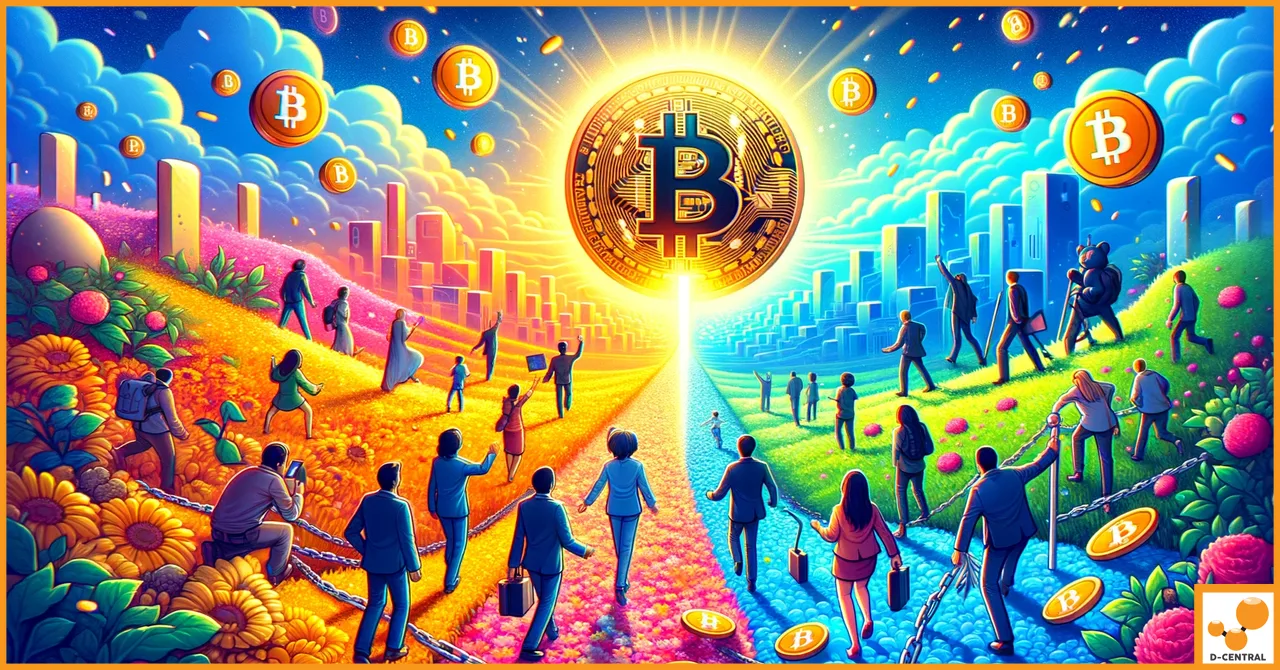
Bitcoin fixes this. Not as a slogan — as an engineering fact. A payment network with no chargebacks, no intermediaries, no currency borders, and no permission required. Since its launch in 2009, Bitcoin has matured from a cypherpunk experiment into a global monetary network securing over 800 EH/s of hashrate, with a difficulty above 110 trillion. Every 10 minutes, a new block is mined, and 3.125 BTC enters circulation as the reward. This is not speculative technology. This is battle-tested, adversarially hardened infrastructure — and it is reshaping how commerce works on the internet.
At D-Central Technologies, we have been embedded in the Bitcoin ecosystem since 2016. We mine it, we repair the machines that mine it, and we accept it as payment. This is not theoretical for us. Bitcoin-native commerce is how we operate every single day.
Why Traditional E-Commerce Payments Are Broken
Before understanding what Bitcoin brings to the table, you need to see what it replaces. The traditional e-commerce payment stack looks like this: the customer enters card details, which travel through a payment gateway, to an acquiring bank, through the card network (Visa, Mastercard), to the issuing bank, and back. Each intermediary takes a cut. The merchant pays 2.5-3.5% per transaction, plus fixed fees, plus monthly fees, plus chargeback fees when disputes arise.
The chargeback system deserves special attention because it is uniquely destructive. A customer can dispute a charge months after a purchase, and the burden of proof falls entirely on the merchant. The merchant loses the product, loses the revenue, and pays an additional chargeback fee for the privilege. Fraud rates in e-commerce hover around 1-2% of transactions, but the downstream costs — manual reviews, fraud prevention tools, lost inventory — multiply that figure several times over.
Then there is the privacy dimension. Every traditional payment requires the customer to share sensitive personal data: name, card number, expiration, CVV, billing address. This data gets stored across dozens of databases operated by merchants, processors, and banks. Each database is a target. The result is billions of records breached every year and a never-ending cycle of card reissuances and identity monitoring.
The system works, in the same way a horse-drawn carriage works. It gets you there. But the inefficiencies are staggering, and the entire model is architecturally hostile to both merchants and customers.
Bitcoin as a Payment Rail: The Engineering Advantage
Bitcoin operates on fundamentally different principles. There is no identity layer — transactions are authenticated cryptographically, not by sharing secrets. There is no intermediary — payments move directly from buyer to seller. There is no chargeback mechanism — once a transaction is confirmed on the blockchain, it is final and irreversible.
Push vs. Pull Payments
This is the critical distinction most people miss. Credit card payments are pull payments: you give the merchant permission to pull money from your account, and you trust them (and every system in the chain) to pull only the right amount, only once. Bitcoin payments are push payments: the customer pushes the exact amount to the merchant. No credentials are shared. No ongoing access is granted. The attack surface collapses entirely.
Transaction Finality
When a Bitcoin transaction receives sufficient confirmations — typically 1-3 for most e-commerce purchases, and 6 for high-value transactions — it is settled. Not “pending” for 30-90 days while a chargeback window remains open. Settled. Final. The merchant has the funds, secured by proof-of-work that would require reorganizing the entire blockchain to reverse. At 800+ EH/s of global hashrate, that is not happening.
Global by Default
Bitcoin does not care about borders. A customer in Tokyo, Sao Paulo, or Lagos can pay a Canadian merchant with the exact same process and the exact same fees as someone in Montreal. No currency conversion. No international transaction surcharges. No SWIFT delays. The network is global from day one, and it operates 24/7/365 — no banking hours, no holidays, no downtime.
The Lightning Network: Instant Commerce at Scale
The base Bitcoin blockchain confirms blocks approximately every 10 minutes, which is excellent for settlement finality but impractical for buying a coffee. The Lightning Network solves this — a Layer 2 protocol that enables instant Bitcoin payments with fees measured in fractions of a cent.
Lightning works by opening payment channels between parties. Once a channel is open, thousands of transactions can flow back and forth instantly, with only the opening and closing transactions recorded on the base blockchain. The result is a payment experience that is faster than credit cards, cheaper than any traditional processor, and just as final.
For e-commerce, Lightning is transformative. A customer scanning a QR code, confirming on their phone, and seeing the payment complete in under two seconds — that is not a future promise. That is happening right now, today, on thousands of merchants worldwide. The technology stack exists. The UX has matured. The only missing piece is merchant adoption catching up to the capability.
BTCPay Server: Self-Sovereign Payment Processing
If Bitcoin is the payment rail, BTCPay Server is the on-ramp for merchants. It is an open-source, self-hosted payment processor that lets any merchant accept Bitcoin without relying on a third party. No Stripe. No PayPal. No middleman extracting a percentage of every sale.
How BTCPay Server Works
You deploy BTCPay Server on your own infrastructure — a VPS, a dedicated server, or even a Raspberry Pi. It connects directly to the Bitcoin network and generates unique payment addresses for each invoice. When a customer pays, BTCPay detects the transaction, confirms it, and notifies your e-commerce platform. The funds go directly to your wallet. Nobody else touches them.
BTCPay integrates with WooCommerce, Shopify, PrestaShop, and dozens of other platforms. For WooCommerce specifically — which powers D-Central’s own online store — the integration is seamless. Install the plugin, point it at your BTCPay instance, and you are accepting Bitcoin payments alongside traditional methods.
Why Self-Hosting Matters
Third-party payment processors can freeze your account, hold your funds, or deplatform you entirely — and they do, regularly. This is not paranoia; it is a documented pattern that affects businesses in perfectly legal industries. Self-hosting your payment processing with BTCPay Server eliminates this risk entirely. Your server, your keys, your money. This aligns directly with Bitcoin’s core principle: do not trust, verify.
The cost? Zero transaction fees from BTCPay itself. You pay only the Bitcoin network fees (pennies for on-chain, sub-penny for Lightning). Compare that to the 2.9% + $0.30 per transaction that Stripe charges, and the math becomes obvious — especially at scale.
Bitcoin Commerce for Hardware Merchants
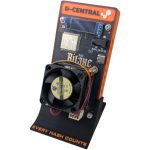
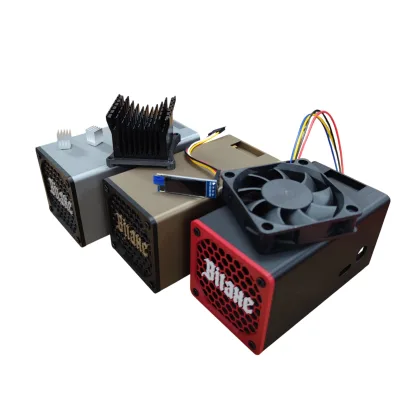
At D-Central, we do not just advocate for Bitcoin payments in the abstract. We live it. Our shop sells ASIC miners, Bitcoin space heaters, open-source mining hardware like the Bitaxe, replacement parts, and accessories. Many of our customers are Bitcoiners who prefer to pay in bitcoin. Offering BTC payments is not a marketing gimmick for us — it is serving our community in the currency they believe in.
For hardware merchants specifically, Bitcoin payments solve real problems:
No chargebacks on high-value items. When you are selling an ASIC miner worth thousands of dollars, a fraudulent chargeback is devastating. Bitcoin’s irreversible transactions eliminate this risk completely.
International sales without friction. We ship worldwide from Canada. A customer in Europe paying with Bitcoin avoids international credit card fees, currency conversion losses, and the 3-5 day settlement delay. The payment clears, we ship the hardware.
Alignment with the community. If you are selling Bitcoin mining equipment and you do not accept Bitcoin, you are sending the wrong message. Our customers are building the decentralized future. We should be transacting in it.
Practical Steps for Merchants: Getting Started
If you are an e-commerce merchant considering Bitcoin payments, here is the practical path forward:
1. Set up a Bitcoin wallet. Use a hardware wallet (Trezor, Blockstream Jade, or similar) for your merchant funds. Generate an extended public key (xpub) that BTCPay Server will use to derive unique addresses for each invoice, without ever holding your private keys.
2. Deploy BTCPay Server. LunaNode and Voltage offer one-click BTCPay deployments if you do not want to manage your own server. For full sovereignty, deploy on your own VPS. The BTCPay documentation is excellent and the community is highly supportive.
3. Integrate with your e-commerce platform. For WooCommerce, install the BTCPay for WooCommerce V2 plugin. For Shopify, use the BTCPay Shopify integration. Configuration takes minutes, not days.
4. Enable Lightning Network. Configure an LND or CLN node within BTCPay Server to accept Lightning payments. This gives your customers the option of instant, near-zero-fee payments — the best possible checkout experience.
5. Test thoroughly. Make test purchases on Bitcoin’s testnet before going live. Verify that invoices generate correctly, payments are detected, and order statuses update properly in your platform.
6. Display the option prominently. Do not bury Bitcoin payments in a dropdown menu. Put the Bitcoin/Lightning payment option front and center. Your Bitcoin-native customers will appreciate it, and curious newcomers will ask questions — which is how adoption spreads.
The Broader Impact: Why This Matters for Decentralization
Every merchant that accepts Bitcoin directly — not through a custodial processor that immediately converts to fiat, but actually accepting and holding bitcoin — strengthens the circular economy. It creates one more node in a network of value exchange that does not depend on banks, governments, or payment corporations.
This is the same principle that drives Bitcoin mining decentralization. When mining is concentrated in a few large facilities, the network is vulnerable. When it is distributed across thousands of home miners running Bitaxe units and space heaters in their basements, the network becomes antifragile. Commerce works the same way. The more merchants accepting Bitcoin natively, the more resilient the economic layer becomes.
D-Central was founded in 2016 with a mission to decentralize every layer of Bitcoin mining. But mining is just the production layer. Commerce is the usage layer. They are two sides of the same coin — literally. When our customers mine bitcoin with hardware they bought from us, and then spend that bitcoin at merchants who accept it, the loop closes. That is the circular Bitcoin economy in action.
The Road Ahead
Bitcoin commerce is no longer early-stage. The tools are mature. BTCPay Server is battle-tested. The Lightning Network handles millions of transactions. Wallets have evolved from command-line tools to polished mobile apps that your non-technical customers can use without friction.
What remains is will. The will of merchants to integrate a payment option that serves their customers better, costs them less, and aligns with the future of money. The will of consumers to spend bitcoin where it is accepted and demand it where it is not.
The legacy payment system will not fix itself. It is working exactly as designed — extracting rent from every transaction, surveilling every purchase, and maintaining gatekeeping power over who can participate in commerce. Bitcoin is the alternative that was engineered from first principles to solve these exact problems.
If you are a merchant, start accepting Bitcoin. If you are a consumer, start spending it at merchants who do. And if you are a miner — if you are running an ASIC in your garage or a Bitaxe on your desk — you are already producing the hardest money ever created. The next step is using it.
Frequently Asked Questions
What makes Bitcoin payments fundamentally different from credit card payments?
Bitcoin uses a push payment model — you send the exact amount to the merchant without sharing any credentials or personal data. Credit cards use a pull model where you hand over your financial identity and trust the merchant to charge the right amount. Bitcoin transactions are irreversible once confirmed, eliminating chargebacks. There is no intermediary taking 2.5-3.5% of every sale, and payments work globally without currency conversion fees.
What is BTCPay Server and why should merchants use it?
BTCPay Server is an open-source, self-hosted payment processor for Bitcoin. It lets merchants accept BTC directly into their own wallet with zero transaction fees from the processor itself. Unlike custodial services, BTCPay never holds your funds. It integrates with WooCommerce, Shopify, and other platforms. Self-hosting means no third party can freeze your account or deplatform you.
How fast are Bitcoin payments for e-commerce?
On-chain Bitcoin transactions typically confirm within 10-60 minutes depending on fee priority. For instant payments, the Lightning Network settles transactions in under two seconds with fees measured in fractions of a cent. For most e-commerce purchases, Lightning provides a checkout experience faster than credit cards.
Is Bitcoin too volatile for merchants to accept?
Merchants can choose their approach. Some convert received bitcoin to fiat immediately using BTCPay Server’s integration with exchanges. Others hold a percentage in bitcoin as a treasury strategy. The key insight is that accepting Bitcoin does not require holding it — though many merchants who understand the technology choose to. Bitcoin’s purchasing power trend over any four-year period has been consistently upward since inception.
Does D-Central accept Bitcoin payments?
Yes. D-Central Technologies accepts Bitcoin for purchases in our online store. We sell ASIC miners, Bitcoin space heaters, open-source mining hardware like the Bitaxe, replacement parts, and accessories. As a company that has operated in the Bitcoin ecosystem since 2016, accepting BTC is fundamental to how we do business. Browse our full catalog at d-central.tech/shop.
How does accepting Bitcoin benefit hardware and mining equipment sellers specifically?
For high-value items like ASIC miners, Bitcoin’s irreversible transactions eliminate chargeback fraud — a significant risk when selling equipment worth hundreds or thousands of dollars. International sales become frictionless since Bitcoin works globally without currency conversion or international card fees. And it signals authentic alignment with the Bitcoin community you serve.
What is the Lightning Network and how does it help e-commerce?
The Lightning Network is a Layer 2 protocol built on Bitcoin that enables instant payments with near-zero fees. It works by opening payment channels between parties, allowing thousands of transactions to flow without each one being recorded on the base blockchain. For e-commerce, this means checkout experiences faster than credit cards at a fraction of the cost — ideal for both small purchases and high-volume merchants.