Short answer: manipulation is a serious market-integrity concern, but a price move alone is not proof of manipulation. Bitcoin trades through multiple spot and derivatives venues with different rules, liquidity, and surveillance. A careful reader separates documented conduct from a plausible mechanism and from an untested narrative.
A Price Move Is Not, by Itself, Evidence of Manipulation
Prices can move because of new information, order imbalances, liquidations, changes in risk appetite, market fragmentation, or trading errors. Manipulation involves deceptive or improper conduct and usually requires evidence about orders, ownership, intent, communications, or venue records. Claims should identify the time, market, conduct, and evidence rather than infer intent from a chart.
What Market Manipulation Means
Terms such as spoofing, layering, wash trading, and pump-and-dump describe different conduct. Their legal definitions, the regulator with authority, and the available surveillance depend on the instrument, venue, and jurisdiction. A regulatory allegation is not a final finding; a final order or judgment should be described accurately and linked directly.
Spot Markets, Derivatives, and Fragmented Liquidity
Bitcoin can trade in spot markets and through derivatives. Leverage and liquidations can amplify a move, but they do not demonstrate who caused it. Fragmented venues can also create price differences and arbitrage frictions. Peer-reviewed research documents recurrent cross-market deviations and changing price discovery, which is a reason to avoid treating one displayed price or reported volume as the entire market.
Trading and arbitrage research | Price-discovery research
How Common Tactics Work
- Spoofing or layering: displayed orders may be used to create a false impression of supply or demand before cancellation.
- Wash trading: activity may create a misleading appearance of volume without meaningful economic exposure changing hands.
- Pump-and-dump schemes: misleading promotion can be used to attract buyers before sellers exit.
These descriptions are not an assertion that any particular Bitcoin move used a tactic. Official enforcement records document such conduct in crypto-asset markets, while the CFTC also warns readers about pump-and-dump risks in thin or new markets.
Department of Justice market-manipulation case | CFTC customer advisory
What the Documented Evidence Shows – and Its Limits
Historic research identified suspicious activity at one exchange during 2013 and found evidence consistent with a material price effect in that dataset. That result is important, but it does not establish that every Bitcoin rally, decline, liquidation, or order-book change is manipulated. Each event needs its own evidence and scope.
Read the 2013 Bitcoin-market study.
What On-Chain Analysis Can and Cannot Establish
Blockchain data can show confirmed transactions, block timing, and publicly visible flows. It generally cannot identify all beneficial owners, prove a trader’s intent, reveal cancelled orders, establish off-chain balances, or show derivatives exposure. Use it as context, not as conclusive evidence of fraud or market manipulation.
What Proof of Work, Nodes, and Difficulty Adjustment Actually Protect
Fully validating nodes enforce their configured consensus rules. Proof of work helps them compare valid chain histories, and the protocol retargets difficulty every 2,016 blocks to target a long-run average block interval. These mechanisms support consensus operation; they do not protect an exchange account, determine market liquidity, establish a price, or prevent deceptive trading on a venue.
Bitcoin whitepaper | Bitcoin Core validation overview
Mining Is an Operating Activity, Not Protection From Market Risk
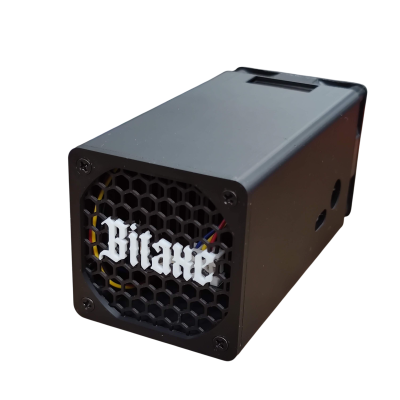
A mining assessment should include accepted hashrate, wall efficiency, electricity and delivery charges, cooling or ventilation, downtime, pool fees, repair, financing, difficulty, BTC price, taxes, and resale value. Heat recovery is a conditional operating credit only when it displaces useful heating at the relevant time and rate. It does not remove capital, operational, or market risk. This page is educational information, not investment, tax, or legal advice.
Reader-Safety Checklist
- Do not treat social-media tips, a chart, or a volume figure as proof of a claim.
- Understand leverage, liquidation, custody, withdrawal, and counterparty risks before using a venue.
- Check the registration and warnings applicable in your jurisdiction before sending funds or relying on advice.
- Keep records and seek qualified legal, tax, or financial advice for a decision that requires it.
Ontario investor warnings and registration resources
Related: Mining Costs Are Not a Price Floor
Protocol security and market-integrity evidence are different from a valuation claim. See Does Bitcoin Have Intrinsic Value? Mining, Scarcity, Utility, and Market Price.
Sources and Further Reading
- Gandal, Hamrick, Moore, and Oberman, Price Manipulation in the Bitcoin Ecosystem.
- Makarov and Schoar, research on trading, arbitrage, and price discovery.
- Official consumer and enforcement resources linked above.
Frequently Asked Questions
Is a sudden Bitcoin price move proof of manipulation?
No. Price movement alone cannot establish intent or deception. A conclusion about manipulation needs evidence suited to the alleged conduct, such as order-event records, beneficial-ownership evidence, communications, or a regulator or court finding.
What are spoofing and wash trading?
Spoofing generally describes orders placed with intent to cancel in order to mislead other traders. Wash trading generally describes trades that create artificial activity without a genuine change in economic exposure. Legal definitions and jurisdiction vary.
Can on-chain data prove manipulation?
Usually no. Public blockchain data can describe transactions and sometimes provide context, but it does not reveal all beneficial owners, trading intent, cancelled orders, off-chain balances, or derivatives positions.
Do proof of work and difficulty adjustment protect Bitcoin's price?
No. They support the operation of the consensus system: nodes validate rules, and difficulty retargets expected work over time. They do not insure a market price, exchange solvency, liquidity, or a mining return.
Does mining eliminate market risk?
No. Mining involves equipment, electricity, uptime, pool, financing, difficulty, price, tax, and resale risks. Recovered heat may offset a relevant heating cost in some settings, but it does not eliminate those risks.