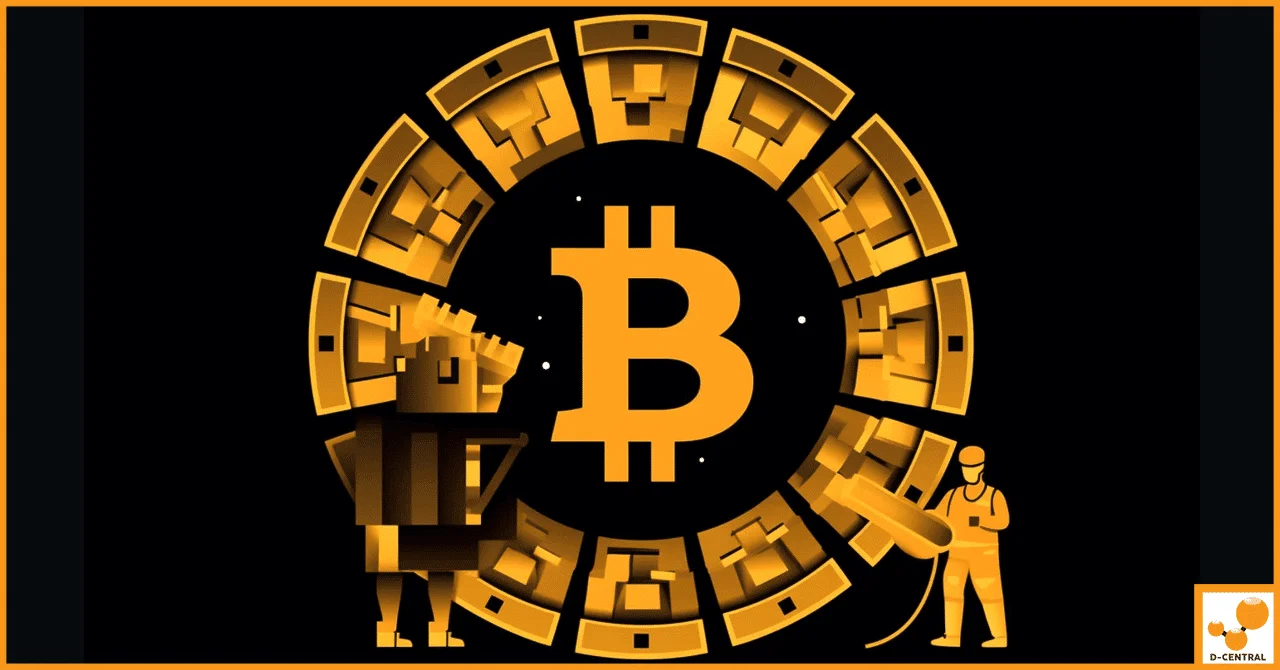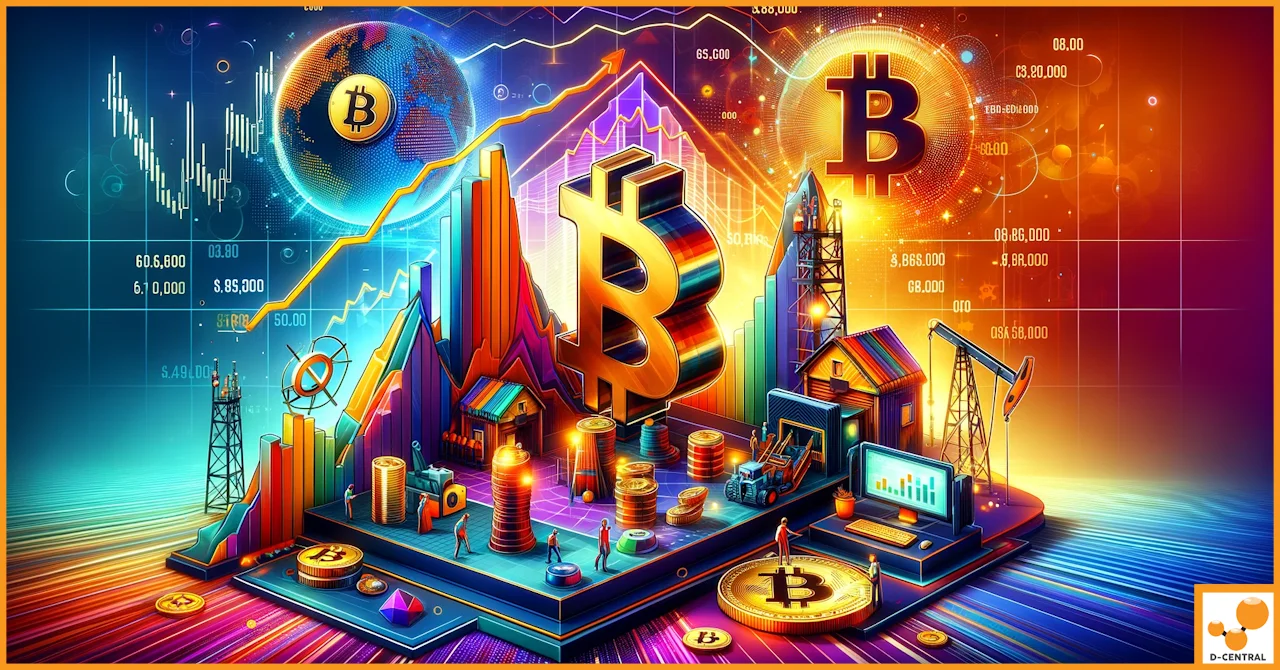
The Bitcoin halving is the hardest monetary policy on Earth — enforced by math, not central bankers. Every 210,000 blocks, the block subsidy gets slashed in half. No negotiations. No emergency meetings. No one can print more. This is the mechanism that makes Bitcoin the scarcest digital asset ever created, and it fundamentally reshapes the mining industry every time it fires.
The most recent halving occurred on April 19, 2024, at block 840,000. The block reward dropped from 6.25 BTC to 3.125 BTC. Miners woke up the next day earning half as much bitcoin per block — and the network didn’t skip a beat. That is the power of a protocol that runs on proof-of-work, not proof-of-authority.
At D-Central Technologies, we have operated through two full halving cycles since our founding in 2016. We have watched miners adapt, hardware evolve, and the network grow stronger after every single one. This article breaks down what the halving actually does, how it impacts miners at every scale, and why it matters more than ever for the decentralization of Bitcoin in 2026.
What Is the Bitcoin Halving?
The halving is a programmatic reduction of the block subsidy — the newly minted bitcoin awarded to the miner (or pool) that successfully mines each block. It was built into Bitcoin’s protocol by Satoshi Nakamoto as the core enforcement mechanism of Bitcoin’s fixed 21 million coin supply.
The Halving Schedule
Every 210,000 blocks — roughly every four years — the subsidy is cut in half. This schedule is immutable. No committee votes on it. No government approves it. The code executes, and the network continues.
Here is the complete halving history:
- January 3, 2009 (Block 0): 50 BTC per block — Bitcoin launches with the genesis block.
- November 28, 2012 (Block 210,000): Reward cut to 25 BTC — Bitcoin’s first halving, with the price around $12.
- July 9, 2016 (Block 420,000): Reward cut to 12.5 BTC — the second halving, with hashrate around 1.5 EH/s.
- May 11, 2020 (Block 630,000): Reward cut to 6.25 BTC — the third halving, during global economic uncertainty.
- April 19, 2024 (Block 840,000): Reward cut to 3.125 BTC — the fourth and most recent halving.
- ~2028 (Block 1,050,000): Reward will drop to 1.5625 BTC — the next halving on the horizon.
By approximately 2140, the final satoshi will be mined and the block subsidy drops to zero. From that point forward, miners are compensated entirely through transaction fees. This is not a flaw — it is the design. Bitcoin transitions from subsidy-funded security to fee-funded security over a 130-year period, the longest monetary policy runway in human history.
Why Fixed Supply Matters
Bitcoin’s supply schedule is the polar opposite of fiat monetary policy. Central banks can — and routinely do — expand the money supply at will. Bitcoin cannot. The halving enforces digital scarcity in a way that no other asset achieves: programmatically, transparently, and without any possibility of intervention.
This is why Bitcoiners refer to the halving as a feature, not a bug. Every halving reduces the rate of new supply entering circulation, making existing bitcoin marginally scarcer. It is the monetary policy that a cypherpunk would design — trustless, verifiable, and incorruptible.
The 2024 Halving: What Actually Happened
The April 2024 halving was the fourth in Bitcoin’s history and the first where the network hashrate exceeded 600 EH/s at the time of the event. By early 2026, the global hashrate had crossed the zettahash threshold — 1 ZH/s (1,000 EH/s), a staggering amount of computational energy securing the network.
Immediate Impact on Mining Economics
On April 18, 2024, mining one block earned you 6.25 BTC. On April 19, it earned you 3.125 BTC. The math is simple: revenue per block was halved overnight while electricity bills remained the same. This creates an immediate profitability crunch that forces the weakest and most inefficient operations offline.
But here is the part that most surface-level analysis misses: this is a feature of Bitcoin’s design. The halving is a natural selection event for miners. Inefficient operations running outdated hardware at high electricity costs get squeezed out. Efficient operations — those with low power costs, modern hardware, and smart strategies — survive and absorb the hashrate share vacated by those who quit.
Transaction Fees Become More Important
The 2024 halving coincided with the emergence of Ordinals and increased on-chain activity, which meant transaction fees spiked significantly around the halving block. Some post-halving blocks carried transaction fees exceeding the block subsidy itself — a preview of Bitcoin’s long-term fee-market economy.
This trend is critical for miners to understand. As block subsidies continue to halve every four years, transaction fees will represent an increasingly larger share of total miner revenue. The network is slowly transitioning from subsidy-dominant to fee-dominant economics, exactly as Satoshi designed.
How Halving Reshapes the Mining Industry
The halving is not just a number change — it restructures the entire mining industry from top to bottom. Hardware, strategy, location, and scale all get re-evaluated under the new economic reality.
Hardware Efficiency Becomes Non-Negotiable
After every halving, miners running older-generation hardware face a stark choice: upgrade or shut down. The metric that matters most is joules per terahash (J/TH) — how much energy your machine consumes per unit of hashing power. After the 2024 halving, the efficiency threshold tightened significantly.
Machines like the Antminer S9 (approximately 90 J/TH) that once printed money are now deeply unprofitable for standard mining at most electricity rates. Meanwhile, current-generation machines like the Antminer S21 series (approximately 15-17 J/TH) represent a 5-6x efficiency improvement and remain profitable even at higher power costs.
At D-Central Technologies, we specialize in keeping miners running through these transitions. Our ASIC repair services extend the life of hardware that would otherwise end up as e-waste. We repair hashboards, replace failed ASIC chips, and refurbish machines to give them a second life — because throwing away functional hardware is wasteful, and keeping it running is what mining hackers do.
The Home Miner Advantage
Here is the counterintuitive truth about halvings: they can actually benefit home miners. While industrial operations face enormous fixed costs — facility leases, cooling infrastructure, staff — home miners have a fundamentally different cost structure.
Home miners can:
- Monetize waste heat: A miner running in your home during winter is both a heater and a bitcoin earner. Your electricity cost is offset by the heating value you would have spent on a traditional heater anyway. Our Bitcoin Space Heaters are purpose-built for this use case.
- Use off-peak electricity: Many residential tariffs offer time-of-use pricing. Running miners during off-peak hours slashes power costs.
- Run at any scale: There is no minimum viable hashrate. Whether you are running a Bitaxe solo miner at 500 GH/s or an Antminer S19 at 110 TH/s, you are contributing to the network and earning bitcoin.
- Avoid overhead: No rent, no staff, no corporate overhead. Your marginal cost is electricity alone.
This is why D-Central has championed the home mining movement since our founding. The halving makes industrial mining harder — but it makes home mining more important, because decentralized hashrate is the backbone of a censorship-resistant network.
Solo Mining and Lottery Mining
The halving also reshapes the solo mining calculus. With the block reward now at 3.125 BTC, a solo-mined block is worth less in bitcoin terms than it was before April 2024 — but the dollar value depends entirely on the bitcoin price. At current levels, a solo-mined block is still worth hundreds of thousands of dollars.
Open-source solo miners like the Bitaxe have made solo mining accessible to anyone. These devices contribute to network decentralization by pointing hashrate at solo mining pools like Solo CKPool or OCEAN. The odds of any individual Bitaxe mining a block are low — but the odds are never zero. As we say at D-Central: every hash counts.
Several Bitaxe devices have already successfully solo-mined full Bitcoin blocks, proving that the lottery model works. The halving reduces the prize from 6.25 to 3.125 BTC, but the philosophical value — a home miner, running open-source hardware, solo-mining a block without any intermediary — is priceless for Bitcoin’s decentralization mission.
Halving and Network Security
A common concern raised by Bitcoin skeptics is that reducing the block subsidy will eventually make mining unprofitable and compromise network security. This fear misunderstands how Bitcoin’s security model works.
Difficulty Adjustment: Bitcoin’s Built-In Regulator
Bitcoin has a difficulty adjustment algorithm that recalibrates every 2,016 blocks (approximately every two weeks). If miners go offline and hashrate drops, the difficulty adjusts downward, making it easier and cheaper for remaining miners to find blocks. If hashrate increases, difficulty adjusts upward.
This means Bitcoin’s security is self-regulating. The network cannot enter a “death spiral” because the difficulty adjustment ensures that mining always returns to equilibrium. After every halving in history, the hashrate initially dipped slightly and then came back stronger. The pattern after the 2024 halving was no different — hashrate briefly plateaued, then climbed to new all-time highs, crossing 1 ZH/s (1,000 EH/s) by 2026.
The Fee Market Transition
As block subsidies decrease, transaction fees become the primary incentive for miners. This transition has been underway since Bitcoin’s earliest days, but it accelerates with each halving. In 2024 and 2025, we saw blocks where transaction fees rivaled or exceeded the subsidy — a sign that the fee market is maturing.
For this model to sustain long-term security, Bitcoin needs sustained demand for block space. The growing adoption of Bitcoin for payments, layer-2 protocols like the Lightning Network, and on-chain data inscriptions all contribute to fee revenue. The more people use Bitcoin, the more they pay in fees, and the more secure the network becomes — a virtuous cycle.
Why Hashrate Distribution Matters More Than Total Hashrate
The total network hashrate is important, but the distribution of that hashrate matters even more. A network with 800 EH/s concentrated in three mining pools and two jurisdictions is far less secure than one with 500 EH/s distributed across thousands of home miners worldwide.
This is the decentralization argument for home mining, and it becomes stronger after every halving. When large industrial operations get squeezed by reduced subsidies, the hashrate they drop can be absorbed by distributed home miners running efficient hardware. The result is a more censorship-resistant, more geographically distributed network — which is the entire point of Bitcoin.
Strategic Approaches for Miners After a Halving
Surviving and thriving through a halving requires deliberate strategy. Here are the approaches that separate profitable miners from those who capitulate.
Upgrade to Efficient Hardware
The single most impactful action a miner can take is upgrading to hardware with better J/TH efficiency. Current-generation machines (sub-20 J/TH) can remain profitable at electricity costs where older machines cannot. D-Central stocks a full range of ASIC miners suited for every budget and scale.
Optimize Your Electricity Cost
After a halving, your electricity rate becomes the make-or-break variable. Strategies include:
- Negotiating commercial power rates if you are running at scale
- Using time-of-use pricing to mine during off-peak hours
- Co-locating miners in regions with cheap hydro or stranded energy
- Capturing waste heat to offset your home heating costs, effectively reducing your net mining cost
Diversify Revenue Streams
Smart miners do not rely solely on the block subsidy. Consider:
- Dual-purpose mining: Use your miner as a space heater during cold months. In Canada, this is particularly effective — heating season aligns perfectly with the most profitable mining months.
- Transaction fee optimization: Choose mining pools that are transparent about fee distribution. OCEAN Pool and other non-custodial pools give miners more direct access to fees.
- Repair and refurbishment: Learning to maintain and repair your own machines reduces downtime and extends hardware lifespan.
Think Long-Term
The halving is a four-year cycle. Miners who plan in four-year increments — aligning hardware purchases, electricity contracts, and operational expansion with the halving schedule — consistently outperform those who react in the moment. Every piece of bitcoin mined today, at the current subsidy rate, becomes more scarce after the next halving. Mining is accumulation at production cost.
The Bigger Picture: Halving and Bitcoin’s Monetary Properties
Step back from the mining economics for a moment and consider what the halving represents for Bitcoin as a monetary system.
Predictable Monetary Policy in an Unpredictable World
We live in a world where central banks can change interest rates overnight, print trillions in stimulus, and redefine what “inflation target” means whenever it suits them. Bitcoin’s halving schedule is the antithesis of this. It was set in 2009 and will execute identically in 2140. No human can change it. No committee can override it.
This predictability is what makes Bitcoin the hardest money ever created. Miners are not just processing transactions — they are enforcing a monetary policy that no government, corporation, or individual can alter. Every block mined under a halved subsidy is proof that the system works exactly as designed.
The Stock-to-Flow Dynamics
Each halving increases Bitcoin’s stock-to-flow ratio — the relationship between existing supply and new production. After the 2024 halving, Bitcoin’s stock-to-flow ratio surpassed that of gold for the first time. Bitcoin is now, by this measure, the scarcest monetary asset on the planet.
For miners, this is the fundamental thesis: you are producing an asset that is becoming programmatically scarcer over time. The halving is not a problem to be solved — it is the reason Bitcoin has value in the first place.
Decentralization Through Adversity
Every halving tests the network. It squeezes margins, forces innovation, and shakes out complacency. But the network has emerged stronger from every single halving in its history. Hashrate always recovers. Mining technology advances. And new participants — home miners, pleb miners, cypherpunks running Bitaxe devices in their living rooms — join the network and make it more resilient.
This is what decentralization looks like in practice. Not a static state, but a dynamic process where the protocol’s incentives continuously attract and retain miners who are committed to securing the network — not because a company told them to, but because the math makes sense.
Looking Ahead: The 2028 Halving and Beyond
The next halving, expected around 2028, will reduce the block subsidy to 1.5625 BTC. This will mark the point where less than 1% of Bitcoin’s total supply remains to be mined. The competitive pressure on miners will intensify further, and the importance of efficiency, strategy, and diversified revenue will only grow.
For home miners, the message is clear: start now. Every halving epoch is a window of opportunity to accumulate bitcoin at the current production cost. The miners who are running today — even at small scale — are building the foundation for the future of the network.
D-Central Technologies is committed to making that possible for every miner, at every scale. From open-source Bitaxe solo miners to industrial-grade ASICs, from professional ASIC repair to purpose-built Bitcoin Space Heaters, we build and hack the tools that keep the network decentralized.
The halving is not an obstacle. It is the mechanism that makes Bitcoin work. And for those of us who mine — every hash counts.
Frequently Asked Questions
What is the Bitcoin halving and when did the last one occur?
The Bitcoin halving is a programmatic event that cuts the block subsidy — the newly minted bitcoin rewarded to miners — in half every 210,000 blocks (approximately every four years). The most recent halving occurred on April 19, 2024, at block 840,000, reducing the reward from 6.25 BTC to 3.125 BTC per block.
How many bitcoin are created per block after the 2024 halving?
After the April 2024 halving, each successfully mined block produces 3.125 BTC. This will remain the subsidy until the next halving, expected around 2028, when it will drop to 1.5625 BTC per block. The halving ensures that Bitcoin’s total supply will never exceed 21 million coins.
Does the halving make Bitcoin mining unprofitable?
Not universally — but it does raise the efficiency bar. Miners running outdated hardware at high electricity rates get squeezed out, while those with efficient machines (sub-20 J/TH) and low power costs remain profitable. The halving is a natural selection event that rewards preparation and efficiency. Home miners who use their machines for dual-purpose heating can be especially resilient because their effective electricity cost is offset by heating value.
What happens to network security when miners go offline after a halving?
Bitcoin’s difficulty adjustment algorithm recalibrates every 2,016 blocks. If hashrate drops because some miners shut down, the difficulty adjusts downward, making it easier and cheaper for remaining miners to find blocks. This self-regulating mechanism prevents any “death spiral” scenario. After every halving in Bitcoin’s history, hashrate has recovered and reached new all-time highs.
What is the current Bitcoin network hashrate?
As of 2026, the Bitcoin network hashrate stands around 1 ZH/s (one zettahash — 1,000 EH/s). This is an all-time high and represents an enormous amount of computational energy securing the network — more than ever before in Bitcoin’s history, despite the reduced block subsidy.
When is the next Bitcoin halving?
The next halving is expected around 2028, when block 1,050,000 is mined. The block subsidy will drop from the current 3.125 BTC to 1.5625 BTC. At that point, less than 1% of Bitcoin’s total 21 million supply will remain to be mined.
Can home miners survive a halving?
Yes — and home miners often have structural advantages. With no facility leases, no staff costs, and the ability to capture waste heat for home heating, home miners have lower effective costs than many industrial operations. Dual-purpose mining with Bitcoin Space Heaters is particularly powerful in cold climates like Canada, where heating season aligns with profitable mining conditions.
How does the halving affect solo mining with a Bitaxe?
The halving reduces the block reward from 6.25 to 3.125 BTC, meaning a solo-mined block is worth less in bitcoin terms. However, the dollar value depends on the bitcoin price. Several Bitaxe devices have successfully solo-mined full blocks, proving the model works. For many solo miners, the motivation goes beyond pure economics — it is about contributing to decentralization and experiencing the thrill of finding a block independently.
Will transaction fees replace the block subsidy?
That is the long-term design. As the block subsidy halves every four years, transaction fees become an increasingly important share of total miner revenue. We are already seeing blocks where fees rival or exceed the subsidy. For this to sustain long-term security, Bitcoin needs continued demand for block space — driven by payments, Lightning Network usage, and on-chain activity.
How can I prepare for the next halving as a miner?
Focus on three things: hardware efficiency (upgrade to current-generation machines with low J/TH ratings), electricity cost optimization (negotiate rates, use off-peak pricing, capture waste heat), and long-term planning (think in four-year halving cycles, not quarterly). D-Central Technologies offers the full range of hardware, repair services, and custom mining solutions to help you prepare. Visit our shop or contact our team to build a post-halving strategy that works for your setup.