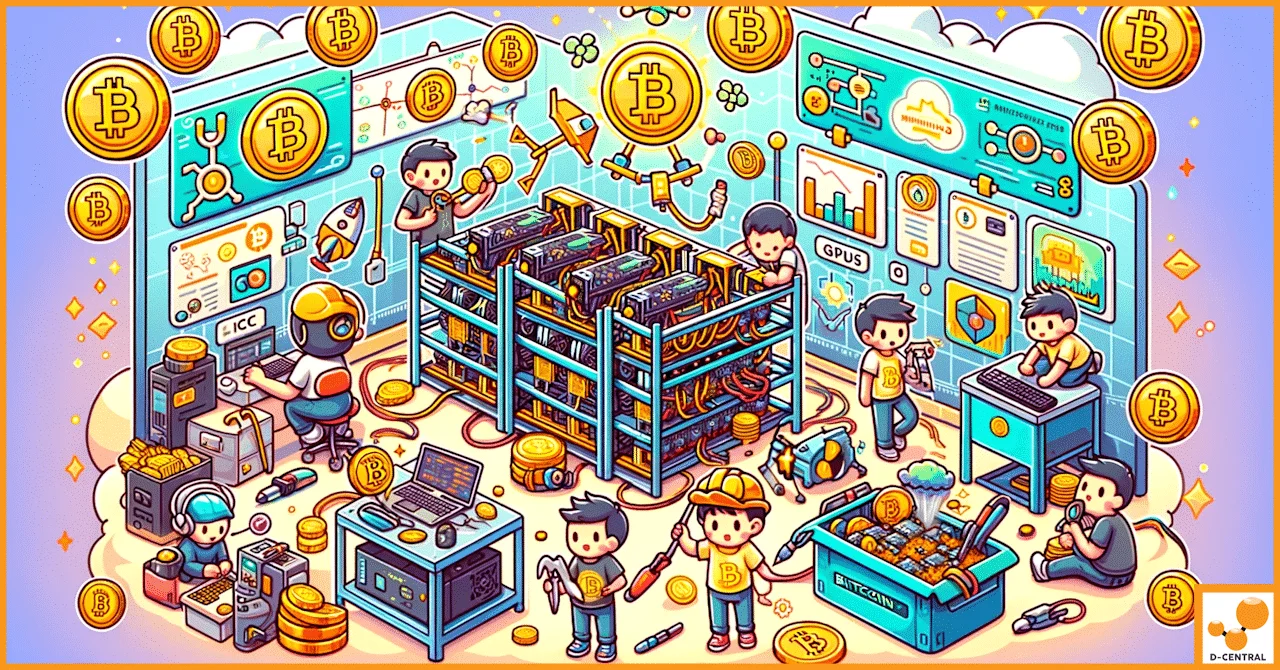
Bitcoin mining colocation is the practice of housing your ASIC miners in a purpose-built facility operated by a third party. Instead of running machines in your basement, garage, or spare bedroom — dealing with noise complaints, circuit breaker trips, and domestic cooling nightmares — you ship your hardware to a facility where power, cooling, network, and physical security are already solved at industrial scale.
For solo operators who want to own their hashrate without the infrastructure headaches, colocation is the sweet spot between home mining and fully managed cloud contracts where you never touch hardware at all. You keep your machines, you keep your keys, you keep sovereignty over your hashrate — someone else just keeps the lights on.
But not all colocation providers are equal. The difference between a good facility and a bad one can mean thousands of dollars in lost revenue, fried hashboards, or worse — machines that simply disappear. Here is what to actually look for.
1. Location and Jurisdiction Matter More Than You Think
Most colocation guides will tell you location affects latency. That is technically true but practically irrelevant — Bitcoin mining does not require millisecond-level latency the way high-frequency trading does. A 50ms difference in block template delivery is noise.
What location actually affects:
Electricity cost. This is the single largest variable in your mining P&L. Hydroelectric regions like Quebec consistently offer some of the lowest industrial power rates in North America. The province generates over 95% of its electricity from hydropower, giving it a structural cost advantage that is not going away.
Climate. Cold climates reduce cooling costs dramatically. A facility in Montreal, Quebec can leverage sub-zero winter temperatures for free air cooling six months of the year, slashing the energy overhead that eats into margins at facilities in warmer climates.
Jurisdiction. This is the one nobody talks about until it is too late. You want your miners in a jurisdiction with clear property rights, political stability, and no history of surprise regulation targeting mining operations. Canada — and Quebec specifically — provides a stable legal framework for Bitcoin mining. Your hardware is protected by Canadian commercial law. Compare that to jurisdictions where miners have had equipment confiscated, contracts voided, or operations shut down with minimal notice.
Proximity for service. When a hashboard fails (and they will), you want your colocation provider to be able to pull the machine, diagnose the issue, and either repair it on-site or route it to a qualified repair shop without shipping it across the continent. D-Central operates its hosting facility at 1325 Rue Bergar, Laval, QC, with full ASIC repair capabilities in-house — meaning your machine goes from rack to repair bench to rack without ever leaving the building.
2. Power Infrastructure: The Non-Negotiable
Power is not just about cost per kWh. It is about the entire electrical infrastructure behind that number.
Redundancy. Ask the provider: what happens when the utility feed drops? Do they have automatic transfer switches (ATS) and backup generators? How long can they sustain operations on backup power? A facility with N+1 power redundancy means one power path can fail completely and your miners keep hashing. Anything less than that is a risk you are paying for every month.
Power density. Modern ASIC miners draw serious wattage. A single Antminer S21 Hydro pulls 5,360W at the wall. A rack of ten machines is over 50kW. Not every facility is built for this kind of density. Traditional data center colocation — the kind designed for servers drawing 5-10kW per rack — will either refuse high-density mining loads or charge a premium that erases your margins. Purpose-built mining facilities are engineered for these loads from the ground up.
Power metering transparency. You should be able to verify exactly how much power your machines are consuming. Some providers give you access to per-circuit or per-PDU metering dashboards. Others hand you a flat rate and you have no idea if you are being overcharged. Transparent metering is a sign of an honest operator.
Stable voltage and clean power. Voltage sags, spikes, and dirty power kill ASIC hardware. Hash boards are sensitive electronics — not industrial motors. Ask about power conditioning, surge protection, and UPS systems. A facility that skimps on power quality will cost you in hardware failures.
3. Cooling: Where Amateurs Get Exposed
Every watt your miner consumes becomes heat. All of it. A 3,500W Antminer S21 is a 3,500W space heater that happens to hash. The facility’s job is to move that heat out efficiently and cheaply.
Air cooling is the most common approach — large fans and ventilation systems that push hot exhaust air out of the building and pull cool ambient air in. This works well in cold climates. In Quebec, outside air temperatures below freezing for five months of the year make air cooling extremely cost-effective. The challenge is managing humidity and filtration to prevent dust buildup on hash boards.
Immersion cooling uses dielectric fluid to absorb heat directly from the ASIC chips. It is thermally superior and eliminates dust entirely, but it adds complexity and cost. Immersion setups require specialized tanks, fluid management, and heat exchangers. If your provider offers immersion, ask about the fluid type, maintenance schedule, and what happens if you need to pull a machine for service.
The real question: What is the facility’s PUE (Power Usage Effectiveness)? A PUE of 1.0 means every watt goes to mining. A PUE of 1.3 means you are paying 30% extra for cooling and overhead. Purpose-built mining facilities in cold climates routinely achieve PUE values between 1.05 and 1.15 — significantly better than traditional data centers at 1.3-1.6.
4. Physical Security and Access
Your ASIC miners are not cheap. An Antminer S21 retails for thousands of dollars. A rack of machines represents a significant capital investment sitting in someone else’s building. You need to trust that building.
Minimum security expectations:
- 24/7 video surveillance with retention (minimum 30 days)
- Access control — keycards, biometrics, or both
- Perimeter fencing and controlled entry points
- Visitor logs and escort policies
- Fire detection and suppression systems
- Insurance coverage for hosted equipment
Access policy matters too. Can you visit your machines? How much notice is required? Some facilities allow 24/7 client access with keycard entry. Others require scheduled appointments. Neither is inherently wrong, but you should know the policy before you ship hardware. If you are the kind of operator who wants to physically inspect your setup, choose a provider that accommodates that.
Red flags: Any provider that will not show you the facility before you commit, will not provide photos or video of their security setup, or is vague about insurance — walk away. This industry has seen enough exit scams and fly-by-night operations that due diligence is not optional.
5. Network Connectivity
Mining does not require massive bandwidth, but it does require reliability. A miner uses very little data — typically under 1 Mbps — but a network outage means your machines are hashing against nothing. Zero revenue until connectivity is restored.
Look for:
- Multiple upstream ISP connections (redundant connectivity)
- Low-latency paths to major mining pools
- Network monitoring with alerting
- DDoS protection (relevant if the facility hosts a large percentage of network hashrate)
Most reputable colocation providers include network connectivity in their pricing. If a provider charges separately for “premium network” at a mining facility, ask why their standard network is not sufficient.
6. Technical Support and On-Site Repair
This is where D-Central’s colocation model diverges from most competitors. The typical colocation provider rents you space, power, and cooling. When a machine goes down, they will power-cycle it for you. Maybe swap a fan. Anything beyond that and you are shipping the machine out for repair — adding days or weeks of downtime plus shipping costs.
D-Central operates a full ASIC repair service alongside its hosting facility. Hashboard diagnostics, chip-level repair, firmware troubleshooting, control board replacement — it all happens under the same roof. When your machine faults, the turnaround from diagnosis to back-on-rack is measured in hours or days, not weeks. That difference compounds over months and years of operation.
What to ask any colocation provider about support:
- What is included in the base hosting rate? (Power cycling, fan swaps, visual inspections?)
- What costs extra? (Firmware updates, hashboard swaps, deep cleaning?)
- Do you have on-site repair technicians, or do machines get shipped out?
- What is the average turnaround time for a machine repair?
- Can you provide monitoring dashboards or alerts for machine status?
- What is the communication protocol when a machine goes down? (Email, ticket system, phone?)
7. Contract Terms and Pricing Transparency
Colocation pricing in the mining industry typically follows one of these models:
All-inclusive per-kW pricing. You pay a flat rate per kilowatt per month that covers power, cooling, space, network, and basic support. This is the simplest model and the easiest to budget for. Typical rates in North America range from $0.06 to $0.12 per kWh depending on location, facility quality, and contract length.
Power pass-through plus hosting fee. The provider charges you the actual utility cost of power consumed (verified by metering) plus a fixed monthly fee for space, cooling, network, and support. This model is more transparent but introduces variability in your monthly costs if utility rates fluctuate.
Revenue-sharing or hash-rate-based models. Some providers take a percentage of your mining revenue instead of (or in addition to) a fixed fee. Be extremely cautious with these arrangements — they misalign incentives and can become very expensive during bull markets when your revenue spikes but their costs remain fixed.
Contract length. Longer commitments usually mean lower rates, but they also mean less flexibility. A 12-month contract at a discount is only a good deal if the provider delivers on their promises for all 12 months. Start with a shorter term if the provider is new to you, then extend once you have confidence in their service.
What to watch for in the fine print:
- Early termination fees
- Rate adjustment clauses (can they raise prices mid-contract?)
- Liability limitations for downtime or equipment damage
- Hardware removal policies (what happens when the contract ends?)
- Minimum power commitments (some providers require you to fill a minimum number of slots)
8. Scalability
Your mining operation today is probably not the same size it will be in 12 months. Whether you are adding machines after the next difficulty adjustment, upgrading to newer-generation ASICs, or consolidating older hardware, your colocation provider needs to accommodate changes without making it painful.
Good providers offer:
- Flexible slot allocation — scale up or down without renegotiating the entire contract
- Power capacity headroom — ability to add machines without waiting for electrical upgrades
- Hardware transition support — help racking new machines and decommissioning old ones
- Upgrade paths — access to newer hardware through the provider’s retail or resale channels
9. Reputation and Track Record
The Bitcoin mining colocation space has attracted its share of bad actors — providers who collect deposits and vanish, facilities that oversell capacity, operators who quietly redirect your hashrate. Due diligence is not paranoia; it is basic operational hygiene.
How to vet a provider:
- Verify the facility exists. Ask for a physical address, look it up on Google Maps, and if possible visit in person or request a video tour.
- Check longevity. How long have they been operating? Providers that have survived multiple bear markets have proven their business model. D-Central has been operating since 2016 — through two full market cycles.
- Look for community presence. Are they active on Bitcoin forums, X (Twitter), Discord? Do they contribute to the community beyond just selling services?
- Ask for references. Any provider worth their salt will connect you with existing clients who can vouch for the service.
- Read the reviews. Check Google Reviews, Trustpilot, Reddit, and Bitcoin-specific forums. One bad review is noise; a pattern of complaints is signal.
- Verify their expertise. Do they understand ASIC hardware at a technical level, or are they just real estate operators renting out warehouse space? A provider who can talk about hashboard failure modes, firmware tuning, and chip-level diagnostics is operating at a different level than one who just plugs machines in and collects checks.
10. The Sovereignty Angle
Here is the part most colocation guides skip entirely, because most colocation providers do not think in these terms.
If you believe in Bitcoin’s mission — censorship-resistant, decentralized, sound money — then where your hashrate lives matters. Every machine colocated at a facility that could be compelled to censor transactions or redirect hashrate to a compliant pool is a potential vector for network centralization. This is not theoretical — it has happened in other jurisdictions.
When you choose a colocation provider, you are making a decision about the decentralization of the Bitcoin network. A provider that shares your values, operates in a stable jurisdiction, and respects the sovereignty of your hashrate is not just a business partner — they are an ally in the mission.
D-Central’s mining hosting service is built on this principle. Your machines, your hashrate, your pool selection. We provide the infrastructure; you keep control.
Why D-Central for Bitcoin Mining Colocation
D-Central Technologies has operated since 2016 — long before the current wave of colocation providers entered the market. Our hosting facility in Montreal, Quebec takes advantage of Quebec’s hydroelectric power, cold climate, and stable regulatory environment.
What sets us apart:
- Quebec hydroelectric power — clean, cheap, and reliable energy from one of the world’s largest hydroelectric systems
- Cold climate advantage — natural cooling for six months of the year reduces PUE and operating costs
- Integrated ASIC repair — on-site diagnostics and chip-level repair means minimal downtime when hardware fails
- Hardware expertise — we are Bitcoin Mining Hackers who understand ASIC technology at the board level, not just facility operators
- Full mining ecosystem — hosting, repair, hardware sales, and consulting under one roof
- Canadian jurisdiction — strong property rights, political stability, and clear regulatory framework
- Bitcoin-only focus — we are aligned with the network’s mission, not just chasing margins
Whether you are colocating a single S21 or scaling to a full rack deployment, we provide the infrastructure, expertise, and alignment you need.
Explore D-Central’s hosting services or get in touch to discuss your colocation requirements.
Frequently Asked Questions
What is Bitcoin mining colocation?
Bitcoin mining colocation is a service where you place your own ASIC mining hardware in a purpose-built facility operated by a third party. The facility provides power, cooling, network connectivity, physical security, and basic support. You retain ownership of your machines and control over your hashrate — the provider handles the infrastructure.
How much does Bitcoin mining colocation cost in Canada?
Colocation rates in Canada typically range from $0.06 to $0.10 per kWh on an all-inclusive basis, depending on the facility location, contract length, and services included. Quebec facilities often land at the lower end of this range thanks to abundant hydroelectric power. Contact D-Central for current hosting rates at our Montreal, Quebec facility.
Why is Quebec a good location for Bitcoin mining colocation?
Quebec offers three structural advantages for mining: hydroelectric power that is among the cheapest in North America, a cold climate that dramatically reduces cooling costs, and a stable Canadian legal jurisdiction that protects your property rights. Over 95% of Quebec’s electricity comes from renewable hydropower.
What happens if my ASIC miner breaks at a colocation facility?
At most facilities, a broken machine gets power-cycled and, if unresponsive, shipped back to you or to a third-party repair shop. At D-Central, our hosting facility operates alongside our ASIC repair service — your machine gets diagnosed and repaired on-site, often returning to service within hours or days instead of weeks.
Can I visit my miners at D-Central’s facility?
Yes. D-Central’s hosting facility at 1325 Rue Bergar, Laval, QC is accessible to clients with advance scheduling. We can also provide remote monitoring access so you can check machine status without visiting in person.
What is PUE and why does it matter for mining colocation?
PUE (Power Usage Effectiveness) measures total facility power divided by power consumed by mining equipment. A PUE of 1.0 means all power goes directly to mining. A PUE of 1.3 means you are paying 30% overhead for cooling and infrastructure. Purpose-built mining facilities in cold climates typically achieve PUE values between 1.05 and 1.15, compared to 1.3-1.6 for traditional data centers.
Do I choose my own mining pool with colocation?
At D-Central, yes — you retain full control over pool selection, wallet addresses, and firmware configuration. Be cautious of providers that mandate a specific pool or firmware, as this can compromise your sovereignty over your hashrate and may indicate that the provider is redirecting a portion of your mining output.
How long has D-Central been offering hosting services?
D-Central Technologies has been operating since 2016. Our hosting service operates from our facility in Montreal, Quebec, leveraging the province’s hydroelectric power and cold climate for optimal mining conditions.