Canada sits on top of one of the largest oil and gas reserves on the planet. That comes with a dirty side effect: methane venting. Every year, millions of cubic metres of natural gas — primarily methane — are released straight into the atmosphere from wellheads, processing facilities, and pipelines across Western Canada. It is not burned. It is not captured. It is simply wasted.
Methane is roughly 80 times more potent than CO2 as a greenhouse gas over a 20-year window. And Canada’s oil and gas sector is the nation’s single largest source of methane emissions. The scale of the problem is staggering, the waste is inexcusable, and the solution has been sitting under our noses the entire time: Bitcoin mining.
Not as some corporate greenwashing exercise. Not as a speculative investment play. As an engineering solution — a way to convert a toxic, wasted byproduct into thermodynamic proof-of-work that secures the most decentralized monetary network ever built. This is what Bitcoin was designed for. This is what Mining Hackers do.
The Methane Problem: Scale and Urgency
The Canadian oil and gas industry vents and flares methane at every stage of the production lifecycle — extraction, processing, transmission, and storage. While flaring (controlled combustion) converts methane to CO2, venting releases raw methane directly into the atmosphere with zero combustion. The environmental impact is significantly worse.
Consider the numbers:
| Metric | Value |
|---|---|
| Methane global warming potential (20-year) | ~80x CO2 |
| Canada’s federal methane reduction target (by 2030) | 75% below 2012 levels |
| Major venting provinces | Alberta, Saskatchewan, BC |
| Primary emission source | Oil & gas production (upstream) |
Canada’s federal government has set aggressive targets: 75% methane reduction below 2012 levels by 2030. Provincial equivalency agreements in Alberta, British Columbia, and Saskatchewan allow region-specific regulation, but the targets are clear. Methane must be dealt with — and fast.
The question is not whether Canada needs to reduce methane emissions. The question is how. And this is where Bitcoin mining delivers a solution that is technically elegant, economically sound, and philosophically aligned with decentralization.
The Engineering Solution: Mobile Bitcoin Hashcenters
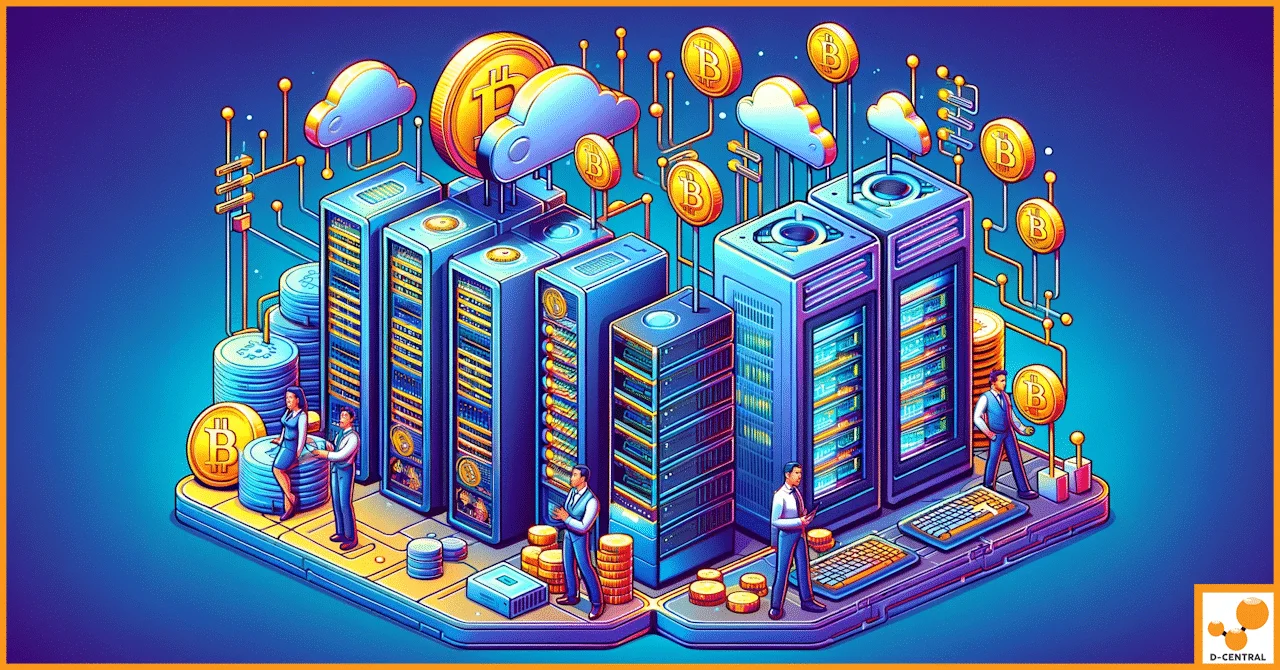
A mobile Bitcoin hashcenter is a containerized, modular mining operation deployed directly at the wellhead or facility where methane is being vented or flared. Instead of letting the gas escape or burning it off wastefully, the hashcenter captures the methane and uses it as fuel for generators that power ASIC miners.
The mechanics are straightforward:
- Capture: Methane that would otherwise be vented or flared is directed to an on-site generator.
- Conversion: The generator converts methane to electricity, producing CO2 (far less harmful than raw methane) and heat as byproducts.
- Mining: That electricity powers ASIC miners running SHA-256 proof-of-work, securing the Bitcoin network.
- Revenue: The mining operation generates bitcoin — turning a liability into an asset.
The result: methane that was warming the planet is now securing the Bitcoin network and generating revenue. The environmental harm is drastically reduced, the stranded energy resource is monetized, and the Bitcoin network’s hashrate grows more decentralized.
This is not theoretical. Companies are already deploying mobile hashcenters across North American oil fields. The economics are compelling precisely because the fuel cost is effectively zero — the gas has negative value as a waste product that operators would otherwise pay to manage.
The Numbers: Bitcoin Mining Crushes Alternatives
Let’s compare three approaches to dealing with vented methane: Bitcoin mobile hashcenters, flaring, and solar offset investment. The metric that matters is emissions avoided per dollar invested.
| Metric | Bitcoin Hashcenters | Flaring | Solar Offset |
|---|---|---|---|
| CO2-eq avoided per $1,000 invested | 63.4 tonnes | 6.6 tonnes | 1.4 tonnes |
| Cost to avoid 1 tonne CO2-eq | $15.77 | $151,515 | $714,286 |
| Revenue generated | Bitcoin (ongoing) | None (waste heat) | Electricity credits |
| Deployment flexibility | Mobile, remote, off-grid | Fixed infrastructure | Grid-connected only |
| Job creation potential | High (tech + energy) | Low | Moderate |
Read that cost column again: $15.77 per tonne of CO2-eq avoided for Bitcoin hashcenters versus $151,515 for flaring and $714,286 for solar. The efficiency gap is not marginal — it is orders of magnitude. Bitcoin mining is roughly 10,000x more cost-effective per tonne of emissions avoided than flaring, and 45,000x more effective than solar offsets for methane specifically.
Why? Because Bitcoin mining does not just destroy the methane. It monetizes the destruction. The revenue from mining subsidizes the entire operation, driving the net cost of emissions reduction toward zero — or negative. No other technology can make that claim.
Why This Matters for Decentralization
The environmental case is compelling on its own. But for Bitcoiners, there is a deeper reason this matters: hashrate decentralization.
Today, the Bitcoin network hashes at over 800 EH/s — and growing. Much of that hashrate is concentrated in large, grid-connected facilities run by publicly traded companies. That concentration is an existential risk to Bitcoin’s censorship resistance. If a handful of jurisdictions can pressure a handful of companies to filter transactions, the entire value proposition of proof-of-work is undermined.
Mobile hashcenters deployed at remote wellheads solve this problem elegantly. They are:
- Geographically distributed — scattered across thousands of remote oil and gas sites
- Grid-independent — powered by on-site gas, not reliant on utility infrastructure
- Difficult to shut down — small, mobile, and dispersed across vast territories
- Economically self-sustaining — the gas is free, the bitcoin pays for operations
This is what genuine decentralization looks like. Not just running a node in your basement (though home mining matters enormously for Bitcoin’s antifragility), but distributing hashrate across the most unlikely and inaccessible locations on Earth. Every wellhead that runs a hashcenter is a node of resistance against centralization.
Canada’s Strategic Position
Canada is uniquely positioned to lead this convergence of energy infrastructure and Bitcoin mining. Here is why:
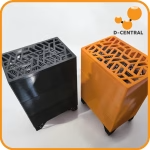
Cold climate: ASIC miners generate enormous heat. Canada’s northern climate provides natural cooling for a significant portion of the year, reducing energy overhead for cooling systems and extending hardware lifespan. This advantage applies equally to Bitcoin space heaters used in home mining — the heat is not wasted, it replaces your furnace.
Abundant stranded energy: Western Canada has thousands of wells producing gas that is too remote or too small-volume to justify pipeline infrastructure. That gas is stranded — and currently wasted. Bitcoin mining is the only buyer that can show up anywhere, at any scale, with zero infrastructure requirements beyond a generator and a satellite link.
Regulatory framework: Canada’s federal methane reduction targets (75% below 2012 levels by 2030) and provincial equivalency agreements create regulatory pressure to find solutions. Bitcoin hashcenters are not a loophole — they are a legitimate, measurable emissions reduction technology that can generate carbon credits.
Hydroelectric dominance: Quebec’s grid runs on nearly 100% hydroelectric power, making it one of the cleanest grids on Earth. For grid-connected mining operations, Quebec offers among the lowest carbon footprints possible. D-Central operates its hosting facility in Montreal, Quebec, leveraging exactly this advantage.
Sovereign monetary opportunity: Canada famously sold off its entire gold reserve. In a world where fiat currencies are being debased at unprecedented rates, Bitcoin represents a superior monetary technology — decentralized, fixed-supply, and censorship-resistant. A nation that mines bitcoin is not just generating revenue; it is accumulating sound money.
The Obstacles — And Why They Are Fading
If Bitcoin hashcenters are so effective, why are they not everywhere yet? Three factors have slowed adoption:
1. Narrative warfare. The mainstream media has spent years painting Bitcoin mining as an environmental disaster. This narrative is not just wrong — it is the exact opposite of the truth when applied to stranded gas mining. Every hashcenter deployed at a methane vent is actively cleaning up the energy sector’s mess. The narrative is shifting as more data becomes available, but it has caused real damage to policy adoption.
2. Regulatory uncertainty. Governments move slowly. The intersection of cryptocurrency, energy regulation, and carbon credits creates jurisdictional complexity that makes bureaucrats nervous. But the economic incentives are so strong that forward-thinking provinces and operators are moving ahead regardless.
3. Education gap. Most energy sector operators do not understand Bitcoin mining. Most Bitcoin miners do not understand wellhead operations. Bridging this knowledge gap requires companies that speak both languages — and that is precisely where the Bitcoin mining community, including pioneers like D-Central Technologies, plays a critical role. We have been debunking energy FUD since 2016.
These obstacles are real but temporary. The economics are too compelling, the environmental benefits too clear, and the regulatory pressure too strong for this technology to remain on the sidelines.
Beyond Methane: The Bigger Picture
Methane-to-hashrate is just one example of a broader principle: Bitcoin mining is the buyer of last resort for stranded energy. Any energy source that is too remote, too intermittent, or too small-scale for traditional consumers can be monetized through proof-of-work.
This applies to:
- Flare gas at oil wells (the methane use case)
- Curtailed renewables — wind and solar farms that produce more than the grid can absorb
- Small hydro — run-of-river installations too small for grid connection
- Biogas from landfills and agricultural operations
- Waste heat recovery — using mining exhaust for industrial or residential heating
This is the thesis behind Bitcoin miners being the grid’s best friend. Mining acts as a flexible load that absorbs excess energy, stabilizes grids, and monetizes resources that would otherwise be worthless. It is the most elegant energy arbitrage mechanism ever devised — and it runs on the hardest money humanity has ever created.
What You Can Do
You do not need to deploy a mobile hashcenter at a wellhead to participate in Bitcoin’s energy revolution. Start where you are:
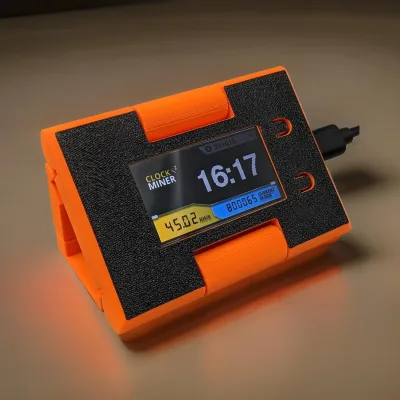
- Mine at home. A Bitaxe on your desk contributes hashrate to the network’s decentralization while teaching you how proof-of-work actually functions.
- Heat with hashrate. Bitcoin space heaters replace your electric furnace with an ASIC miner, turning your heating bill into bitcoin.
- Educate your network. Share the data. The narrative that Bitcoin mining wastes energy is the single biggest obstacle to adoption of technologies that can materially reduce methane emissions.
- Support Canadian mining. When you buy hardware from D-Central, you support a Canadian company that has been building Bitcoin mining solutions since 2016 — hacking institutional technology for pleb miners.
Every hash counts. Whether it comes from a mobile hashcenter at an Alberta wellhead or a Bitaxe on your kitchen counter in Montreal, every unit of proof-of-work strengthens the network, distributes hashrate, and moves us closer to a world where sound money and sound energy policy are the same thing.
FAQ
What is methane venting and why is it worse than CO2 emissions?
Methane venting is the direct release of unburned natural gas (primarily methane) into the atmosphere during oil and gas operations. Unlike flaring, which at least converts methane to CO2 through combustion, venting releases raw methane — a greenhouse gas approximately 80 times more potent than CO2 over a 20-year period. Canada’s oil and gas sector is the country’s largest source of methane emissions, making it a critical environmental challenge.
How do Bitcoin mobile hashcenters reduce methane emissions?
Mobile hashcenters capture methane that would otherwise be vented or flared, using it as fuel for generators that power ASIC miners. The combustion process converts methane to CO2 (a far less potent greenhouse gas), while the electricity generated runs proof-of-work computations that secure the Bitcoin network. The mining revenue subsidizes the operation, making it economically self-sustaining — methane destruction that pays for itself.
How cost-effective is Bitcoin mining compared to other methane reduction technologies?
Bitcoin hashcenters avoid approximately 63.4 tonnes of CO2-equivalent emissions per $1,000 invested, compared to 6.6 tonnes for flaring and 1.4 tonnes for solar offsets. The cost to avoid one tonne of CO2-eq is roughly $15.77 for Bitcoin mining versus $151,515 for flaring — making Bitcoin mining roughly 10,000 times more cost-effective per tonne of emissions avoided.
What are Canada’s methane reduction targets?
Canada’s federal government has mandated a 75% reduction in methane emissions below 2012 levels by 2030. Provincial equivalency agreements with Alberta, British Columbia, and Saskatchewan allow region-specific regulations that must meet or exceed federal targets. These aggressive targets create strong regulatory incentive to deploy effective methane reduction technologies like Bitcoin hashcenters.
Why does Bitcoin mining at wellheads help decentralization?
Mobile hashcenters deployed at remote wellheads distribute hashrate across geographically dispersed, grid-independent locations that are difficult for any single authority to shut down. This directly counteracts the concentration of mining power in large, grid-connected facilities operated by publicly traded companies — strengthening Bitcoin’s censorship resistance and reinforcing the network’s foundational value proposition.
Can home miners contribute to the same principles?
Absolutely. While the scale differs, the principle is identical: decentralize hashrate and monetize energy. Home miners running Bitaxe solo miners or Bitcoin space heaters contribute to network decentralization, learn proof-of-work mechanics first-hand, and in the case of space heaters, convert their heating costs into bitcoin. Every hash strengthens the network, regardless of scale.
Is D-Central involved in mobile hashcenter deployments?
D-Central Technologies has been a Bitcoin mining company since 2016, with deep expertise in ASIC hardware, repair, and deployment. While our primary focus is on making mining accessible to home miners and small operators through products like the Bitaxe, space heaters, and custom ASIC builds, we advocate for and support the broader adoption of Bitcoin mining as an energy solution — including mobile hashcenter technology for stranded gas applications.