There is a question that surfaces in every Bitcoin forum, every subreddit, and every conversation with someone who just fell down the rabbit hole: should you mine Bitcoin or just buy it? On the surface, it seems like a straightforward financial comparison. Run the numbers, pick the cheaper option, move on. But that framing misses the point entirely. It reduces Bitcoin to a speculative asset and ignores what makes it revolutionary in the first place.
At D-Central Technologies, we have been in this industry since 2016 — repairing ASICs, building custom miners, hosting operations, and equipping home miners across Canada and beyond. We are not financial advisors. We are Bitcoin Mining Hackers. And from where we stand, the question is not really “mine or buy?” The real question is: do you want to be a passive participant in the Bitcoin economy, or an active defender of the network?
Let us break this down properly.
The Case for Buying Bitcoin
We will not pretend buying Bitcoin has no merits. It does. If your sole objective is acquiring sats with the least friction, exchanges and peer-to-peer platforms get the job done quickly. You set up an account, send fiat, receive Bitcoin, withdraw to your own wallet. Done. No hardware, no electricity bills, no noise management.
For people who value simplicity above all else, buying is the path of least resistance. And there is nothing wrong with stacking sats through dollar-cost averaging (DCA). Many Bitcoiners do both — they buy on exchanges AND they mine. These are not mutually exclusive strategies.
Where Buying Falls Short
Here is the uncomfortable truth: when you buy Bitcoin on an exchange, you are operating within the very system Bitcoin was designed to circumvent. You hand over your identity documents. You trust a centralized intermediary to custody your funds until withdrawal. You leave a paper trail that connects your real-world identity to your Bitcoin holdings. Every KYC exchange is a honeypot of user data waiting to be breached, subpoenaed, or weaponized.
Buying Bitcoin through KYC channels gives you the asset but strips away a significant portion of the sovereignty that makes Bitcoin worth holding in the first place. You get the number, but you sacrifice the ethos.
There are non-KYC methods — peer-to-peer platforms, Bitcoin ATMs, earning Bitcoin for goods and services — but these come with their own trade-offs in terms of liquidity, premiums, and availability.
The Case for Mining Bitcoin
Mining is fundamentally different from buying. When you mine, you are not acquiring Bitcoin from someone else. You are earning virgin sats — coins that have never existed before, coins with no transaction history, no taint analysis, no chain of custody connecting them to any exchange or previous owner. Your miner performs work, the network rewards you. That is the purest form of Bitcoin acquisition that exists.
But mining is about far more than just getting coins.
You Become the Network
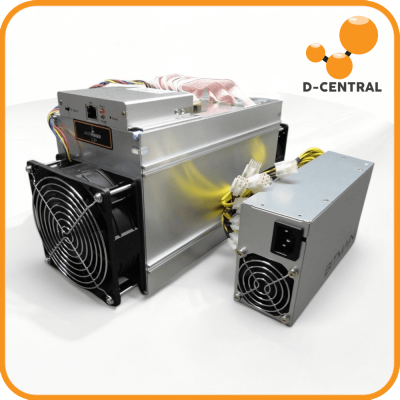
Every miner running contributes hashrate to the Bitcoin network. That hashrate is what makes Bitcoin secure, what makes it censorship-resistant, what makes it the hardest money ever created. When you run a miner — whether it is a full-scale Antminer S21 or a Bitaxe solo miner on your desk — you are casting a vote for decentralization. You are saying: this network does not belong to Foundry or AntPool or any single entity. It belongs to all of us.
In 2026, the Bitcoin network hashrate has surged past 800 EH/s. That is an incomprehensible amount of computational power securing the chain. But here is what matters: the distribution of that hashrate determines Bitcoin’s resilience. If mining is concentrated in a handful of industrial facilities controlled by a few corporations, Bitcoin’s censorship resistance weakens. Every home miner, every garage operation, every pleb running a unit in their basement pushes back against that centralization.
This is not abstract philosophy. This is the security model of the money you hold.
Mining as a Sovereignty Tool
When you mine Bitcoin, you do not need anyone’s permission. You do not fill out forms. You do not submit to identity verification. You plug in hardware, point it at a pool (or mine solo), and the protocol pays you for your work. No intermediary can freeze your mining rewards. No exchange can lock your account. No government can reverse the transaction that put those sats in your wallet.
Mining is Bitcoin acquisition without counterparty risk. That alone makes it worth serious consideration.
The Economics: A Realistic Breakdown for 2026
Let us set aside the ideology for a moment and talk numbers, because the economics of mining matter — especially for home miners who are paying residential electricity rates.
The Current Landscape
After the April 2024 halving, the block reward sits at 3.125 BTC. That is half of what it was before, and it means every terahash of computing power earns fewer sats per day than it did previously. Network difficulty continues to climb as more efficient hardware comes online. These are facts, and ignoring them would be dishonest.
For industrial miners with access to sub-$0.04/kWh power, modern ASICs remain highly profitable. But for home miners paying $0.08-0.15/kWh? The math gets tighter. This is where strategy matters.
The Home Mining Advantage Most People Miss
Here is what the “just buy it” crowd consistently overlooks: mining has value beyond the sats it produces.
Heat recovery. An ASIC miner converts electricity into heat with near-perfect efficiency. Every watt your miner consumes becomes a watt of heat output. In Canada — where we heat our homes for 6-8 months of the year — that heat is not waste. It is replacing your furnace, your space heater, your electric baseboard. D-Central’s Bitcoin Space Heaters are purpose-built for exactly this: mining Bitcoin while heating your home. When you factor in the heating offset, the effective cost of mining drops dramatically. In many Canadian households, a Bitcoin space heater running through winter is cheaper than the electric heater it replaced — and it produces sats while it works.
Tax advantages. Depending on your jurisdiction, mining equipment can be depreciated as a business expense. Electricity costs, maintenance, and repairs may be deductible. Mined Bitcoin is typically taxed at the time of receipt at fair market value, which can be advantageous depending on your tax situation. Consult a tax professional, but understand that mining opens up tax planning strategies that simple purchases do not.
Non-KYC acquisition. As mentioned above, mined Bitcoin is virgin. It has no history. For those who value financial privacy, this is significant.
Education and skills. Running a miner teaches you about networking, electrical systems, thermal management, Linux, firmware, and the Bitcoin protocol itself. This knowledge compounds over time and makes you a more capable participant in the Bitcoin ecosystem.
Entry Points at Every Budget
Mining is not an all-or-nothing commitment. The hardware ecosystem in 2026 offers entry points from under $50 to tens of thousands of dollars:
| Tier | Hardware | Hashrate | Power Input | Best For |
|---|---|---|---|---|
| Entry / Education | Nerdminer, NerdAxe | ~500 H/s – 4 TH/s | 5V barrel jack (5.5×2.1mm) | Learning, lottery mining, desk display |
| Solo / Lottery | Bitaxe Supra, Ultra, Gamma | ~0.5 – 1.2 TH/s | 5V barrel jack (5.5×2.1mm), 5V/6A PSU | Solo mining, supporting decentralization |
| Intermediate | Bitaxe Hex, NerdQAxe, NerdOctaxe | ~3 – 8 TH/s | 12V DC (XT30/XT60 connector) | Meaningful hashrate, quiet enough for home |
| Home Heating | Bitcoin Space Heaters (S9, S17, S19 editions) | ~14 – 110 TH/s | Standard PSU (APW series) | Dual-purpose heating + mining |
| Full Scale | Antminer S21, Whatsminer M60 | 200+ TH/s | Dedicated 240V circuit | Maximum hashrate, hosted or dedicated space |
Note: Bitaxe and NerdAxe models use a 5V barrel jack (5.5×2.1mm) for power — not USB-C. The USB-C port on these devices is for firmware flashing and serial communication only.
D-Central stocks the full range of open-source miners, ASICs, accessories, and replacement parts in our online shop. Whether you are starting with a Bitaxe on your desk or deploying a rack of S21s, we have the hardware.
Solo Mining: Every Hash Counts
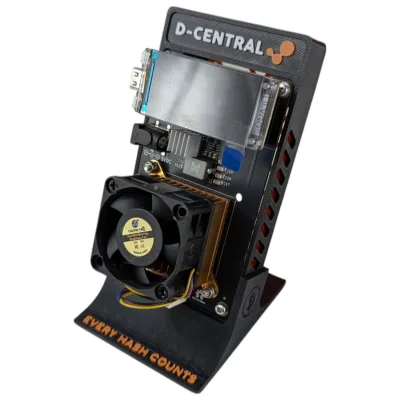
One of the most exciting developments in the home mining space is the rise of solo mining with open-source hardware like the Bitaxe. Solo mining means you are not pooling your hashrate with thousands of other miners. Instead, your device works independently, attempting to find a valid block on its own.
The odds? Astronomically small for any individual device on any given day. A single Bitaxe running at 500 GH/s against a network doing 800+ EH/s is like buying a single lottery ticket. But here is the thing: Bitaxe miners have actually found solo blocks. It has happened. And when it does, the miner receives the entire 3.125 BTC block reward — plus transaction fees.
Solo mining with a Bitaxe is not a business plan. It is a statement. It is running your own node, contributing your own hashrate, and maintaining the possibility — however slim — of finding a block with no intermediary, no pool, no middleman. It is Bitcoin in its purest form.
And even if you never find a block, your hashrate still counts. It still contributes to network decentralization. Every hash matters.
The Hosting Option: Scale Without the Noise
Not everyone can run an industrial ASIC in their living room. These machines are loud — 75+ dB for a modern unit running at full power. If you want serious hashrate but cannot manage the noise, heat, or electrical requirements at home, mining hosting is the solution.
D-Central operates hosting facilities in Quebec, where hydroelectric power provides some of the cleanest and most affordable electricity in North America. You purchase the hardware, we rack it, power it, monitor it, and maintain it. You receive the mining rewards. It is your machine, your hashrate, your sats — we just provide the infrastructure.
This model gives you the benefits of mining — non-KYC acquisition, network participation, heat-to-value conversion at scale — without the lifestyle compromises of running loud equipment in your home.
When Things Break: The Repair Advantage
Here is something the “just buy Bitcoin” advocates never have to think about: what happens when your miner stops working? Hashboards fail. Fans die. Control boards develop faults. Chips burn out.
If you bought your Bitcoin on an exchange, a hardware failure is irrelevant to you. But if you are a miner, your revenue depends on your machines staying online. This is where having a relationship with a company that does professional ASIC repair matters enormously.
D-Central has repaired thousands of mining units since 2016. We maintain model-specific repair pages for over 38 different ASIC models across Bitmain, MicroBT, Innosilicon, and Canaan hardware. Our technicians diagnose at the chip level — identifying failed BM1397s, replacing blown MOSFETs, reflowing solder joints, and bringing dead hashboards back to life. We do not tell you to buy a new machine. We fix the one you have.
This repair capability is a core part of the mining value proposition that gets ignored in simplistic “mine vs. buy” comparisons. When your miner goes down, you want it back online fast. Having a dedicated repair partner — especially one in Canada with fast turnaround — is the difference between days of downtime and weeks of waiting for overseas service.
The Real Comparison: It Is Not Just About Cost Per Sat
Most “mine vs. buy” analyses reduce everything to cost-per-sat. They calculate the dollar cost of mining one Bitcoin versus the spot price, and whichever is lower wins. This analysis is incomplete because it ignores:
- Privacy: Mined sats are non-KYC. Purchased sats (on most platforms) are not.
- Sovereignty: Mining requires no permission. Exchange purchases require identity verification and compliance with regulations that can change at any time.
- Network contribution: Every hash you produce strengthens Bitcoin. Buying on an exchange contributes nothing to network security.
- Heat value: In cold climates, mining heat replaces conventional heating costs — a tangible economic benefit that does not appear in simple mining calculators.
- Resilience: If exchanges get shut down, restricted, or compromised, miners keep earning. Your hardware does not care about exchange regulations.
- Skill development: Mining teaches you practical skills in electrical engineering, networking, Linux administration, and thermal management.
- Hardware residual value: Mining equipment retains resale value — especially well-maintained units that have been professionally serviced.
When you factor in all of these dimensions, the calculus shifts significantly in mining’s favor — especially for Bitcoiners who value sovereignty, privacy, and active participation in the network.
The D-Central Perspective: Why We Build for Home Miners
D-Central’s founder started this company with a simple conviction: Bitcoin mining should not be the exclusive domain of industrial operations with megawatts of power and millions in capital. The technology that secures the Bitcoin network should be accessible to individuals — to the pleb miner running a unit in their basement, to the homesteader offsetting heating costs with hashrate, to the cypherpunk who refuses to KYC for their sats.
That conviction has not changed since 2016. If anything, it has gotten stronger.
We build custom mining solutions — space heaters that mine Bitcoin, slim-edition Antminers that fit in tight spaces, open-source Bitaxe units that anyone can verify and modify. We repair hardware that other companies would scrap. We host miners in Quebec where clean hydro power keeps costs low. We stock every Bitaxe variant, every accessory, every replacement part.
We do all of this because we believe decentralization is not a marketing slogan. It is a technical requirement for Bitcoin to fulfill its promise as censorship-resistant money. And decentralization requires distributed mining — hash power in homes, garages, basements, and workshops around the world.
So, Mine or Buy?
Here is our honest answer: do both, but mine if you can.
Buy Bitcoin when it makes sense — DCA from your paycheck, stack sats on the dips, use non-KYC methods when available. But if you have the capacity to run a miner — even a small one — do it. Not because it will necessarily be cheaper per sat than buying on an exchange. Do it because mining is how you participate in Bitcoin as a system, not just Bitcoin as an asset.
Do it because every hash counts. Do it because decentralization is not someone else’s job. Do it because the miners in your home are the reason no government, no corporation, and no centralized authority can shut this network down.
If you are ready to start mining, here is the path:
- Start small: Grab a Bitaxe and run it solo. Learn the basics, feel the heat, watch your hashrate on the dashboard.
- Scale with purpose: Move to a Bitcoin Space Heater for your home. Replace your electric heater with one that earns sats.
- Go full scale: When you are ready for serious hashrate, explore our Quebec hosting facility for industrial units.
- Maintain your fleet: When hardware needs service, our ASIC repair team keeps your machines running.
This is not a dilemma. It is a spectrum. Start wherever you are, and keep building.
Frequently Asked Questions
Is Bitcoin mining still profitable in 2026 after the halving?
Profitability depends on your electricity cost, hardware efficiency, and whether you account for heat recovery value. With the block reward at 3.125 BTC and network hashrate above 800 EH/s, industrial miners with cheap power remain profitable. Home miners using Bitcoin space heaters in cold climates can achieve effective profitability when heating offset is factored in. The key variables are your electricity rate, the efficiency of your hardware (measured in J/TH), and Bitcoin’s market price.
What is the cheapest way to start mining Bitcoin at home?
The most affordable entry point is a Nerdminer (under $50) for educational solo mining, or a Bitaxe (under $200) for real solo mining with actual SHA-256 hashrate. Both use a 5V barrel jack (5.5×2.1mm) for power — not USB-C. The USB-C port is for firmware flashing only. A Bitaxe Supra or Ultra draws about 15W and can sit quietly on your desk while solo mining 24/7. It will not generate meaningful daily income, but it gives you a real shot at a full block reward and teaches you the fundamentals of mining.
Can I mine Bitcoin and heat my home at the same time?
Yes, and this is one of the strongest arguments for home mining in cold climates. ASIC miners convert electricity to heat at near 100% efficiency. D-Central’s Bitcoin Space Heaters are purpose-built for this — they enclose an ASIC miner in a housing designed for indoor use, directing warm air into your living space. During Canadian winters, a space heater edition miner can replace a conventional electric heater while producing Bitcoin as a byproduct. Your net mining cost effectively becomes zero when you were going to spend that electricity on heating anyway.
Is mined Bitcoin really more private than purchased Bitcoin?
Yes. When you mine Bitcoin — whether solo or through a mining pool — the sats you receive are either newly minted (coinbase transactions) or come from pool payouts. They are not linked to a KYC exchange account, a bank transfer, or your government ID. This does not make them invisible on the blockchain, but it does mean there is no centralized exchange database tying those coins to your identity. For Bitcoiners who value financial privacy and sovereignty, this is a meaningful distinction.
Should I solo mine or join a mining pool?
It depends on your goals and hardware. With a Bitaxe or similar low-hashrate device, solo mining is the natural choice — you are taking a lottery shot at a full 3.125 BTC block reward. The odds on any given day are very small, but Bitaxe miners have found blocks before. With larger hardware (like an Antminer S19 or S21), pool mining provides more consistent and predictable payouts, though you share rewards with other participants. Many miners run both: a Bitaxe solo mining on their desk and larger units in a pool for steady income.
What happens when my mining hardware breaks?
ASIC miners are complex machines with components that can fail — fans, hashboards, control boards, and individual chips are all potential failure points. D-Central operates one of the most comprehensive ASIC repair services in North America, with model-specific expertise across Bitmain, MicroBT, Innosilicon, and Canaan hardware. We diagnose at the chip level and repair rather than replace, which can save you significant money compared to buying new hardware.
Where does D-Central host mining equipment?
D-Central operates hosting facilities in Quebec, Canada, powered by clean hydroelectric energy. Quebec offers some of the most affordable electricity rates in North America, making it an ideal location for Bitcoin mining. You purchase your mining hardware, and we handle racking, powering, monitoring, and maintaining the equipment. The mining rewards go directly to you. Visit our hosting page for current availability and rates.
Does D-Central ship internationally?
Yes. D-Central ships mining hardware and accessories from Canada to customers worldwide. Our primary markets are Canada and the United States, but we serve the global pleb mining community. Browse our full catalog in the D-Central shop.