The 120V Challenge: Mining Bitcoin on a Standard Household Outlet
Here is the uncomfortable truth that most mining hardware sellers will not tell you: the vast majority of ASIC miners on the market cannot run on a standard North American outlet. They were designed for data centers with 220-240V power, industrial cooling, and electrical panels that would make a residential electrician nervous. You plug one into your kitchen outlet and you trip the breaker before the fans even spin up.
But that does not mean home mining on 120V is impossible. It means you need to be smart about it. And being smart about mining hardware is exactly what D-Central does.
North America runs on 120V/60Hz for standard residential circuits. The typical outlet in your house is a 15-amp circuit, which means a hard ceiling of 1,440 watts of continuous load after applying the NEC 80% safety rule. Most modern ASIC miners — the Antminer S19 at 3,250W, the S21 at 3,500W, the Whatsminer M50S at 3,276W — blow past that number without breaking a sweat. They need 240V circuits that most homes do not have readily available.
This guide is the definitive resource for mining Bitcoin on 120V power. We cover six proven methods — from plug-and-play open-source miners to firmware tricks that tame power-hungry ASICs — along with the electrical fundamentals you need to do it safely, the profitability math, and D-Central’s purpose-built solutions for exactly this problem. Whether you are plugging in your first Bitaxe or underclocking an S19 to fit a standard outlet, this manual has you covered.
Home miners in North America (Canada and the United States) who want to mine Bitcoin using standard 120V household power. Beginners through intermediate miners. No electrical engineering background required — we start with the fundamentals and build up to advanced methods. If you are brand new to mining, read our How to Mine Bitcoin at Home guide first for hardware selection and pool setup basics.
Understanding Electrical Basics for Miners
Before you plug anything in, you need to understand the electrical constraints you are working within. This is not optional knowledge — it is the difference between a safe mining setup and a house fire. Every home miner should be able to look at a miner’s spec sheet and immediately know whether it can run on their circuit.
Volts, Amps, and Watts: The Power Equation
Electricity has three fundamental measurements that determine what you can run on any given circuit:
- Voltage (V) — the “pressure” pushing electrons through the wire. In North America, standard outlets deliver 120V. Heavy-duty circuits (dryer, stove, EV charger) deliver 240V.
- Amperage (A) — the “flow rate” of electrons. Your circuit breaker limits this. Standard outlets are on 15A or 20A breakers.
- Wattage (W) — the actual power consumed. This is what your miner draws and what your electricity bill measures.
The relationship is simple:
Power (Watts) = Voltage (Volts) x Current (Amps)
P = V x I

Example: 120V x 15A = 1,800W maximum
Example: 240V x 20A = 4,800W maximum
The NEC/CEC 80% Continuous Load Rule
This is the number that matters most and the one most beginners miss. The National Electrical Code (NEC) in the US and Canadian Electrical Code (CEC) both mandate that continuous loads — anything running for more than 3 hours — must not exceed 80% of the circuit breaker’s rated capacity. Bitcoin miners run 24/7. They are the definition of a continuous load.
This means your actual usable power is 80% of the theoretical maximum:
Available Power by Circuit Type (with 80% Rule)
| Circuit | 120V / 15A | 120V / 20A | 240V / 20A | 240V / 30A |
|---|---|---|---|---|
| Maximum Power | 1,800W | 2,400W | 4,800W | 7,200W |
| 80% Continuous | 1,440W | 1,920W | 3,840W | 5,760W |
| Outlet Type | NEMA 5-15 | NEMA 5-20 | NEMA 6-20 | NEMA 14-30 |
| Typical Use | Standard outlets | Kitchen/bath | Window AC, workshop | Dryer |
The critical number for most home miners is 1,440W — that is your continuous budget on a standard 120V/15A circuit. If your miner draws more than that, you need a different circuit, a different miner, or a way to reduce its power consumption.
Look at the breaker in your electrical panel that controls the outlet you plan to use. It will be stamped 15 or 20. A 15A breaker means 1,440W continuous max. A 20A breaker means 1,920W. If the outlet has a T-shaped neutral slot (one slot is horizontal), it is a 20A outlet. Standard parallel slots = 15A. Never assume — always verify at the breaker panel.
Wire Gauge Requirements
Wire gauge determines how much current a wire can safely carry without overheating. Using undersized wire is a fire hazard — the wire itself becomes a heating element. Standard residential wiring in North America:
- 14 AWG — rated for 15A circuits (standard outlets)
- 12 AWG — rated for 20A circuits (kitchen, bathroom, some workshop outlets)
- 10 AWG — rated for 30A circuits (dryer, heavy appliances)
The wire in your wall is already sized for the breaker on that circuit. The concern is what happens after the outlet — extension cords, power strips, and adapters. We will address this in the safety section.
What You CAN (and Cannot) Run on 120V
This is the table every home miner needs. We tested or verified every device listed below against the 120V/15A continuous limit of 1,440W and the 120V/20A limit of 1,920W.
120V Mining Compatibility — Complete Reference
| Device | Power Draw | 120V/15A | 120V/20A | Notes |
|---|---|---|---|---|
| Bitaxe (all models) | 5–25W | Yes | Yes | USB/5V powered. Any outlet. Run 50+ on one circuit. |
| Nerdminer | 1.5W | Yes | Yes | USB powered. Educational / lottery only. |
| NerdAxe | ~15W | Yes | Yes | USB/barrel connector. Trivial power draw. |
| NerdQAxe | ~40W | Yes | Yes | 12V barrel connector. Any outlet with adapter. |
| Bitaxe Hex | ~90W | Yes | Yes | 12V power. Maximum open-source hashrate. |
| D-Central Space Heaters | 750–1,500W | Yes* | Yes | *S9/BitChimney on 15A. S17/S19 editions need 20A or underclocking. |
| Antminer S9 (stock) | 1,323W | Marginal | Yes | Under 1,440W but leaves zero headroom. Underclocking recommended. |
| Antminer S9 (underclocked) | 750–1,000W | Yes | Yes | Braiins OS+ power target. Ideal for 120V/15A. |
| Antminer S17 (underclocked) | 1,000–1,400W | Yes | Yes | Requires Braiins OS+ or VNish. Target under 1,400W. |
| S19/S19j Pro (LuxOS bypass) | 800–1,400W | Marginal | Yes | PSU bypass mode limits power. Best on 20A circuit. |
| S19/S19j Pro (Braiins, low target) | 1,200–1,800W | Marginal | Yes | Braiins autotuning to 1,400W target fits 15A. Lower hashrate. |
| S21 (LuxOS bypass, limited) | 1,200–1,800W | No | Marginal | Can work on 20A with aggressive limiting. Not ideal. |
| S19/S21 (stock firmware) | 3,000–3,500W | No | No | Requires 240V. No 120V method at full power. |
| Whatsminer M30S/M50S | 3,200–3,400W | No | No | PSU does not support 120V input at all on most models. |
| Whatsminer M60S/M63S | 3,300–3,600W | No | No | 240V only. No viable 120V workaround. |
On a standard 120V/15A outlet, your realistic options are: open-source miners (Bitaxe, NerdAxe, NerdQAxe), underclocked Antminer S9, D-Central Space Heaters (S9 and BitChimney editions), and aggressively underclocked S17/S19 models. If you have a 120V/20A circuit (kitchen, bathroom, or garage outlet), your options expand significantly — stock S9, moderately underclocked S17, and S19 models with LuxOS bypass all become viable.
Method 1: Low-Power Open-Source Miners
The simplest path to mining on 120V is to use hardware that was designed from the ground up to run on minimal power. D-Central’s open-source miner lineup — Bitaxe, NerdAxe, NerdQAxe, NerdOctaxe, and Nerdminer — all run on 5V or 12V DC power supplied through USB or barrel connectors. They draw between 1.5W and 90W. You can plug a dozen of them into a single power strip on a 15A circuit and barely register on your electricity bill.
The Bitaxe Family
Bitaxe is an open-source, single-chip (or multi-chip) ASIC miner designed for solo mining — also called lottery mining. D-Central is a pioneer in the Bitaxe ecosystem, involved since the beginning, and created the original Bitaxe Mesh Stand. We stock every variant and accessory.
- Bitaxe Supra — BM1366 chip, ~600 GH/s, ~15W. The entry point for real ASIC-level solo mining.
- Bitaxe Ultra — BM1397 chip, ~500 GH/s, ~12W. Efficient and proven.
- Bitaxe Gamma — BM1370 chip, ~1.2 TH/s, ~15-25W. More hashpower per unit.
- Bitaxe GT — Latest generation chip, pushing the envelope on single-chip performance.
- Bitaxe Hex — Six BM1366 chips, ~3.6 TH/s, ~90W. The maximum hashrate open-source miner. Still runs comfortably on any outlet.
Every Bitaxe runs on 5V DC via USB-C (except the Hex, which uses a 12V barrel connector). You power it with a standard phone charger or a quality USB power supply. Plug it in, connect to WiFi through the web interface, point it at a solo mining pool like solo.ckpool.org or public-pool.io, and start hashing. The entire setup takes under 10 minutes.
Bitaxe & Open-Source Miners
D-Central stocks all Bitaxe variants (Supra, Ultra, Gamma, GT, Hex), NerdAxe, NerdQAxe, NerdOctaxe, and Nerdminer. Pioneer manufacturer since the beginning of the Bitaxe ecosystem. Every unit tested before shipping.
The Nerd Lineup
For miners who want to go deeper into the open-source ecosystem:
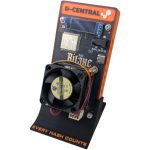
- Nerdminer — ESP32-based, ~78 KH/s, ~1.5W. Educational and display piece. The odds of finding a block are cosmically small, but Nerdminers have found blocks. Every hash counts.
- NerdAxe — BM1397 chip, ~500 GH/s, ~15W. A step up from Nerdminer with real ASIC hashing plus a built-in display.
- NerdQAxe — Quad BM1368 chips, ~2 TH/s, ~40W. Serious solo mining hashrate in a compact package.
- NerdOctaxe — Eight chips, pushing ~4+ TH/s. For miners who want maximum open-source power.
Pros and Cons of Low-Power Mining
Advantages: Zero electrical concerns — plug into any outlet anywhere. Silent or near-silent operation. Low electricity cost. No heat management needed. Perfect for apartments, offices, or spaces where noise and power are constrained. Ideal entry point for learning about mining (see our getting started guide).
Limitations: Low hashrate means negligible daily income from pool mining. Solo mining is a lottery — you may never find a block, or you might find one tomorrow. Not suitable as a primary income-generating mining operation. Best understood as educational, ideological (supporting decentralization), or lottery-style mining.
A Bitaxe Supra at 600 GH/s has roughly a 1-in-1,000,000 chance of finding a block in any given day at current difficulty. Those sound like terrible odds — until you realize that a single block reward is 3.125 BTC. Bitcoiners running Bitaxes are not making a financial calculation. They are buying a perpetual lottery ticket that costs a few cents per day in electricity, supporting network decentralization, and enjoying the thrill of the hunt. Every hash counts.
Method 2: Underclocking and Undervolting
If you already own an ASIC miner — or can get a good deal on a used one — underclocking is the most practical way to make it 120V-compatible. By reducing the chip frequency and voltage, you can cut power consumption by 40-60% while retaining 50-80% of the hashrate. The math works in your favor because power scales with the square of voltage, while hashrate scales linearly with frequency.
For a detailed deep-dive into the physics and firmware methods, see our full Antminer Undervolting Guide. This section covers the 120V-specific application.
Antminer S9 on 120V
The S9 is the most popular miner for 120V operation. At stock settings, it draws 1,323W — technically under the 1,440W continuous limit, but dangerously close with zero safety margin. The APW3++ PSU also operates less efficiently at 120V than 240V, drawing slightly more from the wall for the same DC output. Underclocking solves this completely.
Using Braiins OS+:
- Install Braiins OS+ via web interface upload or SD card (see our Braiins OS Setup Guide)
- Access the Braiins web interface at your miner’s IP address
- Navigate to Miner > Configuration > Autotuning
- Set Power Target to 1,000W for comfortable 120V/15A operation
- Click Save & Apply and allow 2-6 hours for autotuning calibration
- Expected result: ~8-10 TH/s at ~1,000W
Antminer S9 — 120V Power Targets
| Configuration | Stock | Conservative | Aggressive |
|---|---|---|---|
| Power Target | 1,323W | 1,000W | 750W |
| Expected Hashrate | 13.5 TH/s | ~10 TH/s | ~7 TH/s |
| 120V/15A Safe? | Marginal | Yes | Yes |
| 120V/20A Safe? | Yes | Yes | Yes |
| Efficiency | ~98 J/TH | ~100 J/TH | ~107 J/TH |
| Noise Level | ~75 dB | ~60 dB | ~50 dB |
Antminer S17 Series on 120V
The S17 and T17 series are more powerful but also more power-hungry. Stock S17 Pro draws ~2,094W — far too much for 120V/15A. However, with Braiins OS+ autotuning set to a 1,200-1,400W target, you can run an S17 comfortably on a 120V/15A circuit with approximately 30-40 TH/s — a dramatic improvement in hashrate-per-outlet compared to the S9.
The S17 also benefits from a significantly better efficiency floor than the S9 (newer 7nm chips vs. the S9’s 16nm), meaning each watt you spend buys more hashes.
Antminer S19 Series on 120V
The S19 series (S19, S19 Pro, S19j, S19j Pro, S19k Pro) at stock draws 2,920-3,250W. Getting this down to 120V territory requires aggressive underclocking. With Braiins OS+ set to a 1,400W power target, expect approximately 40-55 TH/s depending on the specific model and silicon quality. That is roughly 40-50% of stock hashrate at roughly 45% of stock power — the efficiency actually improves.
For a 120V/15A circuit, set the target to 1,350W or below to maintain safe headroom. On a 120V/20A circuit, you can push to 1,800W and recover more hashrate.
Bitmain APW power supplies operate at lower efficiency on 120V compared to 240V — typically 90-92% at 120V versus 93-95% at 240V. This means the PSU itself wastes more power as heat when running on 120V. Factor in an extra 3-5% power overhead when calculating your actual wall draw. If Braiins reports 1,350W at the miner, your wall draw may be closer to 1,420-1,450W. Always verify with a Kill-A-Watt meter.
Method 3: LuxOS PSU Bypass Mode
LuxOS is a third-party firmware (developed by Luxor Technology) that includes a feature specifically designed for 120V operation: PSU Bypass Mode. This feature limits the power the miner requests from the PSU, effectively capping the total system draw to fit within a specified wattage ceiling. It works on Antminer S19 and S21 series machines.
How PSU Bypass Mode Works
In normal operation, the Antminer’s control board communicates with the APW power supply over an I2C bus, requesting a specific voltage and current for the hashboards. LuxOS Bypass Mode intercepts this communication and limits the power request, preventing the PSU from delivering more than the configured maximum wattage. The result: your miner caps itself below your circuit’s capacity.
This is different from underclocking in an important way — the PSU itself limits power delivery rather than just reducing chip frequency. The miner’s control board manages which hashboards run and at what frequency to stay within the power envelope.
Compatible Models
- Antminer S19, S19 Pro, S19j, S19j Pro, S19j Pro+, S19k Pro
- Antminer S19 XP, S19j XP
- Antminer S21, S21 Pro (with limitations)
- Requires APW12 or APW121215 power supply
Setup Steps
- Download LuxOS firmware for your specific Antminer model from luxor.tech/luxos
- Flash via the miner’s web interface (System > Upgrade) or SD card
- Access the LuxOS dashboard at your miner’s IP address
- Navigate to Settings > Power Management
- Enable PSU Bypass Mode
- Set maximum power to 1,350W (for 120V/15A) or 1,800W (for 120V/20A)
- Save and allow the miner to stabilize (15-30 minutes)
Real-World Results at 120V
LuxOS Bypass Mode — 120V Performance
| Model | S19j Pro (100T) | S19k Pro (120T) | S19 XP (140T) |
|---|---|---|---|
| Stock Power | 3,050W | 2,760W | 3,010W |
| Bypass @ 1,350W | ~42-48 TH/s | ~50-58 TH/s | ~60-68 TH/s |
| Bypass @ 1,800W | ~58-65 TH/s | ~70-80 TH/s | ~85-95 TH/s |
| Best Circuit | 120V/20A | 120V/20A | 120V/20A |
The S19 XP is particularly interesting for 120V operation — its newer, more efficient 5nm BM1362 chips deliver more hashrate per watt than older S19 variants, meaning you get significantly more hashing power within the same power envelope. At 1,800W on a 120V/20A circuit, an S19 XP with LuxOS bypass can deliver 85-95 TH/s — competitive with many miners running at full power on 240V.
PSU Bypass Mode does not work with all PSU models. It requires an APW12 or APW121215 that supports I2C power management. Older APW3 and APW7 supplies (used with S9 and S17 series) do not have this capability. Also note that LuxOS is proprietary firmware — it requires a Luxor account and may have licensing terms. Braiins OS+ is the open-source alternative for power limiting via autotuning.
Method 4: D-Central Bitcoin Space Heaters
Here is the thing about 120V mining that most people miss: you were already going to spend electricity on heating. In Canada, where D-Central is headquartered, the average home spends thousands per year on electric heating. A Bitcoin space heater converts that exact same electricity into heat plus Bitcoin mining revenue. Every watt an ASIC miner consumes becomes heat at 100% efficiency — that is the first law of thermodynamics, not a marketing claim.
D-Central designed its Space Heater Edition miners specifically for 120V home use. These are not jury-rigged mining rigs with a fan pointed at your couch. They are refurbished, quality-tested ASIC miners installed in custom 3D-printed enclosures with premium silent fans, paired with the correct power supply, and shipped ready to plug into a standard North American outlet.
Available Models
- S9 Space Heater Edition — 750-1,150W, 4-13.5 TH/s. The workhorse. Runs comfortably on any 120V/15A circuit. Heats a 100-200 sq ft room. The most affordable entry point.
- S17 Space Heater Edition — 800-1,500W, 26-36 TH/s. More hashrate, more heat output. Best on a 120V/20A circuit or underclocked for 15A.
- BitChimney — Single S19-series hashboard in a compact Loki configuration, 750-950W, 31-38 TH/s. The best efficiency-per-watt at 120V. Fits any 15A circuit.
Why Space Heaters Win the 120V Equation
The economics of a Bitcoin space heater on 120V are uniquely compelling because of the heating offset. Consider this scenario:
You run a 1,000W electric space heater all winter. It costs you roughly $2.40/day at $0.10/kWh (24 hours x 1kW x $0.10). At the end of winter, you have spent hundreds of dollars on electricity and produced nothing but heat.
Now replace that space heater with a D-Central S9 Space Heater Edition drawing the same 1,000W. You produce the identical amount of heat (physics does not care what the electrons did before becoming heat), but you also mine Bitcoin. Even if the mining revenue only covers 30-50% of the electricity cost, your effective heating cost just dropped by that same percentage. During the coldest months, the mining is essentially free — you were going to burn that electricity as heat regardless.
Space Heater vs. Traditional Heater — Cost Comparison
| Device | Electric Space Heater | D-Central S9 Space Heater | D-Central BitChimney |
|---|---|---|---|
| Power Draw | 1,000W | 1,000W | 900W |
| Heat Output (BTU/hr) | 3,412 | 3,412 | 3,071 |
| Daily Electricity Cost | $2.40 | $2.40 | $2.16 |
| Daily Mining Revenue | $0.00 | ~$0.60-1.00* | ~$1.50-2.50* |
| Effective Heating Cost | $2.40/day | ~$1.40-1.80/day | ~$0.00-0.66/day |
| 120V/15A Compatible? | Yes | Yes | Yes |
*Mining revenue varies with Bitcoin price and network difficulty. Figures shown are approximate at the time of writing.
Bitcoin Space Heaters
Purpose-built for 120V home use. S9, S17, and BitChimney editions with custom 3D-printed enclosures, silent fans, and quality-tested ASIC hardware. Heat your home while mining Bitcoin. Designed and assembled in Canada.
For complete assembly and maintenance instructions, see our Bitcoin Space Heater Assembly & Maintenance Guide.
Method 5: APW Power Supply Modification for 120V
Bitmain’s APW12 power supply — the unit that ships with S19-series miners — is a dual-voltage PSU that accepts both 120V and 240V input. However, at 120V input, it cannot deliver enough power to run the miner at full capacity. The APW12 is rated for approximately 1,200-1,500W output at 120V versus 3,000-3,600W at 240V. This is a PSU limitation, not a miner limitation.
D-Central has published a guide on modifying the APW12 for optimal 120V operation. The modification involves adjusting the PSU’s input current limit and working with the miner’s firmware to match the reduced power delivery. This is an advanced technique — not recommended for beginners.
Power supply modifications carry serious risks. Opening a PSU exposes you to lethal voltages — capacitors retain charge even when unplugged and can deliver a fatal shock. This modification voids your warranty and, if done incorrectly, can cause fire or equipment damage. D-Central provides this information for experienced technicians only. If you are not comfortable working with high-voltage electronics, use Method 2 (underclocking) or Method 3 (LuxOS bypass) instead — they achieve similar results without opening the PSU.
Key Principles
- The APW12 automatically reduces output when input voltage is 120V — this is by design, not a defect
- At 120V input, maximum continuous output is approximately 1,200-1,500W depending on the specific APW12 revision
- The miner must be configured (via Braiins OS+, LuxOS, or VNish) to request no more power than the PSU can deliver at 120V
- Running the APW12 at its 120V capacity limit continuously degrades the PSU faster than 240V operation due to higher input current stress
For the full modification walkthrough, including specific APW12 revisions and input current limit adjustments, see our detailed blog post: APW12 PSU 120V Modification Guide.
Method 6: Install a 240V Circuit
Sometimes the right answer to “How do I mine on 120V?” is: do not. If you are serious about mining, plan to run a miner at full power, or want to run multiple machines, installing a dedicated 240V circuit is the correct long-term investment. It removes every 120V limitation in one move.
When to Upgrade to 240V
Consider a 240V circuit if any of the following apply:
- You want to run any miner at full stock hashrate (S19, S21, Whatsminer, etc.)
- You plan to run multiple miners in the same location
- Your PSU is noticeably less efficient at 120V (most are — typically 2-5% less efficient)
- You want to mine year-round, not just heating season
- You already have a 240V circuit nearby (dryer outlet, EV charger, workshop)
Cost Estimates
240V Circuit Installation — Typical Costs
| Circuit Type | NEMA 6-20 (20A) | NEMA 6-30 (30A) | NEMA 14-30 (30A) | Sub-Panel (100A) |
|---|---|---|---|---|
| Capacity | 3,840W continuous | 5,760W continuous | 5,760W continuous | 19,200W continuous |
| Wire Gauge | 12 AWG | 10 AWG | 10 AWG | 3 AWG or larger |
| Miners Supported | 1 full-power S19/S21 | 1-2 full-power miners | 1-2 full-power miners | 5-6 full-power miners |
| Estimated Cost (CAD/USD) | $200-500 | $300-700 | $300-700 | $1,500-4,000 |
| Permit Required? | Usually yes | Yes | Yes | Yes |
The costs above assume the electrical panel has available breaker slots and sufficient amperage capacity. If your panel is full, a panel upgrade can add $1,000-3,000 to the project. Always hire a licensed electrician — this is not a DIY project, it requires permits in most jurisdictions, and errors can be lethal or cause house fires.
Which Outlet to Install
NEMA 6-20 — The recommended choice for most single-miner setups. Provides 240V/20A (3,840W continuous) which handles any single ASIC miner including the S21. Uses a compact outlet and 12 AWG wire. Cost-effective to install.
NEMA 6-30 — For miners who may add a second machine. Provides 240V/30A (5,760W continuous). Uses 10 AWG wire. Only slightly more expensive than a 6-20 but provides significant headroom.
NEMA 14-30 — The “dryer outlet.” If you already have an unused dryer plug (common in homes with gas dryers), you can use it for mining with a NEMA 14-30 to C19 adapter cable. Same 30A/240V capacity as the 6-30 but includes a neutral conductor.
If your home has a 240V dryer outlet that is not being used (you have a gas dryer, or the laundry room has an unused outlet), you already have a 240V/30A circuit. You can use a NEMA 14-30 to C19 power cord (available from most mining hardware suppliers) to power a single full-power ASIC miner. This costs $20-40 for the cord instead of $300-700 for a new circuit. Check that the breaker is rated for continuous load — some older dryer circuits may not be.
Safety Considerations for 120V Mining
Mining at 120V means you are operating near the limits of standard household electrical infrastructure. This demands more vigilance, not less. Every recommendation in this section exists because someone, somewhere, learned it the hard way — through a tripped breaker, a melted outlet, or worse.
NEVER Use Extension Cords for ASIC Miners
This is the single most important safety rule in home mining and the one most frequently violated. Never run an ASIC miner through an extension cord, power strip, or relocatable power tap. Not a “heavy-duty” one. Not a “contractor-grade” one. Not a short one. None of them.
An ASIC miner drawing 1,000-1,400W continuously is not a lamp, a phone charger, or a space heater you run for a few hours. It runs 24/7/365. Most extension cords are rated for intermittent use and will heat up under continuous high-current load. The connection points — where the cord plugs into the outlet and where the PSU plugs into the cord — are resistance points that generate heat under load. Over weeks and months of continuous use, these connections can degrade, arc, and ignite.
Plug your miner’s PSU directly into the wall outlet. If the outlet is not where you need it, have an electrician install one where you do.
Extension cords are the leading cause of residential electrical fires related to high-wattage appliances. At 1,200W continuous on a 16 AWG extension cord, the wire temperature rises to dangerous levels within hours. Connection points oxidize and develop increased resistance over time, creating hot spots. Multiple mining forums have documented fires caused by running ASICs through extension cords. Plug directly into the wall. No exceptions.
Use Dedicated Circuits
A “dedicated circuit” means a circuit that serves only your miner — no other devices sharing the same breaker. If your miner draws 1,200W on a 15A circuit (1,440W continuous max), you have only 240W of headroom. That is less than a single lightbulb and a phone charger. If someone plugs a vacuum cleaner (1,200W) into another outlet on the same circuit, the breaker trips instantly.
Check which outlets share a circuit by turning off individual breakers and testing which outlets lose power. Ideally, your mining outlet should be on its own breaker with nothing else on it.
Monitor Your Actual Power Consumption
Never trust the miner’s web interface for wall power draw. The miner reports DC power consumed by the hashboards — it does not include PSU losses, fan power, or control board power. Your actual wall draw is typically 5-12% higher than what the miner’s dashboard reports.
Buy a Kill-A-Watt meter (or similar plug-in power meter) and measure the actual watts being drawn from the wall. These cost $20-30 and are indispensable for 120V mining where you have minimal headroom. Check the reading after your miner has been running for at least an hour — power draw can fluctuate during the initial tuning phase.
GFCI and AFCI Protection
Modern building codes require GFCI (Ground Fault Circuit Interrupter) outlets in wet areas (bathroom, kitchen, garage, basement) and AFCI (Arc Fault Circuit Interrupter) breakers on bedroom circuits. Both can cause nuisance trips with ASIC miners:
- GFCI — Miners with switching power supplies can cause small ground fault currents that trip GFCI outlets. If your mining outlet is GFCI-protected and trips frequently, consider using a non-GFCI outlet on a different circuit or having an electrician install a dedicated non-GFCI circuit (where code permits).
- AFCI — Arc-fault breakers are sensitive to the high-frequency electrical noise that switching power supplies generate. Nuisance trips are common. If your mining circuit has an AFCI breaker that trips repeatedly, consult an electrician about options. Do NOT disable or bypass AFCI protection — it exists to prevent fires.
Fire Safety Basics
- Keep a fire extinguisher (Class C rated for electrical fires) within reach of your mining setup
- Install a smoke detector in the room where your miner operates
- Maintain clearance around the miner — at least 12 inches of open air on all sides for airflow
- Do not place miners on flammable surfaces (carpet, wood shelving, near curtains)
- Check outlet and plug temperature periodically — warm is normal, hot to the touch is not
- If you hear buzzing, crackling, or arcing from the outlet, disconnect immediately and have it inspected
Profitability Analysis at 120V
Running a miner at reduced power on 120V means less hashrate — but it also means less electricity consumed. The profitability question is not “how much do I mine?” but “how much do I mine per dollar of electricity?” This is where 120V mining can surprise you.
Efficiency Is King at Residential Rates
At industrial electricity rates ($0.03-0.05/kWh), raw hashrate wins — you want every terahash the silicon can deliver because electricity is nearly free. At residential rates ($0.08-0.20/kWh), efficiency (J/TH) matters far more than total hashrate. An underclocked S19j Pro running at 50 TH/s and 1,400W (28 J/TH) is often more profitable than the same machine at 100 TH/s and 3,050W (30.5 J/TH) when you are paying $0.12/kWh — because the electricity savings outweigh the lost mining revenue.
The Heating Offset: Your Secret Weapon
This is the calculation that changes everything for cold-climate miners. If you were going to spend $X on electric heating anyway, your effective mining electricity cost is reduced by the cost of the heat you would have purchased.
In Canada and the northern United States, the heating season runs roughly October through April — seven months. During those months, every watt your miner consumes is a watt you did not have to spend on a conventional heater. Your effective electricity cost for mining during heating season is:
Effective mining cost = Electricity cost - Heating offset

If electricity = $0.10/kWh
And you would have spent that $0.10 on heating anyway...
Effective mining electricity cost = $0.00/kWh

Your mining revenue during heating season is essentially FREE.
The heat is the product. The Bitcoin is the bonus.
This is not a trick — it is accounting. Your electricity bill is the same whether a 1,000W electric heater or a 1,000W Bitcoin miner produces the heat. But only one of them also produces Bitcoin. During the 7-month Canadian heating season, a well-placed space heater miner is the most economically rational way to heat your home.
Break-Even Analysis by Setup
120V Mining — Estimated Monthly Economics
| Setup | Bitaxe Supra | S9 @ 1,000W | BitChimney | S19j Pro @ 1,400W |
|---|---|---|---|---|
| Hashrate | 0.6 TH/s | 10 TH/s | 35 TH/s | 48 TH/s |
| Power Draw | 15W | 1,000W | 900W | 1,400W |
| Monthly Electricity | $1.08 | $72.00 | $64.80 | $100.80 |
| Monthly Revenue* | ~$0.50 | ~$18-25 | ~$60-85 | ~$80-120 |
| Monthly Profit (Summer) | -$0.58 | -$47 to -$54 | -$5 to +$20 | -$21 to +$19 |
| Monthly Profit (Heating Season) | ~$0.50 | ~$18-25 | ~$60-85 | ~$80-120 |
*Revenue estimates based on approximate network conditions. Actual results vary with Bitcoin price, difficulty, and pool luck. Electricity cost assumed at $0.10/kWh. “Heating season” profit assumes 100% heating offset — you would have spent that electricity on heating regardless.
The Antminer S9 is an inefficient miner by modern standards (~100 J/TH). It produces almost no profit at residential electricity rates. But as a space heater that also mines Bitcoin, it makes perfect economic sense — you were going to spend that electricity on heat anyway, so any Bitcoin it produces is pure bonus. This is why D-Central continues to sell and support S9 Space Heater Editions: the value proposition is not the hashrate, it is the heat with a side of sats.
Recommended 120V Mining Setups
Based on everything above, here are three recommended setups at different budget levels for mining on 120V. Every option below works on a standard household outlet without any electrical modifications.
Budget Tier: $50–200
Hardware: Bitaxe (any variant) or NerdAxe / NerdQAxe
Power: 5-90W — any outlet, anywhere. Run it from a USB port, phone charger, or 12V adapter.
Hashrate: 0.5-4 TH/s
Best for: Solo lottery mining, learning, supporting decentralization, desk display. Zero electrical concerns. Whisper-quiet operation. Perfect apartment miner.
Mining approach: Solo mining via public-pool.io or solo.ckpool.org. You are buying a perpetual lottery ticket that costs pennies per day. A Bitaxe Hex at 3.6 TH/s gives you the best solo mining odds in this tier.
Expected economics: Negligible electricity cost ($1-6/month). Negligible pool mining revenue. The value is in solo mining potential, education, and supporting the network.
Bitaxe Solo Miners
Start mining Bitcoin today with zero electrical requirements. Bitaxe, NerdAxe, NerdQAxe, and Nerdminer — all in stock at D-Central. Pioneer of the Bitaxe ecosystem since day one.
Mid Tier: $300–800
Hardware: D-Central S9 Space Heater Edition or BitChimney
Power: 750-1,150W — standard 120V/15A outlet. No electrical modifications needed.
Hashrate: 7-38 TH/s (depending on model and underclocking level)
Best for: Home heating + mining combo. Canadian and northern US homes where the heat is productive 7+ months per year. Budget-conscious miners who want real hashrate on 120V.
Mining approach: Pool mining via Braiins Pool, Ocean Mining, or similar. BitChimney offers significantly better efficiency than the S9 — if budget allows, the BitChimney is the superior choice at this tier.
Expected economics: Profitable during heating season (October-April) when 100% of electricity cost is offset by heat value. Marginal to slightly unprofitable in summer. The BitChimney can approach break-even even in summer at favorable electricity rates.
Premium Tier: $1,500+
Hardware: Antminer S19j Pro, S19k Pro, or S19 XP with Braiins OS+ or LuxOS firmware
Power: 1,400-1,800W — requires a 120V/20A circuit (or aggressive underclocking for 15A)
Hashrate: 45-95 TH/s (depending on model, power target, and firmware)
Best for: Serious home miners who want maximum hashrate from a 120V circuit. The S19 XP with LuxOS bypass on a 20A circuit delivers the best 120V performance available — up to 95 TH/s at 1,800W.
Mining approach: Pool mining. At 60-95 TH/s, you are generating meaningful daily revenue. Braiins OS+ autotuning gives you the most control over the power-hashrate tradeoff.
Expected economics: Can be profitable year-round at electricity rates below ~$0.08/Calculate your mining power costs per kWh.. Profitable during heating season at rates up to ~$0.15/kWh with heat offset. The S19 XP is the most efficient option — newer chips deliver more hashes per watt.
Many D-Central customers start with a Bitaxe, catch the mining bug, graduate to a Space Heater for the winter, and eventually install a 240V circuit for a full-power rig. There is no wrong starting point. The best miner is the one you actually plug in and run. Start where your electrical setup allows and grow from there.
Frequently Asked Questions
Can I plug an Antminer S19 into a regular wall outlet?
Not at full power. A stock S19 draws 3,050-3,250W, which far exceeds the 1,440W continuous capacity of a standard 120V/15A outlet. However, with Braiins OS+ autotuning set to a 1,350W power target, or LuxOS PSU Bypass Mode, you can run an S19 on a 120V/20A circuit at reduced hashrate (45-65 TH/s). For a 120V/15A outlet, you need to target 1,350W or below.
Will running an ASIC miner on 120V damage it?
No. The miner does not care what voltage the wall outlet provides — the PSU converts AC power to the DC voltage the hashboards need. What matters is that the PSU receives enough input power to supply the miner’s configured demand. Running at reduced power on 120V actually reduces wear on the ASIC chips due to lower temperatures and voltages. The only component under more stress is the PSU itself, which operates at lower efficiency and higher input current at 120V compared to 240V.
Can I use a step-up transformer to convert 120V to 240V?
Technically yes, but it is generally a poor solution. A step-up transformer rated for 3,000W+ continuous is expensive ($150-400), heavy (30-50 lbs), generates its own heat, adds another potential failure point, and does not change the fact that your wall circuit is still 120V/15A — meaning you are still limited to 1,440W continuous from the wall. The transformer does not create more power; it just changes the voltage. You are better off installing a real 240V circuit or underclocking the miner to fit 120V.
How much does it cost to run a miner on 120V per month?
At $0.10/kWh: a Bitaxe (15W) costs about $1.08/month. An underclocked S9 at 1,000W costs $72/month. A BitChimney at 900W costs $64.80/month. An S19j Pro at 1,400W costs $100.80/month. Calculate yours: Power (kW) x 24 hours x 30 days x your electricity rate ($/kWh). During heating season, subtract whatever you would have spent on heating — that electricity was going to be consumed regardless.
Can I run two miners on the same 120V circuit?
Only if their combined continuous power draw stays below 80% of the circuit breaker rating. On a 120V/15A circuit, that is 1,440W total for both miners combined. On a 120V/20A circuit, it is 1,920W total. Two underclocked S9s at 700W each (1,400W total) would work on a 15A circuit. Two Bitaxes would work on any circuit. Two full-size miners at 1,000W+ each — absolutely not on the same 120V circuit. Each should be on its own dedicated circuit.
Why can’t Whatsminer models run on 120V?
Most MicroBT Whatsminer power supplies (the built-in PSU in M30S, M50S, M60S, and M63S models) are designed exclusively for 220-240V AC input. Unlike Bitmain’s APW series, which accept a wide 100-240V input range, Whatsminer PSUs have a narrower input voltage range and cannot operate at 120V at all. Connecting a Whatsminer to 120V will result in the PSU failing to start or shutting down immediately. There is no firmware workaround — this is a hardware limitation.
Is it worth mining on 120V or should I wait until I can get 240V?
Start mining now. Every day you wait is a day you are not stacking sats, not learning, and not contributing to network decentralization. A Bitaxe or Space Heater on 120V is infinitely more productive than a theoretical 240V setup you have not built yet. Many successful home miners started on 120V with an underclocked S9 and upgraded to 240V later once they proved the concept. The best time to start mining was yesterday. The second best time is today.
Do I need to tell my landlord or HOA about mining on 120V?
From an electrical standpoint, running a device that draws 1,000-1,400W from a standard outlet is no different than running a space heater, a hair dryer, or a gaming PC — you do not need permission for that. However, if you are in a rental, check your lease for clauses about excessive electricity use or noise. If utilities are included in your rent, running a miner 24/7 could cause disputes. For HOAs, there are generally no restrictions on what you plug into your own outlets, but noise from stock-fan miners could trigger noise complaints. Underclocked or Space Heater Edition miners with silent fans avoid this issue.
Can I use a UPS (battery backup) with my miner on 120V?
A UPS is not necessary for mining — if power goes out, the miner simply restarts when power returns. However, a UPS can prevent wear from frequent power cycles and protect against voltage sags that cause PSU stress. If you use a UPS, it must be rated for the continuous wattage of your miner. Most consumer UPS units (APC, CyberPower) are rated for 600-1,500VA, which may be insufficient for a 1,200W+ miner. A UPS is more useful for protecting your router and network equipment so the miner can reconnect quickly after a brief outage.
How do D-Central Space Heaters compare to a standard electric heater?
The heat output is physically identical. A 1,000W D-Central Space Heater produces exactly 3,412 BTU/hr of heat — the same as a 1,000W ceramic space heater, oil-filled radiator, or baseboard heater. The laws of thermodynamics do not change based on what the electricity did before becoming heat. The difference is that a D-Central Space Heater also mines Bitcoin while heating. Same heat, same electricity cost, but one earns you satoshis. During heating season, the Bitcoin revenue is pure bonus — you were going to spend that electricity on heating regardless.
Why D-Central for 120V Mining
D-Central Technologies has been in the Bitcoin mining business since 2016. We are not a reseller who discovered mining last year — we are the original Bitcoin Mining Hackers, taking institutional-grade mining technology and hacking it to work for the home miner. That is exactly what 120V mining is: making hardware designed for data centers work in your living room.
What We Bring to the Table
- Purpose-built 120V solutions. Our Space Heater Edition miners are specifically designed and tested for 120V North American outlets. They are not afterthoughts — they are core products.
- Bitaxe pioneer. D-Central has been part of the Bitaxe ecosystem from the very beginning. We created the original Bitaxe Mesh Stand. We stock every variant, every accessory, every heatsink. If it is open-source mining hardware, we have it.
- ASIC repair expertise. With 2,500+ miners repaired, we know this hardware inside and out. If your 120V setup develops issues — a failing PSU, a hashboard dropping out, fan bearings going bad — we diagnose and fix it. Our ASIC Repair Service covers every major manufacturer and model.
- Canadian company, Canadian advantages. Based in Laval, Quebec, we understand cold-climate mining. We built our Space Heater line because we heat our homes with miners. We ship from Canada to customers worldwide.
- Full mining ecosystem. Hardware, accessories, repair, hosting, consulting, training. No other company in the Bitcoin mining space offers this complete lifecycle. Whatever your 120V mining setup needs — from a $50 Bitaxe to a custom underclocking configuration — we can help.
D-Central ASIC Repair Service
2,500+ miners repaired since 2016. Every major manufacturer, every major model. Hashboard repair, PSU diagnostics, firmware recovery, and full-service overhaul. Ship your miner to our Laval, Quebec facility and we will get it hashing again.
Questions about 120V mining, Space Heaters, Bitaxe, or anything else in this guide? Contact D-Central at 1-855-753-9997 or submit a support request. We are miners helping miners. Every hash counts.
Can I plug an Antminer S19 into a regular wall outlet?
Not at full power. A stock S19 draws 3,050-3,250W, which far exceeds the 1,440W continuous capacity of a standard 120V/15A outlet. However, with Braiins OS+ autotuning set to a 1,350W power target, or LuxOS PSU Bypass Mode, you can run an S19 on a 120V/20A circuit at reduced hashrate (45-65 TH/s). For a 120V/15A outlet, you need to target 1,350W or below.
Will running an ASIC miner on 120V damage it?
No. The miner does not care what voltage the wall outlet provides — the PSU converts AC power to the DC voltage the hashboards need. What matters is that the PSU receives enough input power to supply the miner’s configured demand. Running at reduced power on 120V actually reduces wear on the ASIC chips due to lower temperatures and voltages. The only component under more stress is the PSU itself, which operates at lower efficiency and higher input current at 120V compared to 240V.
Can I use a step-up transformer to convert 120V to 240V?
Technically yes, but it is generally a poor solution. A step-up transformer rated for 3,000W+ continuous is expensive ($150-400), heavy (30-50 lbs), generates its own heat, adds another potential failure point, and does not change the fact that your wall circuit is still 120V/15A — meaning you are still limited to 1,440W continuous from the wall. The transformer does not create more power; it just changes the voltage. You are better off installing a real 240V circuit or underclocking the…
How much does it cost to run a miner on 120V per month?
At $0.10/kWh: a Bitaxe (15W) costs about $1.08/month. An underclocked S9 at 1,000W costs $72/month. A BitChimney at 900W costs $64.80/month. An S19j Pro at 1,400W costs $100.80/month. Calculate yours: Power (kW) x 24 hours x 30 days x your electricity rate ($/kWh). During heating season, subtract whatever you would have spent on heating — that electricity was going to be consumed regardless.
Can I run two miners on the same 120V circuit?
Only if their combined continuous power draw stays below 80% of the circuit breaker rating. On a 120V/15A circuit, that is 1,440W total for both miners combined. On a 120V/20A circuit, it is 1,920W total. Two underclocked S9s at 700W each (1,400W total) would work on a 15A circuit. Two Bitaxes would work on any circuit. Two full-size miners at 1,000W+ each — absolutely not on the same 120V circuit. Each should be on its own dedicated circuit.
Why can’t Whatsminer models run on 120V?
Most MicroBT Whatsminer power supplies (the built-in PSU in M30S, M50S, M60S, and M63S models) are designed exclusively for 220-240V AC input. Unlike Bitmain’s APW series, which accept a wide 100-240V input range, Whatsminer PSUs have a narrower input voltage range and cannot operate at 120V at all. Connecting a Whatsminer to 120V will result in the PSU failing to start or shutting down immediately. There is no firmware workaround — this is a hardware limitation.
Is it worth mining on 120V or should I wait until I can get 240V?
Start mining now. Every day you wait is a day you are not stacking sats, not learning, and not contributing to network decentralization. A Bitaxe or Space Heater on 120V is infinitely more productive than a theoretical 240V setup you have not built yet. Many successful home miners started on 120V with an underclocked S9 and upgraded to 240V later once they proved the concept. The best time to start mining was yesterday. The second best time is today.
Do I need to tell my landlord or HOA about mining on 120V?
From an electrical standpoint, running a device that draws 1,000-1,400W from a standard outlet is no different than running a space heater, a hair dryer, or a gaming PC — you do not need permission for that. However, if you are in a rental, check your lease for clauses about excessive electricity use or noise. If utilities are included in your rent, running a miner 24/7 could cause disputes. For HOAs, there are generally no restrictions on what you plug into your own outlets, but noise…
Can I use a UPS (battery backup) with my miner on 120V?
A UPS is not necessary for mining — if power goes out, the miner simply restarts when power returns. However, a UPS can prevent wear from frequent power cycles and protect against voltage sags that cause PSU stress. If you use a UPS, it must be rated for the continuous wattage of your miner. Most consumer UPS units (APC, CyberPower) are rated for 600-1,500VA, which may be insufficient for a 1,200W+ miner. A UPS is more useful for protecting your router and network equipment so the miner…
How do D-Central Space Heaters compare to a standard electric heater?
The heat output is physically identical. A 1,000W D-Central Space Heater produces exactly 3,412 BTU/hr of heat — the same as a 1,000W ceramic space heater, oil-filled radiator, or baseboard heater. The laws of thermodynamics do not change based on what the electricity did before becoming heat. The difference is that a D-Central Space Heater also mines Bitcoin while heating. Same heat, same electricity cost, but one earns you satoshis. During heating season, the Bitcoin revenue is pure…