Every ASIC miner is a space heater that happens to produce Bitcoin. That is not a bug — it is the fundamental thermodynamic reality of proof-of-work. A single Antminer S19 XP converts 3,010 watts of electricity into roughly 10,270 BTU/h of heat. An Antminer S21 pushes 3,500W and delivers nearly 11,940 BTU/h. That thermal output does not vanish when the block is found. It has to go somewhere.
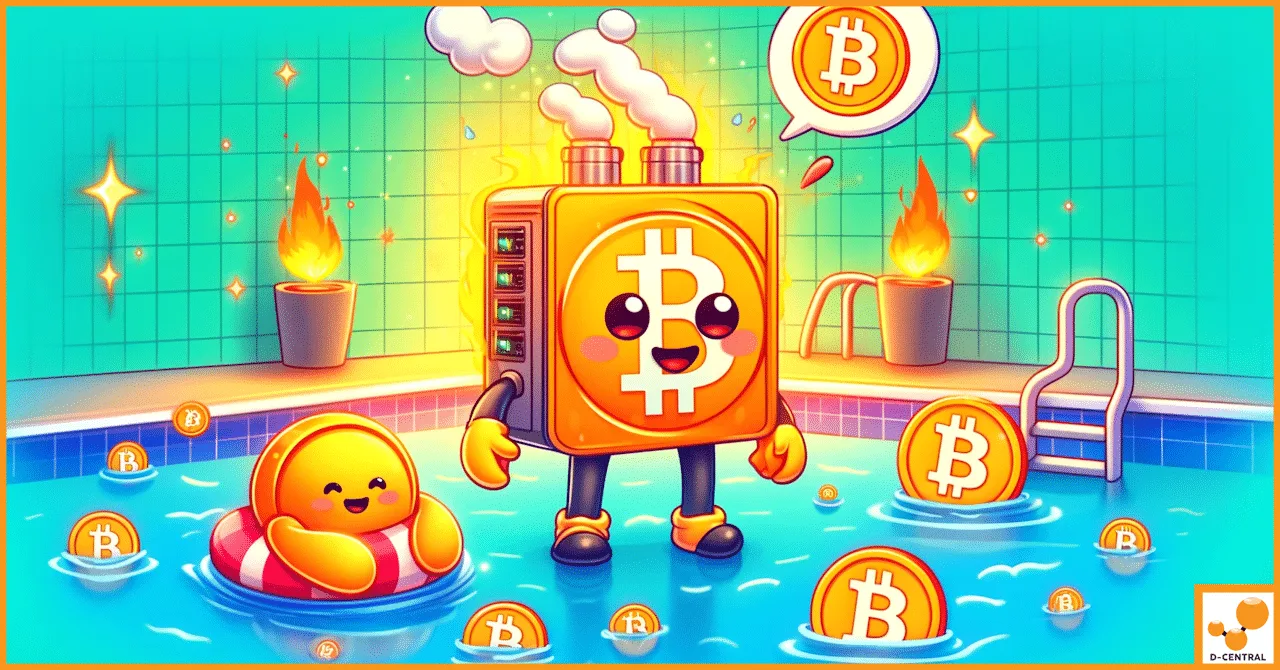
For most miners, “somewhere” means out the window, into the attic, or through an exhaust duct that heats the neighbours’ opinion of you. But what if you pointed all that thermal energy at one of the most power-hungry heating loads in any building — an indoor swimming pool?
Indoor pools are thermal black holes. They demand constant heating to maintain comfortable water temperatures (typically 26-28 C / 78-82 F), they lose heat through evaporation 24/7, and they run year-round. In Canada, heating a residential indoor pool can cost $3,000 to $8,000+ per year in natural gas or electricity. Commercial and municipal pools spend tens of thousands. That is a massive, continuous demand for exactly the kind of low-grade heat that ASIC miners produce in abundance.
At D-Central Technologies, we have spent nearly a decade building Bitcoin Space Heaters that turn mining waste heat into residential heating. Swimming pools are the logical next frontier — the heat sink is bigger, the demand is constant, and the economics are even more compelling than home heating.
Why ASIC Mining Heat and Swimming Pools Are a Perfect Match
The thermodynamic argument is straightforward: ASIC miners convert virtually 100% of their electrical input into heat. There is no combustion, no flue losses, no standby pilot lights. Every watt consumed becomes a watt of thermal energy. Compare that to a natural gas pool heater that loses 15-20% up the flue, or a heat pump that works brilliantly at 25 C ambient but struggles when Canadian winter drops to -20 C.
Swimming pools, unlike home heating loads, have several characteristics that make them ideal heat sinks for mining operations:
- Constant demand: Pools need heating 24/7/365. Mining also runs 24/7/365. The load profiles align perfectly — no seasonal mismatch, no thermostat cycling.
- Large thermal mass: A typical residential indoor pool holds 40,000-80,000 litres of water. That massive thermal mass acts as a buffer, absorbing heat gradually without temperature spikes.
- Low target temperature: Pools only need 26-30 C water (78-86 F). ASIC exhaust air exits at 50-65 C, and immersion cooling fluid can reach 40-55 C. Both are well above pool target temperature, ensuring efficient heat transfer.
- High evaporation losses: Indoor pools lose enormous amounts of heat through surface evaporation. A constant heat input from miners offsets this steady drain without cycling large boilers on and off.
- Dual revenue stream: The electricity is doing double duty — mining Bitcoin AND heating the pool. Your heating cost effectively becomes $0, and the mining revenue is pure upside.
The Math: How Many Miners to Heat a Pool?
Let us run real numbers. We will use current-generation hardware and typical Canadian conditions.
| Parameter | Residential Pool | Commercial Pool |
|---|---|---|
| Pool Volume | 50,000 L (13,200 gal) | 200,000 L (52,800 gal) |
| Target Temperature | 28 C (82 F) | 28 C (82 F) |
| Estimated Heat Loss | ~10-15 kW continuous | ~40-60 kW continuous |
| Antminer S21 Units Needed | 3-5 units (10.5-17.5 kW) | 12-18 units (42-63 kW) |
| Combined Hashrate (S21) | 600-1,000 TH/s | 2,400-3,600 TH/s |
| Annual Electricity (at $0.07/kWh) | $6,400-$10,700 | $25,700-$38,500 |
| Annual Gas Heating Cost Replaced | $3,000-$6,000 | $15,000-$30,000 |
| Est. Annual BTC Revenue (2026) | ~0.015-0.025 BTC | ~0.06-0.09 BTC |
The critical insight: you are not spending $10,000/year on electricity just to heat a pool. You are spending $10,000/year on electricity that mines Bitcoin AND heats the pool. The heating is a free byproduct of an operation that is already generating revenue. Even if mining only breaks even on electricity costs, you have eliminated your entire pool heating bill — a savings of $3,000-$6,000+ per year on a residential pool.
In Canada, where electricity rates in Quebec hover around $0.06-0.07/kWh and winter heating demands are brutal, this equation tilts even further in favour of the miner-heater approach.
Heat Transfer Methods: Air-Cooled vs. Immersion
There are two primary architectures for transferring ASIC mining heat to pool water. Each has distinct advantages depending on scale, budget, and technical comfort level.
Method 1: Air-to-Water Heat Exchange (Simplest)
This is the approach most accessible to home miners and small pool operators. Standard air-cooled ASIC miners (like the Antminer S19 or S21 series) exhaust hot air at 50-65 C. That hot air is ducted through an air-to-water heat exchanger — essentially a radiator in reverse — where pool water (or a glycol loop) absorbs the thermal energy.
This is essentially the same principle behind D-Central’s Bitcoin Space Heaters, scaled up. Instead of heating a room, you are heating a water loop.
- Pros: Uses standard air-cooled miners (no hardware modifications), lower upfront cost, easier maintenance, miners remain accessible for servicing
- Cons: Air-to-water heat exchange is less efficient than liquid-to-liquid, requires ducting and some noise management, heat exchangers need periodic cleaning
- Best for: Residential pools, 2-6 miner setups, DIY-friendly installations
Method 2: Immersion Cooling with Heat Recovery (Most Efficient)
In immersion cooling, miners are submerged in a dielectric (non-conductive) fluid — typically engineered synthetic oils or fluorocarbon-based coolants. The fluid absorbs heat directly from the ASIC chips, boards, and components with no air gap, achieving dramatically better heat transfer efficiency.
The heated fluid (typically 40-55 C) is pumped through a liquid-to-liquid heat exchanger where it transfers thermal energy to the pool water loop. The cooled fluid returns to the immersion tank. It is a closed loop on both sides — the dielectric fluid never contacts pool water, and pool water never touches the miners.
- Pros: Superior heat transfer efficiency (near 100% capture), silent operation (no fans), extends miner lifespan (no dust, no thermal cycling), enables overclocking (better cooling = more hashrate = more heat = more Bitcoin)
- Cons: Higher upfront cost (immersion tanks, dielectric fluid), more complex plumbing, specialized maintenance required, dielectric fluid has ongoing costs
- Best for: Commercial pools, 10+ miner setups, operations prioritizing maximum efficiency and silence
Technical Implementation: Step by Step
Here is how to build an ASIC-heated pool system from scratch. This guide assumes a residential indoor pool with 3-5 air-cooled miners, the most common DIY scenario.
Step 1: Assess Your Heat Budget
Calculate your pool’s continuous heat loss. Factors include pool surface area, water temperature, ambient air temperature, insulation quality, pool cover usage, and ventilation rate. A pool heating professional or an online heat loss calculator can estimate this. For a typical indoor residential pool in Canada, expect 10-20 kW of continuous heat loss.
Step 2: Size Your Mining Operation
Match miner heat output to pool heat demand. Each Antminer S21 produces approximately 3.5 kW of heat. For a 15 kW heat demand, you need about 4-5 units. Always size slightly over your minimum to account for heat transfer losses in the ducting and exchanger (typically 10-20% loss).
Step 3: Build the Mining Room
Isolate your miners in a dedicated space adjacent to or near the pool mechanical room. Requirements:
- Adequate electrical service (each S21 draws ~15A at 240V)
- Fresh air intake for cooling air supply
- Exhaust ducted to the heat exchanger (not to outside)
- Sound isolation — ASIC miners run at 70-80 dB
- Network connectivity (Ethernet preferred over WiFi for stability)
- Fire-rated construction and appropriate electrical code compliance
Step 4: Install the Heat Exchange System
Mount an air-to-water heat exchanger in the exhaust path of your miners. The hot exhaust air (50-65 C) passes through the exchanger, transferring heat to a water/glycol loop. This loop connects to your pool’s existing heating circuit, typically tying in at or near the pool heater’s return line. A circulation pump moves the heated fluid through the exchanger and into the pool plumbing.
Step 5: Integrate with Pool Controls
Install temperature sensors and a controller that monitors pool water temperature and adjusts the mining heat loop accordingly. In most setups, the miners run continuously (you want maximum uptime for Bitcoin revenue), and a bypass valve diverts excess heat when the pool reaches target temperature. The existing pool heater serves as backup for unusually cold periods or maintenance downtime.
Step 6: Commission and Monitor
Run the system for 48-72 hours while monitoring pool temperature stability, miner temperatures, heat exchanger performance, and electricity consumption. Adjust flow rates and air ducting as needed. Set up remote monitoring for your miners (most modern ASICs support this natively) so you can track hashrate, temperature, and uptime from your phone.
Real-World Case Studies and Precedents
This is not theoretical. Multiple projects worldwide have demonstrated Bitcoin mining heat recovery for aquatic applications:
- North Vancouver District Energy: MintGreen’s partnership with the City of North Vancouver used Bitcoin mining waste heat to supply a district energy system that heats buildings and has the capacity to heat pools. This was one of the first municipal-scale demonstrations of mining heat recovery in Canada.
- Bathhouse Projects (Europe): Several European facilities have used immersion-cooled miners to heat spa and bathing facilities, proving the concept at commercial scale with real paying customers.
- Agricultural and Greenhouse Heating: Numerous operations across Canada and Scandinavia heat greenhouses with ASIC waste heat, demonstrating the same water-loop heat recovery architecture applicable to pools.
- D-Central Bitcoin Space Heaters: Our own Bitcoin Space Heater line proves the underlying principle every day in Canadian homes — mining hardware as a primary heat source. The pool application simply scales the concept to a larger thermal load.
Cost-Benefit Analysis: Mining Heat vs. Traditional Pool Heating
| Factor | Natural Gas Heater | Electric Heat Pump | ASIC Mining Heat |
|---|---|---|---|
| Annual Heating Cost (Residential) | $3,000-$6,000 | $1,500-$3,500 | $0 (heat is mining byproduct) |
| Annual Mining Revenue | $0 | $0 | Variable (BTC earned) |
| Efficiency | 80-95% (flue losses) | 300-600% (COP 3-6) | ~100% electrical to thermal |
| Cold Climate Performance | Consistent | Degrades below -10 C | Consistent (indoor operation) |
| Upfront Equipment Cost | $2,000-$5,000 | $4,000-$8,000 | $8,000-$20,000 (miners + heat exchange) |
| Lifespan | 10-15 years | 10-15 years | 3-5 years (miner lifecycle) |
| Noise | Low | Moderate | High (requires isolation) |
| Bitcoin Exposure | None | None | Full — you are stacking sats |
The honest nuance: heat pumps have a higher COP (coefficient of performance) — they move 3-6 units of heat per unit of electricity. An ASIC miner converts 1 unit of electricity into 1 unit of heat. Purely on heating efficiency, heat pumps win. But heat pumps do not produce Bitcoin. When you factor in the mining revenue, even at conservative BTC price assumptions, the ASIC approach often comes out ahead on total economics — especially in cold climates where heat pump efficiency drops significantly.
Canadian Advantages for ASIC-Heated Pools
Canada is uniquely positioned for this application, and this is where D-Central’s expertise as a Canadian Bitcoin mining company matters:
- Low electricity rates: Quebec’s residential rates (~$0.06-0.07/kWh) and industrial rates are among the lowest in North America. Cheap power means more profitable mining, which makes the “free heating” argument even stronger.
- Long heating season: Canadian winters mean 6-8 months of heavy pool heating demand. The longer the heating season, the greater the value captured from mining waste heat.
- Cold ambient air: Cold intake air actually improves ASIC cooling efficiency before it hits the heat exchanger, potentially enabling higher hashrates and more Bitcoin per watt.
- Hydroelectric grid: Much of Canada’s electricity comes from hydroelectric generation — one of the cleanest energy sources available. Bitcoin mined with Canadian hydro has a minimal carbon footprint.
- No natural gas dependency: Pool operators switching from gas to ASIC heat eliminate fossil fuel dependency entirely, aligning with both environmental goals and energy sovereignty.
If you are evaluating mining hardware for a pool heating project, D-Central’s mining consulting service can help you size the operation, select the right hardware, and plan the thermal integration.
Noise Management: The Elephant in the Pool Room
Let us address the obvious concern. ASIC miners are loud — a single Antminer S21 runs at approximately 75 dB, comparable to a vacuum cleaner. Five of them together in an enclosed space will push well past 80 dB. You cannot install these machines next to a pool without serious acoustic isolation.
Solutions that work:
- Dedicated mining room: A separate, sound-insulated room with insulated ducting carrying exhaust air to the heat exchanger. Double-wall construction with acoustic insulation brings noise to near-zero in adjacent spaces.
- Immersion cooling: Eliminates fan noise entirely since the fans are removed. The loudest component becomes the circulation pump, which runs at 40-50 dB — barely noticeable.
- Custom firmware: Aftermarket firmware (like Braiins OS+) allows underclocking miners to reduce noise while maintaining adequate heat output. A 20% hashrate reduction can cut noise by 10+ dB while still producing 80% of the heat.
- Vibration isolation: Rubber mounts, floating floors, and anti-vibration pads prevent structural transmission of miner vibration to the pool area.
If noise is a dealbreaker for your location, D-Central’s custom miner builds — including our Space Heater editions — are designed with residential noise levels as a primary constraint. We have been solving the ASIC noise problem for Canadian homes since 2016.
Maintenance and Long-Term Considerations
Running ASIC miners as pool heaters is not a set-and-forget system. Here is what to expect:
Regular Maintenance
- Miner cleaning: Air-cooled miners accumulate dust. In a pool environment with higher humidity, clean fans and heatsinks every 2-3 months.
- Heat exchanger descaling: Pool water (and especially chlorinated water) can scale heat exchangers over time. Flush and descale every 6-12 months.
- Filter changes: Air intake filters for the mining room need monthly replacement in dusty or humid environments.
- Firmware updates: Keep miner firmware current for security, efficiency, and stability.
Hardware Lifecycle
ASIC miners have a productive lifespan of 3-5 years before they become unprofitable to run due to increasing network difficulty and newer, more efficient hardware. As of early 2026, the Bitcoin network hashrate exceeds 800 EH/s and difficulty sits above 110 trillion. When it is time to upgrade, D-Central’s ASIC repair service can help you maintain aging hardware, and our shop carries current-generation miners ready for deployment.
Humidity Considerations
Pool environments are humid. Locate your miners in a separate, dehumidified room — never in the pool area itself. Humidity accelerates corrosion of electronic components. A dedicated mining room with its own HVAC and dehumidification is essential for protecting your hardware investment.
Regulatory and Safety Requirements
Before building an ASIC pool heating system, consider these regulatory factors:
- Electrical code: Multiple high-wattage mining units require dedicated electrical circuits, typically 240V/30A per unit. A licensed electrician must handle the installation to meet Canadian Electrical Code (CEC) requirements.
- Building permits: Depending on your municipality, modifications to pool heating systems may require building permits. The addition of a mining room almost certainly does.
- Plumbing code: Heat exchanger integration with pool plumbing must comply with local plumbing codes. Backflow prevention is critical to prevent contamination of either the pool or cooling system.
- Insurance: Notify your property insurer about the mining operation. The electrical load and equipment value should be reflected in your coverage.
- Noise bylaws: Many Canadian municipalities have noise bylaws. While indoor noise is typically not regulated, ensure exhaust vents and external equipment meet local limits.
Getting Started: Your Path to an ASIC-Heated Pool
If you are a pool owner considering Bitcoin mining heat recovery, here is the practical path forward:
- Calculate your pool’s heat demand — get a professional heat loss assessment or use your current annual heating bills as a baseline.
- Determine your electrical capacity — consult an electrician about available amperage and the cost of upgrading your panel if needed.
- Evaluate your electricity rate — below $0.10/kWh makes mining-heat economics very attractive. Above $0.15/kWh, you need to run the numbers carefully.
- Select your mining hardware — current-generation machines (S21 series, T21 series) offer the best efficiency. Browse our mining hardware selection for options.
- Design the heat recovery system — air-to-water for simplicity, immersion for maximum efficiency. A mechanical contractor can help integrate with your existing pool plumbing.
- Consult experts — D-Central’s consulting team can help you plan the entire system, from hardware selection to thermal modelling to ongoing support.
The convergence of Bitcoin mining and building heating is not a novelty — it is the inevitable economic conclusion of proof-of-work thermodynamics. Every hash produces heat. Every pool needs heat. The question is not whether this makes sense, but why you are still paying a gas company to do what a Bitcoin miner can do while stacking sats at the same time.
Welcome to the future of pool heating. It is decentralized, it is self-sovereign, and it runs on proof of work.
Frequently Asked Questions
How many Bitcoin miners do I need to heat my indoor swimming pool?
A typical residential indoor pool requires 10-20 kW of continuous heating. Each current-generation ASIC miner (like the Antminer S21) produces approximately 3.5 kW of heat. For most residential pools, 3-6 miners will handle the heating load. Commercial pools may require 12-20+ units. The exact number depends on pool size, insulation quality, ambient temperature, and whether you use a pool cover.
Is it cheaper to heat a pool with Bitcoin miners than with a gas heater?
The pool heating itself becomes effectively free since the heat is a byproduct of mining. However, you are paying for electricity to run the miners. The total economics depend on your electricity rate, Bitcoin’s mining profitability, and your current gas costs. At Canadian electricity rates ($0.06-0.10/kWh), the combined value of Bitcoin earned plus heating savings typically exceeds the electricity cost, making it cheaper than gas in most scenarios.
Will the chlorine or humidity from my pool damage the mining equipment?
Yes, if the miners are exposed to pool air. Miners must be installed in a separate, sealed, and dehumidified room — never in the pool enclosure itself. The heat is transferred via ducting and heat exchangers, keeping the mining environment isolated from the humid, chlorinated pool atmosphere. Proper isolation protects your hardware investment completely.
How loud are Bitcoin miners, and will my pool guests hear them?
Air-cooled ASIC miners run at 70-80 dB — similar to a loud vacuum cleaner. However, with proper acoustic isolation (dedicated room, insulated walls, sealed ducting), noise is reduced to near-zero in the pool area. Immersion cooling eliminates fan noise entirely. Custom firmware can also reduce fan speed and noise at the cost of some hashrate.
What happens to pool heating when Bitcoin mining is not profitable?
Even during periods of low mining profitability, the miners are still producing heat. If the value of free pool heating ($3,000-$6,000/year saved) exceeds the net mining loss, it still makes sense to run them. Your existing pool heater serves as backup. Many operators keep miners running through profitability dips because the heating value alone justifies the electricity cost.
Can I use this setup in an outdoor pool?
Technically yes, but outdoor pools lose far more heat to the environment (wind, rain, cold air), making them less efficient heat sinks. The economics work best with indoor pools where heat loss is contained and predictable. That said, in summer months when outdoor pools are in use, the same system can provide heating — just expect lower efficiency.
Do I need special permits to install Bitcoin mining equipment for pool heating?
In most Canadian jurisdictions, you will need electrical permits for the mining room’s wiring (high-amperage 240V circuits), and possibly building permits for the room construction and plumbing modifications. Consult your local building department and hire licensed contractors. Mining itself is legal throughout Canada and does not require special licensing.
What is the best ASIC miner for pool heating in 2026?
For pool heating applications, prioritize high wattage (more heat output) and good efficiency (more BTC per kWh). As of early 2026, the Antminer S21 series and T21 series offer the best balance of heat output, hashrate, and efficiency. For quieter operation, consider immersion cooling with older-generation hardware. Visit D-Central’s shop to compare current options.